One Lab, Three Student-Athletes and Some Tiny Worms

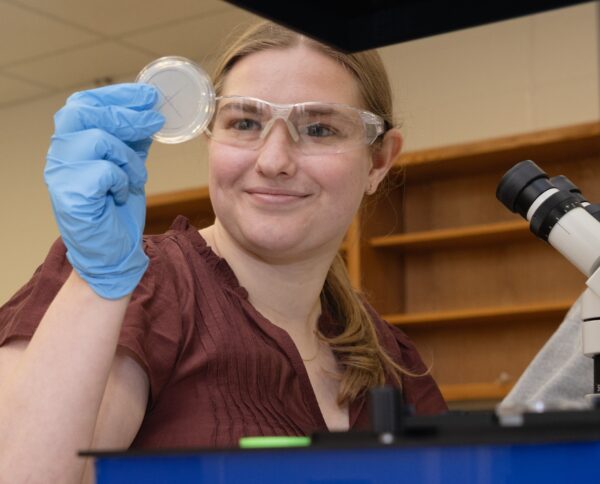
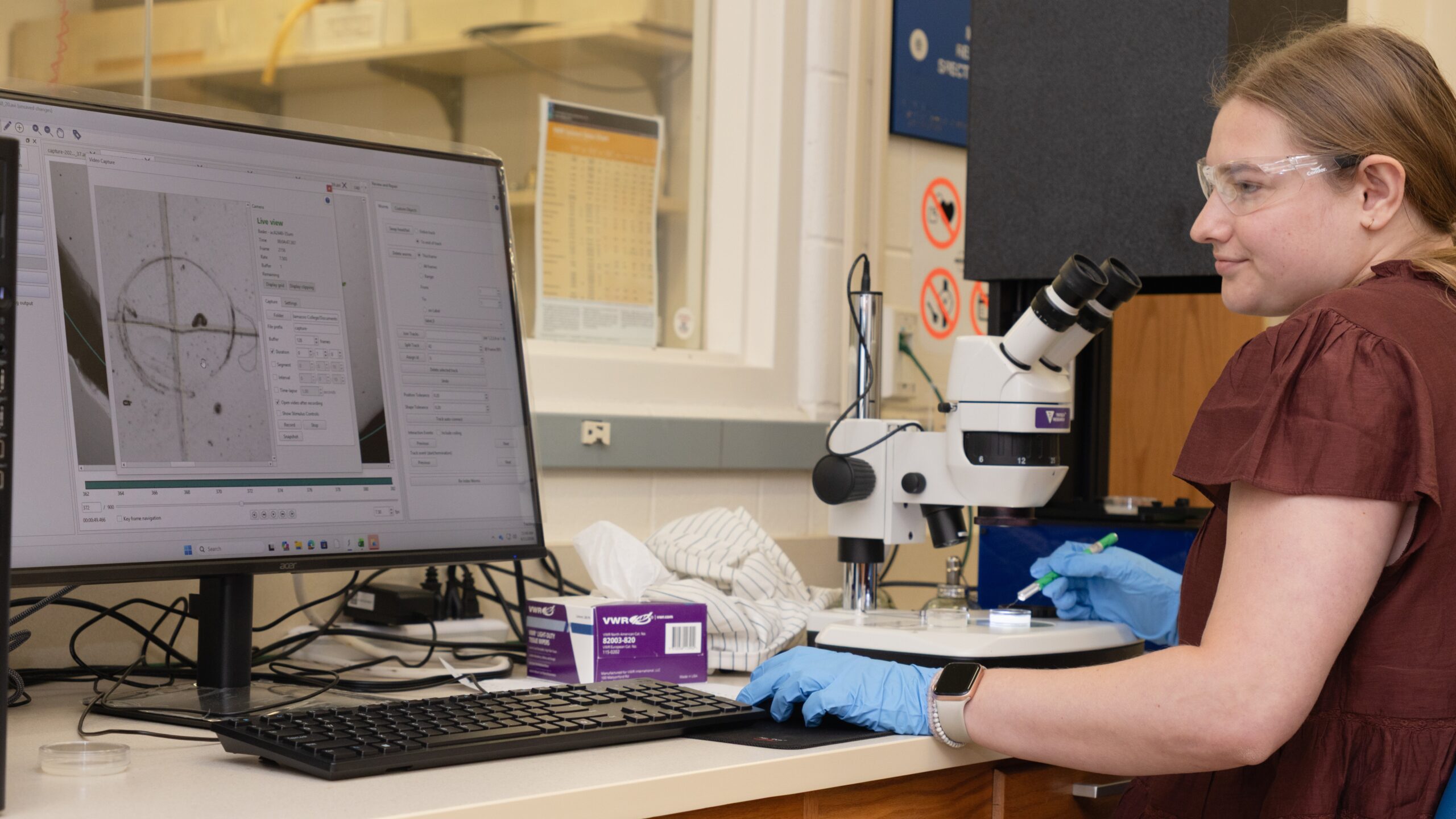
Student-athlete Sara Cate Finks '27 works in the summer lab of Dwight Williams
Sara Cate Finks ’27 is one of three student-athletes performing summer research alongside Dwight Williams, the Kurt D. Kaufman Associate Professor of Chemistry.

At 10 p.m., when many college students have called it a day, Sara Cate Finks ’27 is still waiting on worms.

The rising Kalamazoo College senior and distance swimmer isn’t pulling a late night because of an upcoming exam. The microscopic C. elegans she studies operate on their own biological clock, meaning experiments happen when they’re ready, not when it’s convenient.

It’s the kind of schedule that might overwhelm some students. But for Finks, and a growing number of student-athletes at K spending their summers in chemistry labs, it’s simply another example of the discipline, adaptability and persistence they’ve already learned through athletics.

Finks works in the research group of Dwight Williams, the Kurt D. Kaufman Associate Professor of Chemistry, known affectionately to his students as Dr. D. Her project uses microscopic worms to study neurodegenerative diseases such as Alzheimer’s and Parkinson’s. By tracking how the worms respond to their environment, she can measure changes in memory and determine whether experimental drugs might reverse the effects of disease-related genetic mutations.

Her path to the project began with a simple question from Williams after she completed his organic chemistry course.

“How do you feel about worms?” He asked.

“Worms are fine,” Finks replied.

That answer launched a research experience that now shapes her summers, informs her academic future and serves as the foundation for her Senior Integrated Project.

Finks’ willingness to adapt to unpredictable schedules is one reason Williams believes student-athletes often thrive in research environments.

“It’s beneficial because it just gives us another perspective on the student experience and how students are actually making the most out of the K-Plan as a whole,” Williams said. Their presence in the lab, he added, also helps other students see what’s possible when they pursue multiple passions at K.

Just a few feet away from Finks, two fellow student-athletes also are hard at work in the Williams lab.

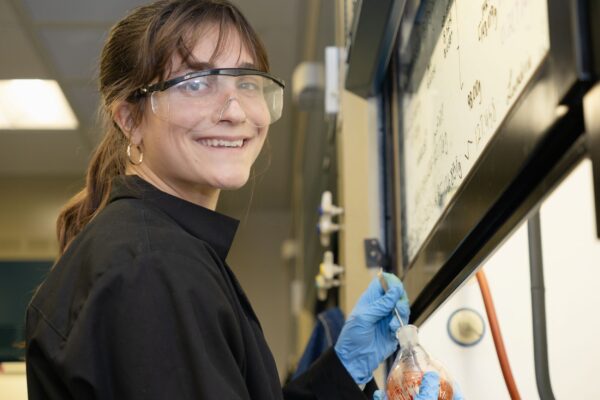
Julia Kozal ’27, a member of the women’s lacrosse team, is synthesizing an asymmetric maleimide derivative, a natural-product compound connected to antimicrobial resistance. Her goal is to create four versions of the molecule and test how small structural changes influence its ability to combat bacteria.

Landrie Fridsma ’27, a softball player, is spending her second summer in Williams’ lab synthesizing chromone compounds that may help protect neurons from damage associated with Alzheimer’s disease and dementia. The compounds are designed to interact with receptors in the brain that help prevent harmful calcium buildup linked to neurodegeneration.

Although their projects differ, all three students share something beyond chemistry: experience balancing demanding commitments.

Ask Williams what sets student-athletes apart in the lab, and time management comes immediately to mind. In a research environment where experiments, reactions and data collection often unfold simultaneously, Williams said athletes arrive with an understanding of how to organize their schedules and remain productive amid competing priorities.
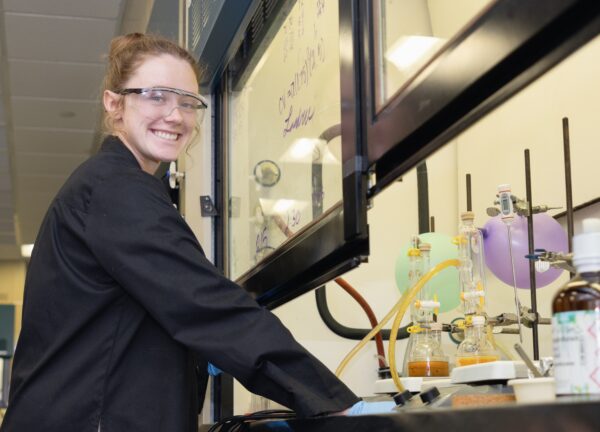
Student-athlete Landrie Fridsma '27 working in the summer lab of Dwight Williams
Landrie Fridsma ’27
Student-athlete Julia Kozal '27 works in the summer lab of Dwight Williams
Julia Kozal ’27
Sara Cate Finks works in the summer resesarch lab of Dwight Williams
Sara Cate Finks ’27

The students see the connection, too. Fridsma, who regularly spends full days in the lab during the summer, credits softball with teaching her persistence as much as planning. She also values the collaborative atmosphere among her fellow researchers.

With several student-athletes working in the lab, questions often get answered through conversations with peers before anyone seeks out Williams. Kozal traces her own approach to research directly to lessons learned on the lacrosse field.

“I am a very goal-oriented person, so having that and having determination, and not really wanting to quit ever is helpful,” she said.

Long days in the lab don’t feel unusual, she added. The same mindset that gets her through early morning practices helps her push through difficult experiments.

Finks sees a similar connection between swimming and science. Having competed for 18 years, she says athletics taught her to finish what she starts.

“Once I start a project, I need to get to the end of it,” she said. “It’s the same thing with swimming. Once I start a race, I have to finish that race. There’s no stopping halfway through.”

For Williams, their experiences illustrate the opportunities K students have to pursue multiple interests without having to choose between them—including demanding research and college athletics.

“Our students get a chance to do both,” Williams said.

Beyond the science itself, all three students describe the lab as a community built on mentorship, trust and encouragement.

Kozal returned to Williams’ lab for a second summer because she wanted to continue a project she had already begun. She credits him with helping students become more independent and confident researchers. Fridsma agrees.

“He definitely pulls the best out of each and every one of us, and he takes the time to learn all of us and how we perform best,” she said.

Williams sees those relationships as one of the most rewarding parts of the job.

“I think they add an aspect of diversity to my lab in particular,” he said of his student-athletes. “It’s a lot of fun.”

For Finks, Kozal and Fridsma, the summer has reinforced a lesson they first learned through athletics: meaningful progress rarely happens all at once. Sometimes it’s measured in a faster race. Sometimes it’s measured in a successful experiment. And sometimes it’s measured at 10 p.m., waiting for a tray of microscopic worms to be ready.
Princeton Review Honors K Among Best Colleges

Kalamazoo College honored among 388 best colleges
Kalamazoo College has once again been nationally recognized by the Princeton Review in its popular guide, “The Best 388 Colleges.”

Kalamazoo College has once again been nationally recognized by the Princeton Review in its popular guide, The Best 388 Colleges. The 2023 edition of the book will feature Kalamazoo College among the top 14 percent of colleges and universities in the country and will be available to purchase on August 23.

The Best 388 Colleges, released annually by the Princeton Review, chooses colleges from the nation’s 2,700 institutions based on data it collects from administrators about their academic offerings, and surveys of its students who rate and report on their experiences.

The colleges selected are currently listed on the Princeton Review’s website.

“We salute Kalamazoo College for its outstanding academics and we are genuinely pleased to recommend it to prospective applicants searching for their ‘best-fit’ college,” said Rob Franek, the Princeton Review’s editor-in-chief and lead author of The Best 388 Colleges.

The book won’t rank colleges individually, however, it gives K faculty high marks—95 out of 99—for student accessibility. Students in surveys for the Princeton Review say their professors “present challenging information and generally work to achieve camaraderie with students.” Furthermore, faculty “definitely understand that classes may be difficult and really, truly want to help students learn the best they can.” Professors also view students “as equals and peers and are open to listening to everyone’s ideas in classes.”

In K’s academic profile, The Best 388 Colleges lauds the K-Plan, the College’s approach to an education in the liberal arts and sciences, for an open curriculum in which “students have more time to explore exactly what they want to learn.” That approach allows each student to find their niche quickly in a small-school environment and helps everyone find campus and community activities they care about, the book says.

“K’s inclusion in The Best 388 Colleges is based on how students rate their experiences in classrooms and labs, with their professors, in community engagement and in their extracurricular activities including athletics,” Dean of Admission Suzanne Lepley said. “The idea that K is repeatedly honored year after year through the publication reflects the opportunities available to our students and the quality education they receive.”

New Fellowship Provides Post-Grad Opportunity Abroad for K Students

Bob Sherbin establishing fellowship abroad
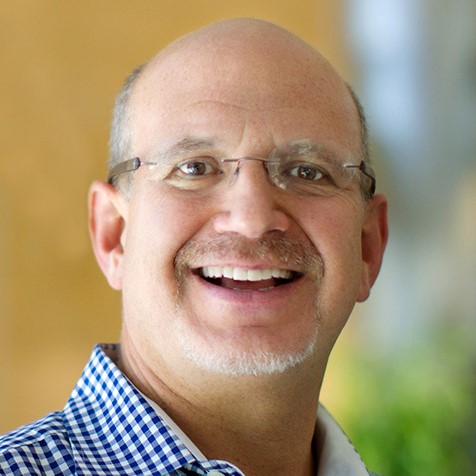
Robert Sherbin ’79

A generous leadership gift from Kalamazoo College alumnus Robert Sherbin ’79 will open the door to independent exploration outside the United States for Kalamazoo College graduates.

Sherbin has established the Jerry Sherbin Fellowship, named in honor of his father, which each year will provide one K senior with a stipend to pursue an academic year post-graduation, independently exploring a subject of deep personal interest outside the United States. Applicants will be assessed based on their proposal’s creativity and personal significance, their passion for the subject, and how the work may shape their future plans. The first fellowship abroad will be awarded in spring 2023.

“The College’s K-Plan emphasizes international study and engagement, so this fellowship wonderfully complements a student’s K education,” said Provost Danette Ifert Johnson. “It provides yet another avenue for students to pursue a project of personal interest in a deep and meaningful way prior to starting their graduate study or career. We are grateful to Bob for creating this opportunity for current and future generations of students.”

While an English major at K, Sherbin studied abroad at the University of Nairobi, one of only six American undergrads—and the only K student—there at that time. As a senior, Sherbin applied for a Thomas J. Watson Fellowship, an external grant through the Watson Foundation that provides the opportunity to design and execute a one-year project overseas. Before attending graduate school at Northwestern, Sherbin spent a year in Central and West Africa as a Watson Fellow, conducting a sociological study of long-distance truck drivers. This opportunity was transformative, helping guide Sherbin’s path to becoming an international journalist and later, a global corporate communications executive. Today he is the vice president of corporate communications at NVIDIA, a technology company based in Silicon Valley.

Sherbin said, “The Watson Fellowship was the most formative experience of my life. I’d not taken an intro to sociology class. My French was appalling. And I didn’t know a soul within thousands of miles, when aerograms were the WhatsApp of the age. But K had given me the tools to learn and sparked my passion to figure out the rest. It’s my hope that this fellowship will enable students to widen their perspectives, taking them from Dewaters to Danang, from the Upjohn Library steps to the Russian steppes and beyond, and discover ways to make a difference before they head into the rest of their lives.”

Guide to Colleges Celebrates K’s Excellence

Fiske Guide to Colleges
Sourcebooks, the publisher of the “Fiske Guide to Colleges,” says “K’s academic terms may be fast-paced and the workload demanding, but students are given the flexibility to pursue their interests through individualized projects and off-campus exploration.”

Kalamazoo College’s excellence is again featured in the annual Fiske Guide to Colleges, a selective look at about 300 higher-education institutions in the United States, Canada and the U.K.

The guide’s readers discover institutional personalities based on a broad range of subjects including the student body, academics, social life, financial aid, campus setting, housing, food and extracurricular activities. The book also includes a quiz to help students understand what they’re looking for in a college, lists of strong programs and popular majors at each institution, indexes that break down schools by state and price, and ratings regarding academics and quality of life.

In the 2022 version, available now, the publisher Sourcebooks says K students “pursue a liberal arts curriculum that includes language proficiency, a first-year writing seminar, sophomore and senior seminars, as well as a senior individualized project—directed research, a creative piece, or a traditional thesis—basically anything that caps off each student’s education in some meaningful way.”

In addition to senior integrated projects promoting independent scholarship opportunities, the guide praises other tenets of the K-Plan, the College’s four-part, integrated approach to education, including:

  • Rigorous academics. The flexibility and rigor of K’s curriculum provides students with a customized academic experience.
  • Experiential education. Students connect classroom learning with real-world experience by completing career development internships or externships, participating in civic engagement and service-learning projects, and getting involved in social justice leadership work.
  • International and intercultural experience. Students choose from 56 study abroad programs in 29 countries across six continents. A biology major interviewed by the publisher remarks on how easy it is for students to take advantage of the opportunity, noting, “Kalamazoo College does study abroad so well that it seems ridiculous not to take advantage of this opportunity. They make it financially accessible and ensure that you won’t fall behind by going abroad.”

“K’s academic terms may be fast-paced and the workload demanding, but students are given the flexibility to pursue their interests through individualized projects and off-campus exploration,” the Guide to Colleges says. “The result, says a senior, is a student body defined by open-minded, global citizens.”

Toads Shape Student’s Conservation Research

Molly Ratliff with boreal toads at night
Molly Ratliff ’22 shows one of the boreal toads she’s researching this summer in Rocky Mountain National Park in Colorado.

Molly Ratliff ’22 hopes to work in an environmental-studies field after she graduates from Kalamazoo College, making her senior integrated project (SIP) this summer an ideal experience. She is researching boreal toads at their known breeding grounds in Rocky Mountain National Park in Estes Park, Colorado, as a way to engage with conservation.

“Amphibians, such as boreal toads, are really great indicators of overall ecosystem health,” Ratliff said. “Their skin is highly permeable, making them vulnerable to environmental changes and toxins. Since amphibians are typically the first species to be impacted by changes in the environment such as climate change, they can show general trends of how other species may react.”

To be specific, in her research Ratliff is investigating how a skin disease that affects amphibians around the world—Batrachochytrium dendrobatidis or Bd—might be affecting the sizes of the toads at various locations and how this might relate to survivability. She performs surveys at dusk around lake shores, captures toads to mark them with pit tags, takes body measurements, and swabs them to test for the disease. The toads are then released and can be identified as they’re recaptured by their unique pit tags.

“If amphibian populations are not doing well in an ecosystem, it can be an indicator that there are stressors, toxins, imbalances, etc. within the entire system,” she said. “Amphibians also typically exist as both predators and prey, making them a crucial part of the food chain within an ecosystem.”

Ratliff’s work is an excellent example of the independent scholarship critical to the K-Plan, Kalamazoo College’s integrated approach to academics in the liberal arts and sciences. As a culmination of learning at K, all students explore a subject of their own choosing, resulting in an in-depth, graduate-level research thesis, performance or creative work. Learn more about how these projects fit into the K-Plan at kzoo.edu/k-plan.

Newman Fellowship Empowers K Student to Build Civic-Leadership Skills

Newman Civic Fellow Emily Cheng
Emily Cheng ’23 is continuing to develop her standout civic-leadership skills through Kalamazoo College by accepting a place in the 2021-22 cohort of Newman Civic Fellows.

Emily Cheng ’23 is continuing to develop her standout civic-leadership skills through Kalamazoo College by accepting a place in the 2021-22 cohort of Newman Civic Fellows.

The fellowship is offered through Campus Compact, a Boston-based nonprofit organization that advances the public-service purposes of higher education. About 290 students from member institutions in 39 states, Washington, D.C., and Mexico will comprise the cohort this year. Recipients such as Cheng demonstrate a commitment to finding solutions for challenges facing communities locally, nationally and globally.

“When I applied, I was curious about what Newman Fellows do in general and how Campus Compact teaches students to be confident in themselves while developing leadership skills,” Cheng said. “I am interested in the nonprofit space as a career, but I’m also interested in things the fellowship teaches like advocacy, collaboration and mentoring.”

Cheng is known on campus as a member of the Sexual Peer Educators at K (SPEAK) group, for which she began and co-manages an Instagram account @kc_s.p.e.a.k. She also is the co-president of the Asian Pacific Islander Student Association, while serving as a Reproductive Justice Leadership Institute Fellow for the National Asian Pacific American Women’s Forum.

Elsewhere, she has found her interests in community organizing to create social change through working with local grassroots campaigns, where she has met and worked with inspiring mentors and friends who have catalyzed her passion to fight against institutions that constrain the people she cares about.

Cheng chose to attend K largely for the format of the K-Plan, which allows students to formulate their own curriculum, along with the College’s study abroad programs. The Intercultural Center, however, has given her the courage to seek opportunities such as the Newman Fellowship thanks to people such as Director of Intercultural Student Life Natalia Carvalho-Pinto.

“The Intercultural Center has been my home away from home,” Cheng said. “Even while we’re virtual, people like Natalia are amazing because she is still such an encouraging spirit,” Cheng said.

Each year, Newman Fellows participate in virtual training and networking to give them some of the skills and connections they will need to create change. The cornerstone of the fellowship is the annual Convening of Fellows, which offers intensive skill-building and networking over the course of two days. The fellowship also provides fellows with pathways to apply for exclusive scholarship and post-graduate opportunities.

Each recipient, including Cheng, received a recommendation letter from their institution’s president.

Cheng “is a student leader who has dedicated her time on campus and in her community to advocating for reproductive rights, access to affordable housing, and diversifying the students holding on-campus leadership positions,” Kalamazoo College President Jorge G. Gonzalez said in recommending her. “She has found community at the Intercultural Center, as a place that catalyzed and affirmed her desire to work with her community to create larger, greater change.”

The fellowship is named for the late Frank Newman, one of Campus Compact’s founders, who advocated for civic engagement in higher education. In the spirit of Newman’s leadership, Campus Compact member presidents and chancellors nominate student leaders from their campuses to be named Newman Civic Fellows.

“We are proud to recognize these extraordinary student leaders and thrilled to engage with them,” Campus Compact President Andrew Seligsohn said. “The experience of the last year has driven home to all of us that we need open-minded, innovative, public-spirited thinkers and doers. That is what Campus Compact is about, and the stories of our Newman Civic Fellows demonstrate who they are.”

Declaration of Major Day a Milestone for Sophomores

Male student smiles and signs Declaration of Major Day forms
Declaration of Major Day is a festive gathering where sophomores designate their majors, minors and concentrations at Kalamazoo College.

There are two camps of students who come to college: those who know exactly what they want to study — or are pretty sure they know — and those who don’t. Kalamazoo College takes a different approach to helping students decide their major. Through the K-Plan, students explore and discover academic fields for a year and a half before choosing a major. Best of all, the curriculum is designed to give students this freedom while keeping them on track to graduate in four years. This past Wednesday’s Declaration of Major Day, the midpoint of their sophomore year, was a festive gathering where students formally designated their majors, minors and concentrations.

The banquet hall at Hicks Student Center was packed as each department set up a booth. Students went from table to table, committing to their fields of study and getting stickers declaring their choices. They celebrated the big moment with one another and the rest of campus with a piece of cake baked for the event by Dining Services.

“Declaration of Major Day is a 15-year tradition at Kalamazoo College,” Associate Dean of Students Dana Jansma said. “College students everywhere are required to declare a major, but here at K we make it a special event and celebration.”

Jansma also said it’s a way to celebrate students finding their academic home.

“It is a real rite-of-passage for sophomores,” she said.

K senior Emma Eisenbeis, a political science and German double major, recalled the excitement of her Declaration of Major Day. “This event gives you the opportunity to situate yourself in your academic community with your fellow peers and faculty. It really hits you that this is the start of your career path,” Eisenbeis said.

This event typically merges the two camps of students into one, where they all have a sense of where their paths are headed. And if something changes, no worries. Thanks to the flexibility of the K-Plan, the College will work with students to make a switch of major or majors as seamless as possible.

Forbes Honors K Alumnus Rothstein in 30 Under 30

Kalamazoo College alumnus Peter Rothstein ’14 is celebrating his selection in the 2019 edition of 30 Under 30, Forbes’ annual list of 600 young visionaries from 20 industries.

Rothstein, originally from West Bloomfield, Michigan, is the director of operations for Brooklyn, New York-based Dona Chai. He and his sister, Amy, founded the company, crafting tea concentrates and sodas brewed with spices from around the world. Its products are available at independent coffee shops and Whole Foods stores, mostly on the East and West Coast.

Peter Rothstein, a 30 Under 30 honoree, in a black t-shirt and blue jeans
Peter Rothstein ’14 and his sister, Amy, were included in the 2019 edition of 30 Under 30, Forbes’ annual list of 600 young visionaries from 20 industries. The pair founded the company Dona Chai.

Tea leaves couldn’t have predicted a coffee-shop-inspired success for Rothstein after he graduated from K with a business degree. Rothstein admitted he doesn’t care for coffee and the last time he had any was years ago.

“And that was when I tried a decaf cappuccino with sugar packets and more sugar packets,” he said. However, in 2014, “Amy was attending New York University when she noticed a trend toward better coffee. People wanted higher quality and better baked goods, but people were still using big brand names.”

Armed with ideas and some encouragement from their dad, who is a venture capitalist, the pair created Dona Chai. Today, the company’s masala chai and turmeric tea concentrates are mixed with milk and served hot. Its soda flavors include Juniper Lime Spice, Turmeric Honeybush and Pink Peppercorn.

“There was a lot of learning and trial and error for us at first,” Rothstein said. “It took about two years for us to realize we would be successful.”

At that point, Dona Chai products started getting sold at Whole Foods locations, and the company eclipsed $600,000 in revenue after developing trade-show popularity.

“Even then it still took a couple of months,” Rothstein said, adding that selling a new tea in a retail location requires customers to change something about their morning routine for the product to draw demand. “It took working with customers and baristas. But after that, we saw inventory turn rapidly, and we realized we would be successful.”

When Rothstein reflects on his success, he credits K, the liberal arts and the K-Plan, Kalamazoo College’s distinctive approach to the liberal arts and sciences, for teaching him to think differently and solve problems. Rothstein added a corporate finance course, led by Associate Professor of Economics and Business Tim Moffit ’80, was among his favorites at K.

Although he had first attended Johns Hopkins, Rothstein quickly learned he wanted a different experience, and meeting Kalamazoo College men’s tennis coach Mark Riley convinced him to switch schools.

Riley is “the type of guy who can put his arm around you and nurture you, or he can push you beyond what you think you can do,” said Rothstein, who competed in tennis and studied abroad in Aberdeen, Scotland, in his years at K. “Once I got to K I realized it had a lot of Mark Rileys. That included everyone from my professors to the general staff, to the trainers, to the Registrar’s Office and others. I can’t thank Kalamazoo College enough.”

Read more about Rothstein, his sister, Dona Chai and others honored in the 30 Under 30 Food and Drink category at Forbes’ website.

K Named a Best Buy in Fiske Guide to Colleges

Kalamazoo College is among 20 colleges and universities nationwide to be named a Best Buy School in the just-published 2019 edition of the highly respected Fiske Guide to Colleges.

Logo says 2019 Best Buy School Fiske Guide to Colleges
Kalamazoo College is among 20 colleges and universities nationwide to be named a Best Buy School in the just-published 2019 edition of the highly respected Fiske Guide to Colleges.

Fiske says it based the ratings on “outstanding educational value as determined by academic quality in relation to the net cost of attendance.” The guide says of Kalamazoo College: “Ninety-eight percent of students at this globally oriented liberal arts school receive financial aid and 70 percent study abroad for the same price that they pay for regular tuition.”

Eric Staab, K’s dean of admission and financial aid, says Fiske’s recognition comes as no surprise.

“At Kalamazoo College, the flexibility of the K-Plan, our integrated approach to an excellent education in the liberal arts and science, allows us to seek out students with a broad array of interests, achievements and experiences,” Staab says. “We work hard to ensure that cost is not a barrier for students who can contribute their distinctive ideas and talents to, and benefit from, our richly diverse campus and programs.”

Chartered in 1833, Kalamazoo College is among the nation’s 100 oldest colleges and universities. It ranks in the top 2 percent among the nation’s four-year liberal arts colleges for the percentage of graduates who go on to earn doctorate degrees.

K is the only college in the Great Lakes region named to the Best Buy Schools list, which is comprised of 10 public and 10 private universities and colleges.

Established by former New York Times education editor Edward B. Fiske, the Fiske Guide to Colleges has been among the foremost sources of information about higher education quality and affordability for more than 30 years. USA Today has deemed it “the best college guide you can buy.”

For more information about Kalamazoo College, visit www.kzoo.edu.