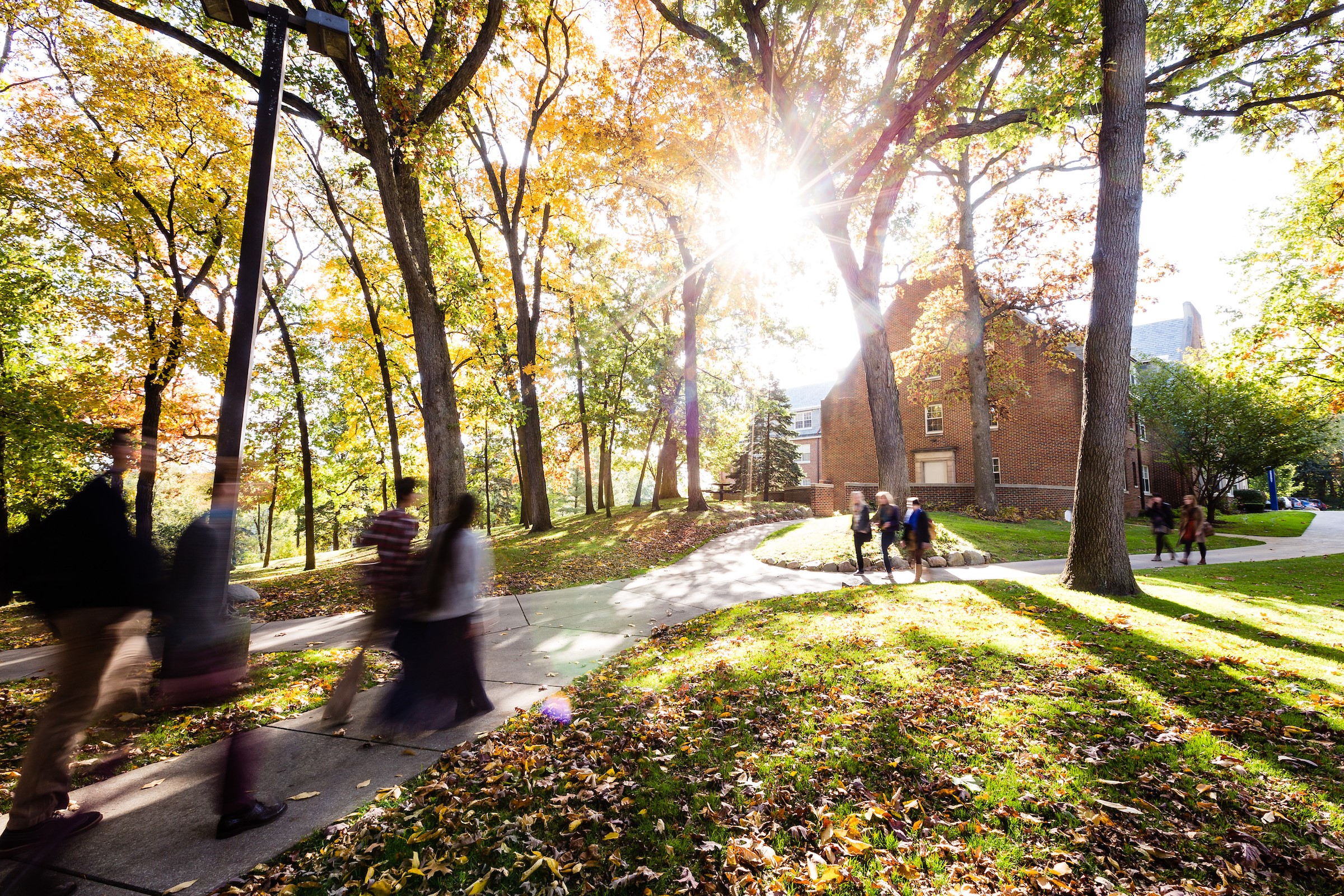
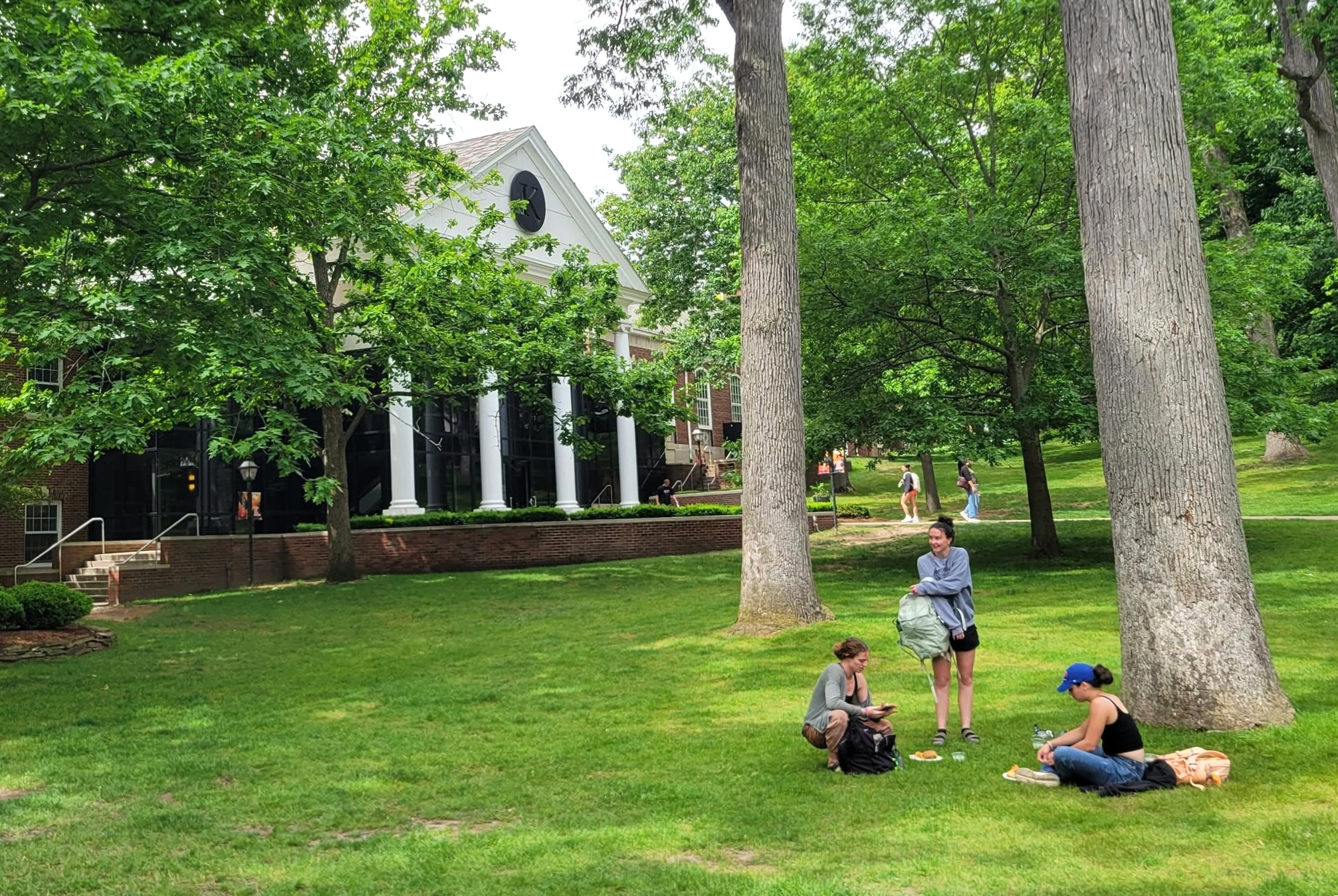
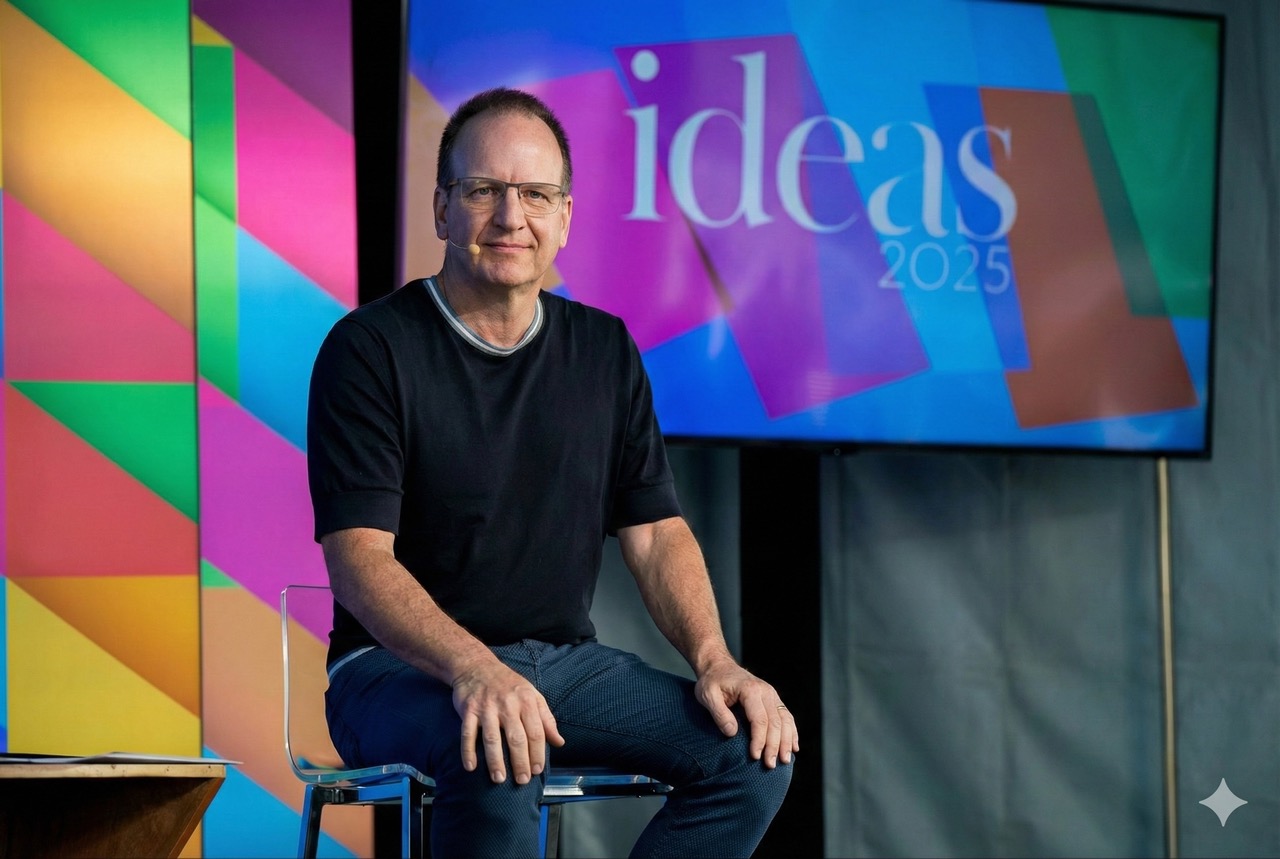
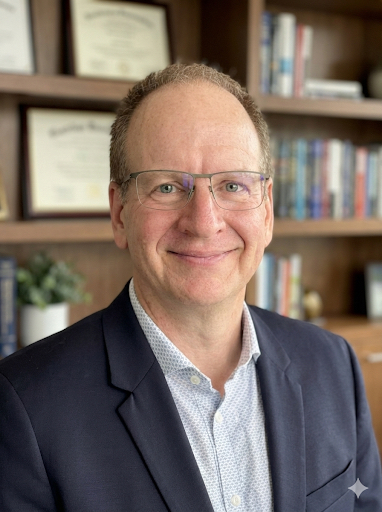
Kalamazoo College is the only private college in Michigan included in The Princeton Review’s Best Value Colleges for 2027, a national list recognizing schools for strong academics, affordability and career prospects for graduates.
The Princeton Review selected 209 schools for its annual list, released September 29, based on more than 40 data points drawn from surveys of administrators at more than 650 colleges in 2025–26, surveys of students attending the schools, and alumni career and salary statistics from the U.S. Department of Education College Scorecard.
The data were weighted to calculate return-on-investment ratings, which served as the primary basis for selecting the schools. Kalamazoo College received an ROI rating of 87 out of 99.
“We highly recommend the schools on our Best Value Colleges list for 2027,” said Rob Franek, editor-in-chief of The Princeton Review. “In our opinion, they are truly the most exceptional in the nation at delivering outstanding academics, affordable cost, and great career foundations. We salute them for all they do to help students with need afford to attend them via comparatively low sticker prices and/or extraordinarily generous financial aid—all while providing an amazing college experience that’s worth every penny.”
The full Best Value Colleges for 2027 report, including its methodology, ROI criteria and ranking information, is available on The Princeton Review’s website.
U.S. News & World Report also names K among the 2027 Best National Liberal Arts Colleges
Kalamazoo College ranks No. 3 in the U.S. for study abroad among all colleges and universities, according to the 2027 U.S. News & World Report Best Colleges rankings.
K also placed No. 74 among the 2027 Best National Liberal Arts Colleges, the second-highest liberal arts ranking in Michigan, along with No. 32 in Most Innovative Schools and No. 39 in Undergraduate Teaching Programs among national liberal arts colleges.
U.S. News notes that the best study abroad programs involve substantial academic work and considerable interaction between the student and the culture. K was a pioneer in the field of study abroad and continues to offer highly immersive and engaging learning experiences, with opportunities abroad for internships, civic engagement, intercultural projects and language study.
“Since 1958, K has made the world part of the classroom,” said Kalamazoo College President Karlyn Crowley. “Study abroad changes how students understand problems, work with others and navigate complexity with confidence—capabilities they carry into their careers and communities.”
The 2027 edition of the Best Colleges rankings evaluates more than 1,700 U.S. colleges and universities using up to 17 factors to measure academic quality and graduate success.
About Kalamazoo College
Founded in 1833, Kalamazoo College is a nationally recognized liberal arts and sciences college located in Kalamazoo, Michigan. Through the K-Plan, its signature approach to education, students design a personalized path that combines rigorous academics with study abroad, undergraduate research, career and civic engagement, and a senior integrated project. Known for its global, experiential approach to learning, Kalamazoo College is a member of Colleges That Change Lives and is included on The Princeton Review “Best Colleges” and “Best Value Colleges” lists. Learn more at kzoo.edu.
About U.S. News & World Report
U.S. News & World Report is the global leader for journalism that empowers consumers, citizens, business leaders and policy officials to make confident decisions in all aspects of their lives and communities. A multifaceted media company, U.S. News provides unbiased rankings, independent reporting and analysis, and consumer advice to millions of people on USNews.com each month. A pillar in Washington for more than 90 years, U.S. News is the trusted home for in-depth and exclusive insights on education, health, politics, the economy, insurance, personal finance, travel, automobiles, real estate, careers and consumer products and services.
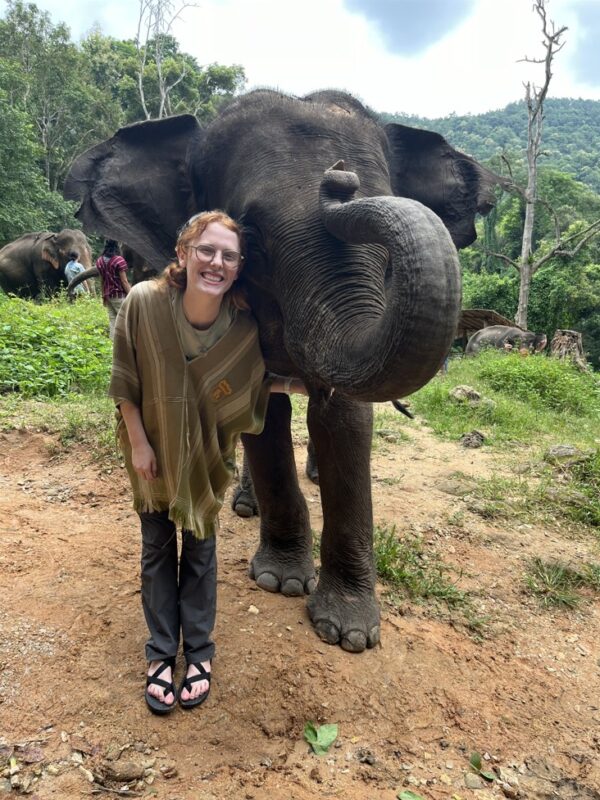
Study abroad at K extends beyond the classroom. In Thailand, biology major Nat Ward ’26 gained hands-on experience through a six-week internship at an elephant camp and sanctuary.
As a child, Dr. Ellen Ochoa didn’t see many people in science, technology, engineering and mathematics who looked like her. And there were no female astronauts at NASA to look up to.
Decades later, Ochoa became the first Latina to travel to space and went on to fly four space missions. On October 13, she will bring that story of curiosity and discovery to Southwest Michigan for a free community event celebrating Hispanic Heritage Month.
“An Evening with Dr. Ellen Ochoa” will take place at the Air Zoo Aerospace and Science Museum in Portage, with a keynote conversation at 6 p.m. The event is free and open to the public, but advance registration is required by October 1, and space is limited.
The evening will begin with a welcome from El Concilio’s Ballet Folklorico Kalamazoo at 5:40 p.m., followed by the keynote conversation with Ochoa. The theme of the visit, “Look Closer. Ask Why. Try Again. Discover More,” reflects the qualities that have defined Ochoa’s career and the event’s broader goal of encouraging curiosity and persistence among people of all ages.
After joining NASA in 1988, Ochoa advanced from research engineer to astronaut to director of Johnson Space Center. She has been recognized with NASA’s highest award, the Distinguished Service Medal, and in 2024, she received the Presidential Medal of Freedom, the nation’s highest civilian honor.
Ochoa’s story, though, is about more than breaking barriers in space exploration. Throughout her career, she has mentored and advocated for women and people from groups underrepresented in STEM. She has spoken about the importance of young people having role models who help them envision possibilities they might not otherwise consider.
“That is part of what makes bringing Dr. Ochoa to Kalamazoo so meaningful,” said Maria Newhouse, director of corporate and foundation relations at Kalamazoo College. “We want young people across our community, particularly girls, young women and young people of color, who have historically been underrepresented in STEM, to see the possibilities in her story. And we want everyone who walks through that door, kids and adults alike, to leave a little more curious about the world than they were when they arrived.”
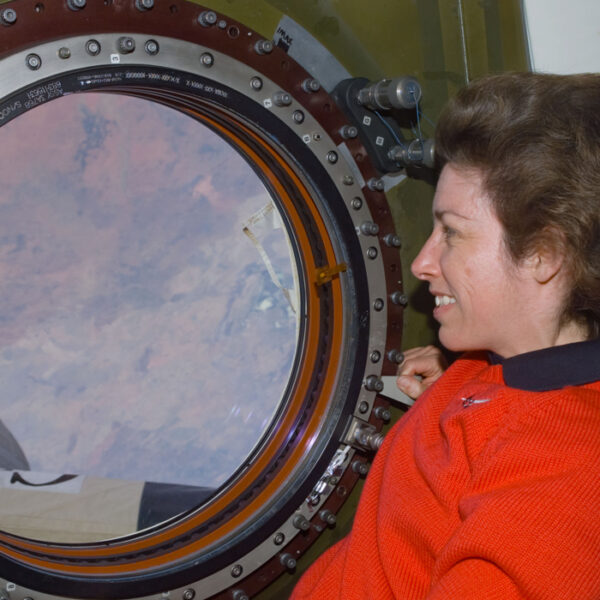
Former NASA Astronaut Ellen Ochoa looks out the International Space Station.
Event Details
What: An Evening with NASA Astronaut Ellen Ochoa
When: Tuesday, October 13
Doors open: 5 p.m.
Program: 5:40 p.m.
Keynote: 6 p.m.
Where: Air Zoo Aerospace and Science Museum, 6151 Portage Road, Portage.
The event is being presented through a community partnership involving the Arcus Center for Social Justice Leadership at Kalamazoo College, the Air Zoo, Bronson Healthcare, PNC Bank, the Kalamazoo Community Foundation, the Kalamazoo Promise, Western Michigan University and El Concilio.
Bronson Healthcare will provide American Sign Language interpretation. El Concilio will provide Spanish-language accessibility. Transportation will be available from several locations in the Kalamazoo community.
For more information, contact the Arcus Center for Social Justice Leadership at arcus.center@kzoo.edu or 269.337.7398.
About Ellen Ochoa
Ochoa is an inventor, astronaut and former director of NASA’s Johnson Space Center. The first Latina to travel to space, she flew on four space missions before becoming director of Johnson Space Center. She has advocated throughout her career for women and people from groups underrepresented in STEM and has mentored the next generation of astronauts and scholars. Ochoa is a member of the Astronaut Hall of Fame and National Academy of Engineering and a Fellow of the National Academy of Inventors. In 2024, she received the Presidential Medal of Freedom, the nation’s highest civilian honor.
About Kalamazoo College
Founded in 1833, Kalamazoo College is a nationally recognized residential liberal arts and sciences college in Kalamazoo, Michigan. Through its distinctive K-Plan, Kalamazoo College combines rigorous academics, experiential learning, international engagement and opportunities for students to connect their education with communities locally and globally.
Kalamazoo College has earned the top spot among Michigan’s private colleges in Forbes’ latest annual rankings of America’s top colleges, while also earning recognition among the nation’s best small colleges.
K ranked No. 181 overall in the publication’s 2027 America’s Top Colleges list, which highlights 500 colleges and universities that produce high-earning, successful and influential graduates from all economic backgrounds, with less student debt. K also ranked 48th among the nation’s top small colleges.
Forbes’ rankings evaluated 1,600 public and not-for-profit schools for undergraduates based on outcomes that matter to students after graduation. The rankings emphasize graduation rates, alumni earnings, student debt, leadership outcomes and other measures of career and financial success, rather than institutional reputation or selectivity.
K’s profile on Forbes’ website highlights the College’s personalized education and strong emphasis on experiential learning. Forbes notes that students combine a flexible curriculum with study abroad, undergraduate research, career development and a Senior Integrated Project through the K-Plan.
For prospective students and families weighing the return on investment on a college education, the latest rankings offer an independent measure of what K delivers: graduates from all economic backgrounds who go on to succeed in their careers and communities, with less student debt.
The Princeton Review again is placing Kalamazoo College among the top 14 percent of the nation’s four-year colleges and universities by featuring the school in the 2027 edition of its annual guide,The Best 392Colleges.
This year, the education services company selected its list from the nation’s 2,800 four-year institutions based on data collected from administrators about their academic offerings and surveys of students who rated and reported on their experiences.
In their comments to The Princeton Review, students praised K for its personalized approach to education and opportunities to learn through study abroad, service, internships and independent research. They described a place where students develop close relationships with peers and professors and can “quickly find their niche thanks to a small-school environment,” where “everyone is always engaged in some kind of work they truly care about.” They added that the flexible curriculum gives them greater freedom to explore their interests rather than take courses solely to fulfill requirements.
Although the guide does not rank the featured institutions individually, K’s inclusion reflects many hallmarks of a K education, including close faculty mentorship, experiential learning and the freedom to pursue a broad range of academic interests.
“The colleges we profile in The Best 392 Colleges vary by type, size, locale and campus culture,” said Rob Franek, lead author and editor-in-chief at The Princeton Review. “In our opinion, each one offers an academically outstanding undergraduate education. They are truly a select group.”
KALAMAZOO, Mich. — Kalamazoo College’s Board of Trustees has elected four new members to its ranks, the College announced following the Board’s June meeting. The Board also recognized several outgoing trustees for their service, including Si Johnson ’78, who concluded an extraordinary 30 years on the Board, including five years as chair.
New Trustees
The Board elected the following new members:
Michael McFall ’93, founder, copresident and co-CEO of BIGGBY Coffee. McFall graduated from Kalamazoo College in 1993 where he was a member of the golf team and earned a bachelor’s degree in economics. He serves as a member of Forbes Business Council and is a Forbes contributor.
Stephanie Teasley ’81, research professor emerita at the University of Michigan School of Information. A psychology major, Teasley went on to earn her Ph.D. at the University of Pittsburgh. She is currently the chair of the Board of Directors for Michigan Virtual and the executive officer for the International Society of the Learning Sciences (ISLS).
Alexander Cadigan ’19, software developer team lead at Epic Systems. He graduated summa cum laude from K in computer science and mathematics. He was a member of the Men’s Tennis team, participated in the Athletic Leadership Council and serves on K’s Board as a recent graduate trustee representative.
Evan Bontrager ’11, principal at Sýndesi Group and advisor at CoMotion. He is the co-chair of the Los Angeles chapter of the Alumni and Friends of the London School of Economics and serves on K’s Board of Trustees as a representative of the Alumni Association Engagement Board. As a student at K, he majored in economics and business with a concentration in environmental studies.
Departing Trustees
The Board also thanked outgoing members for their contributions, including recent graduate trustee Jack Clark ’17 and outgoing AAEB President Michelle Fanroy ’88.
Trustees offered special recognition to Si Johnson ’78, who concluded 30 years of service on the Board. During Johnson’s tenure as chair from 2019 to 2024, the College executed its five-year strategic plan, Advancing Kalamazoo College; embarked on The Brighter Light Campaign, the institution’s largest-ever fundraising campaign, which concluded in 2024 after raising more than $203 million; and navigated through the COVID-19 pandemic.
About Kalamazoo College
Founded in 1833, Kalamazoo College is a nationally recognized liberal arts and sciences college located in Kalamazoo, Michigan. Through the K-Plan, its signature approach to education, students design a personalized path that combines rigorous academics with study abroad, undergraduate research, career and civic engagement, and a Senior Integrated Project. Known for its global, experiential approach to learning, Kalamazoo College is a member of Colleges That Change Lives and is included on The Princeton Review “Best Colleges” and “Best Value Colleges” lists. Learn more at kzoo.edu.
Kalamazoo College received a rating of four stars among Money’s Best Colleges in America 2026.
Kalamazoo College has earned a four-star rating in Money’s Best Colleges in America 2026, recognizing the College for delivering a strong combination of educational quality, affordability and graduate outcomes.
Each year, Money evaluates more than 700 colleges and universities to help students and families identify schools that provide an outstanding value. The ratings consider graduation rates, the net price of a degree, financial aid, student debt, alumni earnings, and economic mobility. Schools also must meet baseline standards for graduation rates, financial stability and sufficient, reliable data reporting to be considered for inclusion.
The recognition reflects K’s long-standing commitment to providing a personalized liberal arts education through the K-Plan, which combines top-tier academics with study abroad, undergraduate research, internships and other experiential learning opportunities.
The impact of those experiences is reflected in alumni outcomes. According to the Fall 2024 National Alumni Career Mobility Survey, 90% of Kalamazoo College graduates from 2014–19 participated in at least one high-impact educational experience. Among those alumni, 85% reported being satisfied with their careers, 86% said their work is meaningful, and 84% said they regularly use skills developed through their Kalamazoo College education.
“Nothing to See Here: Watts” filmmaker Michael Soenen ’92
Kalamazoo College alumnus Michael Soenen ’92, the concept creator and producer of Nothing to See Here: Watts, will return to K on June 11 to screen a documentary created by 20 members of the Watts community—including rival gang members, former Los Angeles Police Department officers, students and victims of violence—credited with catalyzing the 90% reduction in homicides in Watts during the 12 months after its community screenings.
The film has earned more than 100 awards worldwide. It has screened for 4,000 people at the Peacock Theater in Los Angeles, at the King Center in Atlanta for Martin Luther King Jr. Day, and at Harvard University. Time magazine called it “a working playbook for how communities can reclaim their streets by telling their own stories.” Deadline described it as “one of the most remarkable documentaries of the year.”
The free event will take place Thursday, June 11, at the Arcus Center for Social Justice Leadership, 205 Monroe St. Doors open at 5 p.m. with the film beginning at 5:30 p.m. The screening is expected to end around 7 p.m., with a 30-minute panel afterward. Dinner and movie snacks will be provided. Registration is available online.
Soenen, who created the concept and produced the film, will be in attendance with filmmakers LaWanda Hawkins, whose son Reginald was murdered in an unsolved 1995 killing and who founded Justice for Murdered Children in his memory; Tyrone Riley Sr., a former Grape Street Crip and high school basketball coach; and Cornelius Wills, a former Bounty Hunter Blood and gang interventionist.
The event will feature LaWanda Hawkins’ “Silent March”—an exhibit featuring more than 200 pairs of shoes, each belonging to a child lost to violence in the community.
After the screening, the filmmakers will join in a panel discussion with representatives from local organizations Bent Not Broken, Peace During War and KalSAFE. The conversation will connect themes from the documentary with efforts in Kalamazoo to support youth, prevent violence and build safer communities.
For more information about the screening, contact Arcus Center Associate Director CoCo Canders at Coco.Canders@kzoo.edu.
About the Film
Nothing to See Here: Watts is a community-made documentary produced by Nothing to See Here: Productions, created by 20 members of the Watts community—including rival gang members, former LAPD officers, students and victims of violence. More information and trailer at www.nothingtoseeheremovie.com.
About Kalamazoo College
Founded in 1833, Kalamazoo College is a nationally recognized liberal arts and sciences college located in Kalamazoo, Michigan. Through the K-Plan, its signature approach to education, students design a personalized path that combines rigorous academics with study abroad, undergraduate research, career and civic engagement, and a Senior Integrated Project. Known for its global, experiential approach to learning, Kalamazoo College is a member of Colleges That Change Lives and is included on The Princeton Review “Best Colleges” and “Best Value Colleges” lists. Learn more at kzoo.edu.
Kalamazoo College will honor two distinguished alumni at its 2026 Commencement on Sunday, June 14, 2026, at 10 a.m. on the College Quad. Filmmaker and business leader Michael Soenen ’92 will deliver the keynote address to graduates and their families and receive an honorary Doctor of Humane Letters, while Nobel Prize-winning economist Robert J. Shiller ’67 will be awarded an honorary Doctor of Science. Additionally, President Jorge G. Gonzalez, who will be retiring from the College on June 30, will be recognized with an honorary Doctor of Humane Letters. A livestream of the ceremony will be available on the College’s website.
Please note: While Dr. Robert J. Shiller is unable to join us for Commencement, Kalamazoo College is honored to confer this degree upon him in absentia.
About Michael Soenen ’92
Michael Soenen is the CEO of Nothing to See Here: Productions and the creator and lead producer of Nothing to See Here: Watts, a documentary offering a powerful and unfiltered look at life in the Watts neighborhood of Los Angeles. His path to filmmaking was an unexpected turn in a business career that has spanned venture capital, health care and retail.
Soenen graduated from Kalamazoo College with a degree in Economics and Business. Early in his career, he served as vice president, president, CEO and chairman of FTD Group and an analyst at Salomon Brothers. He later became a partner at Valor Equity Partners and served as executive chairman of Manduka, the yoga products company. He has served as a director at several companies, including health care apparel brand FIGS, Benchmark Analytics, and Fooda. In 2011, he was selected as a Henry Crown Fellow at the Aspen Institute, a program which mobilizes leaders to tackle society’s biggest challenges.
The genesis of Nothing to See Here came during a police ride-along while Soenen was volunteering with a nonprofit organization in Watts. His experience led to a project equipping residents—including students, former gang leaders, community leaders and police officers—with iPhone cameras that were used to document their daily lives. Working without a script or predetermined outcomes, these first-time filmmakers came together and fostered dialogue that transformed longtime rivals into collaborators, contributing to a historic peace pledge and significant reduction in homicides. The documentary rewrites the script on who gets to tell their stories and how, and has since earned more than 100 awards worldwide, with a wider release planned. A screening of the film and panel discussion with several of the filmmakers will take place on K’s campus on June 11, 2026, at 5:30 p.m. at the Arcus Center for Social Justice Leadership.
Michael Soenen ’92
About Robert J. Shiller ’67
Robert J. Shiller is an American economist, academic and author who was awarded the Nobel Prize in Economic Sciences in 2013, shared with Eugene Fama and Lars Peter Hansen. At the time of the award, he was widely recognized for having forecast both the dot-com stock bubble and the U.S. housing bubble. He is also the co-creator of the Case-Shiller Home Price Index—a benchmark measure widely used in the housing market—and the author of several books, including Irrational Exuberance, his bestselling analysis of speculative market bubbles.
Shiller is the Sterling Professor Emeritus of Economics at Yale University, where he was a faculty member for more than four decades. His scholarship has ranged across financial markets, financial innovation, behavioral economics, macroeconomics, real estate and statistical methods, as well as public attitudes, opinions and moral judgments toward markets. He has also contributed regularly as a columnist for The New York Times and Project Syndicate. He has been research associate of the National Bureau of Economic Research since 1980 and served as vice president of the American Economic Association in 2005; as president of the Eastern Economic Association in 2006-07; and as president of the American Economic Association in 2016.
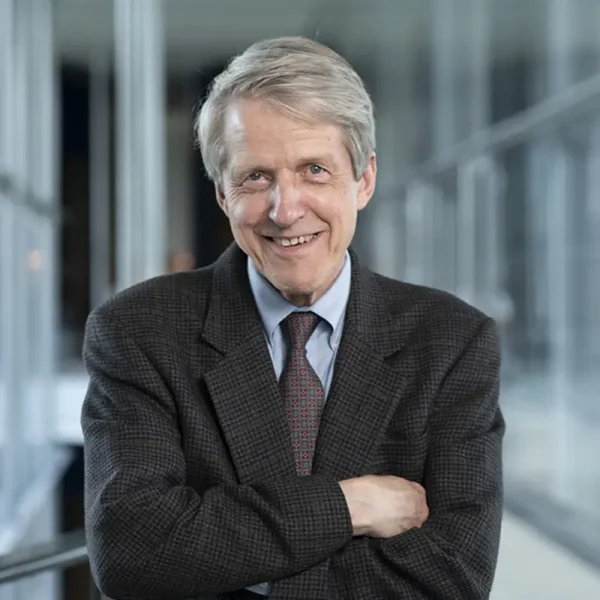
Robert Shiller ’67
A Detroit native and graduate of Southfield High School, Shiller attended Kalamazoo College before completing his B.A. at the University of Michigan. He went on to earn his Ph.D. from MIT. He returned to K as a guest lecturer in 1989 as part of the Monroe Lecture Series.
Among his many honors, Shiller has received the 2017 Truman Medal for Economic Policy, the 2018 Global Economy Prize from the Kiel Institute for the World Economy, and the 2021 Presidential Medal of Lithuania. He is a fellow of the American Academy of Arts and Sciences and the Econometric Society, a member of the National Academy of Sciences and American Philosophical Society, a Research Associate of the National Bureau of Economic Research, and a recipient of the Guggenheim Fellowship.
Shiller has previously received honorary degrees from the University of Michigan, the University of Connecticut, Georgetown University and the University of Paris Dauphine.
About President Jorge G. Gonzalez
Kalamazoo College President Jorge G. Gonzalez has led the institution since 2016, guiding strategic efforts to strengthen the student experience, expand access to the K-Plan and modernize the College’s historic campus. During his tenure, Kalamazoo College completed major campus projects including a new LEED-certified natatorium, a new Admission Center, renovations to Stetson Chapel and upgrades to academic and campus infrastructure. In 2025, the College began construction on new residence halls that will increase access to on-campus residential life for K students.
A strong advocate for the liberal arts, Gonzalez has worked to broaden educational opportunity and support student success, helping shape classes that have been among the most diverse in the College’s history, including growth in first-generation and Pell-eligible students. He guided the institution through the COVID-19 pandemic with a collaborative leadership approach and led the successful Brighter Light Campaign, which raised more than $203 million in support of student access, faculty, facilities and student life—the largest fundraising campaign in the College’s history. Gonzalez has also served on the boards of numerous educational, civic and community organizations at the regional and national levels.
Before joining Kalamazoo College, Gonzalez served as vice president for academic affairs and dean of the college at Occidental College and spent more than two decades as an economics faculty member at Trinity University. He earned a bachelor’s degree in economics from Monterrey Institute of Technology and master’s and doctoral degrees in economics from Michigan State University.
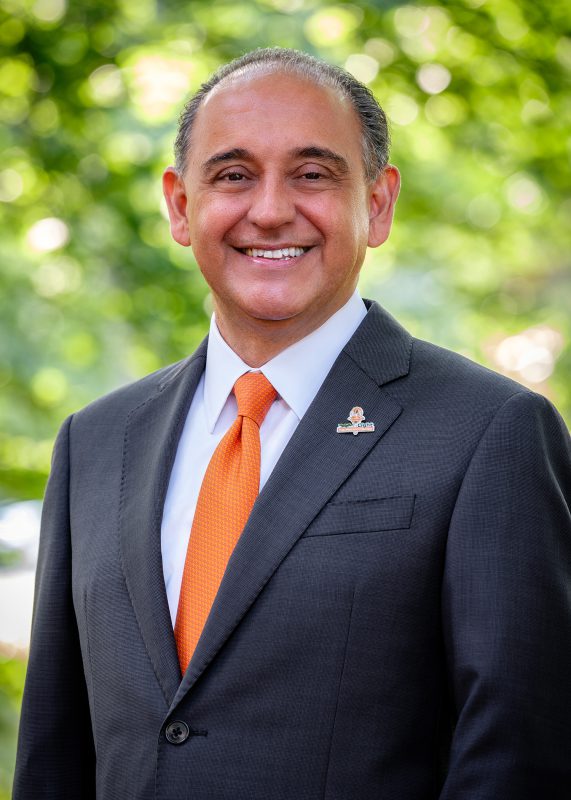
Kalamazoo College President Jorge G. Gonzalez
About Kalamazoo College
Founded in 1833, Kalamazoo College is a nationally recognized liberal arts and sciences college located in Kalamazoo, Michigan. Through the K-Plan, its signature approach to education, students design a personalized path that combines rigorous academics with study abroad, undergraduate research, career and civic engagement, and a Senior Integrated Project. Known for its global, experiential approach to learning, Kalamazoo College is a member of Colleges That Change Lives and is included on The Princeton Review “Best Colleges” and “Best Value Colleges” lists. Learn more at kzoo.edu.
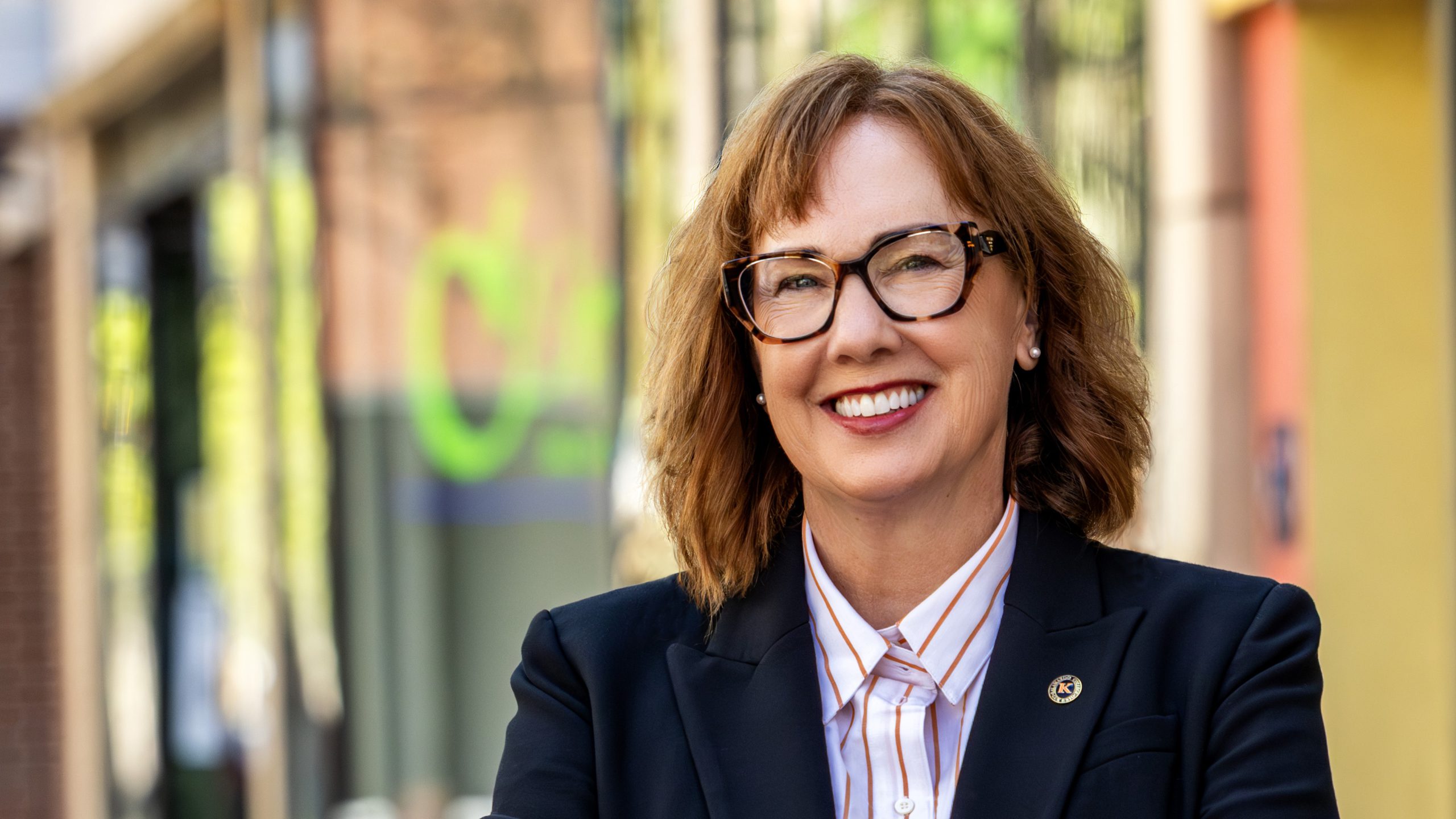
Karlyn Crowley will be the 19th president of Kalamazoo College.
Kalamazoo College has named Karlyn Crowley, provost at Ohio Wesleyan University, as its 19th president following a national search. Crowley was appointed by unanimous vote of the Board of Trustees and will succeed President Jorge G. Gonzalez, who will retire on June 30, 2026. She will begin her role as president on July 1, 2026.
“Dr. Crowley is a strategic, innovative, and deeply collaborative leader who brings both intellectual rigor and a bias for action,” said Jody Clark ’80, president of the Board of Trustees and chair of the search committee. “She understands the moment facing liberal arts colleges and has demonstrated the ability to translate bold ideas into meaningful outcomes for students. Just as importantly, she brings an authentic energy and belief in this work that is both compelling and contagious. We are confident she is the right leader to build on Kalamazoo College’s strengths and lead us forward.”
“Kalamazoo College represents what the liberal arts must be right now—rigorous, globally engaged, and deeply connected to the lives students want to lead,” said Crowley. “I am drawn to the K-Plan as a powerful foundation, and I look forward to working with the campus community to build on its strengths in ways that deepen student opportunity, strengthen outcomes, and position K as a national leader in liberal arts education. This is a college with both a remarkable legacy and extraordinary potential.”
As provost of OWU, Crowley has guided a series of transformative academic initiatives, including the university’s first comprehensive general education revision in 50 years, the establishment of a university-wide faculty development center, and the launch of new programs in public health, entrepreneurship, and a nursing pathway. Most recently, she oversaw the introduction of mechanical engineering through OWU’s new Conrades School of Engineering and helped bring comprehensive civil discourse training to campus through a partnership with the Constructive Dialogue Institute.
A champion of student success, she co-led the “Move the Needle” retention initiative, which achieved the largest first-to-second-year retention increase in OWU’s history.
Her work in strategic partnerships and philanthropy reflects a similar focus on access and opportunity. She co-led a transfer agreement with Columbus State Community College that resulted in a 250% increase in transfer enrollment, and helped establish pathways to advanced degrees through articulation agreements with institutions including Case Western Reserve University and Miami of Ohio. She also played a key role in cultivating and securing gifts for OWU’s Smith Center for Faculty Excellence, the Westwood Real Estate and Community Development Program, and the Conrades School of Engineering. Previously, she collaborated with corporations such as Humana, Schneider, and the Green Bay Packers on educational initiatives.
Throughout her career, Crowley has focused on aligning the enduring strengths of the liberal arts—critical thinking, communication, and ethical reasoning—with emerging student needs and evolving career pathways. This approach has been shaped by her experience as both a student and leader within “Colleges That Change Lives” institutions, including Earlham College, Ohio Wesleyan University, and now Kalamazoo College.
Before joining Ohio Wesleyan in 2020, Crowley spent 18 years at St. Norbert College in Wisconsin, where she served as the interim assistant vice president for academic affairs, founding director of the Cassandra Voss Center, and professor of English and women’s and gender studies. A frequent speaker and published voice on the value of liberal arts education, she is widely recognized as a thought leader in higher education.
“Dr. Crowley is a fierce and enthusiastic proponent of the liberal arts, with a deep understanding of the opportunities and challenges facing colleges like K today,” said Beau Bothwell, associate professor of music and member of the search committee. “In a large pool of highly accomplished candidates, she distinguished herself with a record of turning vision into positive action. She brings a deep respect for faculty voices and collective governance, and we are excited to work with her as we collectively help the K-Plan evolve for the future.”
Crowley holds a Ph.D. in English from the University of Virginia and a B.A. in English and women’s studies from Earlham College. Crowley and her family—spouse John Pennington and their daughter, Ada—look forward to joining the Kalamazoo community.
The College’s presidential search process included a series of listening sessions for campus and community members, as well as a comprehensive survey to collect feedback and input. The Presidential Search Committee was composed of alumni trustees, faculty, staff, and students. The committee was assisted by DSG Storbeck, a leading academic executive search firm, and chaired by Clark.
The College will hold an event introducing Crowley to the K community on May 18 at 11 a.m. in Stetson Chapel. The event will be in-person for faculty, staff, and students and livestreamed. A link to the livestream will be available at the presidential search website.
About Kalamazoo College
Founded in 1833, Kalamazoo College is a nationally recognized liberal arts and sciences college located in Kalamazoo, Michigan. Through the K-Plan, its signature approach to education, students design a personalized path that combines rigorous academics with study abroad, undergraduate research, career and civic engagement, and a Senior Integrated Project. Known for its global, experiential approach to learning, Kalamazoo College is a member of Colleges That Change Lives and is included on The Princeton Review “Best Colleges” and “Best Value Colleges” lists. Learn more at kzoo.edu.