From ‘Wait, What’ to ‘Here’s Why,’ Stevens-Truss Champions Science

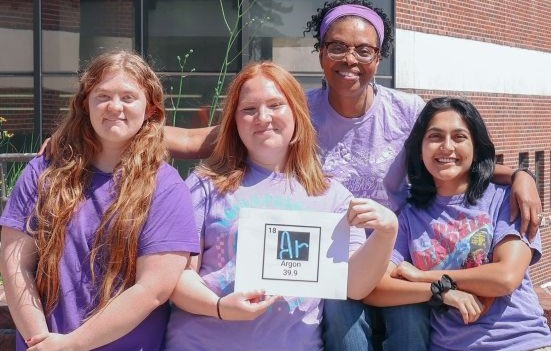
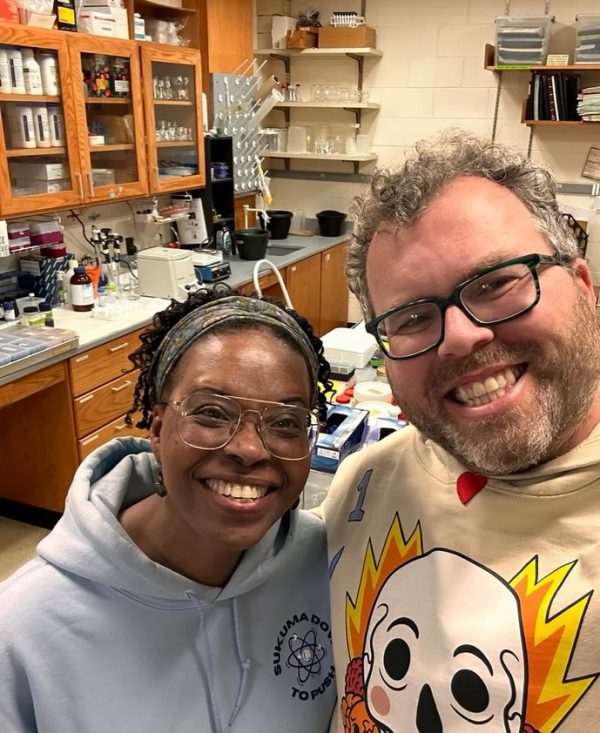
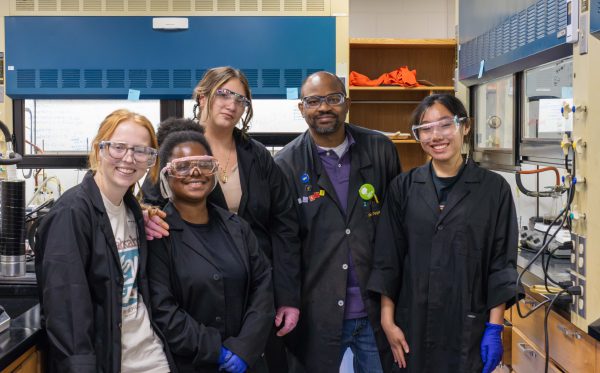
'Wait, Why': Regina Stevens-Truss with three students
Emily Dalecki ’26, Morgan Paye ’26, Dorothy H. Heyl Professor of Chemistry Regina Stevens-Truss and Anoushka Soares ’26 worked together in the Stevens-Truss lab last summer.
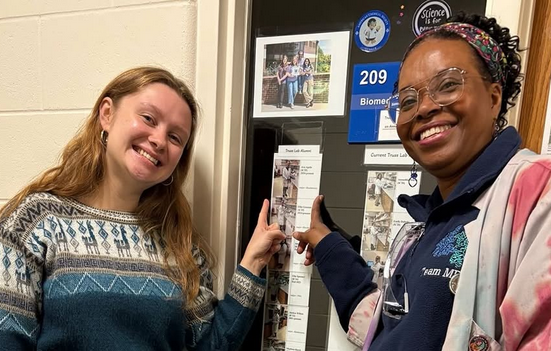
Regina Stevens-Truss with former student
Stevens-Truss and student Ava Apolo ’25 point to Apolo’s photo in a display highlighting that year’s Senior Integrated Project students in Stevens-Truss’ lab.

Some people spend years searching for their calling. For Regina Stevens-Truss, the Dorothy H. Heyl Professor of Chemistry at Kalamazoo College, finding her calling was different. 

“I’m not sure that it was a matter of finding what I wanted to do,” she said. “It was more like destiny. I have always loved science and math!” 

That destiny has taken her on a remarkable journey. She’s gone from a 14-year-old immigrant—arriving in Brooklyn, N.Y., with limited English—to a nationally recognized biochemistry educator who has spent 26 years inspiring students at K. And career success is why the United Nations is celebrating women like Stevens-Truss today, February 11, the International Day of Women and Girls in Science

According to the U.N., a significant gender gap has persisted throughout the years at all levels of science, technology, engineering and mathematics (STEM) disciplines all over the world. Even though women have made tremendous progress toward increasing their participation in higher education, they are still underrepresented in these fields. The U.N.’s hope is that role models like Stevens-Truss will continue inspiring young women to stay with STEM—in academics and their professions—for years to come. 

The ‘Wait, What’ Kid 

Born in Panama, Stevens-Truss arrived in the United States in 1974 with an insatiable curiosity that often tested her father’s patience. 

“I was that kid who wanted to know ‘Why? How?’” Stevens-Truss said. “My dad would say to me in Spanish all the time, ‘Cállate, Regina,’ because I would always ask why. Yes, I was that ‘wait, what?’ kid in school.” 

Her transition to the U.S., though, wasn’t easy. Placed in eighth grade despite limited English proficiency, Stevens-Truss faced isolation as a self-described scrawny Black Latina in 1970s Brooklyn. 

“I got picked on a lot and had very few friends,” Stevens-Truss said. 

But what could have derailed her education became her anchor. 

“What grounded me was school, and in particular my math classes.” 

Those early teachers, none of whom looked like her, saw something special and encouraged her learning. When her family moved to New Jersey, she found community among her white classmates at Cherry Hill West High School.  

“Those were hard years because I was an outcast yet again,” Stevens-Truss said. “I only had three Black friends. My friend groups were all white women, and they helped keep me in science and math because we all loved these subjects. We were taking these classes together, we lived near each other, and I belonged.” 

Finding Her Path 

At Rutgers University, Stevens-Truss initially pursued medicine—like many first-generation students—to fulfill family expectations. Later, a turning point came at the University of Toledo while she was working as a part-time research technician for Richard Hudson ’61. 

Regina Stevens-Truss with a former student
Stevens-Truss stands with Kaleb Brownlow ’01, the first SIP student she had in her tenure at K.
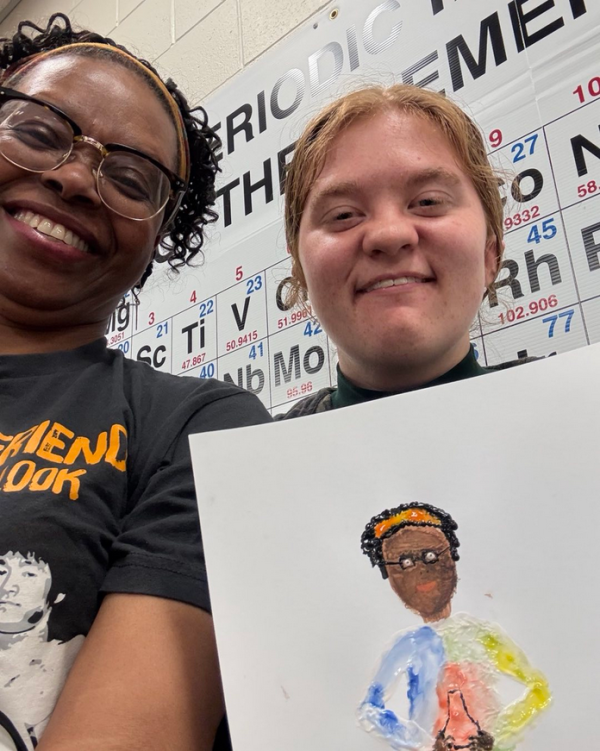
'Wait, Why': Regina Stevens-Truss with student and painting
Dalecki shared her portrait of Stevens-Truss during a Fun Friday activity last summer in which students painted their principal investigators.

Hudson was a K chemistry alumnus who would later become her Ph.D. advisor. One day he walked into the lab with unexpected news and said, “Regina, you need to go do something else.” Thinking she was being fired, Stevens-Truss asked why. His response changed her life: “Because I can tell you’re bored. You need to go get a Ph.D.” 

He was right. 

“I love learning, and when it gets stagnant, I get bored,” Stevens-Truss said. 

That restless curiosity that made her the “wait, what?” kid still drives her today, pushing her to constantly find new ways to reach students. 

The Biochemistry Connection 

What captivates Stevens-Truss about biochemistry now is the intersection where chemistry illuminates biology. 

“Living systems are so complex and yet work so well that I, still to this day, find it exhilarating to learn about them,” she said. “My chemistry classes felt like work, and my biology classes made no sense to me. It’s always been awesome when I could connect my chemistry knowledge to biological phenomena—hence the reason I consider myself a medicinal biochemist. I love to understand living systems through how chemical changes impact them.” 

This philosophy permeates her teaching. Ask her biochemistry students, and they’ll tell you she constantly pushes them to ask how and why—the same questions that defined her childhood. Her current research focuses on ESKAPE pathogens, as she and her lab students study how antimicrobial peptides and hybrid compounds—developed in the K labs of Kurt D. Kaufman Associate Professor of Chemistry Dwight Williams and Associate Professor of Chemistry Blake Tresca—work against dangerous bacteria like E. coli and S. aureus.  

Twenty-Six Years at K 

Hudson had more career advice for Stevens-Truss when she was a postdoctoral fellow at the University of Michigan. 

“Richard called the lab one day and said to me, ‘Regina, I have the job for you: teaching chemistry at Kalamazoo College.’” 

Her response was, “Kalama what?” 

That was 26 years ago. What keeps her engaged after more than two decades? The students. 

“Their curiosity amazes me, and their true interest in knowing makes me want to know and keeps me questioning and finding out,” Stevens-Truss said. “They make me laugh daily.” 

Her impact extends far beyond K. The 2023 ASBMB Award for Exemplary Contributions to Education recognized her decades of work on classroom and social issues affecting student success. 

“Being selected for this award was incredibly humbling,” she said. “It also helped validate my career.” 

That commitment to student success has taken many forms. In 2016, she received K’s highest teaching honor, the Florence J. Lucasse Lectureship for Excellence in Teaching. In 2018, she was named the College’s director of the Howard Hughes Medical Institute Inclusive Excellence grant, awarded to K’s science division. She’s also been a faculty leader for Sisters in Science, a student organization that visits local schools to encourage young women to pursue science; and Sukuma, a peer-based study group for students of color in the sciences. 

A Message for the Next Generation 

When she was asked what message she hoped her students would carry forward, Stevens-Truss didn’t hesitate, though she acknowledged it might sound clichéd. 

“Truly, follow your dreams,” she said. “Don’t let naysayers tell you that you don’t belong and that you can’t.” 

She encourages students to ask themselves key questions: How did you get here? Why do you want to be here? Who inspires you? Who gives you the brutal truth? Who supports you when you’re down? 

“Answers to these questions will help keep you on track,” she said. 

Her advice for finding your passion is simple yet profound. 

“The thing that you go to bed at night thinking about, the one that gets you up in the morning ready to go do it, is your passion and what you should do. Make a career out of that and you’ll be happy.” 

It’s advice that comes from experience. Stevens-Truss never stopped being that curious kid who wanted to know why and how. She just found a way to build a life and help hundreds of students build theirs around asking those questions. 

As she puts it, “Figuring out how and why something changed, to this day, brings me joy, so I think being a scientist is what I was made to be.” 

Ten Days Opened a World Through Short-Term Study Abroad  

For some Kalamazoo College students, study abroad can feel out of reach—too long, too expensive or too intimidating to fit into already full academic and personal schedules. But for 23 students who spent 10 days in the Dominican Republic during winter break, a short-term, faculty-led program offered something transformative: a first step into global learning that reshaped how they see the world and themselves.  

Led by Associate Professor of Spanish Ivett López Malagamba, the immersive experience brought students to Santiago de los Caballeros, a mid-sized city in the Dominican Republic, where they lived with host families, conducted daily academic work and navigated life almost entirely in Spanish.   

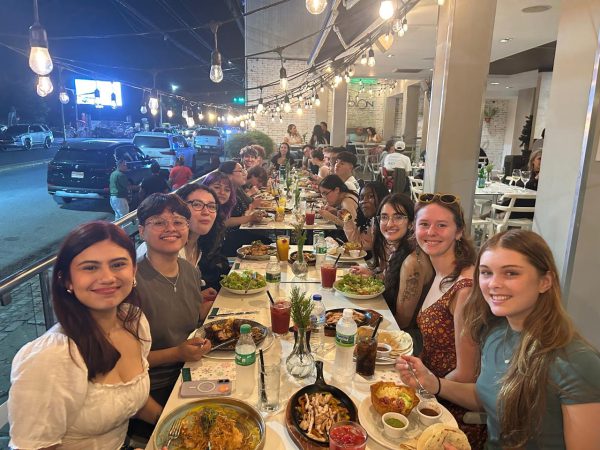
Students sitting at an outdoor table in the Dominican Republic while on short-term study abroad
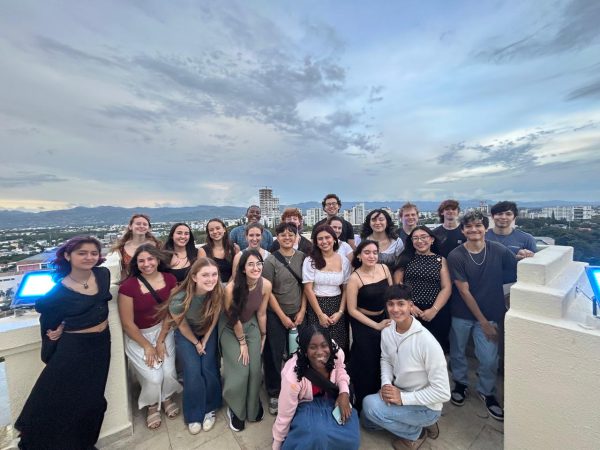
Kalamazoo College students who participated in short-term study abroad over winter break were welcomed to the Dominican Republic with a special dinner.
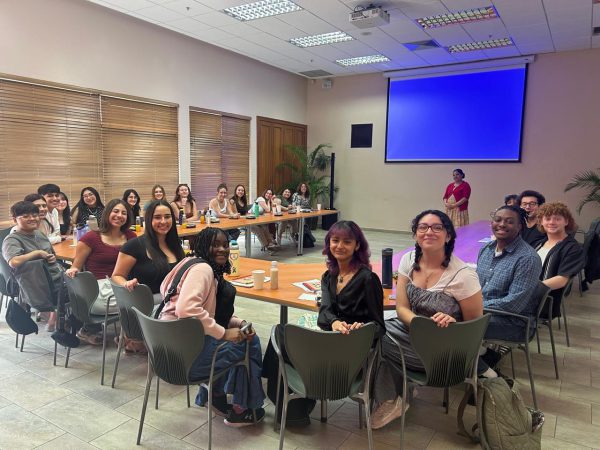
Students participate in an orientation during short-term study abroad in the Dominican Republic
Students participated in an orientation when they arrived in the Dominican Republic.

An Accessible Path to Global Learning  

The short-term program targets students who may face barriers to longer study abroad opportunities, including first-generation college students, students of color, student-athletes and those balancing multiple commitments on campus. It was first launched as a pilot program in 2019, funded through a grant from the Mellon Foundation, which supported faculty planning, along with Center for International Programs funds. Additionally this year, the Ambassador Martha L. Campbell and Consul General Arnold H. Campbell Foreign Study Endowment and the Robert J. Kopecky ’72 Endowed Study Abroad Fund helped high-need students afford the experience. The Campbell Endowment was established in 2009 to support and enhance the foreign study experience for K students. The Kopecky fund was established in 2022 to help maximize the number of students who participate in study abroad while encouraging students to explore the culture around them during their international experience. 

For some participants, the Dominican Republic trip marked their first time traveling internationally or even boarding an airplane.  

“For them, this was not just an academic experience; it was a personal milestone,” López Malagamba said.  

Academically, the program is tied to the Spanish curriculum. Students must have completed Spanish 201, the final course in K’s language requirement sequence for Spanish. In the fall, participants enroll in a preparatory course and attend predeparture sessions focused on Dominican history, race relations, politics and the country’s deep connections to the United States and the Caribbean. And once they are in the Dominican Republic, the learning is nonstop.  

“Every day is academic,” López Malagamba said. “Even when students are on a beach or in a community celebration, they are learning—about economics, migration, tourism, race, history and the environment.”  

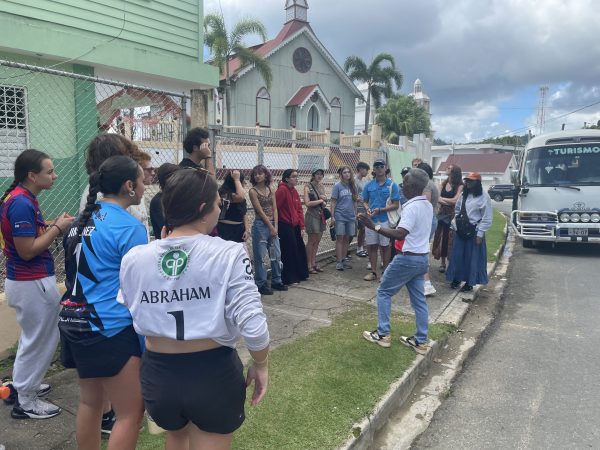
Students visit Samana in the Dominican Republic during short-term study abroad
In the coastal region of Samaná, students encountered a lesser-known chapter of shared history: communities founded by formerly enslaved people from the U.S. who settled there in the 19th century.
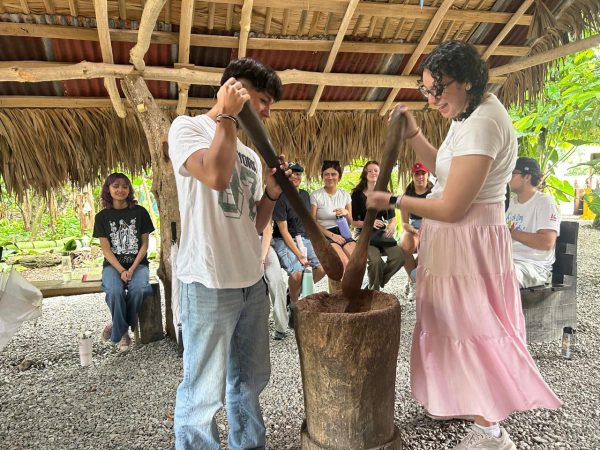
Chocolate making at Sendero del Cacao
Students had a chance to make chocolate while learning about the country’s export economy through cocoa farming, studying the role of tourism in shaping cities, and examining the deep ties between the Dominican Republic and the United States. 

Learning Beyond the Classroom  

Students explored the Dominican Republic through lectures, guided visits and hands-on experiences that reinforced themes from their language coursework, including urban life, nature, the arts and professions. They learned about the country’s export economy through cocoa farming, studied the role of tourism in shaping cities, and examined the deep ties between the Dominican Republic and the United States.  

In the coastal region of Samaná, students encountered a lesser-known chapter of shared history: communities founded by formerly enslaved people from the U.S. who settled there in the 19th century. A guide, himself a descendant of those settlers, shared how English once flourished in the region before being suppressed and how that legacy still shapes Dominican identity.  

“These are moments where students realize that U.S. history doesn’t stop at our borders,” López Malagamba said. “It lives in other places, in other people’s stories.”  

Environmental justice was another key focus. Students learned how coastal communities balance the economic need for tourism with the protection of ecosystems, national parks and marine environments that sustain local livelihoods.  

Living with host families added another layer of immersion and challenge. Students had to adapt to new routines, unfamiliar foods and different cultural expectations, all while communicating in a second language.  

“There’s always a moment where students feel overwhelmed,” López Malagamba said. “They miss their familiarity. They realize how hard it is to express themselves fully. But then something shifts.”  

That shift often comes in small victories: asking for directions, explaining a preference at the dinner table or successfully navigating a conversation they once would have avoided.  

“By the end, students realize, ‘I can do this,’” she said. “That confidence is powerful.”  

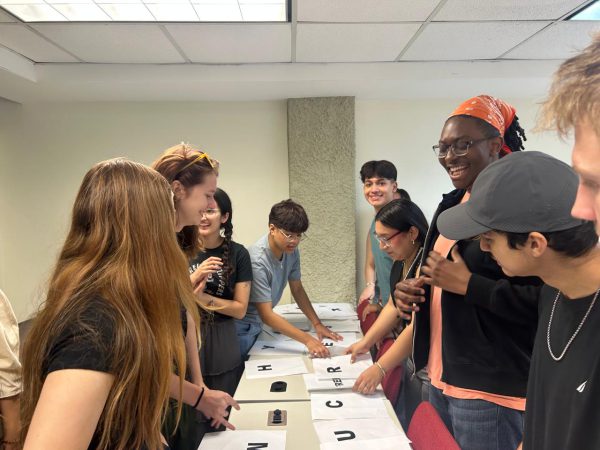
Spanish Class at Pontificia Universidad Catolica Madre y Maestra
K students participated in a Spanish class while visiting the Dominican Republic.
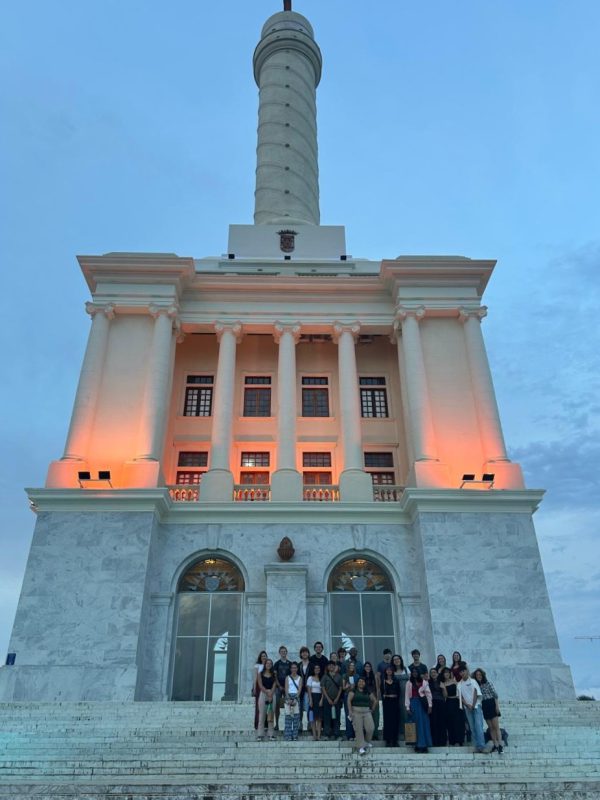
Students visit Monumento a los Heroes de la Restauracion on study abroad
Students visited the Monumento a los Héroes de la Restauración, which was built for the 100th anniversary of the Dominican War of Independence, which was fought in 1844 to gain sovereignty from Haiti.

‘I’m Hooked’  

For Tom Clark ’27, the Dominican Republic trip became a lifeline to study abroad after he had to cancel plans for a longer program in Greece. The business major, who is dual-enrolling at Western Michigan University to pursue exercise science, realized too late that he couldn’t balance a two-term study abroad with his academic timeline.  

“I went through all the predeparture stuff, was all ready to go, and then I realized I wouldn’t be able to do it,” Clark said. “But right as I dropped it, I got an email about this trip to the Dominican Republic. I saw it was over winter break, so it wouldn’t take away from credits that I would need. It was perfect.”  

The trip marked Clark’s first time leaving the country, and the experience immediately challenged his assumptions about privilege and perspective.  

“I thought I was familiar with other cultures,” he said. “I thought of myself as an empathetic person who could put himself in the shoes of others. And then I actually took the trip, and my understanding was much different.”  

Simple differences struck him immediately. Getting off the airplane, he looked for a water fountain to fill his bottle only to realize public drinking fountains don’t exist in places without widespread access to clean water. The language immersion then proved to be both challenging and rewarding. Clark hadn’t taken a Spanish class in nearly a year, and the first few days were rough. But surrounded by Spanish speakers constantly—including his host parents, who spoke no English—he found his skills returning and improving rapidly. Those challenges, in fact, became opportunities for connection.  

Among Clark’s favorite moments was a joint class session with Dominican students learning English as a second language, meeting people his age from vastly different backgrounds, yet fundamentally similar. He made a friend named Casey who runs a fashion brand with 60,000 Instagram followers and is working toward getting a green card.  

The experience reframed how Clark thinks about language learning. In a classroom, he explained, students have varying levels of investment. On the trip, everyone was committed, making the learning more dynamic and applicable.  

“We were talking about how another language is like learning a superpower,” he said. “I learned I could travel to many countries and be perfectly fine. I could meet people and connect better. The Dominican is a tiny island, so I’m hooked on imagining what the rest of the world is like.”  

Tres Ojos National Park
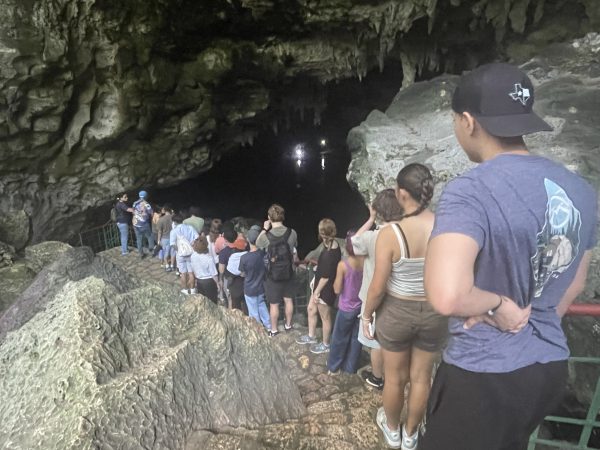
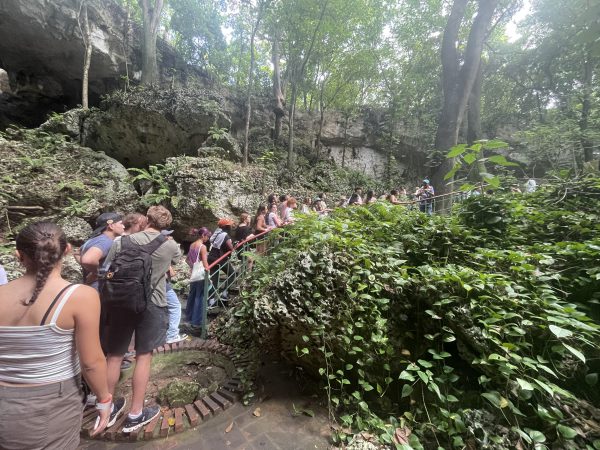
Tres Ojos, or Three Eyes National Park, is a 50-yard, open-air limestone cave.
Students at Tres Ojos National Park
Students walk through Tres Ojos National Park.

Discovering New Perspectives  

For Sarah Guerrero Gorostieta ’28, a first-generation college student, the Dominican Republic trip offered something unexpected: a chance to see her own culture through new eyes while discovering how much she still had to learn.  

“I have never learned so much in such a short amount of time about myself, my peers and an entirely new country,” Guerrero said. “With my Mexican heritage, I assumed because I’m Hispanic and because they’re Hispanic, there would be some similarities between us. There definitely were, but there was also so much nuance.”  

Although Mexico and the Dominican Republic were both colonized by Spain, Guerrero learned how French and African influences shaped Dominican culture differently. More importantly, she heard those histories directly from Dominicans themselves.   

Guerrero’s experience was framed with many memorable moments. She recalls feeling grateful for trying plantains for the first time, exploring caves and seeing the ocean.  

“I’d never felt so many emotions packed into one trip,” she said. “And I’m really excited to carry all of those lessons into study abroad.”  

Guerrero is next hoping to study at Belfast University in Northern Ireland, where she wants to explore political tensions and the media’s role in conflict—themes she first encountered in the Dominican Republic through a guest lecture on how the media weaponizes political relationships during elections.  

Santiago de los Caballeros Tour of the City
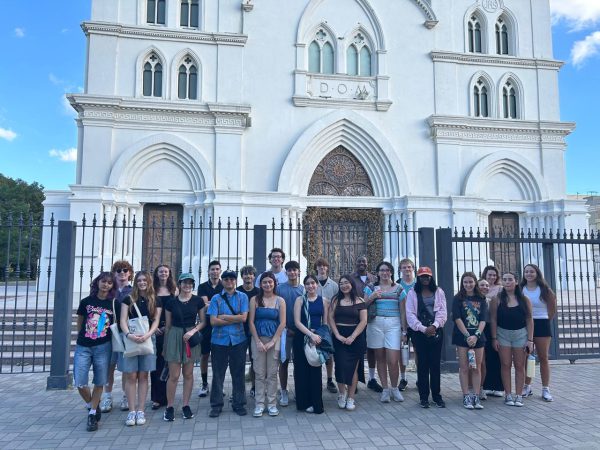
Students stopped at St. James the Apostle Cathedral during a tour of Santiago de los Caballeros in the Dominican Republic.
Downtown Santiago de los Caballeros
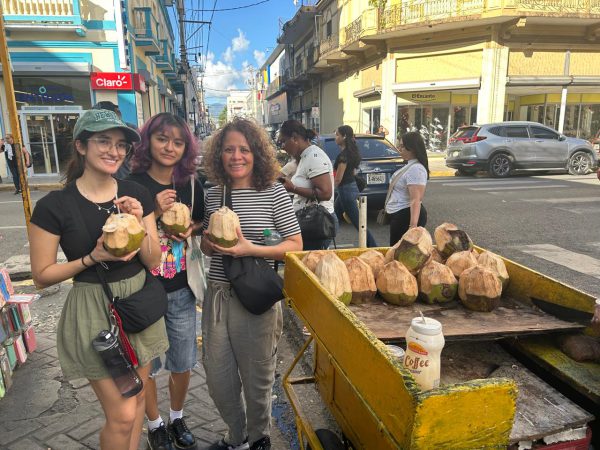
Associate Professor of Spanish Ivett López Malagamba (right) led the short-term study abroad experience through places such as downtown Santiago de los Caballeros.

Opening Doors for Student-Athletes  

For Riley Shults ’28, a runner on K’s cross-country team, the 10-day format meant he didn’t have to choose between his sport and international experience.  

The short-term trip to the Dominican Republic didn’t change Shults’ academic trajectory, he said, but it reinforced the direction he wanted to pursue. He is declaring an anthropology-sociology major in February and is now planning to study in Oaxaca, Mexico, during the winter of his junior year through a program focused on community engagement and Indigenous cultures.  

“I knew that I wanted to care about people, and I knew that I wanted to travel the world,” he said. “This program was the first real experience that I got to have of that.”  

One question lingered throughout the trip: Can such a short program truly transform students in the way longer study abroad experiences do? And for Shults, the answer is unequivocal.  

“One hundred percent,” he said. “I barely talked to anyone on that trip before it, and now I see them every day. Every little aspect fundamentally changed who we are because we were forced to think about someone other than ourselves. It’s not just about me anymore. It’s about the whole world.”  

The change came through small moments that accumulated into profound shifts. Shults discovered he loves beans and rice. He overcame his lack of confidence in his language skills and found himself thinking in Spanish. He engaged with complex political histories he’d only read about in textbooks as his host mother shared stories each morning about the country’s history under dictator Rafael Trujillo.  

“I used to think one way, and now I think this other way,” he said. “Study abroad pulls people out of their comfort zones. Once you push past that boundary your learning is only limited to what you allow yourself to find.”  

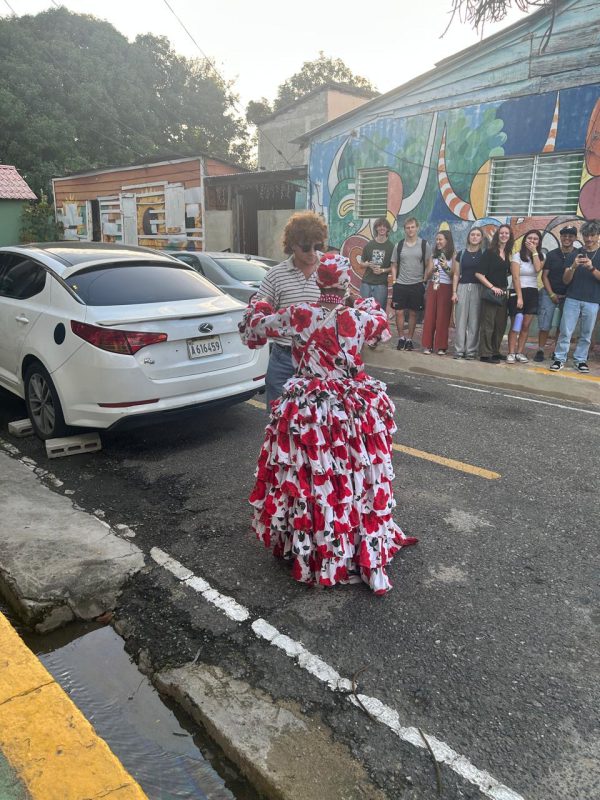
One particularly memorable moment came during a Sunday block party in a working-class neighborhood of Santiago. Community organizers welcomed the K group with music, announcements and open celebrations. 

Students danced alongside children, parents and grandparents in the streets. Shults found himself at the center of that celebration, dancing with elderly women who grabbed his red hair for good luck. He moved freely without self-consciousness in a way he’d never experienced at home.  

“Every single person is not caring about what other people say, they’re just moving,” he said. “It’s such a different culture than ours. Here, people don’t just dance. We’re always thinking about what other people are doing. But that’s not what they think. They’re just going to have fun.”  

His experience now surfaces in unexpected moments back on campus. In a class about water systems, Shults reflected on the reality that Dominican tap water isn’t safe to drink.  

“I’m sitting in class thinking, ‘I lived this,’” he said. “I lived this example where you don’t have water right on the tap.”  

A resident of the Los Pepines neighborhood dances with Riley Shults '28
A resident of the Los Pepines neighborhood dances with Riley Shults ’28.
Visit to the Monumento a los Heroes de la Restauracion
The Monumento a los Héroes de la Restauración is the tallest building in Santiago de los Caballeros in the Dominican Republic.

Distinct Opportunities Bring Transformations  

Although the program lasts just 10 days, its impact extends far beyond winter break. López Malagamba noted that many students return with renewed interest in longer study abroad opportunities and greater confidence in navigating unfamiliar environments. For her, watching students undergo their transformations in just 10 days remains the most rewarding part of leading the program.  

“These students come back with a different understanding of what it means to be a global citizen,” she said. “They’ve lived with families who welcomed them. They’ve navigated challenges in a second language. They’ve sat with discomfort and come out stronger.   

“These programs remind students that the world is bigger than the U.S. and their immediate communities,” she said. “They learn that their actions matter, that their country has an impact elsewhere, and that shared humanity exists across borders. That’s the kind of learning that stays with you long after the trip ends.”  

K Students Explore What Makes a City ‘Stick’

Senior business majors at Kalamazoo College are stepping into a hands-on consulting experience this winter, partnering with a local coalition to explore one of Kalamazoo’s most compelling questions: How can our city foster a stronger sense of belonging and create the kind of social, cultural, and recreational experiences that encourage recent graduates to stay? With nearly 25,000 undergraduate students across the area’s colleges and universities, it’s a question with real potential to shape Kalamazoo’s future.

A 2024 report from the W.E. Upjohn Institute for Employment Research found that nationally, only 47% of public university graduates and 43% of private college graduates stay in the same metro area as their alma mater. While job opportunities often drive alumni migration, the Kalamazoo region offers notable employment options: according to the Michigan Economic Development Corporation, 20 Fortune 1000 companies have headquarters here, and the greater metro area is home to numerous smaller businesses and nonprofits, offering diverse career pathways for new grads. This project, therefore, focuses on another part of the equation: “value of place”— the cultural vibrancy, amenities and social connections that shape daily life and make a location truly stick.

To examine that element, K’s business capstone class is working with Sarah Olszowy, chief experience officer at Greenleaf Hospitality Group, and other members of the Kalamazoo Marketing Coalition, a cross-sector group representing business, regional development, city government and destination marketing. Their coalition aims to improve collaboration and synergy among marketing teams promoting the region. Additional members include Kimberly Viers, marketing and communications manager at Southwest Michigan First; K alumna Dana Wagner ’10, director of marketing and communications at Discover Kalamazoo; Meghan Behymer, downtown coordinator for the City of Kalamazoo; and Allie Lochart, senior marketing manager at Greenleaf Hospitality Group.

Amy MacMillan, L. Lee Stryker Professor of Business at K, is co-teaching the capstone with Visiting Assistant Professor of Business Matthew Schultz. Mirroring the structure of a professional consulting firm, student teams composed of team leads and associates will research the issue and develop data-driven proposals. Each recommendation will need to show meaningful potential for positive return on investment within three years.

The business capstone combines two senior-level courses, one in marketing and one in finance, into a program named The InKubator for Experiential Innovation, a teaching approach that immerses students in real-world problem solving while strengthening their analytical and design-thinking skills. As an InKubator course, students will engage with guest mentors and presenters from various disciplines, drawing on humanities perspectives to expand their creative thinking and problem-solving approaches.

“We invite artists, authors, entrepreneurs, community leaders, and other innovators to our program to help unleash our creative potential,” said MacMillan.  “Our business students take courses across the liberal arts—in creative writing, psychology, languages, sociology, music, and more. Most students studied abroad. They’re often amazed to find how relevant these courses and experiences are in business problem-solving.  At a time when it’s tempting to outsource brainwork to AI, we nurture human creativity to the fullest—and, yes, we’ll harness the power of AI, too.”

Expanding learning beyond the classroom, the course will meet periodically at the downtown Radisson in meeting space provided by Greenleaf Hospitality Group. Throughout the term, Olszowy will review student progress and offer guidance as teams refine their ideas.

The course will conclude with a final presentation in which students will share their proposals directly with Olszowy and other coalition representatives, offering K students an opportunity to contribute to an important conversation already underway regarding talent retention and community development in the region.

“This partnership with Kalamazoo College brings fresh perspective and real momentum to one of our community’s most important questions,” said Olszowy. “Engaging K students in this work gives us an invaluable window into what the next generation is seeking in a community. Their ideas and lived experiences support Greenleaf Hospitality Group’s role as the host of Kalamazoo and help shape a more vibrant, welcoming city that inspires recent graduates to build their future here.”

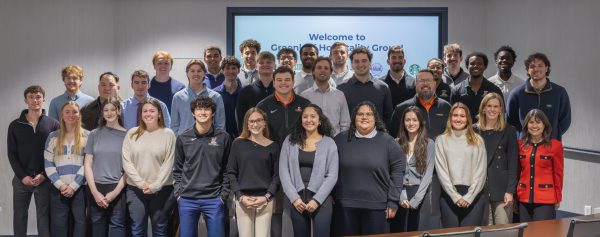
Inkubator for Experiential Education 2026 students group picture
Kalamazoo College’s business capstone class is working with Sarah Olszowy, chief experience officer at Greenleaf Hospitality Group, and other members of the Kalamazoo Marketing Coalition, a cross-sector group representing business, regional development, city government and destination marketing. Their coalition aims to improve collaboration and synergy among marketing teams promoting the region.
Inkubator for Experiential Education
Amy MacMillan, L. Lee Stryker Professor of Business at K, is co-teaching the capstone with Visiting Assistant Professor of Business Matthew Schultz.
Inkubator for Experiential Education students
Business majors at K are partnering with a local coalition to explore one of Kalamazoo’s most compelling questions: How can our city foster a stronger sense of belonging and create the kind of social, cultural, and recreational experiences that encourage recent graduates to stay?
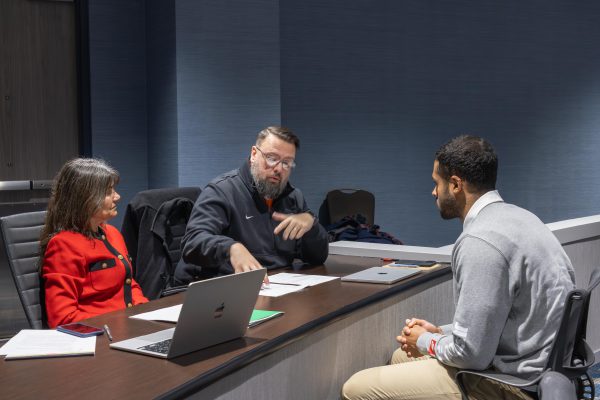
Inkubator for Experiential Education
The course will meet periodically at the downtown Radisson in meeting space provided by Greenleaf Hospitality Group.

Faculty, Staff Showed Inspired Teaching, Leadership in 2025

From breakthrough scholarship and inspired teaching to national recognition and community leadership, Kalamazoo College faculty and staff made 2025 a year of impact. Across campus and around the world, K educators, researchers and professionals advanced knowledge, strengthened student experiences and elevated the College’s mission in meaningful ways. Here’s a look back at the top 10 faculty and staff stories of 2025—moments that captured the creativity, commitment and excellence that define the College. 


10. Africa Month Marks Concentration’s Relaunch 

Kalamazoo College marked the relaunch of its African studies concentration in May with Africa Month 2025, a vibrant celebration organized by Director of African Studies Dominique Somda and Assistant Professor of French Manfa Sanogo. 

Africa Month invited thoughtful and meaningful engagement with Africa and Afro-descendants worldwide thanks in part to support from a Howard Hughes Medical Institute (HHMI) Inclusive Excellence grant and the Arcus Center for Social Justice Leadership. The events welcomed visionary scholars, artists, curators and thinkers whose work challenges certitudes and expands horizons and included lectures, an art exhibit, workshops and roundtable discussions. 

Africa Month events in 2025
Director of African Studies Dominique Somda and Assistant Professor of French Manfa Sanogo hosted brilliant scholars, artists, students, colleagues and friends from near and far in May for Africa Month events.

9. Potts Earns Sixth Wilde Award for Best Lighting 

Professor of Theatre Arts Lanny Potts previously received Wilde Awards for Farmers Alley Theatre productions such as The Light in the Piazza in 2012, Bridges of Madison County in 2018 and Bright Star in 2021. This time, the honor came because of his work in the 2024 Farmers Alley Theatre production of The 25th Annual Putnam County Spelling Bee, a show presented at K that featured youthful characters trying to figure out their own personalities through competitive spirits and strong desires to spell. 

The summer performances—along with a Famers Alley production of School of Rock—united K students with professional Actors’ Equity Association performers and stage workers, just like in the summer stock productions they once had with the Playhouse’s launch in 1964, 60 years prior.  

Wilde Award recipient Lanny Potts
Professor of Theatre Arts Lanny Potts earned his sixth Wilde Award for lighting in 2025.

8. Complex Systems Group Honors K Professor 

Péter Érdi, the Henry Luce Professor of Complex Systems Studies, is serving a two-year term as the secretary and vice president of protocol for the International Society for the Systems Sciences (ISSS). Founded in 1954, ISSS is among the oldest global organizations devoted to interdisciplinary inquiry into the nature of complex systems. It since has expanded its scope beyond purely theoretical and technical considerations to include the practical application of systems methodologies in problem solving. 

Artificial intelligence lecture featuring Peter Erdi
Péter Érdi is the Henry Luce Professor of Complex Systems Studies at Kalamazoo College.

7. Mellon-Funded Project Brings Humanities Leaders to K 

The Learning in/from Place and Community Conference gathered humanities leaders from around the country to help design a model for how liberal arts institutions can engage meaningfully with broad social themes. 

The conference concluded the Humanities Integrated Locational Learning (HILL) Project—envisioned by Associate Professor of Sociology Francisco Villegas, Associate Professor of English Shanna Salinas and Professor Emeritus of English Bruce Mills—which built student coursework rooted in K’s commitment to experiential learning and social justice. The program addressed issues such as racism, border policing, economic inequities, homelessness and global warming, while examining history, how humans share land, and the dislocations that bring people to a communal space. More on the HILL Project will be featured in the spring issue of LuxEsto.  

HILL Project Humanities Conference
Jamala Rogers, the executive director of the Organization for Black Struggle in St. Louis, was among the speakers at the Learning in/from Place and Community Conference.

6. Faculty Member’s Fellowship Benefits Students 

Assistant Professor of Chemistry Cecilia Vollbrecht is one of just 10 faculty members from institutions across the country to be chosen for a new fellowship that will help students in the chemistry and biochemistry department at K attain new skills. 

Through 2027, Vollbrecht will participate in an annual weeklong bootcamp through Accelerating Curricular Transformation in the Computational Molecular Sciences (ACT-CMS), during which she will receive curriculum development and assessment training to help her introduce computer programming and computation in her courses. 

Portrait of Assistant Professor of Chemistry Cecilia Vollbrecht
Assistant Professor of Chemistry Cecilia Vollbrecht

5. Research Partners Earn National Recognition 

Maxwell Rhames ’25 and Daniela Arias-Rotondo, Kalamazoo College’s Roger F. and Harriet G. Varney Endowed Chair in Natural Science, received national recognition for their three years of work together that culminated in Rhames’ Senior Integrated Project (SIP). Together, they earned an honorable mention in the 2024 Division of Inorganic Chemistry Award for Undergraduate Research for work that examined what alternative metals could possibly be used to make things like solar panels less expensive, one day assisting a global shift toward renewable energy. 

Student and faculty member with Undergraduate Research Award
Maxwell Rhames ’25 and Daniela Arias-Rotondo received an honorable mention in the Division of Inorganic Chemistry Award for Undergraduate Research, which recognizes research that students and faculty perform in tandem.

4. Bee-lieve it: Rare Find Excites K Faculty Member 

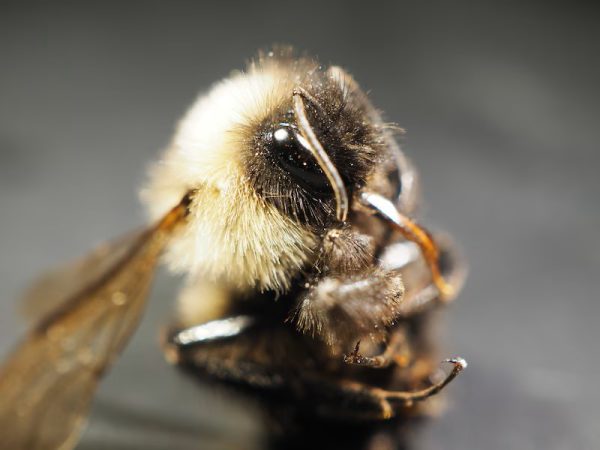
A discovery last summer was absolutely the bee’s knees for Assistant Professor of Biology Clara Stuligross, a bee ecologist who studies how the insects respond to environmental stressors such as climate change and pesticides. She and alumnus Nathan Rank ’83 confirmed that Rank, while visiting Kalamazoo, had found a deceased rusty-patched bumble bee, a species that hadn’t been officially documented in Michigan since 1999, when the insects were last found in Washtenaw County. Ongoing surveys in the area now are looking for more rusty-patched bumble bees, but so far, only the one individual has been found.  

Rusty-patched bumble bee magnified
Assistant Professor of Biology Clara Stuligross and alumnus Nathan Rank ’83 magnified a recently deceased bumble bee to confirm that the insect Rank found in a local driveway is a rusty-patched bumble bee.

3. Grant Backs Williams Lab, Brain Disease Research 

After nearly a decade of research, Kurt D. Kaufman Associate Professor of Chemistry Dwight Williams has been awarded a three-year grant from the National Institutes of Health (NIH) to support his work developing new molecules that could help protect brain cells from dying from neurodegenerative diseases.  

Over the course of the grant, Williams and his students will aim to synthesize and test five families of compounds that could help the fight against conditions such as Parkinson’s disease, Huntington’s disease and glaucoma. 

Faculty member Dwight Williams stands in his lab with four of the students who worked under his guidance this summer
Dwight Williams, the Kurt D. Kaufman Associate Professor of Chemistry at Kalamazoo College, has been awarded a three-year grant from the National Institutes of Health (NIH) to support his work developing new molecules that could help protect brain cells from dying from neurodegenerative diseases.

2. Civic Engagement Leader Seeks Students, Faculty, Local Partners 

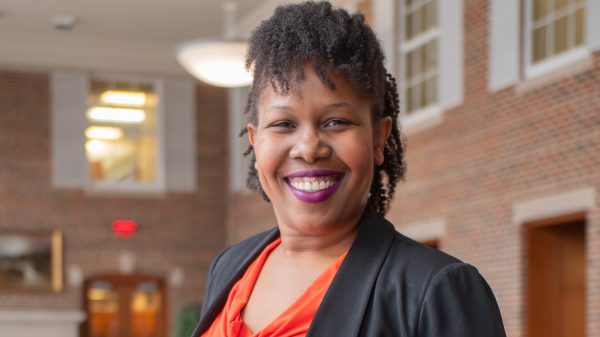
When Sashae Mitchell ’13 stepped into her new role as director of the Mary Jane Underwood Stryker Center for Civic Engagement last year, it was a meaningful return to the place where her journey in civic and global education began. Mitchell holds a master’s degree in international education and development from the University of Pennsylvania and earned her bachelor’s in mathematics right here at K. We caught up with her to learn more about what inspired her return and her vision for the center’s future.  

New Civic Engagement Leader Sashae Mitchell, faculty 2025
As the leader of the Mary Jane Underwood Stryker Center for Civic Engagement, Sashae Mitchell ’13 wants to expand its impact while sharing its efforts nationally and even globally.

1. Zorbo Named MIAA Football Coach of the Year 

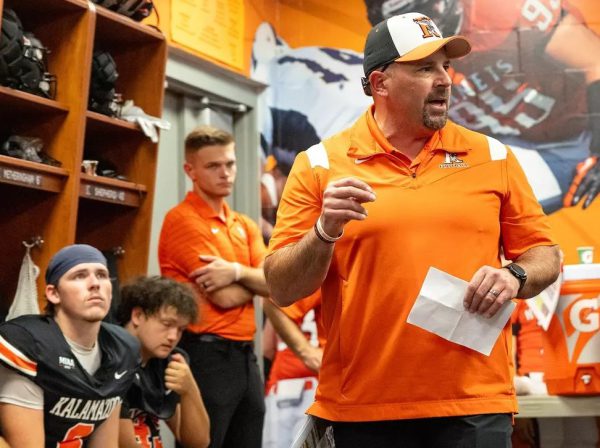
Jamie Zorbo ’00 was named the 2025 MIAA Football Coach of the Year, earning the conference’s top honor in his final season leading the Hornets. The recognition came just weeks after Zorbo announced that he would be stepping down from his coaching role to fully focus on his position as the College’s director of athletics, a role he has held since June 2024. 

During Zorbo’s tenure, Kalamazoo achieved 59 career wins, including a standout 7-3 campaign in 2018—the program’s highest win total since 1983. Under his guidance, the Hornets also produced 72 All-MIAA selections, developing student-athletes who excelled both on the field and in the classroom. 

Jamie Zorbo coaching, faculty 2025
Jamie Zorbo ’00 was named the MIAA Football Coach of the Year.

Pitcher’s Thistle Protectors Collaborate on Beaver Island

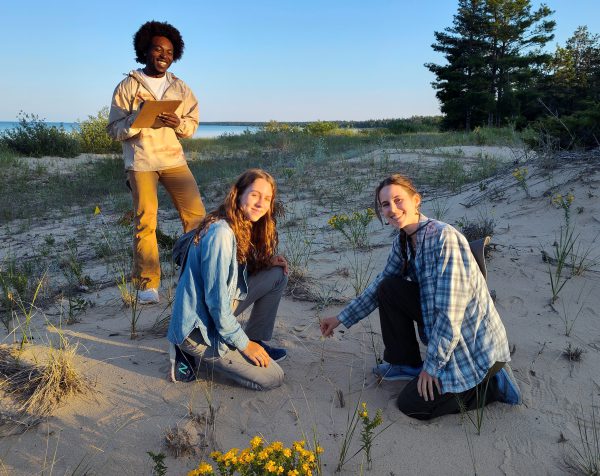
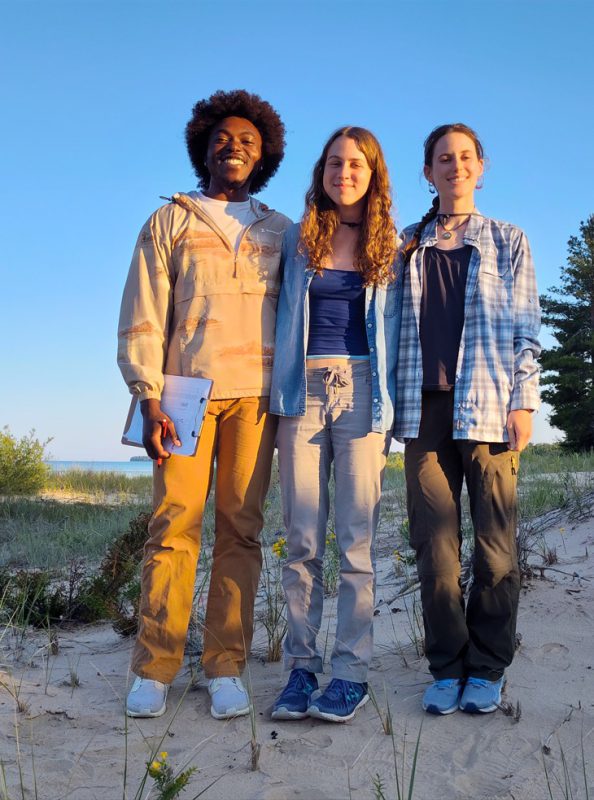
Three students taking notes on plants on Beaver Island
By the end of the summer, Caleb Jenkins ’26, Willow Hayner ’27 and Mairin Boshoven ’25 had recorded data on nearly a thousand Pitcher’s thistle seedlings, some barely a half-centimeter tall, on Beaver Island.
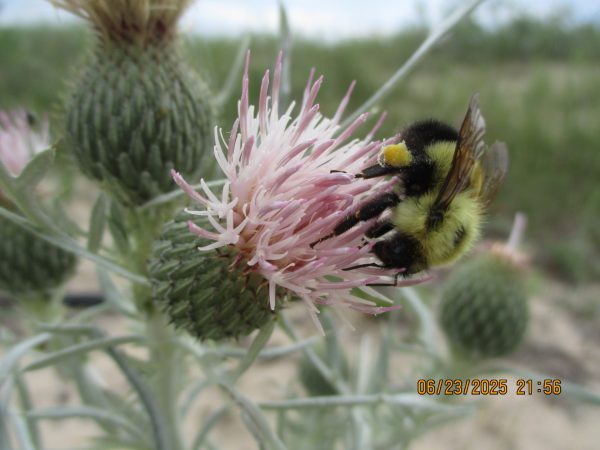
A bee gathers pollen from a Pitcher's thistle plant
Pollinators such as bees, monarchs and hummingbirds rely on Pitcher’s thistle for food in the early spring before much else blooms.

Surrounded by the waters of Lake Michigan, between the state’s Upper and Lower Peninsulas, three Kalamazoo College students spent their summer with Professor of Biology Binney Girdler, studying a small species of plant that fulfills big roles.

Caleb Jenkins ’26, Willow Hayner ’27 and Mairin Boshoven ’25 devoted their days to researching and protecting Pitcher’s thistle, a rare and threatened yet important plant on Beaver Island, where the students spent a couple of months at a remote hub for scientific activity: Central Michigan University’s Biological Station.

Pitcher’s thistle grows only on the shores of the western Great Lakes, Jenkins said, where it began to spread thousands of years ago as a huge glacier traveled northward, depositing minerals and sand.

“As the glacier melted, it gave us our Great Lakes,” Jenkins said. “From that, Pitcher’s thistle established roots deep within the Earth. As it grows, it collects more and more sand as the sand drifts and storms wash up deposits, assisting dune grasses in building dunes. Those dunes have developed into areas like the Sleeping Bear Dunes and Wilderness State Park.”

Studies in Wisconsin have shown that entire swaths of Pitcher’s thistle have been wiped out by an invasive weevil called Larinus planus, which destroys the plant’s seeds. Beaver Island is unique because researchers have yet to find any evidence of the weevils there. Their absence helps make the island an ideal spot for the pollinators that rely on Pitcher’s thistle for food in the early spring before much else blooms. It also provided Jenkins, Hayner and Boshoven with a perfect environment for their research, conducting tests and measurements that contribute to the plant’s conservation.

Even the deer on Beaver Island, whose growing numbers are hurting populations of other plants, seem to be having less impact on Pitcher’s thistle.

“The seedlings of the Pitcher’s thistle tend to be the most vulnerable,” Boshoven said. “The deer might step on a few or bite them, but the plants tend to be very resilient. Humans would be much more of a threat to the plant’s population than deer.”

CMU’s Biological Station is a nucleus for scientists and students from across the country. Hayner said K’s representatives were collecting data during the day while evenings brought talks from visiting researchers from organizations like the National Oceanic and Atmospheric Administration (NOAA) and the Michigan Natural Features Inventory.

“These groups often gave lectures on their research, and it was amazing to meet them and learn about their work,” Hayner said. “We also got to work in Binney’s lab, right next to the shores of Lake Michigan. As an added bonus, we were able to participate in the end-of-summer open house and poster show to present our research to the public.”

Much of the team’s daily work involved close observation—very close observation.

“There was a lot of crawling involved,” Jenkins recalled with a laugh. “We’d be hunched over the plants in the sand, and when people walked by asking what we were doing, we’d pop our heads up like groundhogs and say, ‘We’re measuring plants!’”

By the end of the summer, the group had recorded data on nearly a thousand seedlings, some barely a half-centimeter tall. Beyond the data, the project connected the students with the island community, whose residents deeply value Beaver Island’s natural plant and animal systems and appreciate research on species vital to the island’s ecology.

“You don’t have to convince anyone there why conservation matters,” Boshoven said. “They already know. One of my favorite moments was sharing our findings at the open house and seeing how excited people were about the research. It felt like conservation was happening in real time.”

All three students credit Girdler for fostering an environment that balances challenges with encouragement.

“Binney never pressured us just to produce results,” Jenkins said. “I could lay out what I’d learned and what I understood and say, ‘Here’s where I am.’ She was more than happy to meet us in the middle. That level of understanding is an extra bit of humanity you usually don’t get in academic settings.”

“She met us where we were and encouraged us to keep going, even when things went wrong.” Hayner added. “She’s an outstanding mentor. I learned so much just being part of her lab and hope to continue working with her on data analysis this year.”

For Boshoven, the experience has been transformative.
“My first summer there opened my eyes to what fieldwork could be,” she said. “Now I know I want to go to grad school not just for the degree, but for the process of doing the research. It really taught me how and why I want to structure my work in the future.”

Boshoven expects such enthusiasm to spread to the next generations of K students.

“The program Dr. Girdler has built is so well thought out,” Boshoven said. “Academically, it’s a great experience; she will follow it through with you all the way to publishing research, which is impressive for undergraduates. It has made me an exponentially better researcher. On the other hand, it was also just a great time.”

Jenkins said the experience solidified his own dream of becoming a conservation biologist.

“Anyone who knows me knows I’m a plant guy,” he said. “If I can spend the rest of my life studying plants and teaching people about them, I absolutely will.”

Hayner, too, found the project has influenced her long-term goals.

“I’m not totally sure where I’ll end up, but I know I want to keep doing fieldwork,” she said. “This showed me how passionate I am about plant ecology.”

Three students research Pitcher's thistle on Beaver Island
Jenkins, Hayner and Boshoven joined Professor of Biology Binney Girdler this summer on Beaver Island to research Pitcher’s thistle, a threatened species of plant.
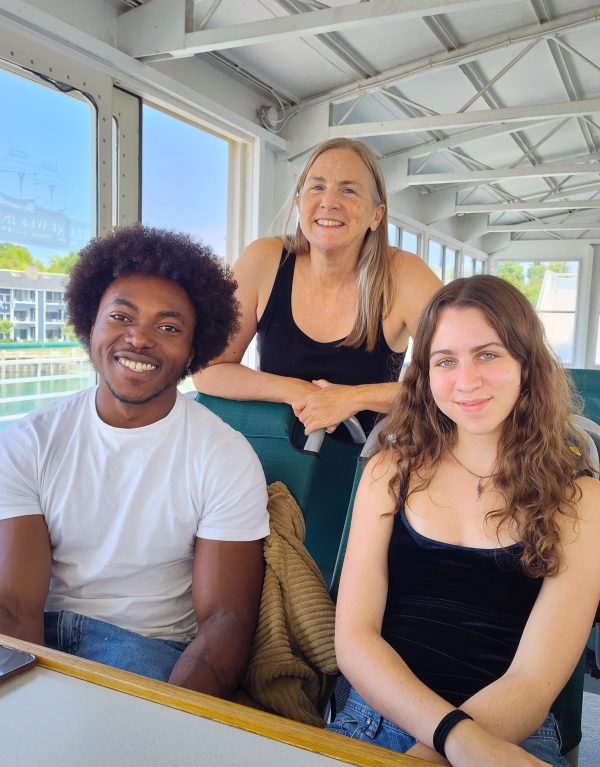
Three people on a ferry to Beaver Island
The remote location of Beaver Island required the research team to take a ferry from Charlevoix, Michigan, to their summer home.

Professor Proud of Students, Beaver Island Research

Professor of Biology Binney Girdler said she’s proud of all of her students who perform research, especially Jenkins, Hayner and Boshoven, who did so in such a remote place.

“From Kalamazoo, it’s a three-and-a-half-hour road trip followed by a two-hour ferry ride,” she said. “There is one small grocery store on the island, one gas station where gas is $6 a gallon and four restaurants. But on the plus side, the students had 300 feet of sugar sand Lake Michigan beach at their disposal, and the lake to go jump in whenever they wanted. I was incredibly proud of each of them for their creativity and dedication. Each student had their own piece of the puzzle. I was really impressed with what a great team these three scholars made. Even though they each had ownership of a different part of the project, they coordinated their work well so that they traded jobs and supported each other through challenges, especially when I was off-island. My students were professional and engaging, and community members told me what a great job they did presenting.”

What is Pitcher’s Thistle?

  • Named after: Zina Pitcher, a U.S. Army surgeon at Fort Brady and an amateur naturalist. He discovered the plant in the 1820s along Lake Superior.
  • Scientific name: Cirsium pitcheri or CIPI for short.
  • Range: Native only to the dunes of Lakes Michigan, Huron and Superior.
  • Status: Federally threatened in the U.S., federally endangered in Canada.
  • Ecological role: Stabilizes sand dunes with deep roots; blooms early to feed pollinators such as bees, monarchs and hummingbirds.
  • Biggest threat: Shoreline development and a seed-eating invasive weevil, Larinus planus.
  • Why Beaver Island matters: It’s one of the few places with no reports of weevil damage, offering a refuge for healthy populations.
  • Kalamazoo College connection: Professor of Biology Binney Girdler and her students have studied the species for years, contributing to its conservation.

K Welcomes New Faculty for 2025

Kalamazoo College is pleased to welcome the following faculty members to campus this fall: 

Visiting Assistant Professor of Biology Bonnie Ebendick

Ebendick arrived at K after earning her Ph.D. in biological sciences in August from Western Michigan University (WMU). She previously earned a bachelor’s degree in biochemistry and molecular biology/biotechnology, with a specialization in microbiology, from Michigan State University.

Before attending WMU, Ebendick worked as a research scientist at Michigan State, the University of Toledo and Iontox, LLC, beginning in 1999. Her teaching experience includes positions as a lecture teaching assistant and recitation teaching assistant at both Michigan State and WMU.

Visiting Assistant Professor Bonnie Ebendick
Visiting Assistant Professor of Biology Bonnie Ebendick joins the Kalamazoo College faculty.

Visiting Assistant Professor of English Kevin Fitton

Fitton recently earned his Ph.D. in English creative writing from WMU. He also holds a bachelor’s degree in English from Hope College, a master’s degree in New Testament from Gordon-Conwell Theological Seminary, and a Master of Fine Arts from Bennington College.

Before arriving at K, he taught first-year writing, children’s literature and creative writing workshops as a graduate assistant at WMU; courses in creativity and literature at Grand Valley State University; and academic writing at Olivet University.

Visiting Assistant Professor of English Kevin Fitton
Visiting Assistant Professor of English Kevin Fitton joins the Kalamazoo College faculty.

Assistant Professor of Chemistry
and Biochemistry Andrew Jensen 

Jensen arrived at K from the University of Michigan, where he was a postdoctoral researcher, a mentor for graduate and undergraduate researchers, and a guest lecturer for courses in chemical analysis, physical properties of analysis, environmental chemistry and mass spectrometry. He previously served as a graduate research assistant at the University of Colorado, Boulder and an undergraduate research assistant at Davidson College in North Carolina. 

Jensen earned a Ph.D. in analytical, environmental and atmospheric chemistry at the University of Colorado, Boulder and a bachelor’s degree in chemistry from Davidson College. 

Assistant Professor of Chemistry and Biochemistry Andrew Jensen
Assistant Professor of Chemistry and Biochemistry Andrew Jensen joins the Kalamazoo College faculty.

Visiting Assistant Professor of Economics and Business Matthew Schultz 

Schultz has prior teaching experience at Kellogg Community College, where he was an adjunct instructor for business courses specializing in economics; Lakeview School District, Climax-Scotts Community Schools and Battle Creek Central High School, where he taught marketing, accounting, entrepreneurship, business law, finance, business management, career preparation and computer science; and with the MiSTEM Network/Code.org, where he facilitated teacher training for the AP Computer Science Principles curriculum. 

Schultz received a Ph.D. in education from Indiana Wesleyan University, a master’s degree in career and technical education from WMU, and both a Master of Business Administration and a bachelor’s degree in business management from Cornerstone University. 

Visiting Assistant Professor of Economics and Business Matthew Schultz, new faculty, 2025
Visiting Assistant Professor of Economics and Business Matthew Schultz joins the Kalamazoo College faculty.

Assistant Professor of Spanish Language and Literature Brayan Serratos García

Serratos García recently earned a Ph.D. in Spanish and Portuguese Language and Literature from Vanderbilt University, where he also completed a master’s degree in the same field. He holds a bachelor’s degree in World Languages and Cultures with an emphasis in Spanish from Iowa State University. His research explores transoceanic connections among Europe, Asia, and the Americas during the Early Modern period, with particular emphasis on the contributions of Indigenous and local knowledge-producers.

Serratos García has held teaching positions as instructor, adjunct faculty, teaching assistant, and course coordinator at Vanderbilt University and Fisk University, as well as a teaching appointment at Beijing Normal University. He has taught a wide range of courses from introductory language classes to advanced seminars on Spanish and Portuguese literature and culture. In addition to Spanish and Portuguese, he speaks Chinese and Italian and has lived, studied, and conducted research across Latin America, Asia, Europe, and the United States.

Assistant Professor of Spanish Language and Literature Brayan Serratos García, new faculty 2025
Assistant Professor of Spanish Language and Literature Brayan Serratos García

Grant Backs Williams Lab, Brain Disease Research

For Dwight Williams, the Kurt D. Kaufman Associate Professor of Chemistry at Kalamazoo College, persistence has paid off. After nearly a decade of research and one unsuccessful grant application, Williams has been awarded a three-year grant from the National Institutes of Health (NIH) to support his work developing new molecules that could help protect brain cells from dying from neurodegenerative diseases.  

The grant, worth nearly $385,000, is a milestone for both Williams and his students, who have played a central role in shaping the project since its inception.  

“After an unsuccessful application in 2018, I went back to the basics and sought guidance and mentoring from my networks, which ultimately strengthened the resubmission,” Williams said. “Receiving this award is such an encouragement, not only for the research ahead, but also for the opportunities it generates for Kalamazoo College’s students.”  

Tackling Neurodegeneration  

Williams said that while neurodegenerative diseases like Alzheimer’s, Parkinson’s, Huntington’s and Glaucoma each begin in different ways, they have been found to share a common cellular process that significantly damages or kills brain cells. His lab focuses on ways to block or reduce this process, extending the health and function of brain cells.  

Over the course of the grant, Williams and his students will aim to synthesize and test five families of compounds, each consisting of several unique molecules, for their neuroprotective potential. Results will be shared with the broader scientific community through peer-reviewed publications and conference presentations.  

Expanding Opportunities for Students  

The NIH funding represents more than just progress in the lab. It directly supports K students by providing stipends for two of them each summer for the next three years, ensuring that financial barriers don’t prevent their participation in research.  

“Many of our students want to engage in scientific research, but limited funding has often been the biggest barrier,” Williams said. “This award helps bridge that gap by expanding access to meaningful research experiences.”  

In addition to stipends, the grant will allow the lab to acquire new equipment and instrumentation, speeding up experiments and enabling access to data that previously wasn’t possible for the lab to collect. These upgrades, Williams said, will help his students grow as independent scientists while working on a project with real-world significance.  

Williams defines success in part by the progress of his student researchers. His aim is to help them strengthen their scientific identity, deepen their research independence, and prepare for graduate school, professional careers and leadership roles.  

“Being awarded this funding shows the scientific community the incredible talent and aptitude of the young scholars here at K,” Williams said. “The majority of the data used in this proposal was produced by our students. That is very impressive to me.”  

Dwight Williams stands in his lab with four of the students who worked under his guidance this summer
Dwight Williams, the Kurt D. Kaufman Associate Professor of Chemistry at Kalamazoo College, has been awarded a three-year grant from the National Institutes of Health (NIH) to support his work developing molecules that could help protect brain cells from neurodegenerative diseases. The grant is a milestone for both Williams and his students, who have helped shape the project.

Williams Thanks …

“I want to thank my many mentors, Dr. Yan Zhang and Dr. Jill Bettinger of Virginia Commonwealth University; Dr. Laura Furge; and Dr. Syliva Fitting of UNC-Chapel Hill, who have helped me bring this together. I am also deeply grateful to every young scholar who has contributed to this project over the years. Their dedication and creativity have been essential to moving the work forward. I am especially thankful to:  

  • Suma Alzouhayli ’17  
  • Myles Truss ’17  
  • Rachel Chang ’18  
  • Natalie Hershenson ’18  
  • Christina Keramidas ’18  
  • MinSoo Kim ’18  
  • McKinzie Thiede ’19  
  • Madeline Harding ’22    
  • Skyler Rogers ’23  
  • My-Anh Phan ’23  
  • Rhys Koellmann ’24  
  • Jenna Beach ’24  
  • Cassy Bennett ’25  
  • Katya Koublitsky ’25  

Thank you for sharing your skills and talents with the Williams Lab and for contributing uniquely to this project since its inception. This award is a reflection of your hard work.” 

Since Williams arrived at K in 2015, he has mentored dozens of students in the lab, recalling each by name and recognizing the role they played in advancing the work. “Their dedication and creativity have been essential to moving the work forward,” he said. “This award is a reflection of their hard work.”  

Persistence and Gratitude  

Williams also acknowledged the challenges of securing federal research support at a time when funding is increasingly limited. The lab’s first NIH application in 2018 was administratively withdrawn and rejected. The resubmitted proposal, sent in February 2024, required patience while awaiting the decision.  

“Knowing that the federal funding landscape is changing only reinforces the necessity of persistence, perseverance and patience,” Williams said. “Things are going to be very different moving forward, but I am continually encouraged by our students because I know they can face tough challenges, execute excellent science and solve big problems by working together—all while having fun and building community along the way.”  

Williams added that his faith has guided him throughout the process.  

“I must first thank my Lord and Savior, Jesus the Christ,” he said. “Without Him, this opportunity would not have been possible.”  

He also expressed gratitude to mentors at Virginia Commonwealth University, the University of North Carolina-Chapel Hill and K, as well as to colleagues such as former Director of Faculty Grants Jessica Fowle ’00.   

Looking Ahead  

For Williams, the NIH grant represents both an achievement and a launching point. It will allow him to pursue ambitious research goals, expand opportunities for student scientists, and share discoveries that might one day contribute to new treatment strategies for people around the world.  

“The work supported by this grant has the potential to benefit people far beyond our campus,” Williams said. “And the students engaged in this work will carry forward skills that will influence communities and fields for years to come.”  

K Awards Two Employees with Lucasse, Ambrose Honors

Kalamazoo College today honored one faculty member and one staff member with two of the highest awards the College bestows on employees. Professor of Mathematics Eric Barth received the 2025–26 Florence J. Lucasse Lectureship for Excellence in Teaching, and Campus Safety Officer Adam Kaur was named the recipient of the W. Haydn Ambrose Prize for Extraordinary Service. 

Barth has served K for more than 28 years as a department chair, assistant provost, first-year class dean and director of the dual-degree engineering program. He has held his professor title since 1997. During the pandemic, he was a leader in providing resources to faculty about effective online teaching. 

Barth was granted K’s Outstanding Advisor Award in 2019. He also was a College leader in developing a partial-unit course to help struggling students develop the skills for academic success through a Howard Hughes Medical Institute (HHMI) grant awarded to K in 2018. 

Nominators said Barth’s teaching exemplifies a holistic commitment to student learning and success. Through course feedback, students have described him as being passionate, encouraging, supportive and engaging while he strives to get the best out of every student. A ceremony to confer the Lucasse Fellowship traditionally occurs in the spring term, during which the honored faculty member speaks about their work. 

Kaur has worked at K since 2021. Nominators said his varied background—including a degree in education and a previous career in hospitality—gives him a broad range of skills. He’s also kind, helpful and thoughtful with tremendous foresight and an empathetic ear as he handles emergent situations calmly, efficiently and expertly with optimism in challenging circumstances. His presence sets a positive tone for students to interact with Campus Safety while making K a better place to live, work and learn. 

Kaur’s interests extend beyond his work to the campus community. He regularly attends Hornet athletic contests, and he is something of a legend for his remarkable rapport with K’s squirrel population. 

The Ambrose Prize is named after W. Haydn Ambrose, who served K for more than 20 years in a variety of roles, including assistant to the president for church relations, dean of admission and financial aid, and vice president for development. Ambrose was known for being thoughtful in the projects he addressed and treating people with respect. In addition to a financial award, Kaur has earned a crystal award to commemorate the achievement and an invitation to sit on the Prize’s selection committee for two years. 

Congratulations to both of the honorees.  

Kalamazoo College President Jorge G. Gonzalez congratulates Professor of Mathematics Eric Barth on earning the 2025-26 Lucasse Award
Kalamazoo College President Jorge G. Gonzalez (left) congratulates Professor of Mathematics Eric Barth on earning the 2025–26 Florence J. Lucasse Lectureship for Excellence in Teaching.
Campus Safety Officer Adam Kaur received the 2025 W. Haydn Ambrose Prize for Extraordinary Service from President Gonzalez
Campus Safety Officer Adam Kaur receives the 2025 W. Haydn Ambrose Prize for Extraordinary Service from President Gonzalez.

Research Builds Student Skills, Advances Science in Summer

Summer research students and faculty from the Department of Chemistry and Biochemistry
About 25 students and five faculty members from the Department of Chemistry and Biochemistry performed summer research together this year.

Summer was not a laid-back break for many of the students and faculty who put the sciences in the liberal arts and sciences at Kalamazoo College. It’s traditionally the time of year when students and professors often collaborate in Dow Science Center labs to advance research projects that could lead to important discoveries for the world.

Take the Department of Chemistry and Biochemistry, for example.

“During the school year, our time to do research is limited,” said Daniela Arias-Rotondo, K’s Roger F. and Harriet G. Varney Endowed Chair in Natural Science, an assistant professor of chemistry. “And while we keep making progress, the summer is when we can really dig deep. When students have uninterrupted time to do this work, we can start looking at more questions. We can go down some rabbit holes that maybe during the school year we avoid because we have less time. It’s fantastic for the students and a transformative experience for them.” 

Student participants often work full-time, with most earning stipends that allow them an immersive experience that builds critical thinking and technical skills. Many of the projects will form the basis of students’ Senior Integrated Projects (SIPs). Some may even result in publications in academic journals or clarify career paths and strengthen graduate school applications. Students also present their findings at national conferences and in peer-reviewed publications, gaining recognition that often extends well beyond campus.

This kind of high-impact learning was on full display this summer through the work of five faculty from chemistry and biochemistry and about 25 students in their labs. The faculty included Assistant Professor of Chemistry Daniela Arias-Rotondo, Associate Professor of Chemistry Blake Tresca, Kurt D. Kaufman Associate Professor of Chemistry Dwight Williams, Dorothy H. Heyl Professor of Chemistry Regina Stevens-Truss and Assistant Professor of Chemistry Cecilia Vollbrecht.

Daniela Arias-Rotondo with her summer research lab students
Bea Putman ’26 (from left), Ava Schwachter ’27, Will Tocco ’26, Kate Suarez ’28 and CJ Aldred ’26 worked with Daniela Arias-Rotondo, the Roger F. and Harriet G. Varney Endowed Chair in Natural Science, who is an assistant professor of chemistry at K.

Daniela Arias-Rotondo

Arias-Rotondo’s synthetic inorganic chemistry lab worked to find ways to convert light into electrical or chemical energy. In the 2024–25 academic year, that work—funded by a National Science Foundation grant—led to national recognition for her along with one of her students, Maxwell Rhames ’25, as they examined what alternative metals could possibly be used to make things like solar panels less expensive. Will Tocco ’26, Bea Putman ’26 and Kate Suarez ’28 continued that work this summer. 
For Putman, the work represents her SIP. She said first-row transition metals such as manganese could hold the solutions she’s seeking because the metals are cheap and Earth abundant. Tocco, meanwhile, praised Arias-Rotondo—affectionately known to her students as Dr. DAR—for her guidance and leadership in the lab.

“A lot of people imagine their boss as a big, scary person who rags on them when they do something wrong,” Tocco said. “Dr. DAR is not like that at all. If something goes wrong, it simply went wrong. It’s all about falling forward and asking, ‘What did you learn? What can you do next time instead?’ It’s very instructive, and as a student, I get to learn a lot. Even when I fail, there’s always a bright side.”

CJ Aldred ’26 and Ava Schwachter ’27 also worked on a project for which Arias-Rotondo earned funding, this time through the ACS Petroleum Research Fund. For this project, molecules they designed acted as catalysts and unlocked chemical transformations through a process called photoredox catalysis. In this case, the transformations involved petroleum byproducts—the waste left behind after crude oil is extracted—and how those byproducts might be used.

Schwachter, much like Tocco, credited Arias-Rotondo for empowering students.

“When you make a mistake, she will ask, ‘Did you die?’ and ‘What did you learn?’” she said. “The mindset of her lab is safety first. That’s the top priority. The next priority is learning and then whether we get the product we expected. We want to move toward our goal, but the top priorities are safety and learning. It’s easy to feel high pressure because you want to succeed, but because the focus is so much on learning and safety, I feel like there’s less.”

Five students with their professor on a sunny day outside Dow Science Center.
Associate Professor of Chemistry Blake Tresca (from left) worked with Jack Bungart ’26, Max Plesscher ’26, Devi DeYoung ’26, Jocelyn Suranyi ’28 and SEED student Rowan Hagenbuch in his lab this summer along with Caleb Moore ’27 (not pictured).

Blake Tresca

In 2024, Tresca earned a National Science Foundation grant that provided three of his lab students with a stipend this summer while also covering the cost of a robot that made their research faster, easier and safer. Together, Jack Bungart ’26, Max Plesscher ’26 and Caleb Moore ’27 used organic compounds called diene amines to create peptoid nanomaterials, which are molecules showing promise in detecting harmful substances in water or people, for example.
In an independent project, Devi DeYoung ’26, a Heyl scholar from Portage, synthesized and computationally modeled peptoids to look for relationships between structural sequences and exhibited properties.
Even high school students occasionally have opportunities at K thanks to Project SEED, the American Chemical Society’s effort to provide lab experiences to underrepresented students. Jocelyn Suranyi ’28 in the past had been one of those SEED representatives and this summer mentored high school senior Rowan Hagenbuch in Tresca’s lab.

The two did similar work, but on different projects. Suranyi synthesized peptoids that will be used in the lab of Stevens-Truss. Hagenbuch synthesized peptoids that could help remove PFAS chemicals from water. PFAS are widely used in various consumer and industrial products due to their ability to repel water, grease and stains.

“I enjoy doing this work because it helps me develop more lab skills and working with people,” Hagenbuch said. “In a high school lab, I don’t necessarily get to experience what I’m doing this summer, so it helps me build my confidence.”

Suranyi was thrilled with her opportunities to perform research and with a chance to get to know Hagenbuch.

“I know what it’s like to come in as a random high school student and she’s understanding so much more than I did,” she said. “I look at her and I think how happy I am that she’s doing so well. It’s fantastic to work with her.”

Suranyi plans to formally declare a chemistry major and Chinese minor during her sophomore year, which begins this fall. She also enrolls as a guest student at Western Michigan University, which allows her to perform with the Bronco Marching Band.

“I’ve talked to people at Western and I’ve told them I’ve been doing lab research for the past three years,” Suranyi said. “They say, ‘That’s a crazy good experience. I can’t believe K lets so many undergraduates do that and without prior experience.'”

11 students with their professor on a sunny day outside Dow Science Center
Trustin Christoper ’26 (back row, from left), SEED student Lizbeth Mares-Castro, Olivia Cannizzaro ’26, Kurt D. Kaufman Associate Professor of Chemistry Dwight Williams, Landrie Fridsma ’27, Isaac Duncan ’27 and Jake Asnis ’26, along with Alyson Ramillano ’26 (front row, from left), SEED student Dorian Roberts, Anni Schnell ’26, Julia Kozal ’27 and Eleanor Andrews ’26 were representatives of the Williams lab this summer.

Dwight Williams

You might’ve heard that too many cooks in the kitchen can spoil a dinner, but the same theory will never apply to the Williams lab at K.

Twelve students, the largest of any lab in the Department of Chemistry and Biochemistry this summer, worked with the associate professor of chemistry fondly known by students as Dr. D.

Those students combined their efforts on three projects, Williams said. One project designed novel antibacterial agents to hopefully make headway against antimicrobial resistance. Another designed molecules that might one day treat neurodegenerative diseases by inhibiting a specific pathway. The last designed new molecules that might be useful for treating Chagas disease and diabetes.

Alyson Ramillano ’26, a Posse Scholar from Los Angeles, was one of the students working in the first group. Specifically, she investigated the natural product Aquamyacin G, an antibiotic showing promise to see whether it can be made synthetically.

“Right now there is a need to identify novel antibiotics because antibiotic resistance has been an ongoing benefit crisis, but there isn’t a lot of financial incentive to invest in antibiotic discovery,” Ramillano said. “From my understanding, that motivated the Williams lab to look into an affordable synthetic that would lower the barriers of entry for further research into this compound.”

Ramillano added that she never would’ve thought she would be doing such research when she started college. Eleanor Andrews ’26, a biology major, didn’t originally plan on doing research this summer in the Williams lab either.

“I was going to do some shadowing at Bronson Hospital because I want to be a nurse,” Andrews said. “But a soccer teammate of mine worked in this lab last year, and I went and listened to her present her SIP. I fell in love with the idea of working here. I loved her project with how she was working to find things that fight antibiotic resistance.”

Andrews added that her lab work consisted of mixing two molecules together to see whether she can create an antibiotic.

“This excites me because it’s really hands on,” she said. “I’m a hands-on kind of person. The thought of sitting back isn’t really for me, so I’m trying find a solution by working on it and figuring out an interesting puzzle.”

Emily Dalecki ’26, Morgan Paye ’26, Dorothy H. Heyl Professor of Chemistry Regina Stevens-Truss and Anoushka Soares ’26 worked together in the Stevens-Truss lab this summer
Emily Dalecki ’26, Morgan Paye ’26, Dorothy H. Heyl Professor of Chemistry Regina Stevens-Truss and Anoushka Soares ’26 worked together in the Stevens-Truss lab this summer.

Regina Stevens-Truss

The Stevens-Truss lab worked in drug-discovery testing to help figure out whether science might be able to develop new antibiotics. She said her students explore by investigating whether antimicrobial peptides that are about 26 to 30 amino acids in length can kill or prevent bacteria from growing. They also analyzed the hybrid compounds synthesized in the Williams lab and the peptoids developed in Tresca’s lab to see whether they can kill bacteria.

“We’ve started working with a whole subset of bacteria known as ESKAPE pathogens,” Stevens-Truss said. “Each letter in ESKAPE stands for a different microorganism that has at least one antibiotic resistance. We know that you can go to the hospital and take penicillin because it cures certain things. But there are some penicillin-resistant bacteria that penicillin won’t kill, and many are now becoming resistant to more than one antibiotic. We’re looking at compounds now to see which of them can still kill antibiotic-resistant bacteria.”

Three of Stevens-Truss’ students—Emily Dalecki ’26, Morgan Paye ’26 and Anoushka Soares ’26—are hoping to eventually go to medical school with such research being vital to their admission applications.

“Research is just something I’ve always enjoyed,” said Soares, a Heyl scholar from Portage. “It’s not something I had a lot of experience with outside high school, so I was curious about it when I got to K. As a first-year student, Dr. Truss had me in General Chemistry II and asked me if I wanted to do research. I told her that would be perfect for me because I was getting more interested. I thought I was going to be a biologist until Dr. Truss made that offer. I thought it was fantastic, all-encompassing and something I wanted to look into more.”

Paye said she was in a science enrichment program last year making this summer a big change for her thanks to a better overall experience and more collaboration.

“Dr. Truss had offered me a spot in her lab so I could start my SIP research when I had never actually had her as a professor before,” Paye said. “In fact, it was the first time we had ever met, so it was amazing that she had offered me the spot. We blend super well together.”

Dalecki said K is a place where students aren’t just numbers, so faculty know students’ names and are interested in student growth. Dr. Truss, however, is special.

“I felt like Dr. Truss really wanted me to become confident in my lab work and as a chemist,” she said. “I really appreciated that. I’ve had a lot of things going on outside of K that some of my professors didn’t notice. But Dr. Truss noticed that and cared about me. She wanted me to come out of my shell and believe in what I’m doing.”

What Students Said
About Summer Research

Portrait of summer research student Julia Kozal
Julia Kozal ’27

“I would say that working in the lab provides the best opportunity for undergraduates to know themselves better as workers and scientists. I’ve learned that I work best when I’m in the lab constantly and not taking breaks outside just so I can get in the flow of the work. It’s also important to build relationships with your classmates. I think biochemistry can be very intimidating as a major, but if you get to know the people you’re working with well, you have a built-in group of friends for the summer.”

Julia Kozal ’27

Summer research student Landrie Fridsma ’27
Landrie Fridsma ’27

“I took Organic Chemistry this year with Dr. D. He helped me challenge myself in a way I never have before and do things I never thought I would be able to do. When I heard about his research, I was intrigued and excited to keep learning in that way. I learned how to problem solve in his class and it has continued in the lab. I’m learning life skills that I don’t think I would get anywhere else.”

Landrie Fridsma ’27

Anni Schnell ’26
Anni Schnell ’26

“I think being in the lab has helped me develop a new appreciation for patience. It gives me a different kind of determination when I have to figure something out. I sometimes fail, but I can figure out how to keep getting back on track, and with having other good students in the lab, it’s a low-pressure environment.”

Anni Schnell ’26

Olivia Cannizzaro ’26 working in the lab
Olivia Cannizzaro ’26

“I’m familiar with this department and all the professors are wonderful. Their projects are super interesting and definitely have implications for the future. It’s fulfilling to be a part of something where long-term applications are important. It’s also a good time. You get to know the professors during the year, and then you spend the summer with them. It’s a really good way to have references in the future, because you spend so much time with them. They know you really well. They can speak to your skills. It’s important to have these people for your future as well beyond K.”

Olivia Cannizzaro ’26

Portrait of Jake Asnis
Jake Asnis ’26

“I’ve been playing lacrosse since I was in second grade, and I had a teammate in high school who just graduated from K. He told me to reach out to the coach to see if I could play here. It’s definitely a great opportunity to be here because we get to do research. I’m a chemistry major, so with this research, I can get ready for grad school and do my SIP. It’s tough to do that during the academic year. With lacrosse, we have fall ball through about Week 7, and we’re practicing three to four times a week with other classes on top of that. We then start practicing for the spring sport in January and we go all the way through April, so the summer is a perfect time to do research where we can. We don’t have to worry about other academics and we can focus solely on research.”

Jake Asnis ’26

Isaac Duncan ’27
Isaac Duncan ’27

“I applied to a bunch of small schools similar to K, but specifically, I really liked that K has an excellent track record when it comes to sending students to medical and graduate schools. Like a lot of small schools, you can really get to know your professors here. I particularly love my professors in the chemistry department, they’re all just wonderful to be around. Sometimes it’s frustrating because the chemistry isn’t easy, but there’s always help if you look for it. All my peers are incredibly kind, and everyone is struggling together! I never feel like I’m completely on my own.”

Isaac Duncan ’27

SEED student Dorian Roberts

“I thought being in a lab this summer would be a great opportunity to get a jump start on learning how college labs work and how I can better plan for time management. I like how forward Dr. D is with his lessons. I appreciate how he doesn’t sugar coat things, because I think that can sometimes cause overconfidence in some areas or make you not want to better yourself, so he allows me to grow as a person and as a scientist.”

SEED student Dorian Roberts;
will attend Eastern Michigan
University in fall

Bea Putman presents her chemistry summer research at the Upjohn Learning Center Commons
Bea Putman ’26

“It’s rigorous, but I think it’s interesting. I’m at college to learn and I want to be proud of my SIP. I want to feel like I put a lot of work into it, and that I used my degree and the brain that I earned from my college degree to put forth this pinnacle of everything that I’ve learned. I wanted to make sure that it accurately relayed all the work that I’ve been doing throughout my years here.”

Bea Putman ’26

Cecilia Vollbrecht

Teige Bredin ’28 and Luke Barnum ’27 have gone from taking their first chemistry course, General Chemistry I, to working in Vollbrecht’s lab in less than a year. Alongside Vollbrecht, they wanted to develop an instrument that can analyze their materials and quickly test how successful they are at capturing pollutants from water or the air.

Some of the pair’s work might have seemed like engineering and physics as much as it did chemistry.

“There’s a bunch of critical thinking where they need to ask themselves, ‘How do we make this instrument work?’” Vollbrecht said. “It’s not just a recipe to follow. We have to figure out how to make these parts fit together, optimize parts, and troubleshoot unexpected problems. They’re learning how to think on their feet while putting together different aspects of their research. We’re not just using our chemistry skills, but physics and math. My students are learning a lot of coding, which I think is fun and a good skill for the future, too.”

Bredin began the summer by using an optical setup and spectrometer to separate light into individual wavelengths. Barnum optimized the mirrors by attempting to make them smaller and even more reflective, so the wavelengths could tell them more about the materials they analyze.

Cecilia Vollbrecht with her lab students Teige Bredin and Luke Barnum
Teige Bredin ’28 (left) and Luke Barnum ’27 (right) worked with Assistant Professor of Chemistry Cecilia Vollbrecht in her lab this summer.

The partners admitted they won’t necessarily find a lot of the answers they want during their time at K. Their subject matter might require years of research, although their summer duties were more than worthwhile to them.

“I’m trying to learn not only about the materials, but the science behind them and our research culture to preview whether I would survive and enjoy a job in this kind of environment,” Barnum said.

And despite being only done with his first year, Bredin knows attending K was a smart decision for him.

“Kalamazoo College has definitely been the right place for me because I’m getting these kinds of opportunities,” he said. “I don’t think I would be meeting the same people and be exposed to the same kinds of things had I not gone here.”

Beyond the Research Lab

The summer culminated in the annual Summer Science Symposium, where students presented their research to peers, faculty and the public. It provided a moment of pride and reflection, along with a celebration of the countless hours spent in the lab to give the faculty a reason to feel good and the students to feel accomplished.

“I was just talking with students about K versus a big school,” Tresca said. “We have a lot of spots for students per capita. In the senior class alone, at least half of our majors are doing research for their SIPs this summer in chemistry or biochemistry. Comparatively, big schools have a very small percentage of their students in labs. That makes us special.”

“Students take ownership of their projects during summer in a way that we don’t see at the very beginning, because as they keep going, they start realizing that they have agency,” Arias-Rotondo said. “They start making their own mistakes, their observations and learning from those mistakes as they come up with alternatives, possible solutions and things they want to try. That’s when they really take ownership of their projects and when they really grow as scientists. They stop being a pair of hands, doing what we tell them to do, and they really become scientists.”

Two people attending the summer research symposium
Corey Garrison ’26 was among the students presenting his research at the Summer Science Symposium.

Complex Systems Group Welcomes K Professor to Board

Péter Érdi, the Henry Luce Professor of Complex Systems Studies, has been named to the Board of Directors for the International Society for the Systems Sciences (ISSS), where he will serve two years as the Secretary and Vice President of Protocol.

Among the first and oldest organizations devoted to interdisciplinary inquiry into the nature of complex systems, ISSS was originally founded in 1954 as the Society for General Systems Research. ISSS’s first purpose was to encourage the development of theoretical systems that are applicable to more than one subject of study.

Since, ISSS has expanded its scope beyond purely theoretical and technical considerations to include the practical application of systems methodologies in problem solving. It also provides a forum where scholars and practitioners from across disciplines—representing academic, business, government and non-profit communities—can share ideas to learn from each other.

Érdi received the 2018 Florence J. Lucasse Fellowship for Excellence in Scholarship, the highest award bestowed by K’s faculty, which honors the recipient’s contributions in creative work, research and publication. He has dozens of publications from his time at K, including three books since 2019, Ranking: The Hidden Rules of the Social Game, We All Play (2019), Repair: When and How to Improve Broken Objects, Ourselves and Our Society (2022) and Feedback: How to Destroy or Save the World (2024), which have received international acclaim.

Henry Luce Professor of Complex Systems Studies Péter Érdi
Péter Érdi, the Henry Luce Professor of Complex Systems Studies at Kalamazoo College, will serve two years as the Secretary and Vice President of Protocol for the International Society for the Systems Sciences.

Also, five K alumni from the class of 2009—Brad Flaugher, Jerrod Howlett, Trevor Jones, Elliot Paquette and Griffin Drutchas—honored Érdi with a fund in his name that will help support the field of complex systems studies for years to come.

For more information on ISSS, visit its website at https://www.isss.org.