K Announces Lucasse, Ambrose Recipients

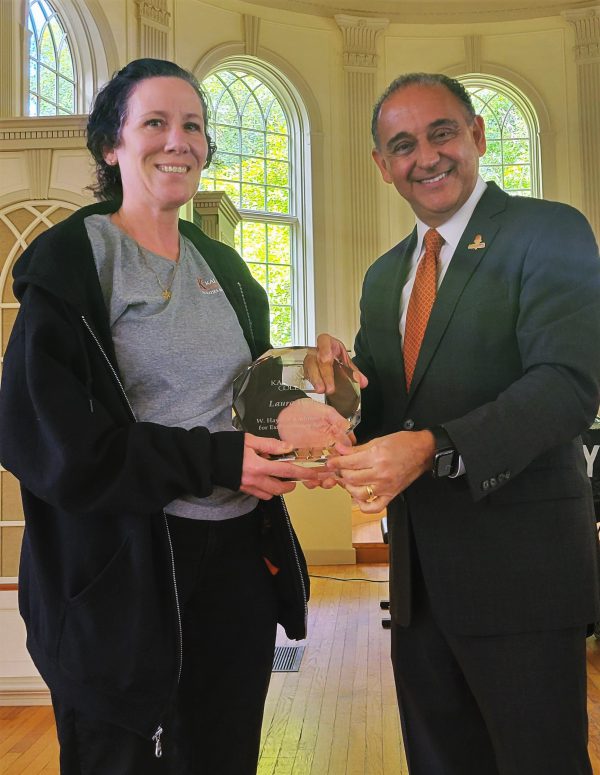
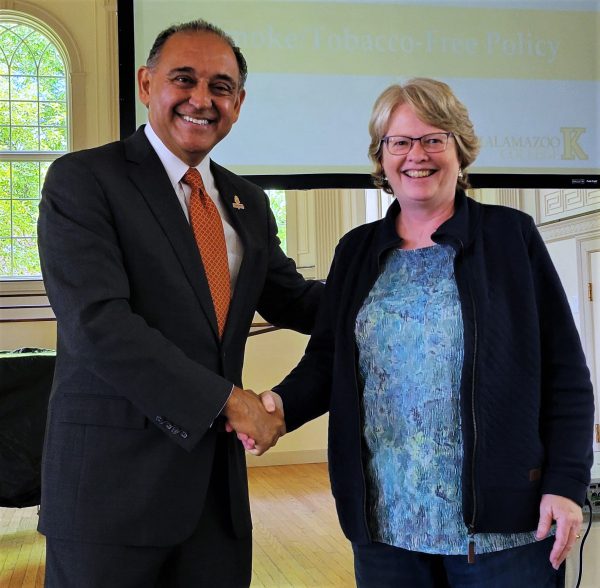
Kalamazoo College announced today that one faculty member and one staff member have earned two of the highest awards the College bestows on its employees. Rosemary K. Brown Professor of Computer Science Alyce Brady received the 2023–24 Florence J. Lucasse Lectureship for Excellence in Teaching, and Custodian Laura Weber was named the recipient of the W. Haydn Ambrose Prize for Extraordinary Service to Kalamazoo College.

Brady, a co-chair of the computer science department, has served K for nearly 30 years. She teaches a variety of courses from introductory classes to advanced classes on programming languages, data structure, dynamic Internet apps and software development in a global context. Her research interests have included the application of computer science to social justice while serving as the Arcus Center for Social Justice Leadership Faculty Fellow from 2013–2015.

Over the past decade, Brady has supervised 72 Senior Integrated Projects and is currently guiding five more. She is also credited with championing student reflection through growth journals, applying a flipped-classroom format that started even before the pandemic, and receiving previous recognition through the Outstanding First-Year Advocate award.

A ceremony to confer the Lucasse Fellowship traditionally occurs in the spring term, where the honored faculty member speaks regarding their work.

Nominators credited Weber, a 10-year staff member in Facilities Management, for volunteering at student events such as Monte Carlo and Cafsgiving. She also hosts international students and refers to her former visitors as her “children,” while former students refer to her as their “mum.” One nominator wrote, “Her love language is inclusion.” Another said, “she treats everyone like family.”

The Ambrose Prize is named after W. Haydn Ambrose, who served K for more than 20 years in a variety of roles, including assistant to the president for church relations, dean of admission and financial aid, and vice president for development. Ambrose was known for being thoughtful in the projects he addressed and treating people with respect. In addition to a financial award, Weber has earned a crystal award to commemorate the achievement and an invitation to sit on the Prize’s selection committee for two years.

Congratulations to both of the honorees.

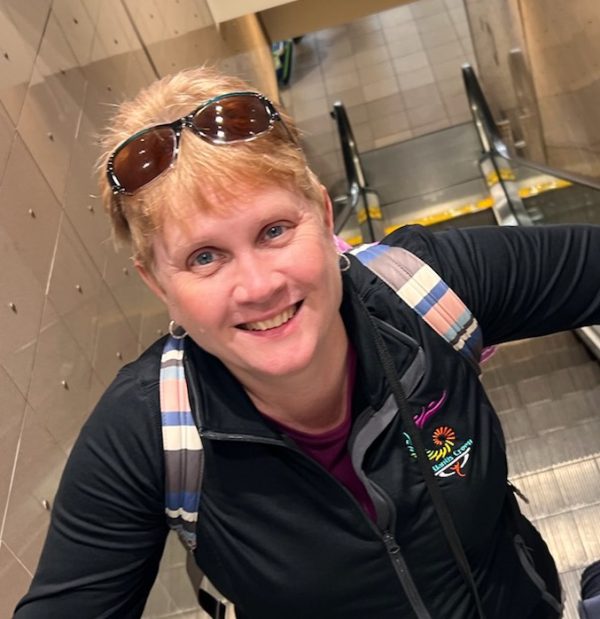
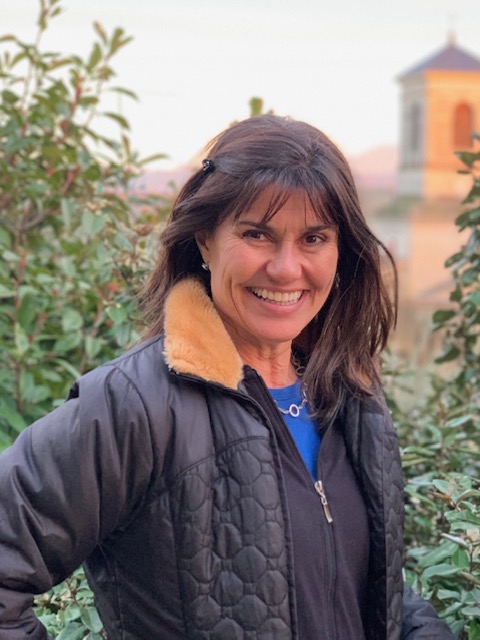
Lucasse Award - Alyce Brady 1
Rosemary K. Brown Professor of Computer Science Alyce Brady was awarded the 2023–24 Florence J. Lucasse Lectureship for Excellence in Teaching.
Ambrose Prize Recipient Laura Weber
Laura Weber, a 10-year staff member in Facilities Management, received the Ambrose Prize, named after W. Haydn Ambrose.

K Faculty Present at Global Pragmatics Seminar

Linguistics professors and graduate students from about 70 countries heard presentations from Kalamazoo College Associate Professor of Japanese Noriko Sugimori and Assistant Professor of Spanish Tris Faulkner at a pragmatics seminar in July.

The International Pragmatics Conference, themed “The shape of interaction: the pragmatics of (a)typicality,” was conducted at the Université Libre de Bruxelles, Solbosch Campus, in Brussels, Belgium.

Sugimori’s presentation, titled “Exploring What Are Atypical and Typical in Modern Japanese: Newspaper Imperial Honorifics and Language Policies,” built on her past studies examining the changes in and the use of Japanese imperial honorifics, representing a variety of political slants in modern Japan during and after World War II. Honorifics are titles or words that imply or express high status, politeness or respect.

Faulkner’s presentation, titled “The Relationship Between Mood and Modal Concord in Spanish Directive Complements,” centered on past experimental studies that demonstrated that traditionally-described, “subjunctive-requiring” clauses are not as stringently subjunctive as previously put forth. In this presentation, she discussed “weak” directive predicates (such as recomendar que ‘to recommend that’ and aconsejar que ‘to advise that’) and their use of the indicative (instead of the customary use of the subjunctive) in contexts designated to putting forth a singular order or command as opposed to dual or bilateral instructions.

The semiannual conference is presented by the International Pragmatics Association (IPrA), a global scientific organization devoted to the study of language. Established in 1986, it currently has about 1,500 members and targets successful communication across languages and borders.

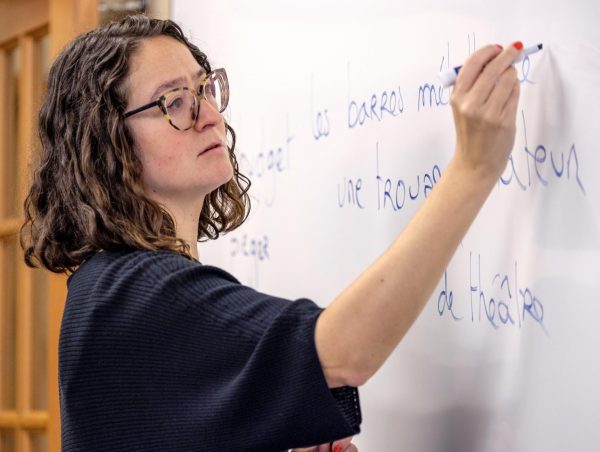
Pragmatics Conference Faculty
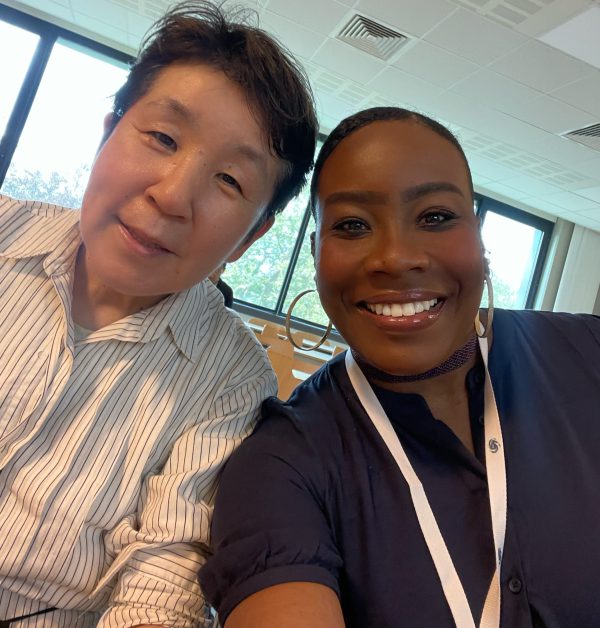
Kalamazoo College Associate Professor of Japanese Noriko Sugimori (left) and Assistant Professor of Spanish Tris Faulkner were presenters at the International Pragmatics Conference at the Université Libre de Bruxelles, Solbosch Campus, in Brussels, Belgium.

New Star Wars Religion Class Fills with Hyperspace-Like Speed

Sohini Pillai standing in her office with some Star Wars merchandise
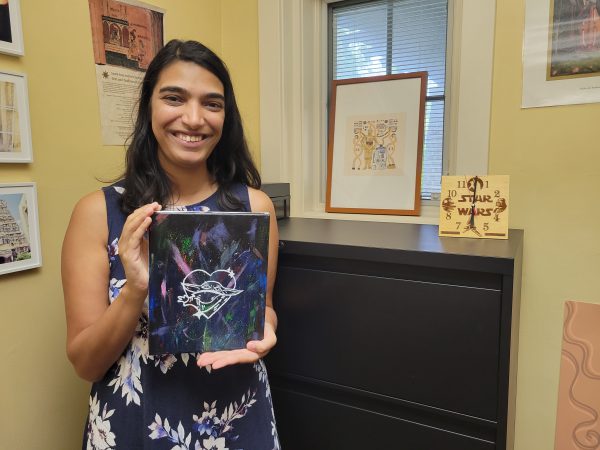
Kalamazoo College Assistant Professor of Religion Sohini Pillai displays some of the personal Star Wars merchandise she has in her office including a painting of Grogu gifted to her by a student.
Star Wars-related pictures in Sohini Pillai's office
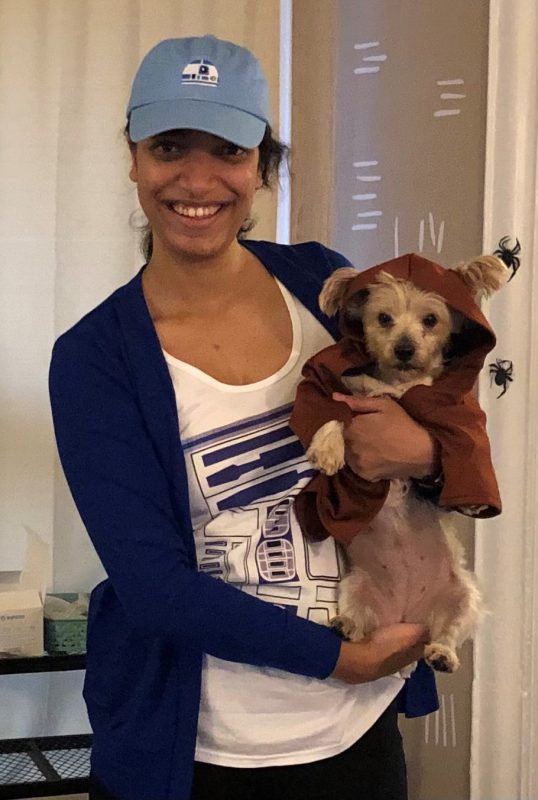
Pillai’s office leaves no doubt of her status as a Star Wars fan. The picture at left shows her likeness as a Jedi with her dog, Leia, dressed as Chewbacca. The picture at right is the dog’s face imposed on an image of Princess Leia’s clothing in the franchise’s first movie, “A New Hope.”
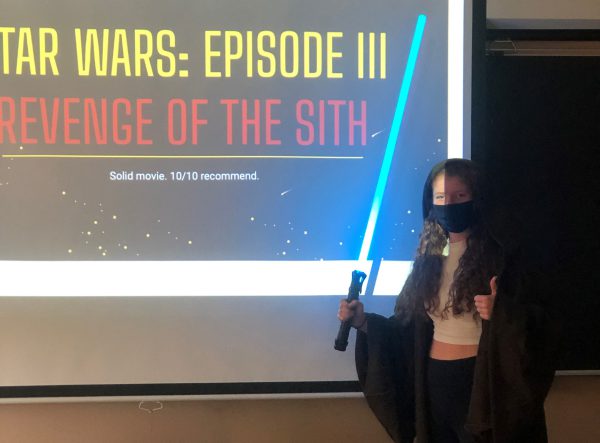
Student wearing Jedi robes and carries a lightsaber
The Force is strong with the Star Wars community at K. Paige Anderson ’25, for example, wore Jedi robes and wielded a lightsaber for an Epic Epics presentation on the Star Wars film “Revenge of the Sith.”

Some Kalamazoo College students will learn the ways of the Force this fall in a new Star Wars-themed class that examines religion’s role in the franchise.

Students in Jedi, Sith, and Mandalorians: Religion and Star Wars, taught by Assistant Professor of Religion Sohini Pillai, will watch seven of the films along with The Mandalorian Disney+ series, and read from books such as The Tao of Yoda, The Gospel According to Star Wars: Faith, Hope and the Force, and The Myth Awakens before writing a research paper in which they analyze a Star Wars film or show not discussed in class.

Their goals are to gain a better understanding of religious, cultural and historical contexts related to Star Wars while investigating key concepts in the study of religion such as canonization, myth, invented vs. traditional religions, cultural appropriation, colonization, indigenous cultures, orientalism and racism.

“There are so many themes in the Star Wars universe that are applicable to the study of religion,” Pillai said. “Just in the first week, for example, we’re going to be talking about orientalism and the exoticization of the Eastern world. The world of Tatooine was filmed in Tunisia and the whole planet is essentially based on the Middle East, the Ewoks speak in highspeed Tibetan, and many of the characters have names based on Sanskrit words. I’m really looking forward to it.”

The idea for the course developed not so long ago, in a classroom not so far away, when—in 2021—Pillai began teaching a First-Year Seminar, Epic Epics. The class used The Odyssey of Star Wars: An Epic Poem, along with nine other narratives about a variety of heroic warriors and colossal battles, to examine how such stories have changed over time and influenced cultures.

Revenge of the Sith, a Star Wars prequel released in 2005, took center stage in final presentations that term with two students reflecting on the film through themes found in the epics. One of the students, Paige Anderson ’25, even offered her presentation while wearing Jedi robes and wielding a lightsaber. The conversations from those presentations and throughout the term pleased Pillai, who also is K’s director of film and media studies.

“Those students are hardcore Star Wars fans,” she said. “I was especially surprised by how much they loved the prequel trilogy. The story, if you haven’t seen the original Star Wars movies, is compelling and exciting. It’s a story about Anakin Skywalker turning to the Dark Side to become Darth Vader. But my students would have been in high school and middle school when the sequel trilogy came out. I thought they would’ve liked those more.”

Regardless of their favorite movies in the franchise, it was evident that student interest, not to mention her own fandom, could help Pillai develop Jedi, Sith, and Mandalorians: Religion and Star Wars. Pillai said she remembers first being interested in the Star Wars universe when she was in kindergarten and her parents introduced her to the first three films after she heard about the films from a classmate. When she was 9, The Phantom Menace, the original prequel, was the first Star Wars movie she saw in theaters. Today, her fandom continues with a variety of merchandise in her office, the Disney+ streaming shows, and an Instagram-famous Yorkshire terrier, Leia, named after the princess who is Pillai’s favorite character in the franchise.

“I distinctly remember growing up and seeing movies like The Little Mermaid, Cinderella, and Sleeping Beauty where these princesses are basically sitting there and doing nothing,” she said. “And then in kindergarten, seeing Princess Leia with a blaster and defending herself while also being a diplomat and speaking so eloquently, I was impressed by her. I think she’s one of the most incredible female characters in cinema. I liked the idea of Padmé being a queen at the age of 14, and I enjoyed Rey’s character in the new trilogy as well. And speaking of the new Ahsoka show, I love that three women including two women of color are leading it.”

If you were concerned that some in and around K would question the value of a Star Wars class in the curriculum, Darth Vader—and Pillai, for that matter—might say, “I find your lack of faith disturbing.”

“I remember in the faculty meeting when we were voting on new classes that about 10 people all at once seconded the motion to adopt the course,” Pillai said. “I’ve had a lot of people—like Director of Athletics Becky Hall—say, ‘Send me the syllabus! I want to sit in on the class.’ I think there’s a lot of excitement for this. K has a solid Star Wars community.”

Pillai dresses her dog, Leia, as a Jedi while she dresses as R2-D2.
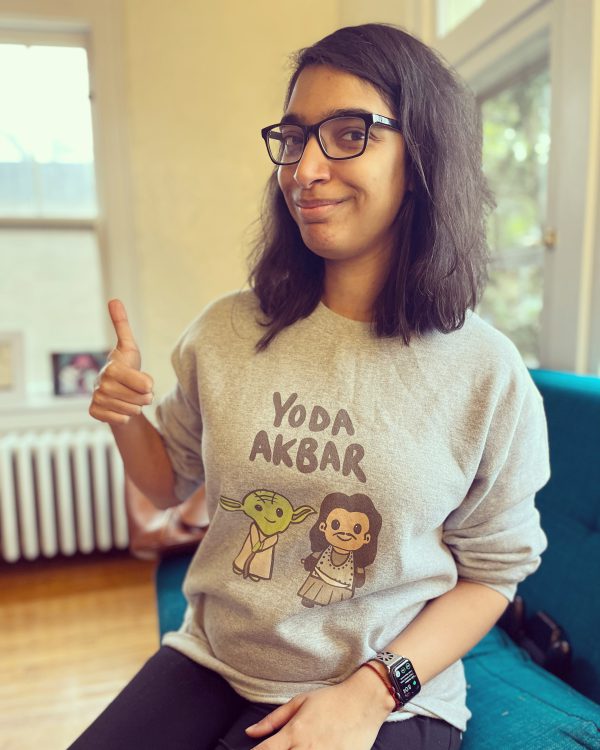
Sohini Pillai wears a sweatshirt that says Yoda Akbar
Pillai wears one of her favorite sweatshirts, which combines Star Wars with the film “Jodhaa Akbar,” which she covers in her Religion, Bollywood, and Beyond class.

The broader K community, from staff to alumni and beyond, has been equally supportive. One recent Twitter/X post said, “As a @kcollege alum, I am stone cold jealous of the students taking this class.” Another said, “The fact that I graduated from @kcollege 30 years too late to take this class is a big disappointment to me as a #StarWars fanatic!”

Then there are the junior and senior K students who didn’t exactly have to be scruffy-looking nerf-herders to realize that the course would be fun, entertaining, and educational as they filled the last seats in it during the second day of fall registration.

Pillai can’t be certain that Jedi, Sith, and Mandalorians: Religion and Star Wars will be offered again. As Yoda would state, it’s “difficult to say; always in motion is the future.” She hopes, however, that first-year students, sophomores, and students on study abroad this term will have opportunities to register for it, too.

“I’ll probably want to teach it again because I imagine it’s going to be super fun for me,” Pillai said. “In the future, I think I’m going to have to reserve spots for underclassmen because I feel bad that they weren’t able to take it this time around. But it’s great we have so much interest in it. I think that Star Wars can be used as an important teaching tool, especially in the world that we live in.”

‘Tandem’ Tussles with Hit-and-Run Cover-Up

Kalamazoo College Professor of English Andy Mozina just couldn’t turn his attention away from a tragedy he first heard about seven years ago involving a drunken driving accident and the irreparable harm it caused a community through the loss of life.

 “It was this nexus of awfulness,” Mozina said. “I couldn’t stop thinking about what that would be like for the relatives of the victims, and also for the perpetrator.”

Although the inescapable images were dreadful, they also seeded the plot that grew into Mozina’s latest work of fiction, Tandem, a novel due out this fall. It centers on Mike Kovacs, an economics professor from Kalamazoo living in the West Main Hill neighborhood, who kills two college-age tandem bicyclists in an inebriated hit-and-run at the parking lot of Saugatuck Dunes State Park.

The lead character goes to great lengths to cover up his crime while attempting to get over a bitter divorce and seeking a relationship with his estranged only child, a son at the University of Michigan.

“My mind thinks that he has given up the right to claim that he’s a good person, and he’s an economist, so he thinks in terms of debt and repayment,” Mozina said of the character. “He knows he’s in debt to humanity and that drives everything he does. He feels very guilty. Wherever he goes, whether he has any redeeming qualities, I want readers to think of him as a real person who did these things and is having these experiences. I want them to travel along with him and just imaginatively enter into the situation.”

During his internal struggles, Mike befriends a neighbor, Claire Boland, who is the mother of one of his victims. With her marriage suffering, Claire is racked with guilt over what she might have done differently as a parent to prevent her daughter’s death, while Mike deals with the shame he feels from committing his atrocity.

“I hope readers have a lot of sympathy for Claire,” Mozina said. “I wanted her to have good qualities without being a blameless victim. I think of her as a sympathetic and earnest person whose flaws are tied to how she wants to live right and learn everything she can from TED Talks, the New York Times and NPR, and apply it to her life.”

The driving force behind the book is that strange, troubled relationship between Mike and Claire, with the perpetrator hiding and thinking about surrendering. Mozina said he doesn’t expect everyone to read or appreciate Tandem given its subject matter and the moments of humor within it. However, early feedback from fellow authors has provided positive reviews.

“A glimmering masterpiece about the slippery nature of truth and redemption, Tandem is at once riveting and contemplative, moving and hilarious, devastating and tender,” said Erica Ferencik, the bestselling author of Girl in Ice, Into the Jungle and The River at Night. “It does what the best novels do: forever change how we see the world.”

Tandem, published by Tortoise Books, will be available beginning with a free launch party at 6:30 p.m. October 24 at This is a Bookstore and Bookbug, 3019 Oakland Drive in Kalamazoo. Attendees are encouraged to RSVP through the store’s Facebook event. Signed copies of Tandem may be reserved for $21. A second book-release event will be at 27th Letter Books in Detroit on October 25. Find more information at the store’s website.


About the Author of ‘Tandem’

Mozina studied economics at Northwestern University and attended Harvard Law School for a year before earning a master’s degree in creative writing from Boston University. He then completed a doctorate in English literature at Washington University in St. Louis, moving to Kalamazoo to teach literature and creative writing at K after graduation. His classes at K include an introductory course in creative writing, a first-year seminar titled Co-Authoring Your Life, and intermediate and advanced courses in fiction.

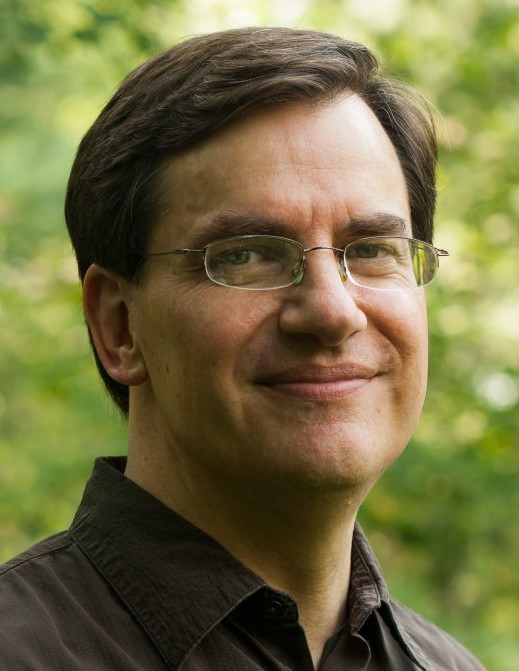
Professor of English Andy Mozina
Kalamazoo College Professor of English Andy Mozina has authored a new book titled “Tandem.”
Tandem Book Cover
“Tandem” centers on Mike Kovacs, an economics professor, who kills two bicyclists in an inebriated hit-and-run.

The author’s first novel, Contrary Motion, about a concert harpist taking a symphony audition, was published in 2016. He is also the author of a book of literary criticism titled Joseph Conrad and the Art of Sacrifice along with two short-story collections, The Women Were Leaving the Men, which won the Great Lakes Colleges Association New Writers Award; and Quality Snacks, which was a finalist for The Flannery O’Connor Short Fiction Award. His fiction has appeared in numerous magazines, including Tin House, Ecotone, Fence, The Southern Review, and The Missouri Review, and has received special citations in Best American Short Stories, Pushcart Prize, and New Stories from the Midwest.

“I think fiction allows you to pick the struggles that show up diffusely throughout your life and be true to those problems,” Mozina said. “You can also heighten them in a way that creates interest for the reader by inventing and shaping a lot. It brings out meaning to complicate things and shine a light on them. There’s a certain soul work to reading and writing that I don’t find elsewhere, so I do it through fiction.”

Here’s the Scoop: Admission Staffer Targets Favorite Chef Title

When she’s not helping Kalamazoo College’s Admission Office recruit the next batch of first-year students to campus, Operations Manager Teresa Fiocchi is often cooking up something special in her kitchen. In fact, she is an award-winning chef with her own website, who is slicing through the competition in the Favorite Chef contest, presented by author, TV personality and chef Carla Hall.

Fiocchi has collected praise in the past as the Cook of the Week in the Daily Herald newspaper’s Chopped competition. She also won the SpartanNash Souper Competition in Grand Rapids in 2018, providing a $2,500 prize, an additional $2,500 for the South Michigan Food Bank in Battle Creek, and a chance to make her dish on TV.

Yet Favorite Chef provides bigger fish to fry.

By reaching the competition’s quarterfinals, Fiocchi’s already in the top 1% of the thousands of nationwide entrants. Plus, with your vote before 10 p.m. Eastern time Thursday, she might keep alive her hope for the whole enchilada: a $25,000 grand prize, a two-page spread in Taste of Home Magazine, and a chance to cook in person with Hall, a chef known in part for her appearances on Top Chef and co-hosting The Chew.

 “Food is my love language and feeding people brings me joy,” she said. “People express how they feel about each other differently, but I always say that if I like you, I cook for you. Food should bring people together; whether it’s surrounded by family at the kitchen table, standing at the counter drinking wine and talking about what’s for dinner, or cookies in the breakroom at K—the ultimate goal is finding common ground and time to be together. I think food does that. Food is how I express that I’ve taken the time to think through what would bring you joy.”

Fiocchi loves collecting hundreds of cookbooks and trying new recipes, but family recipes are always favorites. The chef added that she has many happy memories of cooking, especially with family. “Making mom’s potato salad, or Nonni’s tortellini is my way of honoring their lives and the food memories we’ve inherited from them.” She’s the proud owner of a vintage Pillsbury cookbook from 1913; as well as a signed copy of Sister Pie by K alumna Lisa Ludwinski ’06. Yet if she doesn’t love a cookbook, she doesn’t keep it because she knows someone else will fall in love with it.

Perhaps that love could be passed to a K colleague, the folks who make working at the College enjoyable for her.

“I love everything about K,” she said. “I love the institution, but the people are really what makes K so special. We moved to Michigan in 2017 after 50 years in the Chicagoland area and I found my extended family at K in 2018 when I started working in the Admission office. I’m grateful to work with people who are my friends in and out of the office, and that they are all so willing to be my taste testers.”

Favorite Chef Contestant Teresa Fiocchi Cooking in Her Kitchen
Office of Admission Operations Manager Teresa Fiocchi has reached the quarterfinals of the Favorite Chef competition.

How to Vote for K’s Favorite Chef

To support Teresa Fiocchi in the Favorite Chef contest, visit her quarterfinalist page and click “Free Daily Vote.” Voters may choose “Verify with Facebook” or “Verify by Card.” Voters who select “Verify by Card” are charged $1 that is immediately refunded. The process ensures that voters select their favorite chef no more than once per day.

Forbes Ranks K Among Best Small Employers

If you’re job hunting and small employers are appealing to you, Forbes says Kalamazoo College should be on your radar.

The global media company that focuses on business, investing, technology, entrepreneurship, leadership and lifestyle released its inaugural list of America’s Best Small Employers this week. After crunching data from more than 10,000 employers nationwide that have between 200 and 1,000 workers, Forbes shows K at No. 253 of the top 300.

To assemble the list, Forbes teamed up with Statista, a market research firm, to examine anonymous surveys of employees using targeted panels and open participation from the public; job-related websites that gauge employer reputation, engagement, retention and benefits; and social listening text analysis through websites, blogs, Instagram, Tumblr, Twitter and YouTube.

Small colleges and private schools scored particularly well in general, comprising 20% of the list. Plus, K prepares its graduates to better understand, live successfully within, and provide enlightened leadership to a richly diverse and increasingly complex world—a mission that resonates with its dedicated faculty and staff. If you’re interested in working for K, visit our “Careers at K” web pages. 

Dedicated faculty and staff such as Kalamazoo College Fund Director Laurel Palmer have helped K reach Forbes’ first list of America’s Best Small Employers.

Language Conference in Japan Spotlights K Student, Professor

Associate Professor of Japanese Noriko Sugimori and William Shaw ’23 presented a paper titled “Evaluating the Language Policy Effects of Imperial Honorifics in the Japanese Historical Corpus” on June 16 at the annual meeting of the Japan Association for Language Policy at Reitaku University in Chiba, Japan. 

The pandemic prevented Shaw from studying abroad in Japan as a student at K. However, he became the first recipient of the Roselee Bundy Student Travel to East Asia Fund, which enabled him to attend the language policy conference.

The fund, named after the late professor emerita, provides students with benefits to perform SIP research and conference presentations, seek some types of internships, and—in some cases—receive travel expenses, living expenses and archive fees related to distinct research projects in Asia.

For their presentation, Shaw analyzed historical Japanese texts in Chinese and Japanese characters from the eighth century onward using the skills he acquired during his Senior Integrated Project (SIP) under Sugimori’s supervision. As a computer science major with a minor in Japanese and mathematics, Shaw impressed the audience by delivering his presentation entirely in Japanese, which he had studied only at K. He is also a member of the Japanese National Honor Society, along with fellow 2023 graduates Robin Dudd, Madeline Schroeder and Mikki Wong. He will continue his work as a research assistant for Sugimori’s Japanese historical sociolinguistics project this summer.

“The presentation was largely thanks to Dr. Sugimori,” Shaw said. “My part focused on the data-collection aspect and what we found numerically when searching for occurrences of honorific phrases/words in NINJAL’s (the National Institute for Japanese Language and Linguistics) corpus of historical Japanese. At the conference, Dr. Sugimori explained much of the premise and results of our work, and I explained the graphs and number-side of it. We met frequently on campus to work on it and I practiced my part orally so she could correct my pronunciation and flow.”

Sugimori benefited from the Great Lakes Colleges Association NEH Endowment for this experience in Japan. The fund covers travel to Japan, within Japan or to other East Asian countries as a part of projects related to the study of Japan. The fund is available to faculty members from GLCA and Associated Colleges of the Midwest schools.

Sugimori also received a benefit from the Arcus Center for Social Justice Leadership (ACSJL) Faculty and Staff Fund, which aims to support K faculty and staff on expanding or initiating new and innovative lines of learning, engagement, advocacy and research around social justice issues.

William Shaw and Professor Sugimori attend language conference in Japan
Associate Professor of Japanese Noriko Sugimori (right) and William Shaw ’23 presented a paper titled “Evaluating the Language Policy Effects of Imperial Honorifics in the Japanese Historical Corpus” at the annual meeting of the Japan Association for Language Policy at Reitaku University in Chiba, Japan.

Donate in Memory of Professor Roselee Bundy

  • If you would like to support K students and give in memory of Professor Bundy, please make a gift online to the Roselee Bundy Student Travel to Asia Fund. For more information, please contact Lindsay O’Donohue at 269.337.7299 or lindsay.odonohue@kzoo.edu.
  • Learn more about Bundy and the academic legacy of K’s Department of East Asian Studies in the winter 2023 edition of LuxEsto.

Family Science Night Fun Brings Community to K

Students participate in Family Science Night
Kalamazoo College students demonstrate how oranges can be used to pop balloons during Family Science Night.
Students participate in Family Science Night
K students teach community members about acid/base chemistry by writing hidden messages.
Family Science Night 14 (2)
K students helped K-12 students explore density by using oil, water and Alka-Seltzer to make lava lamps.

About 160 community members, consisting of kindergartners through 12th graders and their families, came to campus to engage with fun, hands-on experiments at Family Science Night on May 18, hosted by students from the Department of Chemistry and Biochemistry and the Department of Biology at Kalamazoo College.

The Family Science Night “Science Surrounds Us,” conducted at Dow Science Center and supported by funding from the Mary Jane Underwood Stryker Center for Civic Engagement, featured 15 interactive science booths with 39 undergraduate student volunteers and a four-student planning committee, consisting of Crystal Mendoza ’23, Elizabeth Wang ’23, Maxwell Rhames ’25 and Onora Lancaster ’23. The event gave K students the opportunity to practice their science communication skills while nurturing children’s interest in the sciences.

K students showed Family Science Night attendees how to make DNA bracelets using the DNA sequences from various animals.
Students participate in Family Science Night
K students helped Family Science Night attendees explore the freezing-point of water by making ice cream.
K students showed taught community members about the life cycle of plants by planting herb seeds for kids to take home.

Assistant Professor of Chemistry Josie Mitchell joined the faculty at K last fall and had been thinking since about ways she could connect her students with the community. Science outreach events with K-12 students had been the way she loved doing similar community engagement as a graduate student at the University of Wisconsin-Madison.

“One of the skills I hope my students develop is to be able to communicate the scientific concepts they learn about in class in an exciting and accessible way to the public,” Mitchell said. “As students planned their science booths, we talked about the scientific topic each group hoped to convey and then designed hands-on experiments that K-12 students would do. Ultimately, we all learn better and have more fun when we’re actually doing something versus being told about it.”

Stickers helped K-12 students keep track of which experiments they saw
Kids used stickers in a Family Science Night passport to keep track of which experiment stations they visited.
K students assist community members
·        K students showed Family Science Night attendees how to extract the iron content from cereal using magnets
Students tend to a booth showing homemade volcanoes
K students helped community members investigate acid/base chemistry with baking soda and vinegar to make mini-volcanoes.

The K students developed ideas using household ingredients that ranged from experiments such as creating miniature volcanoes with baking soda and vinegar, exploring the freezing point of water by making ice cream and learning about the life cycle of plants by planting herbs, to creative activities such as removing the iron from cereal with magnets, extracting DNA from strawberries and investigating rubber polymers by using oranges to pop balloons.

“The planning committee and I worked together with groups to hone their scientific concept and think creatively about how students could get their hands wet and learn through experimentation,” Mitchell said. “For example, one group was learning about acids and bases. There is a chemical in red cabbage called anthocyanin that serves as a pH indicator and it will change color depending on how acidic or basic the solution is. K students prepared a red cabbage pH indicator solution and then had K-12 students add it into acidic and basic solutions and observe a color change. Many of the parents would also engage with the science booths, and I believe events like this can bring out the inner child-like curiosity in all of us.”

Students participate in Family Science Night
K students helped Family Science Night attendees investigate the polarity of molecules using milk, food coloring and detergent.
Family Science Night
Family Science Night attendees explored protein folding using a computer program and origami.
Family Science Night 9
K students taught K-12 students and parents about genetics through taste inheritance by using a PTC test.

The K community made the night possible with involvement from the planning stages all the way through cleanup after the event.

“We had a lot of help, especially with funding from the Center for Civic Engagement and donated prize items from K Admissions and the K Bookstore,” Mitchell said. “I communicated with (CCE Director) Alison Geist throughout the planning stages, and (Associate Director for Community Partnerships) Teresa Denton tapped into the CCE’s amazing network of local schools and programs to invite community members to the event.”

Student organizations such as Sisters in Science and the College’s chapter of the American Chemical Society also assisted.

“I think our student involvement was the most rewarding part,” Mitchell said. “I’ve already known how amazing our students are, but they went above and beyond to make this event possible. I wanted to start smaller and more focused this year to see how it went, and next year I would love to invite other K students from science, technology, engineering and math (STEM) disciplines to host a booth.”

Family Science Night 4
K students showed Family Science Night attendees how to test the pH of household items using cabbage water.
K students helped K-12 students explore density by using oil, water and Alka-Seltzer to make lava lamps.
Family Science Night 13
K students taught community members how to extract DNA from strawberries during Family Science Night.

Family Science Night Experiments

  • Magnetic Munchies: extracting iron content in cereal using magnets
  • Fold It: exploring protein folding using a computer program and origami
  • Dancing Drawings: learning about density by watching dry erase drawings float
  • Butterfly Wings: creating colorful butterflies using coffee filter paper chromatography
  • Mini Volcanoes: investigating acid/base chemistry with baking soda and vinegar
  • Strawberry DNA: extracting DNA from strawberries
  • Ice Cream: exploring the freezing-point of water by making ice cream
  • The Lifecycle of Plants: planting herb seeds and taking them home to watch them grow
  • Magic Milk: investigating polarity of molecules using milk, food coloring and detergent
  • Lava Lamps: exploring density using oil, water and Alka-Seltzer to make lava lamps
  • Oranges and Balloons: investigating rubber polymers using oranges to pop balloons
  • Bitter or Bland: exploring the genetics of taste inheritance using a PTC test
  • DNA Bracelets: making DNA bracelets using the DNA sequence from various animals
  • Acid or Base: testing the pH of various household items using cabbage water as a pH indicator
  • Spies in Disguise, Invisible Ink: learning about acid/base chemistry by writing hidden messages

Volunteer Feedback

  • “I had so much fun running this booth and it was fun to be able to teach kids about chemistry. I feel like everything was running smoothly with some rush of people, but it was manageable.”
  • “This was a wonderful time! I heard phenomenal things from parents as they came out!”
  • “I had so much fun and would love to do it again! I loved seeing all of their reactions to our volcanoes!”

Parent Feedback

“The Family Science Night was absolutely wonderful. My children had the best time! My son is very interested in science, but my daughter has approached it more cautiously, although last night really made her more interested in it so I am grateful to you all!”

Fulbright Enables Professor to Spend Year in Australia

Professor of English Amelia Katanski ’92 has earned a Fulbright U.S. Scholar Program award that will send her to Australia during the 2023–24 academic year.

Katanski will be working with faculty at the University of Wollongong to develop curriculum that will better prepare K students for study abroad there. She previously undertook similar work after a visit to another K study abroad site—Curtin University, in Perth, Australia—and created a sophomore seminar titled World Indigenous Literatures to help students be more aware of Indigenous issues while on study abroad. This time the goal is to develop a curriculum in partnership with the host university and centered on land-based learning that addresses what international students need to know before going to Wollongong, with an emphasis on how K students impact Wollongong’s Indigenous faculty, staff and students.

“Like most universities in Australia, Wollongong has a lot of international students from all over the world, not just the U.S., which is very important to their functioning,” Katanski said. “The university is trying to be conscious about what it means for them to welcome these students onto Indigenous land through a program that teaches curriculum reconciliation, which looks at how to keep Indigenous issues at the forefront of all university operations. The international program would like to focus on their own curriculum reconciliation process, so I would be going through it with them or learning from their experiences, depending on timing.”

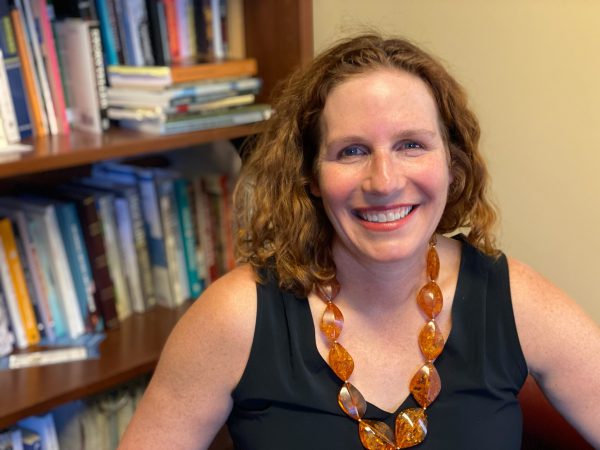
Fulbright recipient and Professor of English Amelia Katanski in her office with books in the background
Professor of English Amelia Katanski ’92 has earned a Fulbright U.S. Scholar Program award that will send her to the University of Wollongong in Australia in the 2023–24 academic year.

Katanski will spend her fall term preparing for the Fulbright trip and working on another piece of a sabbatical project before heading to Australia in January. She is one of about 800 U.S. citizens who will teach, conduct research or provide expertise abroad through Fulbright. Those citizens are selected based on their academic and professional achievement, as well as their record of service and demonstrated leadership. The awards are funded through the U.S. Department of State and the J. William Fulbright Foreign Scholarship Board.

The Fulbright Program is the U.S. government’s international education-exchange program designed to build connections between U.S. citizens and people from other countries. The program is funded through an annual Congressional appropriation made to the Department of State. Participating governments and host institutions, corporations and foundations around the world also support the program, which operates in more than 160 countries.

“We don’t get a lot of opportunities to be somewhere long enough that we get to know the people and their land while developing relationships with them,” Katanski said. “I’m really grateful for the chance to be in a place that is far from home with a distinctive landscape, while being supported in my learning.”

Since 1946, the Fulbright Program has given more than 390,000 students, scholars, teachers, artists and professionals in a variety of backgrounds and fields opportunities to study, teach and conduct research, exchange ideas and contribute solutions to international problems.

Thousands of Fulbright alumni have achieved distinction in many fields, including 61 who have been awarded the Nobel Prize, 89 who have received Pulitzer Prizes and 76 MacArthur Fellows. For more information about the Fulbright program, visit its website.

“There’s so much for me to learn and I’m grateful for this opportunity because I can sit at my computer and do some research or read literary, cultural or historical texts, but the important piece for me is helping our students who are learning from and on Indigenous land right now,” Katanski said. “This is also an opportunity to work in partnership with and learn from the University of Wollongong, which has clearly articulated institutional goals about reconciliation, and how Indigenous people and issues are centered within its work.”

Grant to Provide Students with Accessible Design Lessons

Associate Professor of Computer Science Pam Cutter will introduce the fundamental concepts and skills of accessible design and development to her Kalamazoo College courses thanks to the Teach Access Faculty Grants program.

Teach Access announced May 18 that Cutter will receive $2,500 to develop assignments, discussions, and activities that promote accessibility skills for students in her first-year seminar, Exploring Technology for Accessibility, while sharing her resources with other faculty members in K’s computer science program and submitting her materials to a curriculum repository.

The third Thursday of May, which was May 18 this year, annually serves as Global Accessibility Awareness Day (GAAD). The day’s purpose is to promote the global awareness of digital access and inclusion for the 1 billion people worldwide who have disabilities or impairments.

In total, Teach Access is giving 19 college faculty members from around the country a combined $50,000 for their projects.

“Getting students to think about designing tools for accessibility early in their college careers would give them the opportunity to carry that knowledge into any discipline they choose,” Cutter said. “This might be computer science, where they can delve deeper into the technical aspects of designing more inclusive tools, such as websites and mobile applications, for accessibility, or it might be something like economics or political science, where they can be more informed advocates for helping their organization meet the demands of digital accessibility. Having an adult child with special needs, I’ve seen how the right tools, and digital tools designed with special needs in mind, can have an impact on the success of an individual. I’m excited to bring this topic to my classrooms and look forward to the contributions of my students.”

Pam Cutter will introduce the fundamental concepts and skills of accessible design and development to her Kalamazoo College students
Associate Professor of Computer Science Pam Cutter will receive a $2,500 grant to develop assignments, discussions and activities that promote accessible design lessons for students in her first-year seminar, Exploring Technology for Accessibility, while sharing her resources with other faculty members in K’s computer science program.

Leaders from Yahoo and Facebook founded Teach Access in 2015 while attempting to narrow an accessibility technology skills gap in recent graduates. Other companies experiencing the same concerns quickly joined the initiative including Adobe, Google, LinkedIn, Microsoft, Intuit, Walmart and Apple.

Bringing together industry, education and disability advocacy organizations, the mission of Teach Access is to address the digital accessibility skills gap by equipping learners to build toward an inclusive world. Through targeting education institutions to provide opportunities for learners to gain accessibility skills, more candidates considering careers in technology are doing so with knowledge and commitment to designing and developing accessible technology.

Speaking on behalf of Teach Access, Rochester Institute of Technology Associate Professor Elissa Weeden, a past faculty grant recipient, said the grants also allow faculty to buy various assistive technology devices such as switches, eye trackers, adaptive controllers and a Braille notetaker to use in courses.

“Before the grant, I was only able to talk and show videos about how these devices can be used,” she said. “Now, my students are able to explore and interact with the devices to experience how they can be used to provide access and interaction with digital content.”

While Cutter does not plan to use her grant to buy any equipment, she plans to take her seminar students to visit the Bureau of Services for Blind Persons Training Center and to meet with the Assistive Technology Team at Kalamazoo RESA to learn how technology is being used to assist members of our local community. She also plans to discuss the Americans with Disabilities Act and what it requires regarding digital accessibility.