
Kalamazoo College alumni Justin Danzy ’16 and Marquise Griffin ’15 have created a virtual communal space shared by a team of thinkers and artists free to create and share content that promotes their vision of a more informed, empowered and collaborative diasporic community. The Black Diaspora Project is a collaboration between two groups of friends from opposite sides of the globe in an attempt to forge connections between millennials and members of the African diaspora. It’s also a space where people express unique worldviews and forward the vision of a more just, equitable world.

A month after graduating from Kalamazoo College, Danzy spent a month and a half in Uganda working with the Bavubuka Foundation, which inspires youths to embrace and celebrate their native languages, culture and tradition. It conducts a yearly hip-hop summit, which includes youth performances and workshops taught by contributing professionals in media, recording arts and writing. The relationships he built in Uganda were what led to the Black Diaspora Project, an online space created Feb. 20, 2017. Danzy expresses with great passion how his experience at Kalamazoo College prepared him for what the world would bring post-graduation.
He admits: “K really took me out of my comfort zone and forced me to learn a lot about how maneuver and preserve yourself … I met many wonderful friends and mentors who went out of their way to help steer me while I was on this journey of understanding. For instance, Di Seuss introduced me and seduced me into the world of creative writing, which has become a haven for me. She also introduced me to the executive director of the organization that I currently work at. Dr. Bruce Mills affirmed my ability as an academic in a way that really bolstered my self-confidence … His tutelage led to me presenting my SIP at the International James Baldwin Conference at American University in Paris, France last spring. Lastly, Dr. Lisa Brock and Mia Henry provided a space for me to grow on my own terms, while also giving the language that greatly assisted in me understanding some of the things I was experiencing for the first time at K. Working with them at the Arcus Center also led to me meeting Silas Balabyekkubo, the founder of the Bavubuka Foundation, who I ended up partnering with in Uganda for our hip-hop and sustainable agriculture initiative, which planted the seed for what was to become the Black Diaspora Project.”
Danzy was joined by fellow alumnus and friend Griffin, who after graduating from K began pursuing his master’s degree in educational leadership and policy analysis at the University of Missouri-Columbia. There, he studies the structure of higher education, its administration, processes, culture and the policies that affect it. Griffin is the co-editor-in-chief, working closely with Danzy on making creative decisions regarding the Black Diaspora Project, its structure, direction and what they want from contributors.
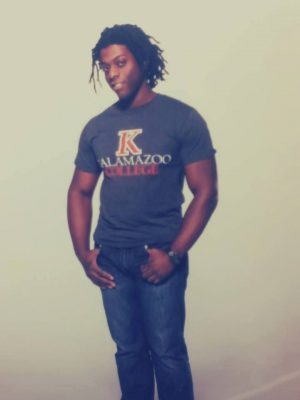
While they were students at K, Griffin and Danzy discussed their desire to spearhead a collaborative project inspired by their love of writing and the ritual of workshopping poetry. After Danzy’s experience in Uganda, Danzy went to Griffin with the idea for the Black Diaspora Project. Griffin happily helped bring the idea to fruition. Griffin admits Danzy’s “tireless enthusiasm and the amount of work he put into the site pulled me in and I began to see the potential for this to be a true collaboration of creative people, all working to expand their knowledge of themselves and others.”
Danzy said the ultimate goal of the Black Diaspora Project is to provide an honest depiction of the African diaspora and enhance the audience’s understanding of blackness on a global scale. He wants to prioritize the understanding of a global blackness, to offer diverse and positive depictions of contemporary Africa. Furthermore, to offer a resource that does not look upon Africa with pity and endow it with charity. The Black Diaspora Project can contribute to moving toward this understanding of an autonomous Africa that is full of talent and the acumen to create a better future for the continent.
Text by Aunye Scott-Anderson ’18

 Harry Garland ’68, Ph.D., is pictured in Upjohn Library Commons with one of the several MakerBot 3D printers Kalamazoo College was able to purchase thanks to a donation from Garland for that purpose. The picture was taken last October when Garland visited campus and discussed the various uses of the printers with Josh Moon, educational technology specialist in the Information Services division. “3D printing offers students technology that can create physical examples of their designs, art projects, models and historical artifacts,” said Josh. “It also lets them engage with a community of digital designers who are sharing their work with others for scholarship, productivity, and fun. As a young, experimental tool the MakerBot is available to all classes and students for exploration.” Garland’s gift combines his love of technology and his love of K. As an undergraduate here he developed superior analytical and problem-solving skills that became a foundation for a distinguished career that has included writing three books, being awarded 20 patents, serving on K’s board of trustees, teaching at Stanford University, and co-founding three businesses, including a 400-employee firm that made an immediate precursor to the first personal computers.


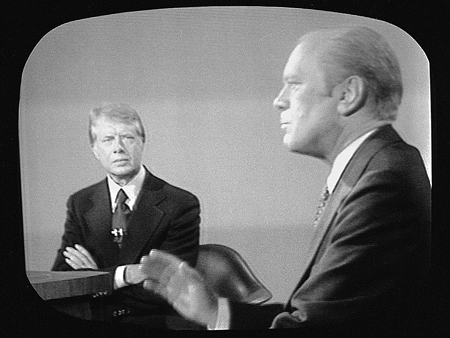
 Gail came home from grad school to Grand Rapids. “My immediate future was a complete mystery to me,” she said. “Four days later history intervened with the resignation of Vice President Agnew. President Nixon then named Gerald Ford as vice president-designate, and several phone calls later, I was on my way to Washington to work on Ford’s confirmation hearings for the vice presidency.”
 Julie Mehretu ’92 is one of 14 new members voted into the American Academy of Arts and Letters. Mehretu is among the most celebrated of contemporary painters in the world. She works from studios in New York City and Berlin. She has exhibited in several important group exhibitions including “Poetic Justice”, 8th Istanbul Biennial (2003); Whitney Biennial; São Paolo Biennial and Carnegie International, Pittsburgh (2004); the Biennale of Sydney and the Museum of Modern Art, New York (2006); Prospect 1, New Orleans (2008); “Automatic Cities” MCA San Diego (2009); “From Picasso to Julie Mehretu,” British Museum, London (2010) and Document XIII, Kassel (2012). Solo exhibitions include Walker Art Center, Minneapolis; REDCAT, Los Angeles and Albright-Knox Art Gallery, Buffalo (2003); St Louis Art Museum (2005) and MUSAC, Léon, Spain (2006); “City Sitings,” Detroit Institute of Art and “Black City” Louisiana Museum of Modern Art, Humlebaek, Denmark (2007); North Carolina Museum of Art, Raleigh, (2008); “Grey Area,” Deutsche Guggenheim, Berlin (2009) and Solomon R. Guggenheim Museum, New York (2010). In 2015 Mehretu was honored with the U.S. State Department’s National Medal of Arts.
