Class: Is Civil Discourse Still Possible in Politics?

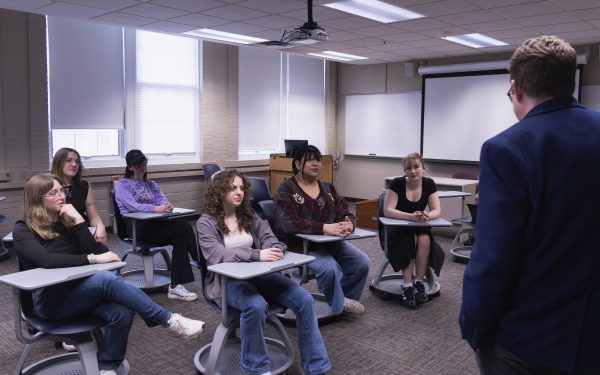
Americans are struggling to talk across political divides, but a classroom at Kalamazoo College recently became a laboratory for civil discourse. Political Science Associate Professor Justin Berry led what he describes as the best class he’s had the privilege of teaching: a senior seminar on political polarization that challenged students not just to study the problem but to actively engage with it.

“I teach a lot of the bigger kinds of classes—intro classes—on Congress and the presidency,” Berry said. “This was my first opportunity to teach a seminar-oriented class, and I was excited about the chance to design something new. I picked a topic that I thought was pertinent to what they’ve learned over their time in political science. It’s a topic that’s particularly relevant to the democracy they’re participating in today.”

Berry designed the course to give students the tools and experiences they need to model what he calls civil disagreement. Over the term, students examined the forces driving political polarization in the United States, from widening divides among elected officials and the public to the ways media and social media reinforce differences. They analyzed the most recent election cycle using various sources, and through dialogue and interviews, they practiced ways to communicate across these differences.

“I wanted to give them the space and the tools to engage in difficult conversations,” he said. “I wanted them to fundamentally disagree on ideas, concepts and values, and yet do so in a constructive, civil way, which I think is absent from our politics today.”

Berry also noted the delicate balance between creating a sense of safety while fostering genuine disagreement in a course of this nature.

“I want to engender an environment that’s intellectually, politically and socially safe, but at the same time, I don’t want it to be so safe that people aren’t actually sharing their true beliefs,” he said. “If everybody’s feeling happy and comfortable, we’re probably not engaging in a real political discussion because politics is conflictual.”

The class was able to achieve that balance, Berry said.

“There was enough overlap, commonality and trust in one another for us to engage in a meaningful conversation on a weekly basis,” Berry said. “Yet there was also enough disagreement to lead to a meaningful exchange. A student would have a strong opinion, attitude or concept, and people would push back and give different perspectives. I heard students say time and again that in their discussions, they changed an attitude or an opinion toward something and I thought that was great. That’s real conversation.”

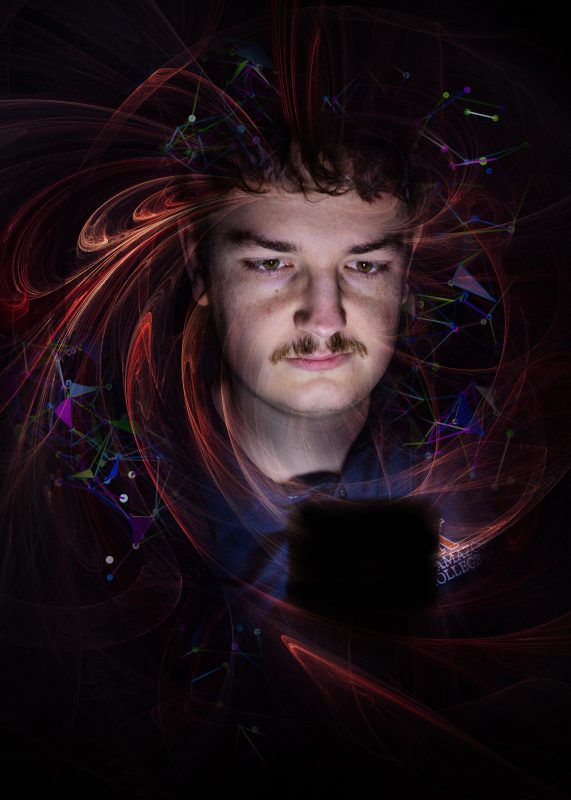
Student observing a cell phone
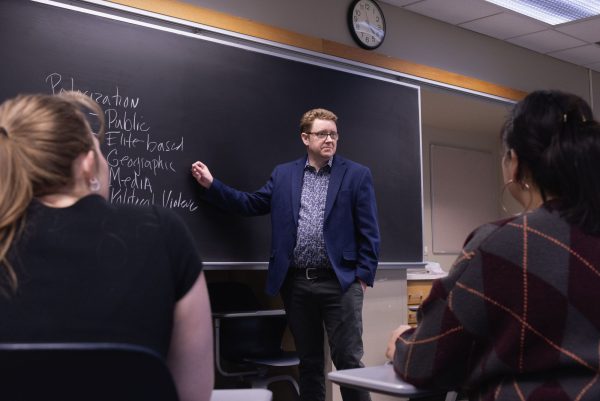
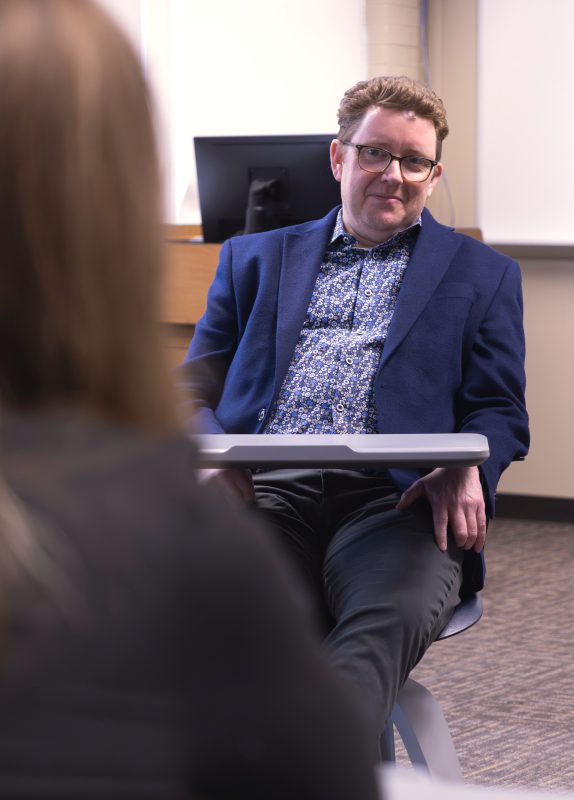
Justin Berry teaches his polarization and civil discourse students
Political Science Associate Professor Justin Berry teaches his polarization and civil discourse students.

The Assignment That Changed Perspectives

The centerpiece of the course was an intentional challenge: students had to interview someone with drastically different political views and write about their conversation. For many students, this meant stepping far outside their comfort zones. What they discovered often surprised them.

Lyrica Gee ’26 spoke with her uncle in Florida, whose politics differed sharply from her father’s despite their similar upbringings.

“I had gone home with some of the questions that we’ve been asking in class,” she said. “I talked to my dad about it and heard some of his answers about the way he was raised by his parents and their ideological lenses. Then, going into that interview with his brother, who ended up with a totally different political perspective, it was interesting to see how such a similar background landed them in these different situations.”

Libby McFarlen ’26 emphasized the humanizing effect of the face-to-face conversation she had.

“It’s so much easier to see what people think and dismiss it when it’s online,” she said. “But when you’re actually speaking to someone face-to-face, it personalizes those opinions. You realize that your opinions about people who disagree with you are attached to a real person, not to a statistic or someone on the other side of a phone screen.”

Berry mentioned two outcomes from the project that were especially noteworthy to him.

“I had one student who interviewed her dad, and she valued the experience so much that she wants to do it with all of her family members and record the conversations to trace her family’s political story,” he said. “I also had some students who assumed those they interviewed had very different beliefs, only to find false polarization once they had the conversation. Sometimes our assumptions are just false, and these things that we think divide us are our own misperceptions.”

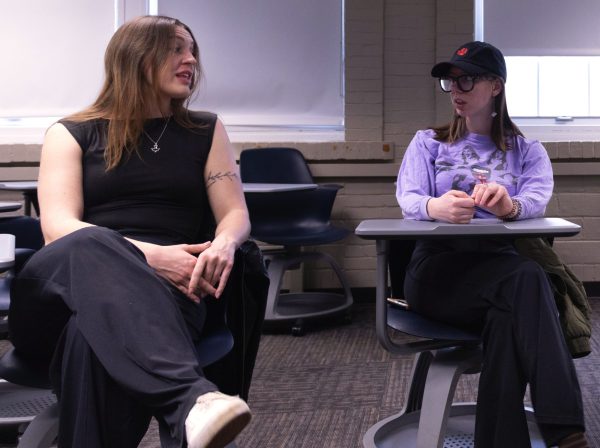
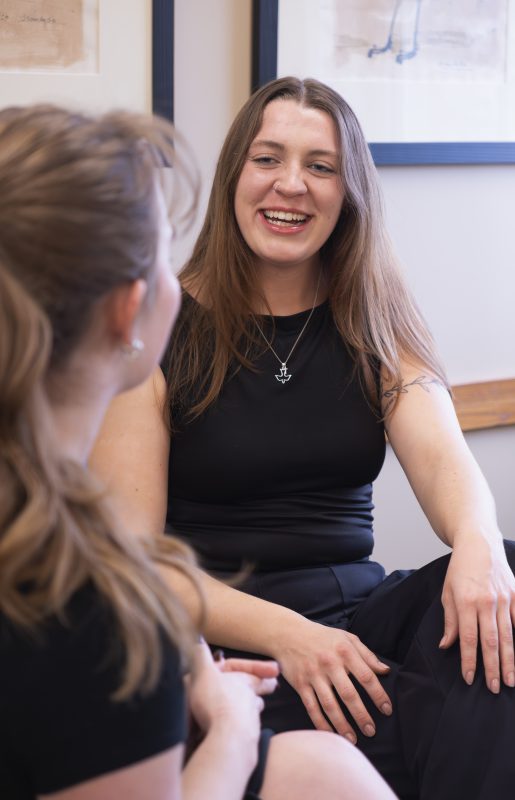
Two students talking in a polarization and civil discourse class
Reagan Woods ’26 (left) talks with Lyrica Gee ’26.
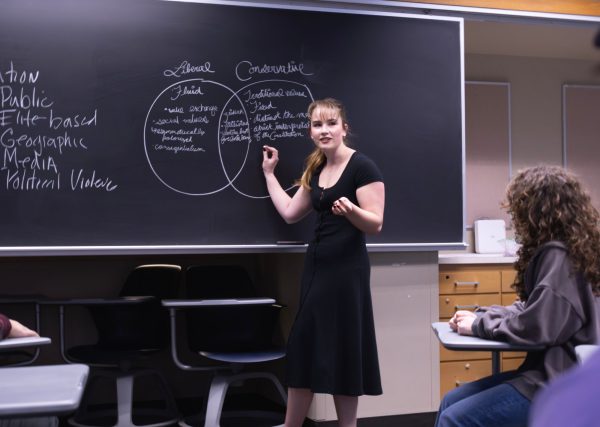
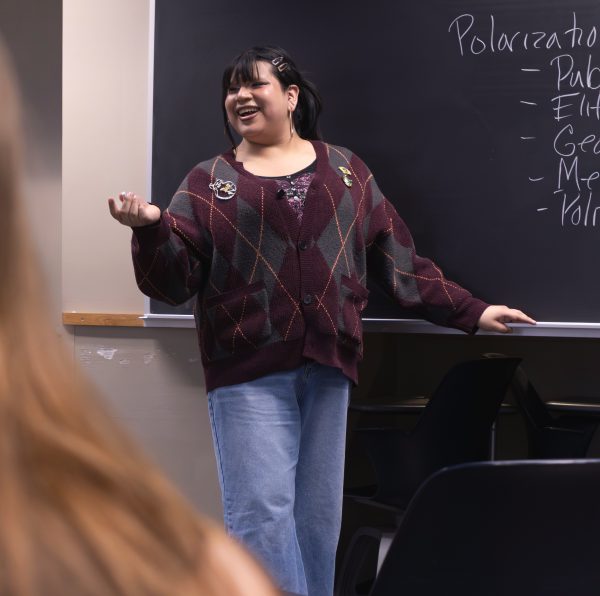
Student leads the class on polarization and civil discourse from a blackboard
Libby McFarlen ’26 leads a discussion.

Student-Led Learning Creates Community

For Reagan Woods ’26, the seminar did more than explore polarization; it gave students practical ways to understand and challenge it.

“Polarization in past political science courses has been an undergirding theme that doesn’t get talked about,” she said. “It’s almost like the boogeyman—this unnamed force that drives our political differences and our current political economy. I like that we have a course where we can address it head-on and say, ‘This is what this is. Let’s name it. Let’s talk about it. Let’s dissect it.’”

The seminar’s structure was deliberately collaborative. Rather than traditional lectures, students led discussions, preparing activities and questions to engage their peers with weekly readings on topics such as media, geographic, and identity-based polarization. Woods described these readings as tools that could be kept in a tool belt, ready to use for class discussions, as well as outside the classroom.

“We have this tool belt full of theories, so what do we do with it now,” she asked. “Do we tackle polarization? Is this a problem we can fix? And while there is no one answer to that, I think it still got the gears turning. We can ask, ‘Is polarization an inevitable problem?’ Dr. Berry also mentioned that we’ve been more polarized before when we fought the Civil War and during the revolution, but we survived as a nation. This is not a hopeless cause, which I think was a hopeful message.”

Hollis Masterson ’26, who is pursuing majors in political science and history, appreciated how the seminar synthesized his undergraduate work.

“The interview assignment and leading class discussions were probably the most important to the classroom experience,” he said. “They offered a great sense of community and understanding among us about where our politics lie, our backgrounds, and that variability of where we all come from.”

Berry said the students embraced the student-led process.

“One thing I found really special about the class was how kind and gracious they were with one another,” he said. “In today’s world of social media and our phones, more often I’ll walk into a classroom, and students won’t be engaging with each other. But because they were developing the lesson plan, I would walk into class, and no one was on their phones—they’d be chatting about the reading they’d done. They posted questions on social media to poll other K students about their attitudes toward topics like political violence, and then they brought up the results in class. We would talk about the different responses in the community, so the conversations didn’t just end in the class; they kept flowing. That, for me, is a rare occurrence.”

The student-led approach created unexpected benefits. Masterson noted that the class brought together political science majors who had rarely shared a classroom before their senior year.

“It became this slow development of a community,” he said. “I wish we could have started this cohort sooner, but having the opportunity to tie everything together as a group made this one of the most valuable experiences of my education.”

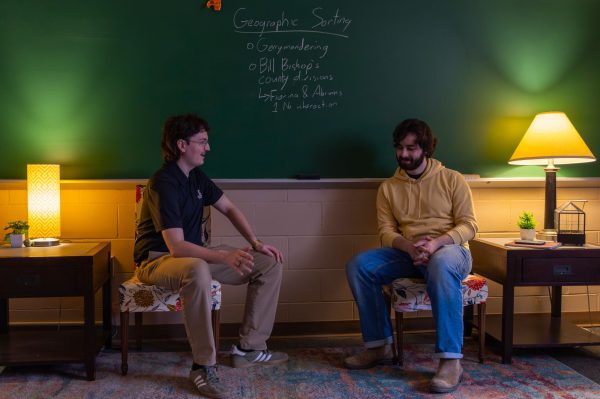
Two students talk about their civil discourse and polarization class
Hollis Masterson ’26 (left) talks with Dymytri Hayda ’26.
Reagan Woods talks with Libby McFarlen.

From Skeptic to Scholar

Maddie Hanulcik ’26 had an experience with the course that reflects the transformative power it had.

“I was excited to take the senior seminar with my cohort, but to tell you the truth, I wasn’t excited about the topic,” she said. “We know that polarization exists, so I wondered whether we needed to make a whole class about it.”

Hanulcik’s perspective shifted drastically as the course progressed. What she initially dismissed as obvious became fascinating as she discovered the depth and breadth of polarization’s impact. The transformation was so complete that Hanulcik chose polarization as the focus of her Senior Integrated Project (SIP). Her project examines why Generation Z has significantly lower faith in democracy than Generation X and how the media influences this decline.

“If people don’t believe in democracy, that’s really scary,” Hanulcik said. “Even if a democracy is not functioning the way you want it to, it’s important to change it for the better instead of just abandoning it. We need to have things like civil discourse and a civil society to keep democracy alive.”

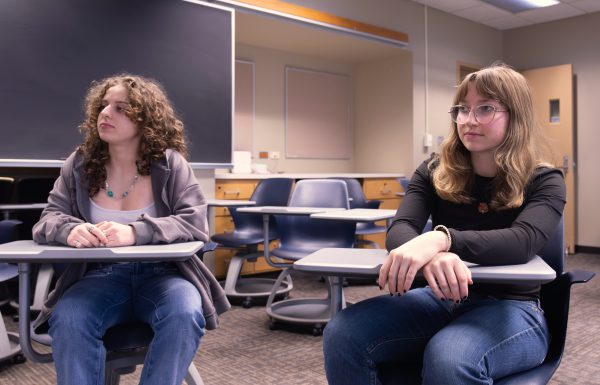
Two students listen in civil discourse and polarization course
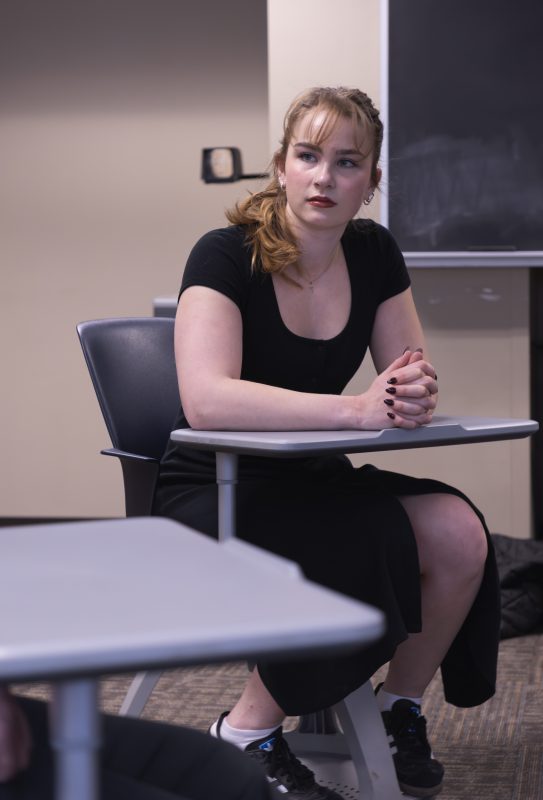
Lilly Cleland ’26 (left) and Maddie Hanulcik ’26
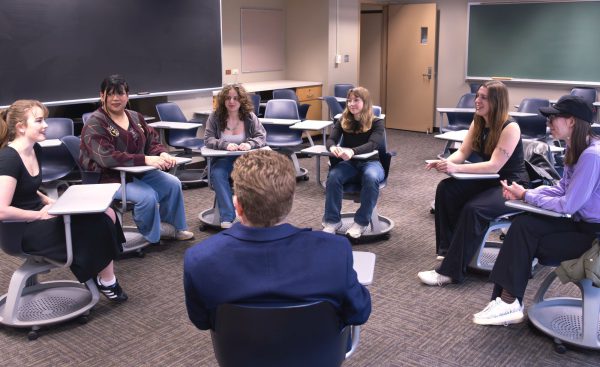
Students in a classroom sit in a semicircle around their professor
Senior Libby McFarlen (from left), Estrella Arana, Lilly Cleland, Maddie Hanulcik, Reagan Woods and Lyrica Gee talk with Associate Professor of Political Science Justin Berry.

Challenging Assumptions

Perhaps the course’s most powerful lesson was how small the actual policy differences could be between opposing sides.

“Despite the fact that ideologically and verbally we have all of these differences, when it comes down to policy, the difference between a moderate Republican and a moderate Democrat is maybe an inch wide,” Gee said. “The difference between voting for one person and voting for the other is sometimes just about how much you dislike the other team.”

Hanulcik, a self-described libertarian, was one of only two non-left-leaning individuals in a class of 20. Initially, that made her feel uneasy, but as class conversations progressed, she found common ground she hadn’t expected.

“People started asking me why I felt the way I did, and after explaining, they said, ‘Oh, I share almost every belief that you have. I just came to it in a different way in my head.’”

The experience helped Hanulcik recognize her own polarization.

“At the beginning of the class, I was polarized against people who were polarized,” she said. “But then I realized I have to have conversations and help them understand the dangers of polarization and what it can lead to.”

She came to see polarization not as a simple left-right divide but as a problem created by extremes on both sides.

“Most individuals here in the U.S. have a similar concept of good or bad,” she said. “Discourse is driven by the extreme ends of both parties, and folks are slowly pulled from the middle. At what point do we lose that extreme dialogue and start communicating with folks in the middle?”

McFarlen captured a common takeaway from the course: people on both sides of the aisle really aren’t as different as they think; they are just shaped by different environments and experiences.

“It doesn’t mean they are your enemies,” she said. “It just means that they think differently, and it’s important to try to understand why people think the way they do.”

Gee reflected on how social media algorithms and sensational journalism exacerbate division for entertainment and profit.

“We’re stoking this fire between the two sides to make it more entertaining,” Gee said. “The entertainment aspect is making us grow further apart because we are sitting in our anger rather than in any critical thinking.”

Associate Professor Justin Berry
Associate Professor of Political Science Justin Berry
Civil Discourse and Polarization Class
Seniors Maddie Hanulcik, Reagan Woods, Lyrica Gee, Lilly Cleland, Estrella Arana and Libby McFarlen listen to Associate Professor of Political Science Justin Berry.

Beyond the Classroom

The lessons students learned have already begun influencing how they engage with politics beyond the classroom. McFarlen said the course changed how she views political campaigns, making her more attentive to how candidates target different audiences and frame their messages.

For Masterson, the course sparked greater interest in state and local politics, where he said bipartisanship still occasionally exists. He’s applying to master’s programs at Tufts University, George Washington University, and three Australian universities, having fallen in love with Australian politics during study abroad.

Gee, who plans to pursue political journalism in Washington, D.C., sees the course as foundational to her future work.

“I always want to look toward educating others and helping them get through really complex bureaucratic systems,” she said. “Having some of these ideas in my head is going to be very helpful in understanding the complexities within people.”

Hanulcik plans to join the Peace Corps after graduation.

“I love being abroad,” she said. “I like moving all the time, and I like helping people in some way, shape or form. I want to live my life as a life of service.”

Libby McFarlen listens in the civil discourse an polarization class
Libby McFarlen ’26

A Model for Democratic Citizenship

For Professor Berry, the course represents more than an academic exercise. It’s about preparing students for democratic citizenship in a fractured era.

“We have reached the point where we can no longer discuss politics with those with whom we disagree,” he said. “I wanted to provide students with a venue to grapple with difficult political questions and model how to engage in civil disagreement. It is a vital component of democratic citizenship, and it is not a skill we have effectively modeled for them.”

The results speak for themselves. What began as a required senior seminar became what multiple students described as their favorite class at K. In a moment defined by division, the course offered a glimmer of hope, proof that with curiosity, respect, and honesty, real conversation is not only possible; it’s transformative.

Estrella Arana ’26

‘Grand Bargain’ Judge Slated to Deliver Flesche Lecture

Kalamazoo College will welcome back distinguished alumnus Gerald Rosen ’73 as the keynote speaker for the 2025 Donald C. Flesche Lecture. The event, “The Grand Bargain: Lessons from the Detroit Bankruptcy,” will take place at 8 p.m. Wednesday, September 24, in the Olmsted Room of Mandelle Hall. The lecture will be free and open to the public, and a livestream will be available for those unable to attend.

Rosen, a retired federal judge for the Eastern District of Michigan and former chief judge of the court, is best known for his role in Detroit’s historic bankruptcy case. His leadership in crafting the “Grand Bargain” helped the city exit bankruptcy in 2014 while protecting the pensions of thousands of retirees and preserving the Detroit Institute of Arts’ world-renowned collection.

Rosen also spoke at K in the 2015 Weber Lecture and was interviewed as a guest at an event for students in 2018. After earning his law degree at George Washington University, Rosen went on to a distinguished career in private practice before being appointed to the federal bench in 1989. During nearly three decades as a judge, including seven years as chief judge, he presided over landmark cases involving terrorism, constitutional questions and civil rights.

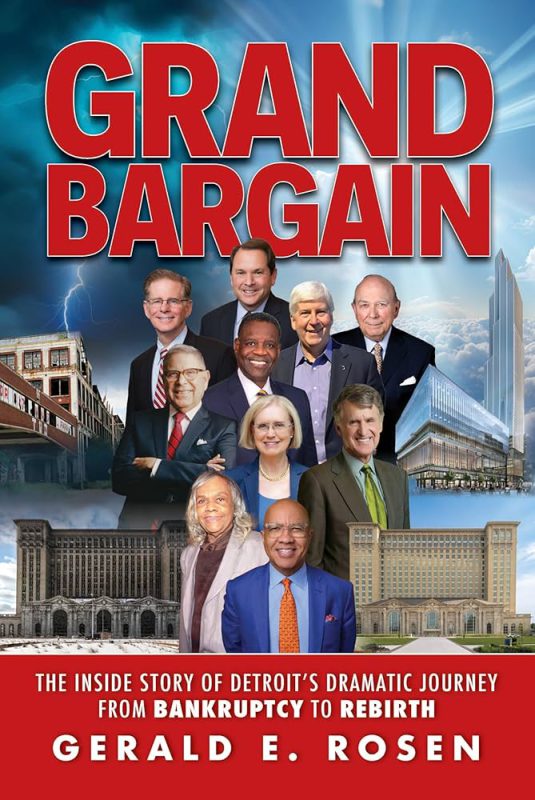
Rosen returns to campus as his story is reaching new audiences. His 2024 book, Grand Bargain: The Inside Story of Detroit’s Dramatic Journey from Bankruptcy to Rebirth, provides a behind-the-scenes account of how city officials, state leaders, philanthropists and creditors came together to negotiate a solution once thought impossible. Detroit Mayor Mike Duggan has described Rosen as “a very important figure in Detroit’s history” whose “daring leadership, wisdom and diplomacy” helped set the stage for the city’s recovery. Rosen discussed the book in a January interview with WMUK 102.1. He and his book also will be spotlighted in the fall edition of Lux Esto.

The annual Flesche Lecture honors Donald C. Flesche, a longtime professor of political science at Kalamazoo College, who influenced generations of students—including Rosen himself. While studying at K, Rosen majored in political science and took courses with Flesche that helped shape his career in law and public service.

Cover of Grand Bargain Book
Retired judge and author Gerald Rosen ’73 will visit Kalamazoo College on September 24 to deliver the annual Flesche Lecture. A livestream will be available.

K Honors Faculty, Staff at Annual Founders Day Celebration

Amy Elman receives Lux Esto Award from President Jorge G. Gonzalez during Founders Day 2025
William Weber Chair of Social Science Amy Elman receives the 2025 Lux Esto Award from President Jorge G. Gonzalez during Founders Day events at Stetson Chapel on Friday, April 25.
Daniela Arias-Rotondo receives the Outstanding First-Year Advocate Award from President Jorge G. Gonzalez at Founders Day
Varney Assistant Professor of Chemistry Daniela Arias-Rotondo receives the Outstanding First-Year Advocate Award from President Gonzalez at Founders Day.
Sandino Vargas-Perez receives the Outstanding Advisor Award from President Jorge G. Gonzalez at Founders Day
Dow Associate professor of Computer Science Sandino Vargas-Perez receives the Outstanding Advisor Award from President Gonzalez at Founders Day

Amy Elman, the William Weber Chair of Social Science, is this year’s recipient of the Lux Esto Award of Excellence as announced today during the College’s Founders Day celebration, marking K’s 192nd year.

The award recognizes an employee who has served the institution for at least 26 years and has contributed significantly to the campus. The recipient—chosen by a committee with student, faculty and staff representatives—is an employee who exemplifies the spirit of K through selfless dedication and goodwill.

At K, Elman has taught a variety of courses within the political science, women’s studies and Jewish studies departments. During her tenure, she has also been a visiting professor at Haifa University in Israel, Harvard University, SUNY Potsdam, Middlebury College, Uppsala University in Sweden and New York University.

Elman has received two Fulbright grants, a fellowship from the National Endowment for the Humanities and a grant from the Sassoon International Center for the Study of Anti-Semitism at Hebrew University. She has written three books: The European Union, Antisemitism and the Politics of Denial (2014); Sexual Equality in an Integrated Europe (2007); and Sexual Subordination and State Intervention: Comparing Sweden and the United States (1996). She also edited Sexual Politics and the European Union: The New Feminist Challenge (1996). In the 1997–98 academic year, she was awarded K’s Florence J. Lucasse Fellowship for outstanding scholarship.

In accordance with Founders Day traditions, two other employees received community awards. Dow Associate Professor of Computer Science Sandino Vargas–Pérez was given the Outstanding Advisor Award and Varney Assistant Professor of Chemistry Daniela Arias-Rotondo received the First-Year Advocate Award.

Before arriving at K, Vargas-Perez worked as an adjunct instructor at Western Michigan University, where he earned his master’s degree and Ph.D. in computer science. He also holds a bachelor’s degree from Pontificia Universidad Catolica Madre y Maestra in the Dominican Republic.

Vargas-Perez has taught courses at K in data structures, algorithms, parallel computing, computing for environmental science, object-oriented programming, and programming in Java and web development. His research interests include high-performance computing, parallel and distributed algorithms, computational genomics, and data structures and compression.

Founders Day Celebration performers
Jazz quartet Liam McElroy (piano), Laura DeVilbiss (flute), Garrick Hohm (string bass) and Adam Cornier-Bridgeforth (drums) performed at the Founders Day celebration.
Two students introduce President Gonzalez
President’s Student Ambassadors Ava Williams ’26 and Madeline Hollander ’26 introduced President Gonzalez at the 192nd Founders Day celebration.
Presidents Student Ambassadors seated at Stetson Chapel
President Gonzalez recognized the students who served this year as President’s Student Ambassadors and shared the names of 13 more who will serve beginning this fall.

Nominators said Vargas–Pérez has consistently gone above and beyond his responsibilities as a professor to promote learning while finding opportunities for his advisees.

Arias-Rotondo has earned significant funding in support of her research and her commitment to engaging students in hands-on experiences in her lab. A $250,000 grant in 2023 from the National Science Foundation’s Early-Career Academic Pathways in the Mathematical and Physical Sciences (LEAPS-MPS) provided funding for student researchers, typically eight to 10 per term. In 2024, she received a $50,000 American Chemical Society (ACS) Petroleum Research Fund grant, which will support her and her students’ upcoming research regarding petroleum byproducts. H.

Arias-Rotondo teaches Introductory Chemistry, Inorganic Chemistry, and Molecular Structure and Reactivity, and commonly takes students to ACS conferences. She holds a bachelor’s degree from the Universidad de Buenos Aires in Argentina and a Ph.D. from Michigan State University. Nominators said she has been a dependable, inspirational and fierce advocate for students.

Gonzalez also recognized the students who served as President’s Student Ambassadors in the 2024–25 academic year and introduced those who will serve the College beginning this fall in 2025–26. As student leaders, President’s Student Ambassadors serve as an extension of the president’s hospitality at events and gatherings, welcoming alumni and guests of the College with a spirit of inclusion. About 15 students serve as ambassadors each academic year. The students selected show strong communication skills; demonstrate leadership through academic life, student life or community service; and maintain a minimum grade-point average.

The 2024-25 ambassadors have been:

  • Jaylen Bowles-Swain ’26  
  • Christopher Cayton ’25  
  • Kyle Cooper ’25  
  • Blake Filkins ’26 
  • James Hauke ’26 
  • Maya Hester ’25  
  • Madeline Hollander ’25 
  • Gavin Houtkooper ’25  
  • Katie Kraemer ’25  
  • Isabelle Mason ’27  
  • Alex Nam ’25 
  • Tyrus Parnell, Jr. ’25 
  • Isabella Pellegrom ’25 
  • Addison Peter ’25  
  • Maxwell Rhames ’25 
  • Emiliano Alvarado Rescala ’27  
  • Amelie Sack ’27  
  • Dean Turpin ’25  
  • Ava Williams ’25 

The 2025-26 ambassadors succeeding this year’s seniors will be:

  • McKenna Acevedo ’27 
  • Randa Alnaas ’27 
  • Zahra Amini ’26 
  • Baylor Baldwin ’26 
  • Victoria “Gracie” Burnham ’27 
  • Avery Davis ’28 
  • Landrie Fridsma ’26 
  • Grey Gardner ’26 
  • Ava King ’28 
  • Claire Rhames ’27 
  • Simon Sawyer ’28 
  • Jillian Smith ’27 
  • Darius Wright III ’28 

University of Chicago Professor to Lecture at K

Tom Ginsburg, the Leo Spitz Distinguished Service Professor of International Law at the University of Chicago, will present the 2024 William Weber Lecture in Government and Society on Tuesday, October 15.

Ginsburg also serves as the faculty director at the Forum on Free Inquiry and Expression, and the Malyi Center for the Study of Institutional and Legal Integrity. His lecture at 4:30 p.m. in the Olmsted Room will address “Surviving the Crises of Constitutional Democracy in the United States: Lessons from Abroad.”

The discussion, which is open to the public, will focus on the idea that many Americans feel that democracy in the United States is in grave danger with polarization high and institutional trust in decline. The U.S. is not alone in this regard as other constitutional democracies around the world are suffering from similar crises. Ginsburg will address the sources of institutional decay and how they might be reversed. The lecture also will approach what resources we as Americans might grasp in attempting democratic renewal.

The William Weber Lecture in Government and Society was founded by Bill Weber, a 1939 graduate of Kalamazoo College. In addition to this lectureship, Weber founded the William Weber Chair in Political Science at K. Previous speakers in this series have included civil rights activist DeRay Mckesson, Chief U.S. District Judge Gerald Rosen, political commentator Van Jones and author Tamara Draut.

For more information on the William Weber Lecture, visit the Department of Political Science’s website.

William Weber Lecture Speaker Tom Ginsburg, the Leo Spitz Distinguished Service Professor of International Law at the University of Chicago.
Tom Ginsburg, the Leo Spitz Distinguished Service Professor of International Law at the University of Chicago.

Trout Unlimited Communication Director to Speak at Convocation

Nicholas Gann ’12 will deliver the keynote at Kalamazoo College’s 2024 Convocation on Thursday, September 12, at 3 p.m. on the Quad.

Throughout jobs as wide-ranging as substitute teacher in Detroit, laborer at a maraschino cherry manufacturing facility, political researcher, roofer, public relations, and tourism manager, and in environments as different as the forests of northern Michigan, the big sky of Montana, the hustle and bustle of Chicago, and the wild west of Wyoming, Gann has recognized how his liberal arts education at K prepared him by developing an open mind, critical thinking skills, and a deep curiosity.

Gann graduated from K with a B.A. in political science and has worked in Montana with Project Vote Smart, a non-partisan candidate research nonprofit; in Chicago with ASGK Public Strategies (later Kivvit, now Avoq), including work on projects for the U.S. Olympic and Paralympic Committee and Fortune 500 companies; and as strategic partnerships manager for the Wyoming Office of Tourism, where he  organized more than a dozen state and federal agencies to develop a shared responsible recreation campaign during the COVID-19 pandemic, and served as part of the larger agency efforts led by the executive director to help Wyoming weather the economic and tourism effects better than many other states.

Since 2022, Gann has worked as a communications director for Trout Unlimited, a nonprofit dedicated to conservation of freshwater streams, rivers and associated habitats for trout, salmon, other aquatic species and people. The organization’s mission is “to bring together diverse interests to care for and recover rivers and streams so our children can experience the joy of wild and native trout and salmon.”

Convocation marks the start of the academic year and formally welcomes the matriculating class of 2028 into the Kalamazoo College community. President Jorge G. Gonzalez, Vice President for Student Development and Dean of Students J. Malcolm Smith, Provost Danette Ifert Johnson, Director of Admission Shannon Milan, Chaplain Elizabeth Candido, the Convocation speaker, faculty, staff and President’s Student Ambassadors will welcome students and their families. All students, families, faculty and staff are invited to attend in person or via livestream.

Trout Unlimited Communication Director Nichols Gann
Nicholas Gann hikes in the Snowy Range of the Medicine Bow-Routt National Forest, near Centennial, Wyoming, October 15, 2021. Gann ’12 will deliver the keynote at Convocation on Thursday, September 12, at 3 p.m. on the Quad. Photo by David Lienemann.

German Exchange Program Chooses K Alumnus

Kalamazoo College alumnus Peter Fitzgerald ’23 will promote global understanding and collaboration for one year in Germany through the Congress-Bundestag Youth Exchange (CBYX) for Young Professionals. 

In his time at K, Fitzgerald was a double major in history and political science. He also minored in music, had a concentration in American studies, played men’s tennis, and served in three political internships between U.S. House candidate Jon Hoadley, Michigan Rep. Darrin Camilleri ’14 and Michigan Governor Gretchen Whitmer and their campaigns. 

Now, however, Fitzgerald and 74 other American participants chosen from 500 applicants will attend a two-month intensive language course, study at a German university, and complete an internship in the field of international relations through the CBYX. 

The bilateral CBYX exchange program, established through the U.S. Congress and German Bundestag (Parliament), allows participants to stay with host families in Germany, where they will act as citizen ambassadors to promote a positive image of the U.S. abroad, and create lifelong friendships and professional connections to enhance German-American relations. 

Although each internship over the CBYX’s 40 years has been different, 93% of participants have reported gaining a new understanding of the U.S. and its role in the world, 92% said they improved their communication skills, and 91% reported gaining an appreciation for other cultures and a curiosity about the world. American host communities also benefit from the program when they welcome German participants in return to homes, schools and organizations in the U.S. 

For more information about CBYX, visit exchanges.state.gov/cbyx or contact Cultural Vistas, a nonprofit exchange organization promoting global understanding and collaboration among individuals and institutions, at cbyx@culturalvistas.org

Exchange program participant Peter Fitzgerald
Peter Fitzgerald ’23 is among 74 Americans going to Germany for one year as a part of the Congress-Bundestag Youth Exchange for Young Professionals. They will act as citizen ambassadors to promote a positive image of the U.S. abroad.

Model United Nations Team Earns Honors at Conferences 

The Model United Nations team from Kalamazoo College earned an Honorable Mention Delegation award at the National Model United Nations (NMUN) in New York in April, and several awards at the Midwest Model UN (MMUN) conference in St. Louis, Missouri, in February. 

The NMUN honor places the 15 K students who participated—half of whom were rookies—in the top 20% of the largest, most established intercollegiate Model UN conference in the world. 

“I was very proud of that, especially with a good half of our students coming into New York completely new to conferences,” said Mason Purdy ’24, president of Model UN at K. “We did as much teaching and training as we could, but they had to learn as they went.” 

The K team represented the Kingdom of Morocco at NMUN, with students assigned in pairs to various committees. For example, Purdy and Hannah Willit ’24, vice president of Model UN at K, served on the human rights council. Each council considers two topics. For Purdy and Willit, the topics were human rights and the use of private military and security companies as well as human rights of indigenous peoples. Before the conference, teams research existing laws and standards, their country’s history, and other areas that provide context for the topics. 

“For example, Morocco has been embroiled in a controversy for years about territory in the Western Sahara,” Purdy said. “One side says this was always Moroccan land and was taken for colonization; the other side says the people who live there don’t really want to be Moroccan; the first side says they are Moroccan, they just don’t realize it. The issue of indigenous sovereignty is a politically tricky one for Morocco, and sometimes you have to represent views at Model UN that maybe you wouldn’t love as an individual.” 

Students from K pictured in the UN General Assembly Hall during the Model UN Conference
The National Model United Nations team from Kalamazoo College attends the conference’s closing ceremony in the UN General Assembly Hall.
Three students in front of National Model United Nations Conference banners
The Model UN team from K received Honorable Mention Delegation at the national conference in New York in April.
Three students hold a sign that says Morocco at the Model United Nations Conference
Fifteen students from K participated in the National Model United Nations in New York in April.
Four students with a sign that says Morocco at the Model UN Conference
K’s Model UN team represented the Kingdom of Morocco at a national conference in New York in April.

Maddie Hanulcik ’26 served on the commission on the status of women, which considered the empowerment of rural women and girls along with healthcare accessibility for women. 

“It was largely an all-women committee, which made it a safe space for women to talk,” Hanulcik said. “We were all dedicated to the same ideas of furthering women’s rights. All of our committee papers passed. I had never been to a conference where every paper passed. It was cool to see us all working together and how everyone felt empowered to share and speak without fear.” 

At each Model UN conference, committees employ both formal (speeches) and informal (networking and developing de facto working groups) sessions to work toward a resolution addressing each topic. Over hours and days, a few resolutions will emerge that the dais (a moderating team of staff members) evaluates as acceptable, the committee will vote, and amendments will be made. The goal is that the committee will eventually adopt one resolution unanimously. 

“Generally, the aim on a Model UN committee is to try to get as much unanimity in agreement as you can on an issue, because in the real international community, that’s how you get change to actually happen,” Purdy said. “Model UN tries to replicate that, and in the process, it teaches conflict resolution, negotiating, compromise, and social and political skills.” 

A highlight of the New York conference for Hanulcik came when the resolution she had primarily worked on was one of just a couple chosen to be sent to the actual United Nations. 

“It felt incredible that so many people from so many places had come together, even though we had very different backgrounds, to find resolution on this issue and make such a powerful, moving paper that our dais submitted it to the actual United Nations,” Hanulcik said. “It was wonderful to feel like we have power in the future as the next generation.” 

For Hanulcik, a political science major with concentrations in community and global health and in women, gender and sexuality, Model UN offers the feel of real-world experience and develops public speaking abilities, teamwork and collaboration, friendships and optimism. 

“Even though it’s not the real world—it’s a model—it gives the sense of what you can do outside of school with the classes you’re taking and see how they can be applied,” Hanulcik said. “For example, in my women, gender and sexuality classes, we learn theories about how women can be fully liberated. Then I go to Model UN and see how those policies can be put in place to make a difference in women’s lives. There is such optimism, and that goes for the real UN as well. It’s easy to know that our world is a hard place to live in and can be terrible for so many people. But the UN has this optimism about it. We’re going to keep trying. We’re going to pass these resolutions. We’re going to encourage people to implement them. It’s a place to gather and try to make things a little bit better with the power of collaboration.” 

Prior to New York, a smaller group of K students attended the Midwest Model United Nations conference, where the team received several awards. There, the more experienced students represented Azerbaijan while the newer participants represented Lebanon. 

“During the St. Louis conference, there was a big plenary where everyone comes together in one room and votes up or down the resolutions that each committee has done,” Purdy said. “There’s debates and amendments, so on and so forth. Representing Azerbaijan, I went to our delegates representing Lebanon—our learners—with a resolution. I said, ‘We would really like your support for this; we would like you to sign on to it.’ They read through it, and they were like, ‘No. Lebanon cannot support this.’ And I was so glad that they didn’t just say yes to me because I was their friend and their teacher. I was like, ‘Yes, you guys are getting it.’ That might have made me more proud than some of the awards we won.” 

Those awards included Distinguished Delegation as Azerbaijan, placing the team in the top 10 of all countries represented. Team members also won three individual awards, with Nathan Bouvard winning an award for his position paper in General Assembly 2 as Azerbaijan, Martina Marín winning a position paper award in the World Health Organization as Azerbaijan, and Purdy winning the top honors of Outstanding Delegation as Azerbaijan in the UN Environmental Assembly. 

A double major in religion and political science with a Jewish studies concentration, Purdy is grateful that the Office of Student Activities and the Department of Political Science fund Model UN at K. 

“Model UN has made a world of difference to me, developing my skills, developing as a person, developing as a leader, being in charge of this club,” Purdy said. “I’m a first-generation student, I come from a very working-class background; If I’d had to pay to participate, I would have had to say no. I’m so glad the K Model UN program is free to students. And we get to do that because the school is very generous, and its donors are very generous. I’m very proud that our program is free because in some places, this is an elite activity. It’s cordoned off for people with wealth, with financial privilege, and I’m glad that’s not the case at this school. Here, Model UN is about your willingness, your talent, your commitment, and that makes a world of difference with our team. 

“I’m happy to say Model UN has made the recovery post-COVID, and we are larger and more competitive than I ever saw us. I’m very proud of this program and I hope that the people I hand it off to will bring it to new heights.” 

Model United Nations Conference at the UN General Assembly
Before going to New York, a smaller group of students attended the Midwest Model United Nations conference, where the team received several awards. The more experienced students represented Azerbaijan while newer ones represented Lebanon.
Two students attending the National Model United Nations Conference
K’s team that represented Azerbaijan in the Midwest competition placed in the top 10 of all countries represented.

Midwest Model United Nations Participants

  • Nathan Bouvard
  • Laura Goia
  • Martina Marin
  • Nailia Narynbek Kyzy
  • John O’Neill
  • Mason Purdy
  • Hannah Willit
  • Wendy Yan (Yan Yazhuo)

National Model UN Participants

  • Belen Cañizares Acuña
  • Nathan Bouvard
  • Maansi Deswal
  • Laura Goia
  • Kenia Gonzalez
  • Teresa Gonzalez Redondo
  • Paola Guzman Jimenez 
  • Maddie Hanulcik
  • Rob Kloosterman
  • Nailia Narynbek Kyzy
  • Andrea Ladera
  • Martina Marin
  • John O’Neill
  • Mason Purdy
  • Hannah Willit

Buzz Around Washington Caps Student’s Paralegal Work, Study Away

Paralegal Libby McFarlen at the Lincoln Memorial
Libby McFarlen ’26, pictured at the Lincoln Memorial, spent her fall term in Washington, D.C., working as a paralegal intern for a criminal defense attorney.
Libby McFarlen at the Washington Memorial
McFarlen visited sites such as the Washington Monument while learning the ins and outs of what a paralegal does within the Washington court system.
Libby McFarlen at the Capitol Building
McFarlen snapped pictures from one end of the Washington Mall to the other with a Buzz the Hornet Squishmallow at sites such as the U.S. Capitol Building on her last day in Washington, D.C.

There was a Buzz floating through the air recently in Washington, D.C.

Although that could mean many things under different circumstances, in this case it means that a cuddly, orange-and-black representation of Kalamazoo College’s beloved mascot, Buzz—a Squishmallow, to be exact—was following Libby McFarlen ’26 around town for some Instagram-worthy photo opportunities while McFarlen concluded her study away experience.

“K is a small liberal arts college in Michigan, and I thought we needed to have some representation in Washington,” McFarlen said. “I just picked some of the major sites people think about with D.C. and took some pictures. We hit the Washington Monument, the Capitol Building and the Lincoln Memorial as he basically went from one end of the National Mall to the other.”

McFarlen’s primary purpose in Washington, though, was to work as a paralegal with a criminal defense attorney through the Washington Center, an organization that provides immersive internships and academic seminars to students from 25 countries including the U.S. It was the perfect study away fit for McFarlen, a Kalamazoo native and Loy Norrix High School graduate, who plans to officially declare a political science major in February.

Both study abroad and study away programs involve firsthand chances to learn in locations far from campus, but study away offers opportunities specifically within the U.S. Many of them are credit-bearing and provide professional experience.

“It’s such an amazing program and it’s not talked about as much as study abroad,” McFarlen said of study away. “I just want K students to know that it’s not a lie to say this was a life-changing experience for me. It has reaffirmed what I want to do after graduating from K. If any student is interested in doing it, I would say just jump in and go for it. I had such a great time, and if I could go back and do it again next fall, that would be 110% fantastic.”

McFarlen commonly worked daily from 8:30 a.m. to 3 p.m. side by side with the defense attorney, primarily in an office environment, but also in court, at a jail, in investigations and in meetings with clients. Although she was surprised how little attorneys are in front of a judge or at trial, the experience gave McFarlen a first-hand look at what might be her future profession.

Paralegal Libby McFarlen at the White House
McFarlen, here at the White House with a friend, interned in Washington through the Washington Center, which provides immersive internships and academic seminars to students from 25 countries.
Libby McFarlen at the National Museum of Natural History
McFarlen, pictured in the middle of the front row at the National Museum of National History, plans to return to Washington, D.C., in a few years to pursue her law degree.
Libby McFarlen at the National Mall
McFarlen praised K’s study away program while recognizing that she had a life-changing experience in Washington, D.C.

“We would go to court in the mornings, and I would take notes for him,” she said. “We would then come back and have client meetings. I really got to know the D.C. superior court system online because I learned how to file motions with the courts and, basically, how to do everything that a paralegal would do. It provided great insight into what it means to be a criminal defense attorney.”

Ultimately, McFarlen has yet to decide whether she wants to be an attorney or a lobbyist. Regardless, the next steps toward her future vocation would be to graduate from K and take a gap year or two before returning to Washington for law school. Her interest in politics makes the day after an election feel like Christmas morning, she said, meaning the location would be perfect for her continued education, hopefully somewhere such as Georgetown or American University.

“In D.C., there’s so much history and so much knowledge condensed into such a small area,” McFarlen said. “It was especially cool that I could do something like go into a Smithsonian anytime I wanted. I would be riding around in an Uber and I would constantly be reminded and shocked that I was in D.C., seeing the Capitol building sitting on the end of the National Mall. It was amazing to be there.”

Paralegal Libby McFarlen with two other Washington Center interns
McFarlen stayed in Washington Center housing while meeting other interns from across the U.S. and Canada.

Shumunov is First K Student to Receive Beren Fellowship

Joseph Shumunov ’25 is the first Kalamazoo College student to be honored with a Beren Fellowship from the Tikvah Fund

The Beren Fellowship, which seeks to encourage and support young scholars in leading lives of Jewish purpose and leadership, includes eight summer weeks in New York City. The cohort of current college students and recent graduates will spend three weeks in seminars led by leading scholars and thinkers, learning and debating Jewish history, texts and politics. Then, each fellow embarks on a research project or internship focusing on an area of Jewish public policy or Jewish life that intrigues them. In the final week of the fellowship, the fellows hold a conference to present their work to each other as well as to other students, writers and professionals in the Tikvah network. 

A double major in political science and international and area studies, Shumunov proposed in his fellowship application a project analyzing the relations between Israel and Azerbaijan and how their relationship might benefit the U.S. geopolitically. His mentor in the research, who also offered Shumunov an internship, will be Michael Doran, a senior fellow and director of the Center for Peace and Security in the Middle East at Hudson Institute in Washington, D.C. Doran specializes in Middle East security issues. 

Shumunov’s interest in the project springs from his role as a virtual social media intern for the U.S. Embassy in Azerbaijan, assisting their public affairs department, creating Instagram posts, reviewing public briefings and writing cables for the ambassador. 

In his first two years at K, Shumunov has also participated in Model UN (and will serve as a co-president), Refugee Outreach Collective (including Homework Champions Tutoring), and Hillel (where he has been vice president).  

Beren Fellowship recipient Joseph Shumunov
Joseph Shumunov ’25 will spend eight weeks in New York City this summer as a result of earning a Beren Fellowship.

In addition, Shumunov values the experiences he has had with Afro Fiesta Desi Sol, as an important space on campus to celebrate cultural differences, and in talks between Hillel and College administration regarding antisemitism on campus, which helped him see how each person can drive change. 

Amy Elman, the William Weber Chair of Social Science and a professor of political science, suggested to Shumunov that he consider applying for the Beren Fellowship. 

“I’ve had Joseph in three classes now, and he distinguishes himself by having the ability to synthesize difficult materials,” Elman said. “Joseph is that rare student who is interested in being challenged. He’s serious about political thought, and he’s genuinely interested in helping the American Jewish community thrive, which is no easy task given the surge in antisemitism worldwide.” 

When he read about the fellowship, Shumunov thought it would be a good opportunity for networking, possible publication of his research, learning and connecting. 

“I lived in a very Jewish community in Detroit, and a lot of my time has been devoted to Judaism and my religion, especially because I went to a Jewish school for most of my life,” Shumunov said. “Coming to K has been a transition for me because now my only access to the Jewish community is maybe a small Jewish Studies program and Hillel, and that’s made me crave it more.” 

The Beren Fellowship has existed in a variety of forms since 2009, and this is the first year a Kalamazoo College student will join the cohort. 

“The Beren Summer Fellowship is thrilled to welcome Joseph as a fellow this year,” said Alan Rubenstein, senior director of Tikvah’s University and Young Professional Programs. “We are excited to see how he will bring his learning about the modern Jewish condition and his deep study of American foreign policy in the Middle East back to the Kalamazoo community.” 

Shumunov hopes to bring what he learns and experiences back to campus, particularly to classes with Elman and as part of ongoing efforts to combat antisemitism on campus. 

“One thing I’m looking forward to is that these students are part of my age group and a lot of them are coming from campuses that also face rising antisemitism,” Shumunov said. “I think a common denominator within our group will be that we know what’s happening, and we want to fix it; we want to apply what we learn to our campuses when we come back. I think we’ll be sharing about our experiences and discussing why antisemitism is rising on campuses, why it’s becoming normalized, ways to combat it, to change it and to prevent it from happening.” 

After completing the Beren Fellowship, Shumunov plans to study abroad in Jordan from August to December and intends to complete a humanitarian internship during this time there. He hopes to work with refugees and migrants in Jordan and to complete a Senior Integrated Project examining the lives of refugees and migrants or diasporas in the world. 

The Tikvah Fund is a private philanthropic foundation based in New York with the mission of promoting serious Jewish thought about the enduring questions of human life and the pressing challenges that confront the Jewish people. 

NBC News Journalist, Producer to Visit K

Dan Slepian, an award-winning NBC News journalist and veteran producer of Dateline, will be the featured speaker at Kalamazoo College’s Flesche Lecture at 8 p.m. May 11 at Stetson Chapel. A livestream will also be available.

In more than two decades at NBC, Slepian has earned 11 Emmy nominations by spearheading dozens of documentaries, hidden-camera investigations and breaking news reports. Referred to as “a TV news gumshoe” by the New York Times, Slepian’s investigations have helped solve cold cases, assisted in exonerating the wrongly accused, and sparked changes in laws.

In February, NBC News released “Letters from Sing Sing,” an eight-episode podcast hosted by Slepian that documents his 20-year journey investigating the wrongful conviction claim of Jon-Adrian “JJ” Velazquez. The podcast hit No. 1 on Apple’s top charts the day of its release. Velazquez will be a guest of Slepian at the lecture.

Slepian also conceived, developed and produced “Justice for All,” an NBC News/MSNBC series about the criminal justice system. The weeklong event included the first town hall from a maximum-security prison as well as Dateline’s Emmy-nominated “Life Inside” about mass incarceration.

In February 2021, NBC premiered Dateline’s first docuseries, “The Widower,” a five-hour network primetime series airing over three nights, detailing Slepian’s 13-year investigation into Thomas Randolph, an eccentric homicide suspect who had been married six times.

In May 2019, Dateline debuted its first podcast with Slepian. The eight-episode series “13 Alibis” helped exonerate an innocent man of homicide. In 2018, Slepian was granted exclusive access to film rapper Meek Mill on the day of his highly publicized release from prison. The Dateline special “Dreams and Nightmares” featured journalist Lester Holt’s exclusive interview with Meek just hours after his release.

As a volunteer, Slepian works with incarcerated men at Sing Sing prison where he helped create “Voices from Within,” a video featuring testimonials intended to help reduce gun violence. Slepian introduced the project, which is now a long-term program at the prison, during a TEDx talk at Sing Sing.

Before joining NBC News, Slepian began his career with the Phil Donahue Show.

K Professor Emeritus of Political Science Donald C. “Don” Flesche has been a longtime voice of the Hornets at countless athletic events and a beloved teacher. The Donald C. Flesche Visiting Scholars and Lectureship Endowment was started by Flesche’s former students, ensuring the conversations among learners on campus include the best scholars and newsmakers in the world. The Flesche Lecture is free and open to the public.

Flesche Lecture speaker Dan Slepian, an NBC News journalist
NBC News journalist Dan Slepian will deliver the 2023 Flesche Lecture at 8 p.m. May 11.
Flesche Lecture guest Jon-Adrian JJ Velazquez
Jon-Adrian “JJ” Velazquez will be Slepian’s guest at the Flesche Lecture.