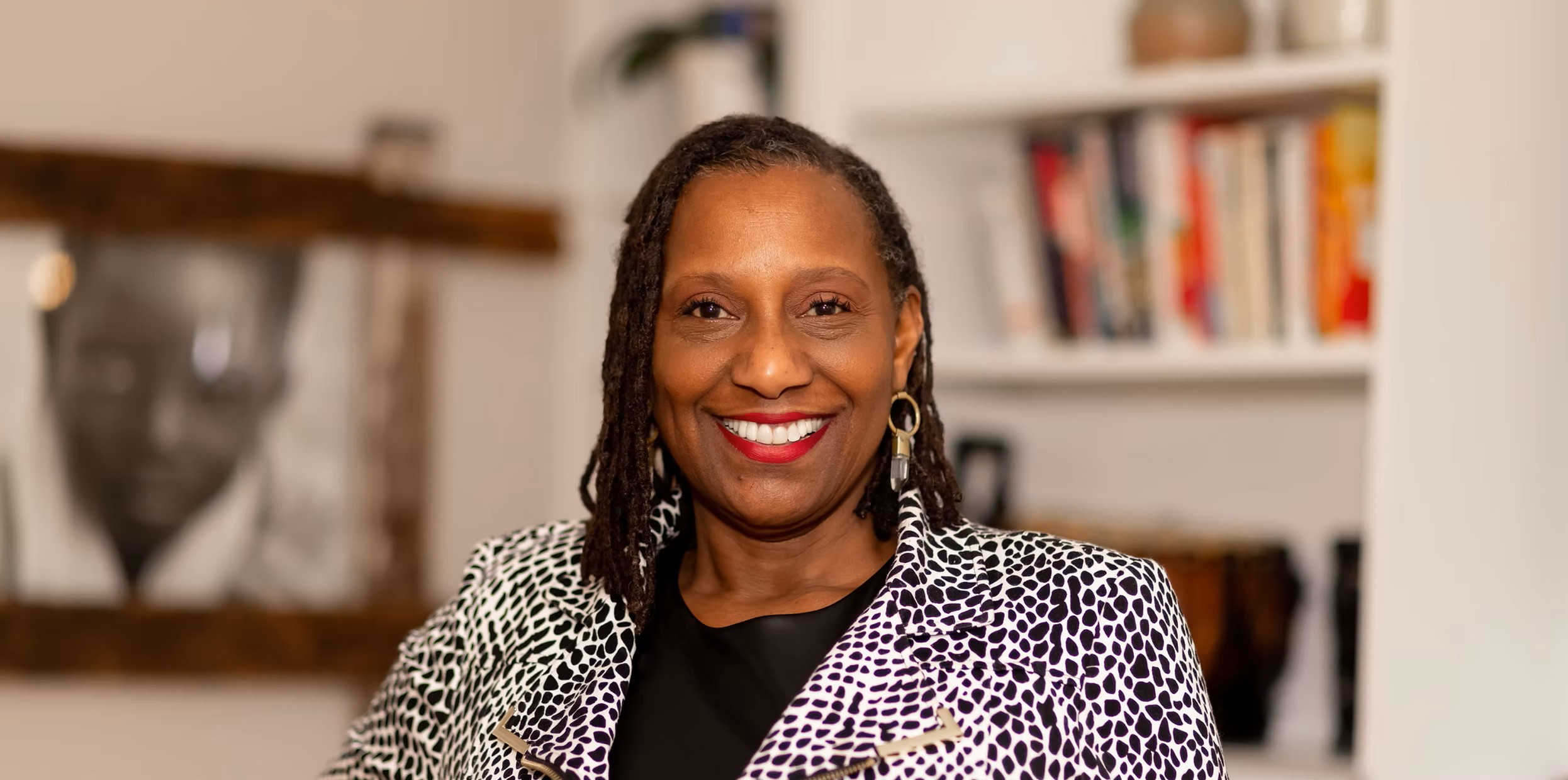
Activist, author, and attorney Sandra Barnhill, JD will return to Kalamazoo College this month for a series of events, including two open to the public, focused on the balance between advocating for social change and preserving one’s sense of purpose.
Barnhill will discuss her book, Tough Mind, Tender Heart: Reflections on a Black Woman’s Activist Journey, from 2–4 p.m. Saturday, April 18, at the Black Arts and Cultural Center, 359 S. Kalamazoo Mall, Suite 102.
She will also deliver a keynote address at 4:15 p.m. Thursday, April 23, in Room 103 of Dewing Hall, 1219 Academy St. Both events, which will feature cultural curator LJ Hollingsworth, and will explore what it means to find one’s voice in a complex world.
Advance registration is encouraged for the April 18 event to help plan for attendance. Guests may register online and walk-ins are welcome.
Barnhill is the founder and former CEO of Foreverfamily, formerly Aid to Children of Imprisoned Mothers, a national nonprofit based in Atlanta that works with children and families impacted by parental incarceration, providing mentoring, leadership development, and advocacy to support long-term stability and opportunity. In 2018, she founded Sandra Barnhill and Associates, a consulting firm focused on advancing social justice and strengthening nonprofit organizations. She was named a Leadership for a Changing World awardee in 2004. Today, she continues that work alongside aspiring and seasoned activists, offering guidance to those navigating the demands of sustained social change.
Barnhill has long-standing ties to Kalamazoo College. As a founding visiting fellow at the Arcus Center for Social Justice Leadership in 2011, she conducted research on intergenerational mentoring and social justice leadership in activist communities. She also co-facilitated a course titled Social Justice Leadership Fundamentals, sparking the creation of the College’s first Diva Brunch, an empowerment-focused gathering for women of color students.
Her book chronicles a four-decade career in activism, offering candid reflections on the challenges and rewards of working for social change. It encourages readers to engage in activism at any level and underscores the importance of diverse voices in the pursuit of justice.
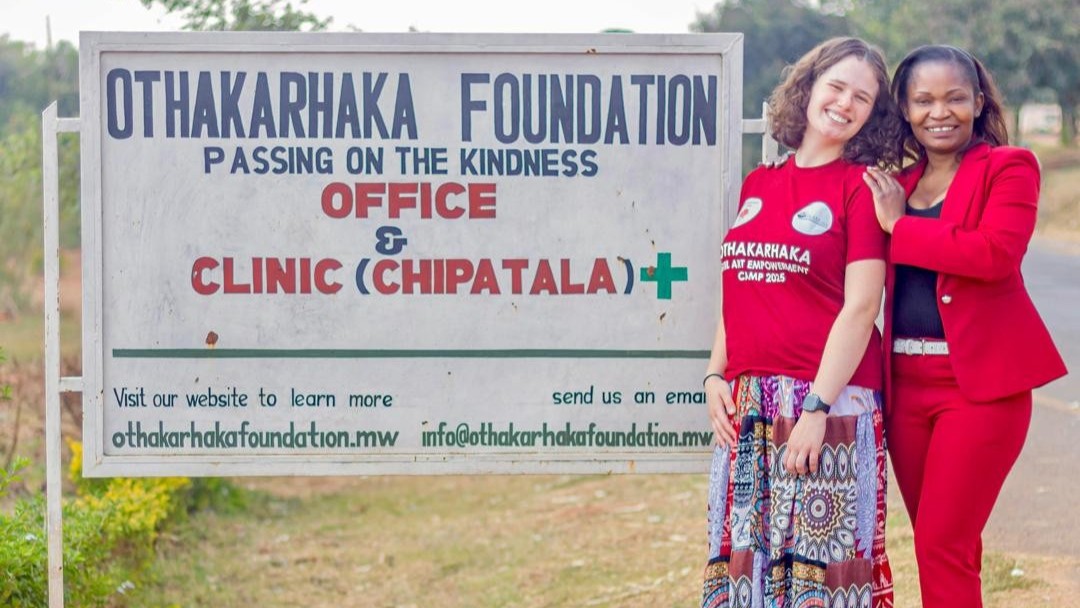
Meghan London ’26 stands with Ida Puliwa Mwango, the founder of the Othakarhaka Foundation, outside the organization’s headquarters in Malawi.
The first time Meghan London ’26 set foot in Malawi, Africa, she didn’t yet know she would one day build her Senior Integrated Project (SIP) around a nonprofit organization there. But standing in the heat with her family in 2023, watching women pause their work in the fields to greet visitors they were just meeting, she began to understand something she would carry back with her to Kalamazoo College: generosity can thrive even where resources don’t.
That realization now sits at the heart of London’s work. A double major in anthropology and political science, she has spent the past year documenting the efforts of the Othakarhaka Foundation, a group that helps girls overcome barriers to education. Her project, housed in critical ethnic studies, draws on interviews, field research, and personal experience to tell the stories of young women whose lives have been reshaped by their access to education.
Secondary school requires fees in Malawi, and in many families, boys are prioritized when resources are limited. Additionally, London quickly learned that the barriers facing girls extend beyond tuition costs.
“Girls may be expected to take care of relatives or spend hours helping their families by collecting firewood,” London said. “Othakarhaka looks at all of those factors.”
That holistic approach became a central theme of her research. The organization, for example, plants trees closer to villages so that girls don’t have to travel long distances for firewood. It operates a health clinic, so illness doesn’t derail education. It provides meals, bicycles, and even a library, implementing small interventions that collectively enhance attendance.
In July 2025, with support from the Center for International Programs, London returned to Malawi for two weeks to conduct her fieldwork. She interviewed about a dozen young women, most between the ages of 18 and 25, all of whom had been connected to Othakarhaka. Their stories, she said, were varied but shared common threads.
“Some were still in school, some were teen mothers, and many had faced financial barriers,” London said. “But all of them talked about how much the organization helped them continue their education and improve their lives.”
In Malawi, pregnancy often ends a girl’s formal education. Schools don’t allow pregnant students to attend, and returning after childbirth is rare. Othakarhaka works to change that, advocating for young mothers and helping them reenter school when possible. For London, those interviews were among the most meaningful parts of her project.
“They were so determined,” she said. “Some wanted to start businesses, some wanted to go into trades like welding, and one wanted to go to law school. Many of them said they wanted to give back by passing on the kindness once they were able to.”
That phrase “passing on the kindness” is a model for how the Othakarhaka Foundation operates, and it’s embedded into what they aim to do. Program volunteers are encouraged to support others when they can. That creates a cycle of community investment that London found both practical and inspiring.
“It’s not just about receiving help,” she said. “It’s about becoming someone who can help others.”
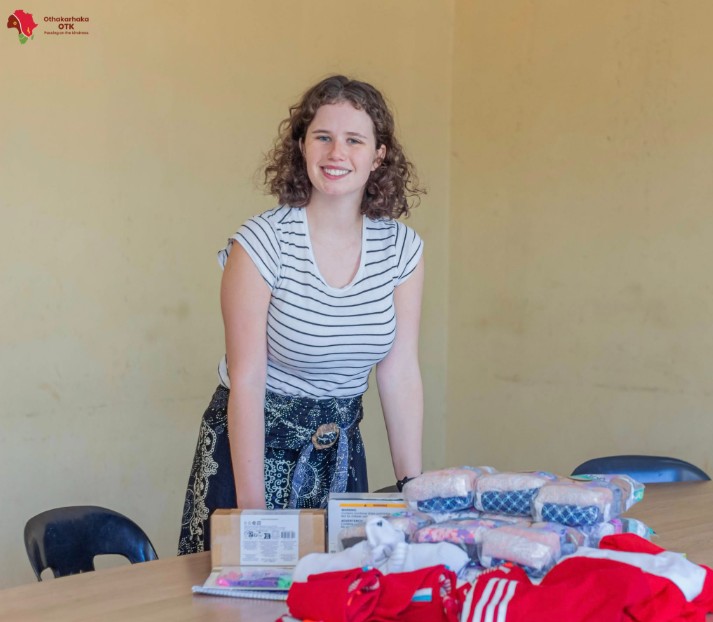
London inside the Othakarhaka Foundation headquarters while she was in Malawi for her SIP.
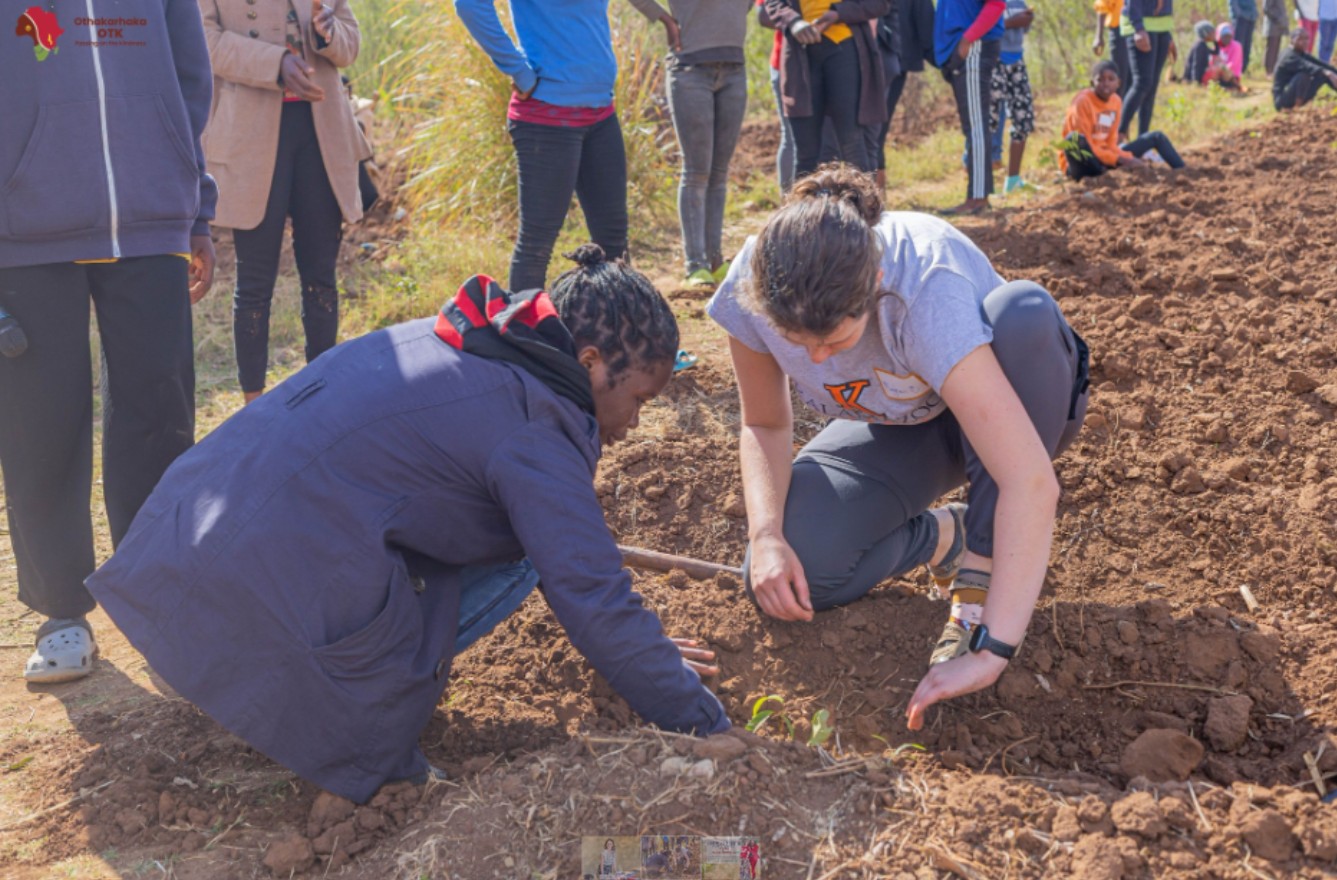
London plants a tree at the headquarters with the help of volunteers. The trees create environmental sustainability and represent the volunteers’ kindness.
About the Othakarhaka Foundation
The Othakarhaka Foundation is a nonprofit organization based in Mulanje, Malawi, dedicated to increasing educational access for girls through a holistic approach that addresses financial, social and logistical barriers. Programs include school-fee sponsorship, a health clinic, a library, a sewing school, tree-planting initiatives, and girls’ empowerment camps. The organization is supported by thousands of volunteers and donors worldwide. Learn more at the Othakarhaka Foundation website or donate to the organization online.
While in Malawi, London also observed a girls’ empowerment camp hosted by the organization. Dozens of participants gathered to learn arts, music and dance, culminating in a community performance.
“The goal is for girls to feel like they can accomplish things, that their education matters, and that people care about them,” London said.
Her work has been guided by Associate Professor of English Shanna Salinas. But London is also quick to credit those on the ground in Malawi, particularly the organization’s founders—Ida Puliwa Mwango and Ted Mt Mwango—for making the experience possible.
“They were incredibly generous with their time and support,” she said. “They invited me to stay at their house for a week, and they drove me to and from the organization. My project wouldn’t exist without them. They’re inspiring people, especially Ida. She is determined to change the world. I hope I can be a lot like her because she’s doing something meaningful.”
That perspective is already shaping London’s future. After graduation, she hopes to work in sustainable development, ideally with organizations that take the kind of long-term, community-centered approach she observed in Malawi.
“I want to create positive change,” she said. “And I think this kind of work, building systems that actually last, is important.”
For now, her project stands as an academic achievement and a personal turning point with a story of connection that began with a family trip and grew into a deeper commitment to global equity. At its core is a simple idea, carried across continents and communities alike: that kindness, when passed on, can multiply.
“This shows how valuable education is and how it can really change someone’s life,” London said. “A quality that I really took away from the organization and the work it does is that it encourages those it helps to ‘pass on the kindness’ once they are able to, helping others the way they were helped through volunteering, donations, and other forms of support. My SIP shows that the work Othakarhaka does has been incredibly meaningful for many different individuals.”
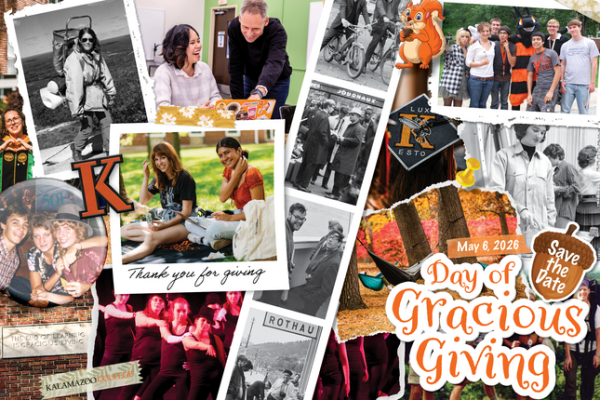
For so many alumni, Kalamazoo College wasn’t just where they went to school; it was a place that felt like home, from the friendships they forged to the passions they discovered. On May 6, the Day of Gracious Giving, K’s annual one-day fundraising celebration, invites alumni, parents and friends of the College to invest in those same experiences for today’s students.
“When I talk with alumni and they reflect on their time at K, they talk about more than academics. They talk about discovering who they are, the mentorship they received, and the lifelong connections they built,” said Lindsay O’Donohue, senior director of constituent programs and annual giving, whose team organizes the Day of Gracious Giving. “That’s what inspires them to give back, ensuring that every student who comes to K can find their place here too.”
Why Your Gift Matters
The Day of Gracious Giving is the College’s largest annual fundraising event, powered by participation. Gifts made throughout the day go to work right away, funding scholarships, programs, faculty, and K’s highest priorities.
The 2026 Day of Gracious Giving is May 6.
With 98 percent of students receiving scholarships or financial aid, donor support helps ensure that a K education remains accessible.
“From first-time donors to longtime supporters, every gift—no matter the size—helps support the quintessential K experiences that students carry with them long after graduation,” O’Donohue said.
How to Get Involved
Building on last year’s momentum, this year’s goal is to grow participation to 1,200 donors across the K community.
Visit the Day of Gracious Giving page to hear directly from students and make your tax-deductible gift. Matches and challenges throughout the day will amplify each contribution, unlocking additional support as more donors participate.
You can also spread the word about the Day of Gracious Giving by sharing a quick message with classmates and friends, posting on social media about why you chose to give to K, and sharing K’s Day of Gracious Giving content.
“As a community, we can make a real difference in a single day,” O’Donohue said. “I invite everyone who believes in the power of a K education to join us on May 6.”
When Amy MacMillan, the L. Lee Stryker Professor of Business at Kalamazoo College, sat down with Matt Shankle to talk through a vision for her Principles of Marketing course, neither could have predicted exactly where it would lead. But their partnership resulted in one of the most hands-on learning experiences her course has ever offered: students were tasked with devising a plan to help Heritage Community—a senior living facility in the Portage area—evolve to meet the future needs, wants and desires of prospective Baby Boomer clients.
“Once we just got started and let things evolve from there, I think it energized both of us and some additional faculty at K,” said Shankle, the vice president of marketing and business development at Heritage Community of Kalamazoo.
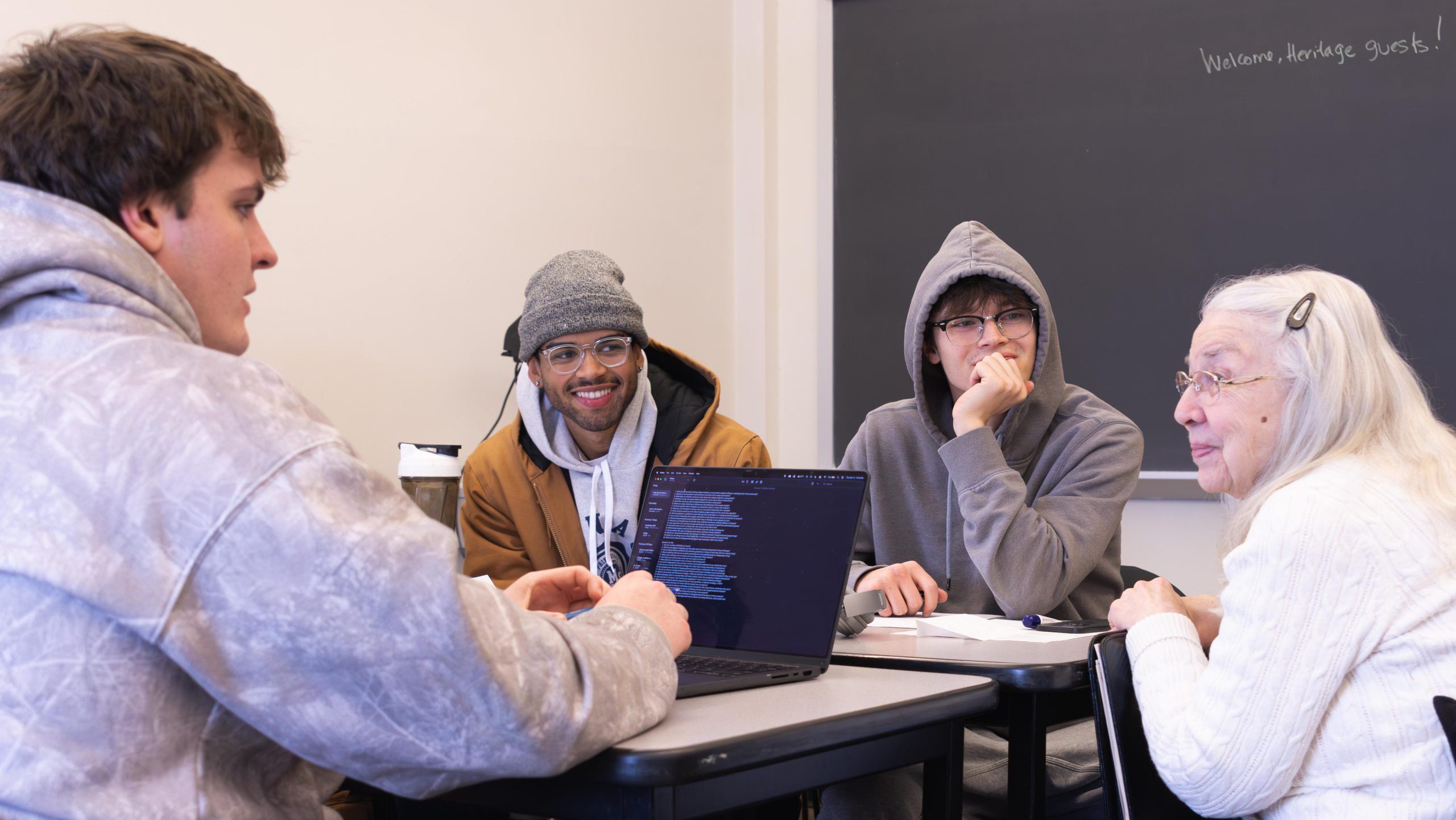
Along the way, students met regularly with Shankle and Heritage residents who visited campus. Their work extended beyond the textbook, as they built out detailed proposals through a series of weekly milestones and ultimately traveled to Heritage to present their finished plans in person.
Meet the Market Where It Lives
Organized into groups of four or five, the students began their work with research. They fanned out to interview members of the Baby Boomer generation—including grandparents, friends’ parents and neighbors—seeking to learn what mattered most to them as they approached or entered retirement. Groups channeled those insights into their projects.
A group that included Agustin Creamer ’28, for example, called its concept Heritage Hub: a membership-based lifestyle hub open to residents and nonresidents of Heritage, offering pickleball, yoga, fitness classes, a pool, dining services, a coffee shop and private event space. The idea was to let people experience the Heritage community and build connections there without requiring the full commitment of moving in.
“We combined two of the main things that we thought Baby Boomers would want: an active lifestyle and socializing,” he said.
Jack Hartung ’27, a junior from Ann Arbor majoring in political science and business, described how his group’s research revealed the importance of intergenerational connections and maintaining independence. Their proposal had two parts: a subscription service for Heritage residents to access outings—such as plays, sporting events and restaurants downtown—and an idea for Heritage to acquire houses in a central location for a more independent, upscale alternative to traditional assisted living.
“Matt and the Heritage residents who came to class seemed receptive to those ideas, but Matt also talked with us about the importance of density and the feasibility of buying a neighborhood of houses,” Hartung said. “Different residents would have different mobility levels, too, so having a whole house might not be best for them. We transitioned that into having one floor of an apartment building that didn’t feel like assisted living.”
Basi Okromchedlishvili ’28 described her group’s concept as “bringing Florida to Michigan” with a resort-style addition to Heritage complete with a pool, sauna, spa and themed events, designed to evoke the warm-weather retreats that Baby Boomers are known to seek in retirement.
Students and Baby Boomers worked together to imagine the future of senior living.
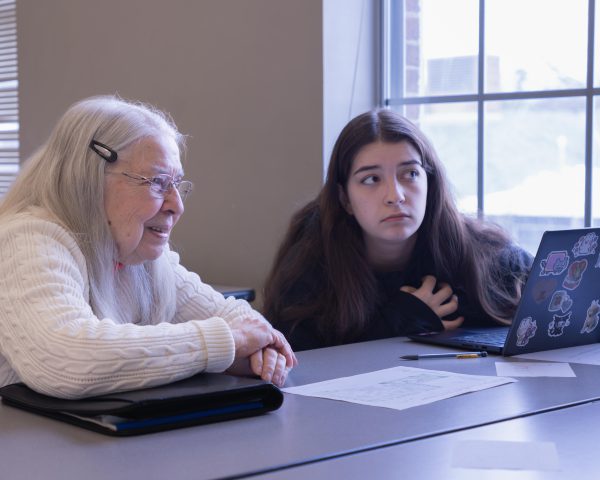
Basi Okromchedlishvili ’28 met with her group and a Heritage resident to talk about the future of senior living.
“Most of the residents were excited about it,” she said. “They were the ones who recommended theme nights. Matt gave us some recommendations about what we could include, like the sauna, and he also mentioned it being open to the public to generate more revenue so the residents wouldn’t have to worry about costs so much. Even with that idea, we had to make sure that it was mostly focused on Heritage and their residents.”
Elisabeth Wilks ’28, a Kalamazoo native majoring in quantitative economics, said her group zeroed in on a project targeting purpose and service. The idea tapped into the intergenerational connection that students experienced in class by having Baby Boomers serve as mentors.
“The shift to retirement can be difficult,” she said. “Our interviews revealed how much it matters to retirees that they make meaningful contributions after spending decades in the working world, so we call our program Bridging Futures. It gives Baby Boomers that sense of purpose through volunteering as they go into retirement.”
Spencer Rasmussen ’26 came in thinking his group might pitch a virtual golf simulator. He said the conversations with Heritage residents quickly changed his team’s direction.
“We found that the people we talked to really just wanted opportunities to be heard because they all had stories to share,” Rasmussen said.
That realization led his group toward a student fellowship model, where K students would spend time at Heritage, benefiting residents through connection and activity, while helping students gain hands-on experience in fields such as nursing, psychology and fitness.
The Real World Walks into Class
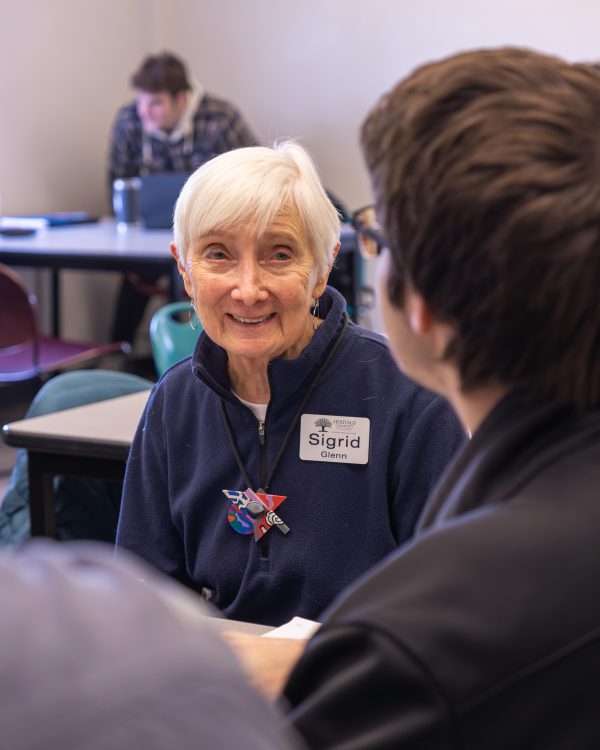
One of the course’s most distinctive features was the regular presence of Heritage residents in the classroom itself. Several times throughout the term, residents made the trip to campus to hear the students’ ideas and offer feedback.
“One who sticks out in my mind is Bill,” Hartung said. “He’s 97, and it was amazing because it made me appreciate that people at these ages aren’t just sitting in a chair—they come out and do things. They can be sharp-minded and healthy, even at 97.”
For Wilks, one resident in particular left a lasting impression.
“Every time Mary comes to our table, she says, ‘This is my favorite idea. I love it.’ She worked for an airline as a flight attendant, and she loves talking about her career with us. There are so many different aspects of being a flight attendant that I never would have known about. She’s always so happy and bubbly.”
Rasmussen remembered a light moment between his group and a regular visitor when they taught her about technology, especially the flashlight on her iPhone. The levity pointed to something deeper.
“I didn’t realize before I was in this class how lively a retirement home can be and how much activity actually goes on,” Rasmussen said. “It’s been an absolute joy working with them.”
Shankle, who has witnessed many intergenerational programs in his career, said the classroom visits were exactly what he had anticipated.
“The mutual interest in seeing the students produce something meaningful meant both residents and students bought-in almost immediately,” he said.
He also was impressed by the students themselves.
“As a graduate of a liberal arts college myself, I can see that K students are a high-caliber group,” he said. “They’re well-rounded. They’re not just studying business, but also religion, ethics and psychology, for example. I think K students are well-prepared for the modern-day workforce that’s ultimately going to need someone with a diversity of thought who can make an impact in society.”
The term culminated with the student groups traveling to Heritage to present their proposals in person, for five minutes each plus questions and answers, in the room where their ideas, if adopted, might one day come to life. The groups took the occasion seriously.
“A couple of groups even had matching shirts that they had made, or they dressed up in the theme of their projects,” Shankle said. “They really had a lot of fun with it, and I was impressed, first and foremost, with the students and their presentation skills. They had never been to Heritage before, and they came prepared.”
But the conversation didn’t end at the presentations. Shankle said two of the student projects are now under active consideration for development.
“I think there are some ideas that I’d like to create a task force for, with a combination of our staff, a few of our residents, and some of the students,” he said.
Shankle envisions a program that would match Heritage residents with K students in their fields—pairing a future health care worker with a retired health care worker, a pre-law student with a former attorney—to create genuine mentorship alongside real-world practicum experience.
“With two of the group projects being very similar, we can get the synergy of both groups thinking as one,” he added.
Where Marketing Comes to Life
If the students and Shankle are enthusiastic about the partnership, they are equally vocal about the professor, MacMillan, who made it happen.
“She has a lot of knowledge in her area, which is marketing, but she’s also good at teaching that knowledge,” Creamer said. “This class is unique because it’s more about how we can apply these concepts in real life rather than just studying them without knowing how to apply them.”
Okromchedlishvili said MacMillan’s class has her thinking about future opportunities in marketing, possibly starting with an internship this summer.
Wilks described MacMillan as engaging on a personal level, quick with constructive feedback, and consistently enthusiastic in a way that makes an early class feel like somewhere worth being.
For Hartung, the class’s value extends beyond marketing. He is considering law school—either for business law or a career in political campaigns—and sees the lessons learned as applicable to either path.
“If I go into politics, that’s all marketing,” he said. “Marketing yourself, marketing a candidate—the same baseline concept applies.”
Rasmussen, who will graduate in June with his sights set on medical device sales, said, “I haven’t missed a class yet. It’s one of those classes where it doesn’t feel like I’m working and I enjoy what I’m doing.”
Shankle said MacMillan’s approach has a rare quality: the ability to ground marketing theory in practice without losing its theoretical foundation.
“She teaches from a book, but she really encourages students to use their own experiences to relate to the teachings,” he said. “Every class I attended, students were presenting on the marketing process through their own lived experiences, and they articulated what they learned.”
It’s a blueprint Shankle and MacMillan hope to build on. Whether the task force produces a mentorship program, a fellowship or something yet to be imagined, the students who spent eight weeks thinking carefully about Heritage Community have left a mark on Heritage residents, each other and future versions of the Principles of Marketing course.
“Amy and I are already talking about next steps and what this could look like in the future,” Shankle said. “I could see a lot more doors opening for these types of engagements where students and older adults are working together.”
A Kalamazoo College alumna has been awarded a prestigious NASA Hubble Fellowship, an honor given to just 24 early-career scientists nationwide.
Hayley Beltz ’18, a postdoctoral researcher at the University of Kansas, was selected from a pool of more than 400 applicants for the highly competitive program, which supports independent research in astrophysics.
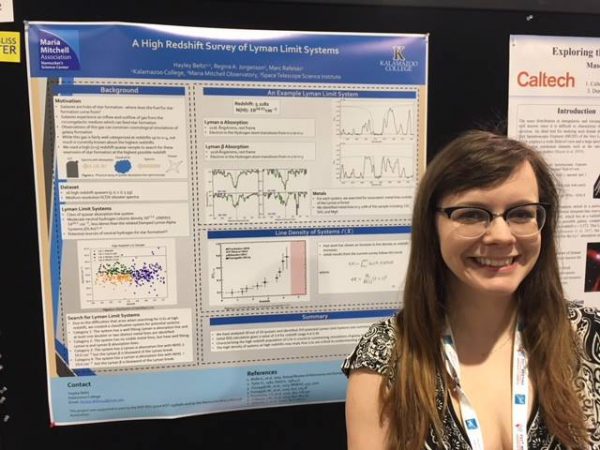
As a senior double majoring in physics and mathematics at K, Beltz received an Astronomy Achievement Student Award and a Chambliss Medal through the American Astronomical Society (AAS), recognizing her exemplary Senior Integrated Project (SIP) presentations at the organization’s meetings. Her SIP involved quasar spectroscopy, meaning she analyzed light that is billions of years old to find and measure the large concentrations of hydrogen that develop as stars form.
“My time at Kalamazoo College gave me the strong physics and math background that I needed for graduate school,” Beltz said. “I loved working as a consultant for the Math and Physics Center, which helped me grow my skills as a mentor and teacher. Being able to try out research with multiple professors at K helped solidify my desire to continue my education and become a scientist. I am very grateful to all the faculty who answered my many questions in office hours, wrote me letters of recommendation, and helped shape me into the astronomer that I am today.”
Beltz earned her doctorate from the University of Michigan in 2023. She then conducted postdoctoral research at the University of Maryland from August 2023 to January 2026 before moving to her current position in Kansas. Recently, her work has focused on “Hot Jupiters,” which are gas giant exoplanets about the size of Jupiter that orbit extremely close to their stars, completing an orbit in just a few days. Temperatures during their daytime can exceed 2,000 degrees.
The Hubble Fellowship will support Beltz’s research for the next three years as she continues developing computer models of exoplanets beyond our solar system with a focus on how magnetic fields shape their atmospheres.
“Learning about these other planets helps us understand the full range of planet formation in our galaxy,” Beltz said. “Magnetic fields are especially important because they play a key role in shaping environments like Earth’s, where life can exist.”
Hayley Beltz ’18
In 2018, Beltz was one of just five undergraduates from across the country to earn a Chambliss Medal from the American Astronomical Society.
Congratulations to the following Kalamazoo College students who achieved a grade point average of 3.5 or better for a full-time course load of at least three units, without failing or withdrawing from any course, during the Winter 2026 academic term. Students who elect to take a letter-graded course on a credit/no credit basis (CR/NC) are not eligible for Dean’s List consideration during that term. Nor are students who receive an F, NC or W grade for that particular term.
Students with incomplete (I) or in-progress (IP) grades will be considered for the Winter 2025 Dean’s List upon receipt of their final grades. Dean’s List recognition is posted on students’ transcripts.
Kudos to the entire group for Winter 2026.
Congratulations to the students who reached the Winter 2026 Dean’s List.
Winter 2026
A
Callie Abair Drew Abbott Yaz Abu-Zaid McKenna Acevedo Jade Acosta Amirat Adebiyi Emerson Agnello Tahmina Ahadi Umair Ahmed Isaac Ahn Zoe Allen Makayla Allen Riley Allen Randa Alnaas Altanshagai Altankhuu Methmi Amaratunga Haresh Anand Eleanor Andrews Jayanthi Anila Eva Applebaum Camden Arndt Louis Asmus Emily Auchter
B
Bryce Balabuch Gabrielle Baldori Johanna Balingit Carter Bandemer Zoie Banger Leila Bank Grace Barber Brianna Barnes Luke Barnum Joseph Basil Summer Beavers Conner Bell Marley Bell Annice Bellows Alexandrea Bernal Eleanor Bernas Eleanor Bernas
Maximus Betten Gurnav Jeet Singh Bhatia Derek Blackwell Douglas Blackwood Tate Bless Trey Bolling Brian Bolvari Sotirios Bougioukos Eleni Bougioukou Juliette Bournay Jaylen Bowles-Swain Ella Boyea Yvette Boyse-Peacor Allison Bozyk Indigo Braun Teige Bredin Chloe Briggs Ella Marie Briggs Ellie Britt Cole Bronoel-Cuthrell Chloe Brown Connor Brown Audrey Bruner Raven Bryans Ava Buccafurri Christopher Bullard Leah Bunnell Maxwell Burg Mag Burkander Sara Bush Ava Butera
C
Amaia Cadenas Evelyn Calderon Eleanor Campion Olivia Cannizzaro Arlanderia Cardenas Estelle Raymond Cargill Emmett Carlson Liam Casey-McFall Tatum Casper Stephanie Castillo Luis Castro-Limon Joe Caton Caleb Caul Emma Caulkins Haziel Cerroblanco Savannah Chapie Derrick Chen Trustin Christpher Noah Chun Parker Ciurla Eva Clancy Jack Clancy Thomas Clark Lourdie Clark Kory Clark Keegan Clarke Brendan Clinard Caleb Coates Mai Elise Code Toby Comensoli Colby Connor Zeina Coreas Elliot Corpuz Jayden Costa Cameron Couch Holden Coulter Sebastian Courtright Henry Cox Gavin Crawley Agustin Creamer Connor Creech Cameron Crosby Kieran Crossley Gwendolyn Crowder Smith Claire Curry Courtney Cutler
D
James Dailey Ryan Dant Ethan Daugherty Jasmine Davis Avery Davis Griffin Davis Maya Davis Ian Davis Asha Dawson Lillian Deer Noel DeFeyter Sophia Deguzman Maya Delaney Enrique Delzer Lora Derian Abram Derksen Arjun Desch Noah Devries Jack Dewey Christopher Dewitt Desmond Distel Reed Dixon Shane Dong Alyssa Dorner Jordan Doyle Charles Doyle Jack Duggins Gwyneth Dunaway Aidan Durst
E
Benjamin Ebner Elise Elliot Kai Ellison-Batt Zachary Emmer Bradley Eziuka
F
Niklas Fagerman Fletcher Fahling James Faletti Max Feliks Alexander Fenkell Peggy Ferris Alex Fleming Mathias Florian Jessica Forbis Kinga Fraczkiewicz Caden Frost
G
Dillon Gacki Yamilet Garcia Grey Gardner Barrett Garrard Corey Garrison Roberta Gatti Abigail Gilmore Vrinda Girdhar Samuel Gladhill Makala Goddard Laura Goia Brizza Gonzalez Charles Gordon Harper Gorman Lukas Graff Charles Graves Adam Green Alexis Gross Sofia Gross Madyson Groth Cole Grupenhoff Sarah Guerrero Gorostieta Fiona Guikema-Bode Kendra Guitar Oliver Gutierrez
Gloria Jackson Sarah Jaimes Santos Jackson Janderwski Nolan Jannenga Anne Catherine Johnson Jaden Johnson Caroline Johnson Isabella Johnson Eiden Jonaitis Elizabeth Jones Gary Jones Ayako Jurgle
K
Jessica Kaplan Violet Kaplan-Neumann Eliza Karlin John Kaul Seth Keana Jackson Keefer Parker Keim Davis Kelly Hibah Khan Soussana Kimbouris Anwen King Ava King Samuel King Caleb Kipnis Kendyl Kirshman Claire Kischer Elizabetta Klein Noah Kleiner Kassandra Koehler Gretje Kooistra-Collar Halle Korendyke Connor Kouki Emma Kovacevic Daryn Krause Molly Kreibich Aravind Krishnan Mara Krupka Shay Kruse Rohan Kumar
L
Andrew La Penna Aubrey Laffoon Rylee Lambert Olivia Laser Minh Thu Le Keilana Le Son Le Dinh Truong Brayden Ledin Maya Lee Duncan Lees Alexander Ligman Peja Liles Maxwell Lloyd Logan Lockhart Dasia Lopez Jacob Lovy Dewen Luo-Li Mairead Lynch Addison Lyons
M
Gwendolyn MacEwen Lauren MacKersie Madison Magda Simran Magnan Kyler Maiorana Vex Maldonado Anthony Mares-Viveros Eliza Maurer Elizabeth Maurer Zachary Maurice Benjamin Maurice Lily May Allison Mayer Jay McDaniel Mollie McDonald MacKale McGuire Kira McManus Ryenn McRell Gina Mehling Isaac Melton Jacey Merkle Rachel Meston Bernice Mike Isaac Miles Elizabeth Miller Ella Miller Madelyn Miller Marin Miroslavich Elana Mitchell Zelda Molitor Aliah Mohmand Phillip Monschau-Johnson Caleb Moore Kyle Moore Stephanie Moranko Eliana Moreno Madeline Moss Karis Mulcahy Karis Mulcahy Grace Murphy
N
Genevieve Nagel Nailia Narynbek Kyzy Zander Nash Alessi Neder Sebastian Nelson Lily Nestich Robert Newland Yen Giang Nguyen Will Norwood Alex Nutt Calvin Nyeholt
O
Jair Obando Martin Odhiambo Anastasia Okromchedlishvili Gabriel Olivier Sasha Olsen Carson Orvis B Osborne
P
Chelsea Paddock Maren Palmer Renzo Palomino Caceres Gyuri Park Hannah Parsons Eric Paternoster Sam Pattison Logan Pearson Marcus Pedde Gavin Pejakovich Mia Pellegrini Alex Pepin Marcos Perez Patrick Perez Maya Peters Tobias Peters Tess Peters Anna Phyo Timothy Pinches Mario Pomorski Bailey Poort Madison Potts Quinten Powers Juliana Pullen
Q
Brody Quinn Matthew Quirk
R
Addison Raffenaud Akaash Raghunath Jennifer Rairigh Alyson Ramillano Jackson Rancilio-Swords Cory Rapp Spencer Rasmussen Liam Regan Julia Reisor Isabel Reyes Micahaia Reynolds Rachel Ribaudo Jaycee Rider Donovan Rinehart Ella Ringel Samuel Rivas Narelle Robles Dillon Rodriguez Amelia Rooks Brigid Roth Alexander Russell Eleanor Ryan McKenna Ryan-Elbert Olive Ryder
S
Zenaida Sackett Oliver Sajan Jeremy Salomon Isabella Santos-Pye Xavier Sarnaik Taiki Sawamata Simon Sawyer Fiona Schaffer Cecilia Schihl Olivia Schleede Sophia Schlotterer Annika Schnell Harper Schrader Kearsten Schultz Sophia Schwartz Oskar Sears Neve Sena Geo Servin William Seymour Katherene Shank DJ Sheibar Veda Shukla Riley Shults Saba Sikharulidze Alexandros Simecek Morgan Smith Jillian Smith Anoushka Soares Miyani Sonera Ella Spooner Lauren Stallman Katelyn Steinbrecher Taylor Stephens Gavin Stewart Laurel Stowers Helen Stoy Calvin Strader Chloe Stuckey Abbygale Stump Katherine Suarez Nolan Surach Luella Swanson Grace Sweet Zachary Sykes
T
Ella Talaski Charlotte Tatara Arielle Tenner Kaljona Thaumanavar Melina Thelen William Thomas Lauren Thompson Christopher Thunder Elizabeth Tiesworth Alexander Tolman Lily Toohey Jey Trebley
V
Gavin Van Kampen Lauren Vanderstelt Tyler Vanderzanden Benjamin Van Nes Benjamin Vansumeren Elijah Vue
W
Connor Walters Natalie Ward Annslee Ware Nina Warrow Luke Werner Jordan Wesaw Astrid Westbury Grace Westerhuis Maggie Westra Jillian Whitton Elisabeth Wilks Jaden Williams Siona Wilson Zoe Wilson Livia Wilson Ryan Witt Andrew Wolford Reagan Woods Zaryn Woods Darius Wright Sophia Wrzesinski
The Michigan Association for College Admission Counseling (MACAC) has honored Sarah Pelyhes, Kalamazoo College’s admission counselor and international recruitment coordinator, with its annual Rising Star Award. The distinction recognizes her early career contributions and commitment to advancing work in her field.
“Recognition like this not only celebrates Sarah’s individual achievements; it also elevates Kalamazoo College’s visibility in the recruitment space,” Director of Admission Shannon Milan ’16 said. “It reinforces our commitment to international students and signals that our team is actively shaping the broader admission profession.”
Pelyhes received her bachelor’s degree from Hope College before teaching English as a second language in Madrid for two years through Spain’s North American Language and Culture Assistants Program (NALCAP). While abroad, she received a master’s degree in global higher education from the University of Alcalá de Henares Instituto Franklin. She began working at K’s Admission Office in July 2024, recruiting students from Michigan and the Pacific Northwest before helping Rod Malcolm, the retired senior associate director of admission, with international recruitment.
“K gives students the freedom to try new things and pursue areas outside of what they anticipated studying,” Pelyhes said. “I think that freedom creates students willing to be curious and open to understanding new connections within their disciplines. More so, K does a great job of fostering creativity, global awareness, and community building. These are students dedicated to building a better future.”
Admission counselor and international recruitment coordinator Sarah Pelyhes
Receiving such an award in a field currently facing enrollment and budget challenges, Pelyhes said, motivates her to continue working to advocate for and support international students who are making a significant leap toward studying in the U.S.
“It was completely unexpected, but it feels like an amazing reflection of the support and trust the folks in my office have placed in me to do this work and to be able to represent K on a global scale,” she said. “By providing domestic students the opportunity to befriend, study alongside, and live with people from different cultures, we provide them with an opportunity to challenge themselves and their world views. It’s important for us to model and embody what it means to be welcoming while creating a true sense of belonging.”
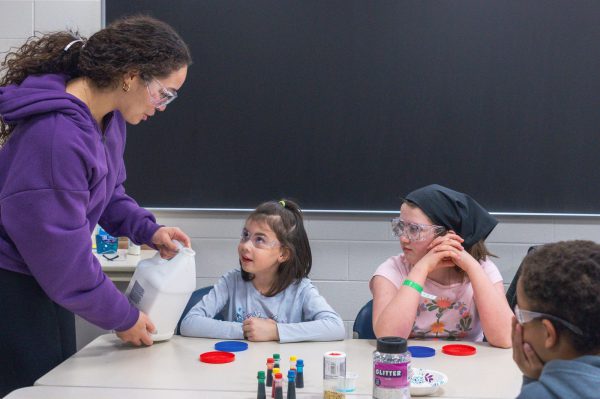
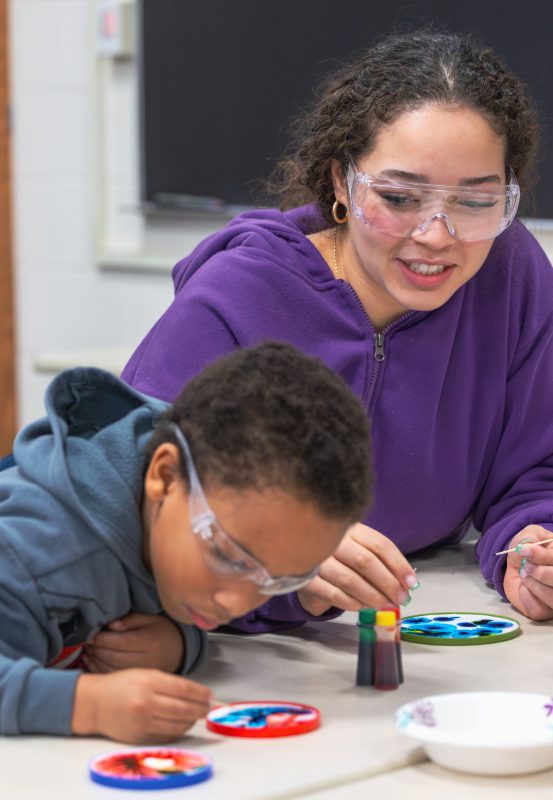
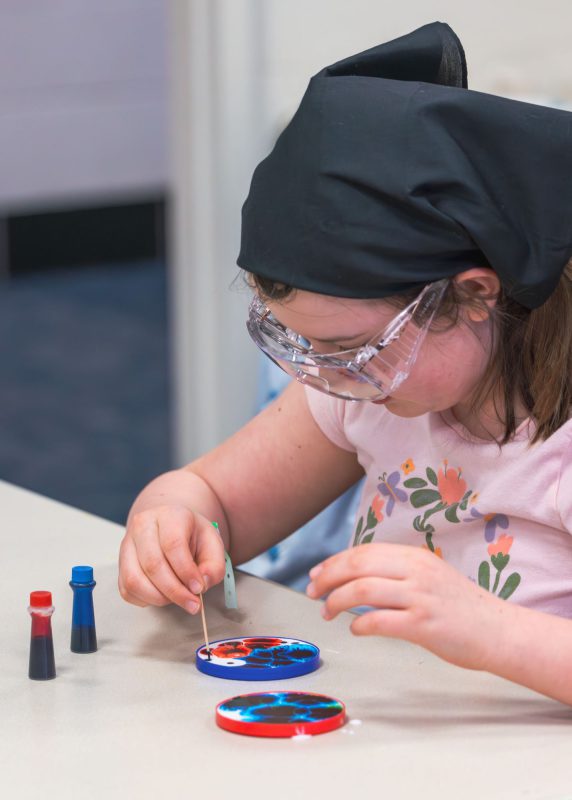
Pauline Hawkes ’26 leads Luella Tresca, Lu Moon and Adwin Williams in a science experiment.
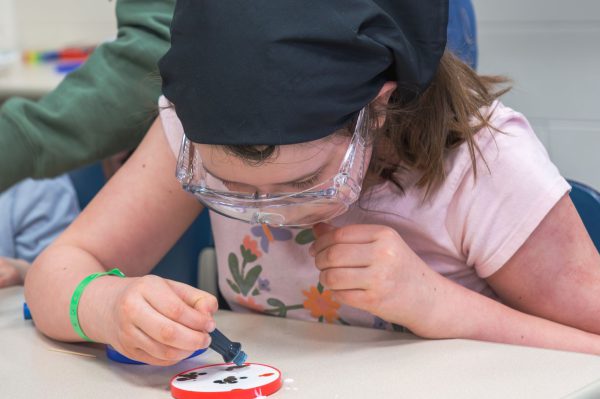
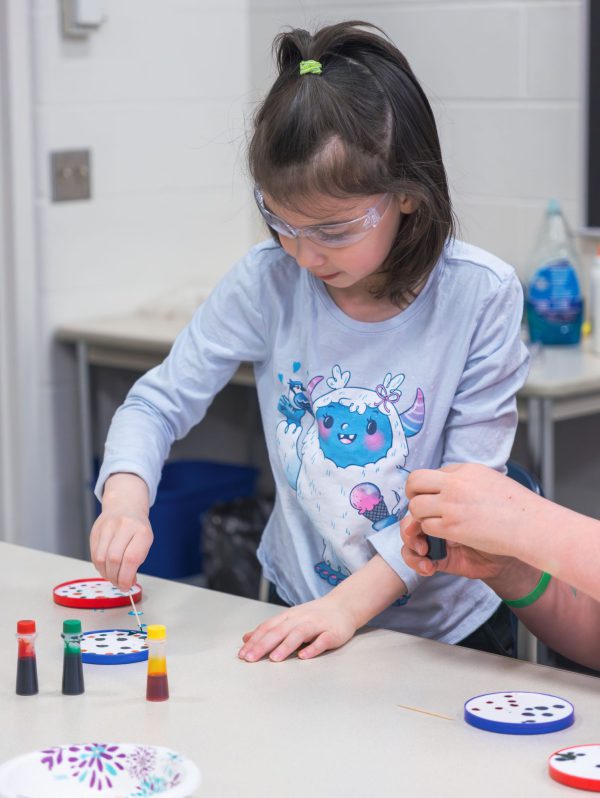
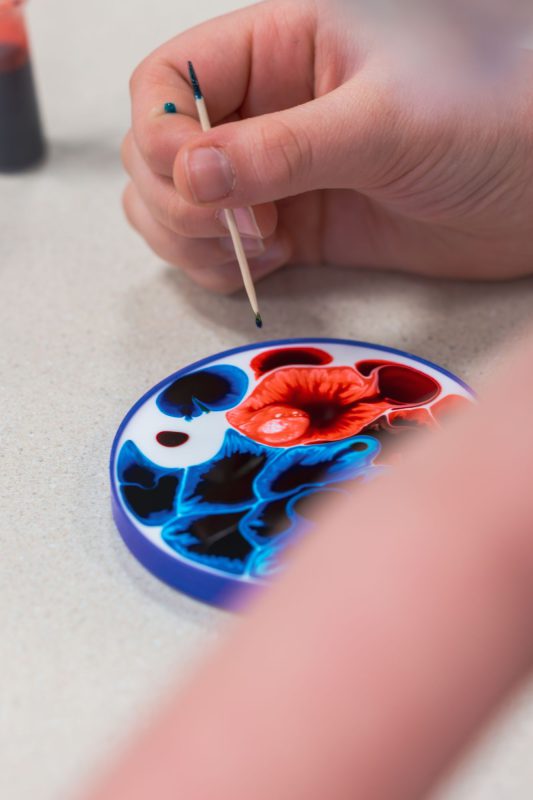
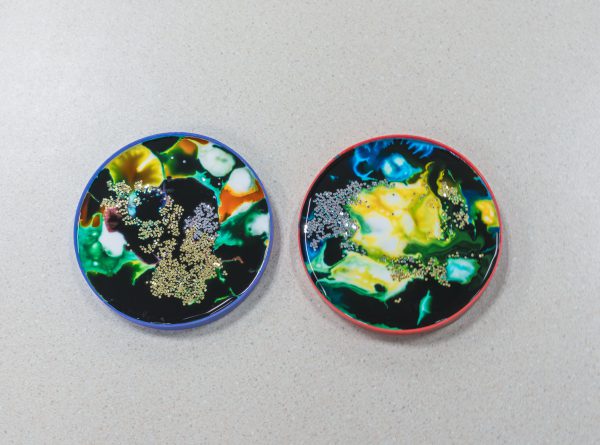
One recent afternoon at Northglade Montessori Magnet School in Kalamazoo, fourth and fifth graders gathered around a table for a simple science experiment involving water, soap and glitter.
“Think about what happens when germs spread,” a college student presenting the experiment told them.
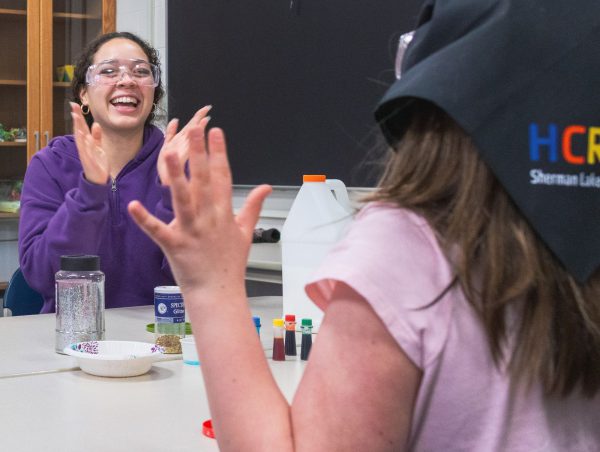
Moments later, a finger dipped into the mixture, and the glitter scattered across the surface of the water. The room filled with laughter, surprise and a few delighted yells of “Whoa!”
For the kids, it looked like magic. For the mentors leading the activity, it was something more powerful. It was a chance to spark curiosity about science through a lesson that showed just how quickly illnesses can jump from one person to another.
The demonstration was one small moment in a program that has quietly shaped young learners in Kalamazoo for a quarter century. Sisters in Science—a student organization at Kalamazoo College—is celebrating its 25th anniversary of presenting hands-on STEM experiences to local kids. The group partners with Communities In Schools of Kalamazoo to visit youths at Northglade and Woodward Elementary, where K students run experiments and serve as mentors for children discovering science in new ways.
A Founding Conversation
Sisters in Science owes its existence to a chance conversation on a school sidewalk. Regina Stevens-Truss, the Dorothy H. Heyl Professor of Chemistry at K and the program’s faculty advisor since its founding, arrived at Northglade in 2001 to pick up her children. A sixth-grade teacher pulled her aside with a question that would stay with her.
The teacher had noticed that her female sixth-grade students consistently outperformed the boys in math and science. But when she saw those same students again in ninth grade, something had changed. The girls who once loved science no longer seemed interested. She wanted to know why.
Stevens-Truss couldn’t stop thinking about that conversation. Research backed what the teacher had observed: girls often lose interest in science and math during the transition from elementary school to junior high, as social pressures begin to reframe those subjects as less compatible with femininity. She brought the idea of a mentorship program to the chemistry department’s office coordinator, who suggested the name Sisters in Science, and then to Leslie Tung, who was serving as interim provost at the time. Tung pointed out that every department in the science division had at least one female faculty member, and he encouraged Stevens-Truss to build a program in which K students would mentor girls at Northglade.
Sisters in Science launched as a one-on-one mentoring program, pairing individual K students with sixth-grade girls at the school in a big sister, little sister model. The pairs would meet weekly to talk about science, math and what it meant to be a young woman with those interests. As demand grew and the sixth grade was moved to the middle school, the model shifted from individual pairings to group sessions at Northglade, and now also at Woodward Elementary School. While the program originally focused on encouraging girls to pursue science, feedback from students led Northglade organizers to expand participation so boys could join as well. The college mentors remain the “sisters” leading the activities, but the sessions now welcome all students. The change reflects the program’s broader mission, which is to make science accessible to everyone.
From Lunch Tables to Laboratories
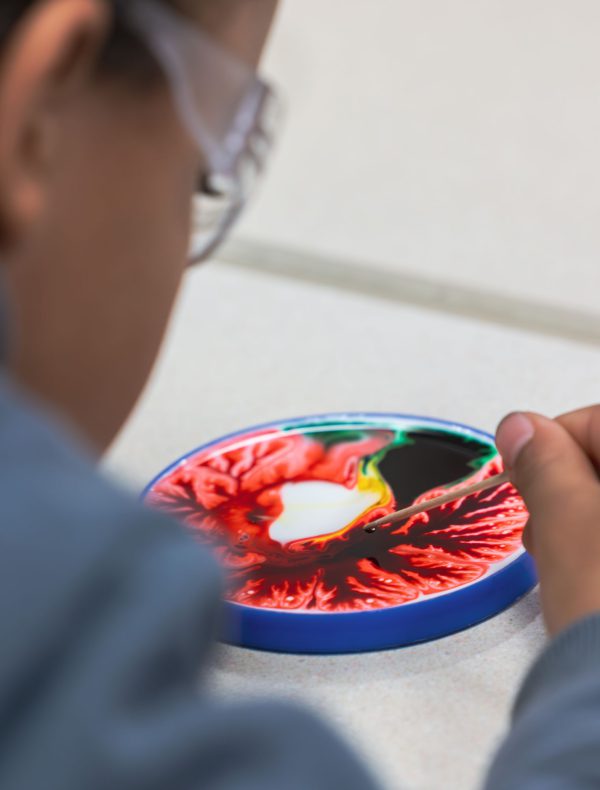
The program is simple but effective. Students bring their lunches into a classroom, where the college volunteers introduce a short experiment. Before long, the room becomes a laboratory filled with egg drops, slime, miniature rockets and glitter experiments.
“They eat their lunch, and then they pretty much jump right into it,” said Emma Braford, a site coordinator at Northglade for Communities In Schools of Kalamazoo. “They’re always very hands-on. It’s all very fun and interactive things that get the kids really engaged with science and loving science in a way that’s not just textbooks.”
The program typically serves about 30 elementary students across the partner schools, with three to five K students guiding activities each visit. Over the course of the school year, the mentors work with the same groups of children, building relationships along the way. That mentorship, Braford said, can be just as important as the science lessons themselves.
“I think it’s cool for them to have that older peer mentor relationship,” she said. “The college students intentionally get to know four or five of the students really well over that time.”
Opening Doors to Science
Sisters in Science is led this year by Pauline Hawkes ’26 and Madison Vrba ’26.
For Vrba, a biochemistry major, the organization represents a natural blend of two passions, science and mentorship. Before joining Sisters in Science, she worked as a pitching instructor for young softball players and discovered how empowering it could be for young girls to realize what they could do.
“When girls feel confident exploring science and asking questions, it not only benefits them individually but also strengthens the entire scientific community,” Vrba said.
Historically, STEM fields have been male dominated, she noted, which can make it harder for girls to picture themselves in those careers. Programs like Sisters in Science help change that narrative by introducing science early and making it approachable.
Success, Vrba said, often comes in small moments.
“If even one student walks away feeling more confident about science or more interested in learning how things work, I consider that a success,” she said.
Inspired to Give Back
For Hawkes, a biology major who hopes to pursue a career in physical therapy, the motivation to mentor younger students is personal.
Growing up, she watched her mother navigate a series of back injuries and surgeries, which sparked her interest in the human body and how it works. She also had an influential role model close to home in her older sister, Isabelle Hawkes ’24, who was also involved in Sisters in Science.
“I’ve always looked up to her,” Hawkes said. “She was able to answer questions and help me understand things when I was struggling. I want to be that resource for other people and open doors they might not know existed.”
Each week during the academic term, Hawkes and other leaders visit partner schools for two days between classes. The goal isn’t simply to perform experiments, she said. “We’re just learning together,” Hawkes said. “It’s a safe, comfortable space where they’re not afraid to ask questions or try different things.”
Learning Science Through Discovery
But the lessons go beyond the experiments. Sometimes, students are surprised simply to learn that the College mentors are studying science themselves.
“I’ve heard some of them say things like, ‘We didn’t know you could study this in college,’” Braford said. “It gives them a broader perspective of different career options that exist.”
“It’s important for everyone to see what’s possible,” Hawkes said. “This is where you’re developing your interests.”
That openness, along with the enthusiasm of both the college mentors and elementary students, helps explain the program’s longevity.
One alumna whose connection to Sisters in Science continues to resonate is Caitlyn VanGelderen ’12. She was deeply devoted to the program during her time at K. Caitlyn loved combining her passion for chemistry with her commitment to mentoring younger students, and she found joy in helping elementary girls discover their own interest in science. Since her passing in 2020, her parents have honored that passion by making annual donations to support Sisters in Science in her memory, ensuring the work that meant so much to her continues to inspire new young scientists.
“I think people want to be part of it,” Hawkes said. “There’s always going to be interest in teaching kids about science and letting them do experiments they might not otherwise have the opportunity to try.”
A Spark for the Future
As Sisters in Science marks its 25th anniversary, the leaders hope to celebrate the milestone with commemorative T-shirts for participants and increased visibility for the program. But the true impact is less tangible. It’s the moment when a student’s eyes widen during an experiment, the moment when a child asks a question no one expected, or the moment when a young student realizes science might be something they love.
“Science can sometimes feel intimidating,” Vrba said. “But programs like this show students that it can also be creative, fun and something they’re a part of.”
Stevens-Truss sees the secret to its longevity in the relationships it builds across multiple constituencies at once: the K students who join as first-year students and grow into leaders, the elementary students who see themselves reflected in the mentors above them, and the community partners who have been with the program since the beginning.
Stevens-Truss said she does little to keep the program running year to year. Each spring, the current leaders identify their successors. Each fall, she reaches out to those students, and they take it from there. The group maintains its own website and keeps its supplies—reagents and materials for experiments—in a cabinet in the science building.
“There’s never been a year since we started Sisters in Science that the program has not run,” she said. “I don’t hound them; they come to me.”
And if the excitement in those classrooms is any indication, the next 25 years of Sisters in Science might inspire just as many future scientists as the first.
Emma Kovacevic ’26 finds that not many of her Kalamazoo College peers are familiar with the story of the Bosnian War, although she knows it well. The conflict, prompted by the fracturing of the former Yugoslavia, lasted from 1992–95. About 100,000 people were killed, and more than 2 million people were displaced in the fighting. It was the deadliest conflict in Europe since World War II. And Emma’s Bosnian father, Ruzmir Kovacevic—the subject of her Senior Integrated Project (SIP)—suffered as a prisoner of the Serbians during the hostilities.
“I would describe my dad as my hero,” Emma said. “He has gone through so many things in his life. I don’t know of anyone that’s gone through so much, and he’s still cracking jokes about random things all the time. I haven’t seen that kind of resilience in anyone else, so it’s inspiring and I’m grateful to have him in my life. He’s the bravest person I know and my biggest role model.”
Ruzmir grew up in the small town of Doboj in Bosnia. His mother was an elementary school teacher, and his father worked as a salesperson at a local store. His childhood was centered on family, school and a tight-knit community where everyone knew each other. He was an outgoing and natural leader, his daughter said, the kind of person who was always surrounded by family and friends.
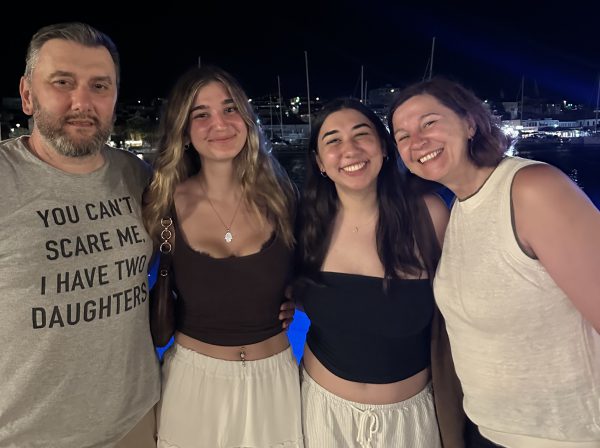
Emma Kovacevic ’26 (second from right) with her family, including her dad, Ruzmir.
Neighbor vs. Neighbor
After high school, Ruzmir attended the University of Sarajevo, where he studied sports medicine. Like many young men in the former Yugoslavia, he also completed mandatory service in the Yugoslav army. His leadership ability stood out so much that military leaders asked him to stay beyond his required service as he ascended to the rank of first lieutenant.
A few years later, the country began splitting apart. When fighting broke out, Bosnia descended into violence and ethnic conflict. In towns like Doboj, neighbors suddenly found themselves on opposite sides of a brutal war.
“It was really interesting to hear about it because during the war, he was fighting against these people who taught him how to fight, how to clean his rifles and how to figure out the best ways to go about a war,” Emma said. “From what he told me, he had a lot of trouble going through that. He was fighting against some people that he knew in his hometown because it was all Yugoslavia.”
There was no official Bosnian army, so Ruzmir and the men of his community formed what they called the Patriotic League. They counted their rifles, took inventory of their weapons, made a plan and held their line as long as they could.
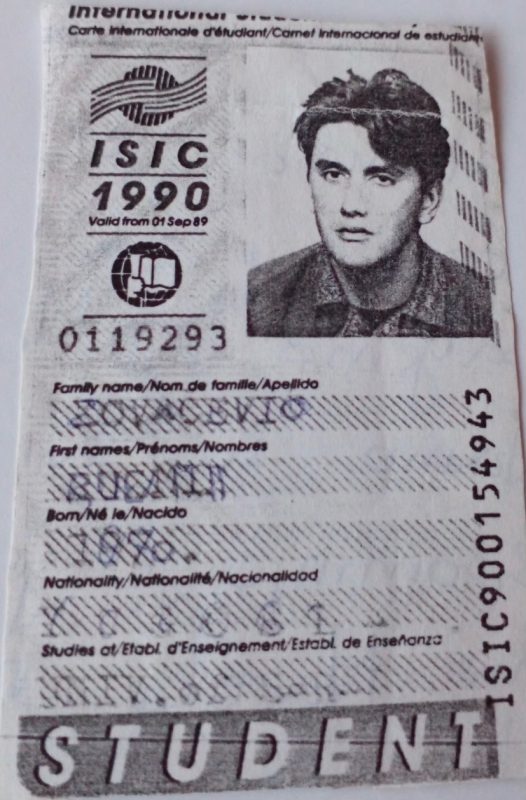
Ruzmir’s student ID from the University of Sarajevo shortly before the Bosnian War.
Brutality from Former Friends
Ruzmir was captured by Serbians after being wounded by a grenade that badly damaged his right leg. The Serbians wrapped the wound in a cast and refused to let surgeons remove the shrapnel. He was taken to a concentration camp where Bosnian prisoners were subjected to brutal treatment. Emma said he played sports growing up with some of the Serbians, who ended up beating him and denying him food for long periods of time.
At one point, a twist of fate briefly freed Ruzmir. A relative of his girlfriend, who held a high-ranking position in the Serbian military, arrived at the camp and escorted him out under the pretense of questioning. For a few days, Ruzmir stayed with family members who were packed into a tiny studio apartment. Fifteen people shared the cramped space, but he described it as heavenly, Emma said.
The freedom didn’t last. Serbian officers soon discovered he was missing and recaptured him, sending him back to the camp for an additional two and a half months. In all, Ruzmir spent about nine months in captivity. By then, many prisoners had died or disappeared. When Ruzmir first arrived, more than 50 men were held in the camp. By the end of his imprisonment, only about a dozen remained.
The prisoners were rescued almost by accident. After hearing reports that Bosnians were being held in the old prison facility, the German Red Cross scheduled an inspection. To hide the evidence, guards forced the remaining prisoners into a conference room and cleaned the cells. The prisoners heard the inspection happening and began screaming for help.
After recording their names, the Red Cross inspectors warned Serbian authorities they would return in two weeks. If conditions had not improved, the prisoners would be taken out of the country as refugees. Two weeks later, the Red Cross inspectors kept their promise.
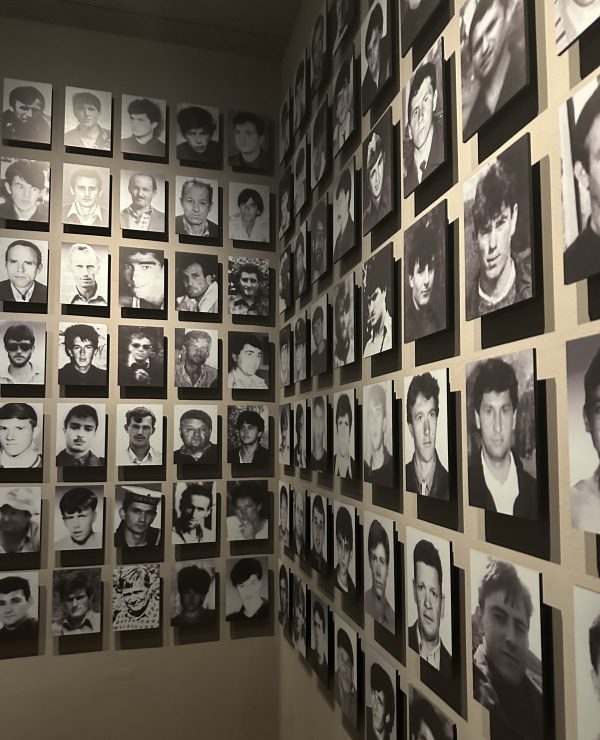
This gallery is a permanent memorial dedicated to the Srebrenica genocide that occurred on July 11, 1995, during the Bosnian War. Gallery 11/07/95 aims to educate visitors and preserve the memory of the genocide through photography and personal artifacts.
Free at Last
Ruzmir boarded a bus to Germany and spent a few years there with his younger brother and father. He later arrived alone in Grand Rapids, where a significant Bosnian refugee community had already taken root. Ruzmir had been a year and a half away from finishing his sports medicine degree at the University of Sarajevo when the war interrupted his education. The credits didn’t transfer to the U.S., but he became a massage therapist. Emma said he loves his career and wouldn’t trade it for anything, though. He also helps resettle other refugees arriving in Michigan from all over the world.
Ruzmir’s father survived the war but died in 2001 when he had a heart attack and stroke simultaneously caused by PTSD. However, he met a Bosnian woman, Amra, who had also fled. They had two daughters, including Emma. He built a life with his family.
“I’ve had a really supportive family, and as my parents are two immigrants, they have always wanted the best for my sister and me,” Emma said. “They’ve always wanted for us to have the education that they didn’t really have access to. They made a lot of sacrifices to support my sister and I in growing up to have access to the things that were taken away from them. I chose K because I just love it. I love what it stands for, the liberal arts education and the relationships I can have with my professors.”
Ruzmir and Emma with family in Bosnia.
55 Minutes
Emma and her father had talked for years about writing a book together. It was a “someday project”—something to tackle after a master’s degree or maybe a Ph.D. There was time.
But in 2023, Ruzmir went into cardiac arrest. He was technically dead for 55 minutes.
“I saw the strongest person I know die for that long,” Emma said.
He recovered. The nurses called him their Christmas miracle despite 13 broken ribs from the CPR, so Emma started thinking about the book differently, and yet was still hesitant. It was big material. Heavy material.
Then, three days before the spring term of her junior year, her father went into cardiac arrest again. She realized she needed to make her dad the subject of her SIP.
“I thought, ‘OK. It’s time. I can’t wait any longer,’” Emma said.
He has since turned 56 and the SIP is finished.
“He has a pacemaker and defibrillator,” Emma said. “They’ve saved him twice now, so I’m just grateful that I’ve been able to do this with him and talk to him about it, even though I could see how hard it was for him. He continuously says that he is so grateful for this opportunity. I hoped that I’d be able to do it later in my life, post-K, but with the inclusion of the SIP in the K-Plan, I’m just grateful that it gave me that push to start sooner.”
Her advisor, Professor of English Marin Heinritz ’99, has guided her through the entire process. Emma first took Introduction to Journalism with Heinritz in her sophomore year, and the two have been close since.
“I know that’s not true at other universities,” Emma said. “My sister goes to Michigan State, and her professors just don’t connect with her as an individual.”
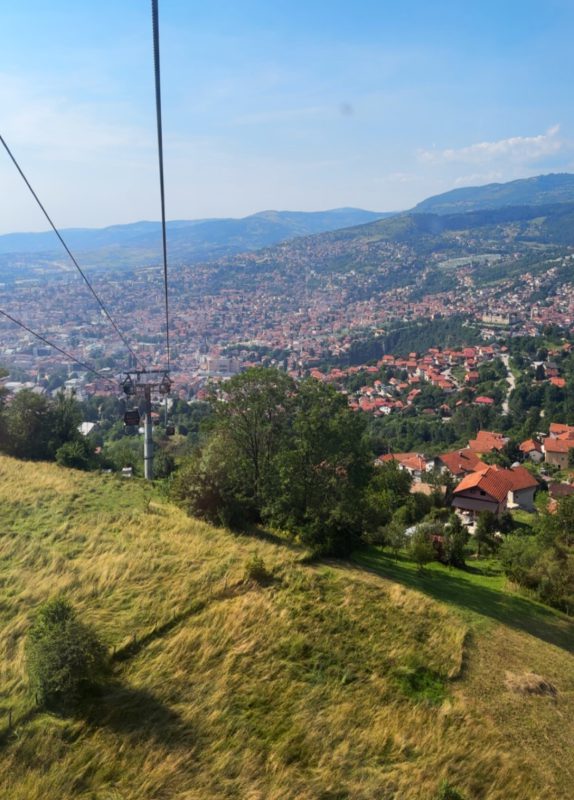
The view of Sarajevo looking down from Trebević Mountain.
A Light at the End of the Tunnel
Emma said Ruzmir wanted the story to be told because the Bosnian War is not something that gets taught much in the U.S., because it happened recently enough that people are still grappling with it, and because it happened distantly enough that many Americans don’t know it happened at all.
She knows he’s proud of her. He has been sending the PDF of her SIP to his friends and massage therapy clients. One of them printed it out and put it in a folder to share with others.
Emma has been accepted to a master’s program in teaching at the University of Michigan. She wants to be a high school English teacher. She also wants to keep writing, and eventually, when her father is ready, to turn the SIP into the book they always planned.
“He just needs a little break first,” she said. “I would hope that it will help people understand that even if they think their life is over with any horrible thing that happens, there’s always a light at the end of the tunnel.”
A pedestrian area in front of the Sacred Heart Cathedral in Sarajevo, near the Gallery 11/07/95 memorial site.
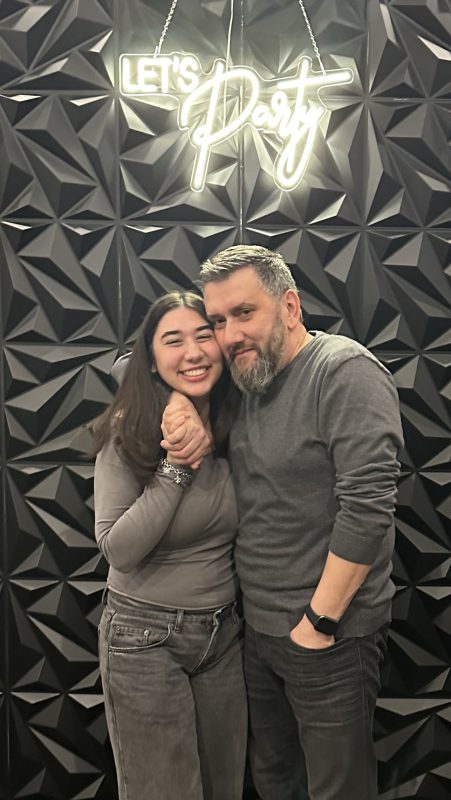
Ruzmir and Emma Kovacevic
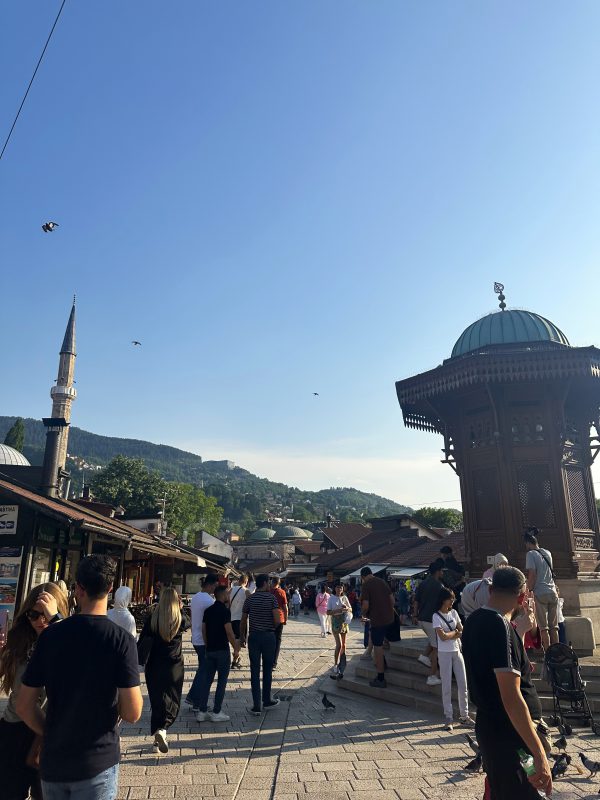
Baščaršija bazaar and Sebilj fountain in Sarajevo.
While some pre-law students focus on statutes and precedents, Ella Miller ’26 has spent her senior year exploring the emotional truths and human lives that exist in the gaps between court rulings.
As an English major at Kalamazoo College, Miller’s Senior Integrated Project (SIP) began as an ambitious challenge to bridge the plain reasoning of the U.S. Supreme Court with the realities of immigrant experiences. Her Race, Law and Politics class, along with her Advanced Nonfiction course, inspired her to pair four major Supreme Court cases on immigration with four books written by authors deeply connected to the decisions’ impacts. Through the combination of case briefs and literary analysis, Miller examined how legal reasoning resonates beyond the courtroom.
“It was stylistically interesting to insert a Supreme Court opinion while also providing facts, and the organization intrigued me,” she said. “I thought it would be interesting to write reviews about books that were influenced by these major Supreme Court decisions, some of which I was learning about in class.”
Connecting Law and Literature
Miller organized her SIP around four immigration-related groups and eras: Chinese immigrants during the Chinese Exclusion Era, Japanese Americans during World War II, Latin American immigrants affected by contemporary policies, and refugees impacted by the 2018 Trump v. Hawaii ruling.
She selected landmark cases associated with each topic, then sought books across genres that offered lived perspectives on the decisions’ consequences. Her final author list included:
John Okada, No-No Boy, paired with Korematsu v. United States.
Erika Lee and Judy Yung, Angel Island: Immigrant Gateway to America, tied to the era of Chinese exclusion.
Sandra Uwiringiyimana and Abigail Pesta, How Dare the Sun Rise: Memoirs of a War Child, connected to modern refugee issues.
Areli Morales, Areli Is a Dreamer, linked to DHS v. Regents of the University of California, related to the recent Deferred Action for Child Arrivals (DACA) case.
By examining fiction, nonfiction, a memoir, and even a children’s book, Miller highlighted the diverse ways personal stories illuminate historical and legal realities.
“What makes them all special is the different ways a story can be told,” she said. “A historical nonfiction book offers documented evidence, while a novel can convey emotional truths through fictional characters. And the children’s book, which was my favorite, brings hope and understanding.”
Bringing Clarity to Complex Cases
Drawing on skills from her constitutional law coursework, Miller began each book review with a one-page case brief, which is a concise summary designed to make a legal case accessible to any reader.
“Case briefs can be eight pages long, so I wanted to take the most prominent parts and briefly summarize them with background, the main issue, and the court’s ultimate decision,” she said. “I talk about the author, how we can see some of the big issues in society reflected in how the decision was reached, and how that decision was then felt by the people impacted by the decision.”
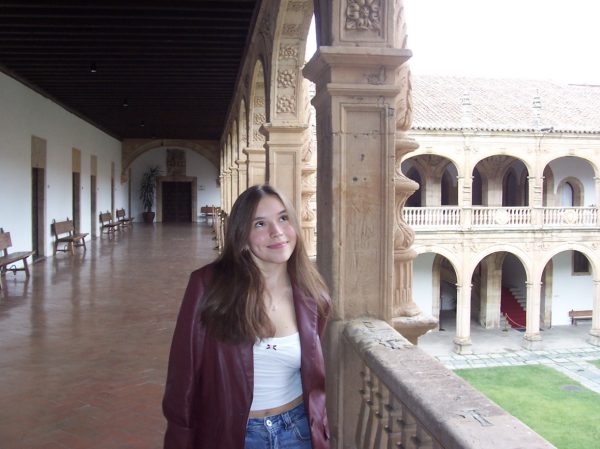
Ella MIller ’26 stands in the historic inner courtyard of the Colegio Arzobispo Fonseca in Salamanca, Spain, during her study abroad experience.
Miller with a group at the joined cathedrals of Salamanca in Castile and León, Spain.
With that foundation in place, she used each book to explore how the court’s rulings were experienced by real people. For Miller, the contrasts revealed what legal texts alone seldom show.
“I think each of these books is valuable, and you can take away a lot on your own,” she said. “But having a real understanding of how the court was reasoning through these decisions adds another layer to how people are affected. In Korematsu v. the United States, for example, the decision allowed for Japanese internment to be held constitutional for domestic safety. But when you read No-No Boy, you can see that Japanese Americans on the West Coast were not a threat in any way.”
Ichiro, the protagonist of No-No Boy, returns home from years in an internment camp and has to come to terms with his dual heritage and how to build a future in the country that imprisoned him.
A Project That Shaped a Future Career
Although the SIP more than satisfied academic requirements, it also reshaped Miller’s confidence and confirmed her path toward law school.
“K is great with giving you lots of creative control in your work, and I’ve never felt stifled,” she said. “But to be given a blank slate where I could choose the topic and my sources while exploring what’s interesting to me gave me a lot of confidence as a writer. It made me feel more prepared for the next steps in my life because I plan to go to law school, and writing is super important. I need to think argumentatively and critically, so I feel my SIP was valuable in giving me the confidence to know that I can produce something like this.”
Faculty mentors played a key role. Miller credits Associate Professor of English Shanna Salinas for ongoing guidance, Associate Professor of Political Science Justin Berry for deepening her interest in law, and Professor of English Amelia Katanski ’92, her advisor, for helping her explore connections between law and literature.
Outside the classroom, Miller holds leadership roles in K’s student organizations related to law. She’s the president of the Phi Alpha Delta law fraternity chapter and the secretary for the Aspiring Law Students Organization. She said the experiences strengthened her sense of purpose.
Next Steps: Spain, Service and Law School
After graduating this spring, Miller hopes to spend a year teaching English in Spain through a Fulbright grant. If she’s not selected, she will teach through the North American Language and Culture Assistants Program (NALCAP), which is also based in Spain. She studied abroad in Madrid and hopes to return to deepen her language skills and global perspective.
“International relationships are really relevant to law,” she said. “The experience would help shape the kind of legal career I want.”
Law school applications will follow next year. But if there’s one lesson Miller hopes readers take from her SIP, it’s that Supreme Court decisions are not abstract.
“The law impacts people in enormous ways,” she said. “If you’re not directly affected, it can be hard to understand that. Literature gives us a way to see what those impacts look like in real life.”