Ten Days Opened a World Through Short-Term Study Abroad  

For some Kalamazoo College students, study abroad can feel out of reach—too long, too expensive or too intimidating to fit into already full academic and personal schedules. But for 23 students who spent 10 days in the Dominican Republic during winter break, a short-term, faculty-led program offered something transformative: a first step into global learning that reshaped how they see the world and themselves.  

Led by Associate Professor of Spanish Ivett López Malagamba, the immersive experience brought students to Santiago de los Caballeros, a mid-sized city in the Dominican Republic, where they lived with host families, conducted daily academic work and navigated life almost entirely in Spanish.   
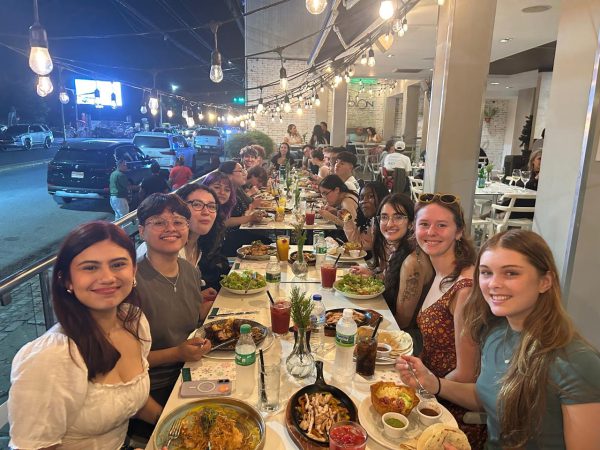
Students sitting at an outdoor table in the Dominican Republic while on short-term study abroad
Kalamazoo College students who participated in short-term study abroad over winter break were welcomed to the Dominican Republic with a special dinner.
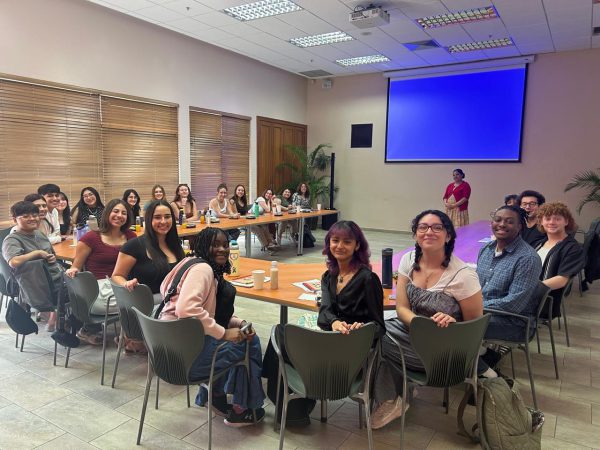
Students participate in an orientation during short-term study abroad in the Dominican Republic
Students participated in an orientation when they arrived in the Dominican Republic.

An Accessible Path to Global Learning  

The short-term program targets students who may face barriers to longer study abroad opportunities, including first-generation college students, students of color, student-athletes and those balancing multiple commitments on campus. It was first launched as a pilot program in 2019, funded through a grant from the Mellon Foundation, which supported faculty planning, along with Center for International Programs funds. Additionally this year, the Ambassador Martha L. Campbell and Consul General Arnold H. Campbell Foreign Study Endowment and the Robert J. Kopecky ’72 Endowed Study Abroad Fund helped high-need students afford the experience. The Campbell Endowment was established in 2009 to support and enhance the foreign study experience for K students. The Kopecky fund was established in 2022 to help maximize the number of students who participate in study abroad while encouraging students to explore the culture around them during their international experience. 

For some participants, the Dominican Republic trip marked their first time traveling internationally or even boarding an airplane.  

“For them, this was not just an academic experience; it was a personal milestone,” López Malagamba said.  

Academically, the program is tied to the Spanish curriculum. Students must have completed Spanish 201, the final course in K’s language requirement sequence for Spanish. In the fall, participants enroll in a preparatory course and attend predeparture sessions focused on Dominican history, race relations, politics and the country’s deep connections to the United States and the Caribbean. And once they are in the Dominican Republic, the learning is nonstop.  

“Every day is academic,” López Malagamba said. “Even when students are on a beach or in a community celebration, they are learning—about economics, migration, tourism, race, history and the environment.”  
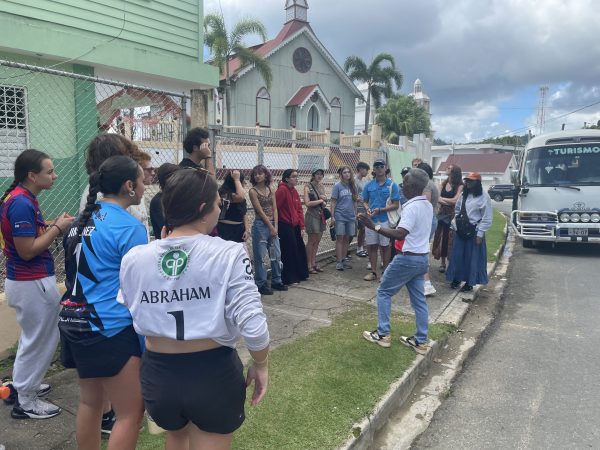
Students visit Samana in the Dominican Republic during short-term study abroad
In the coastal region of Samaná, students encountered a lesser-known chapter of shared history: communities founded by formerly enslaved people from the U.S. who settled there in the 19th century.
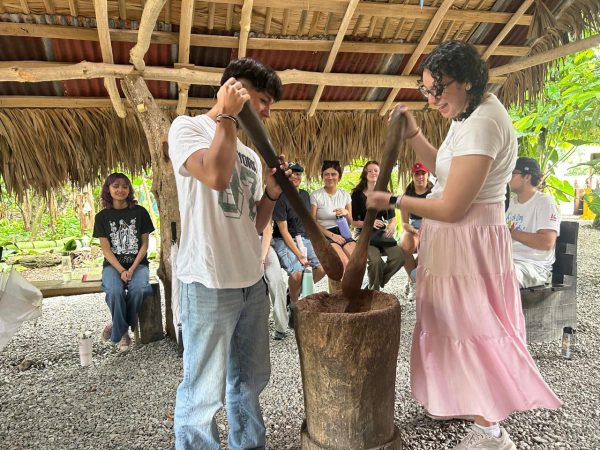
Chocolate making at Sendero del Cacao
Students had a chance to make chocolate while learning about the country’s export economy through cocoa farming, studying the role of tourism in shaping cities, and examining the deep ties between the Dominican Republic and the United States. 

Learning Beyond the Classroom  

Students explored the Dominican Republic through lectures, guided visits and hands-on experiences that reinforced themes from their language coursework, including urban life, nature, the arts and professions. They learned about the country’s export economy through cocoa farming, studied the role of tourism in shaping cities, and examined the deep ties between the Dominican Republic and the United States.  

In the coastal region of Samaná, students encountered a lesser-known chapter of shared history: communities founded by formerly enslaved people from the U.S. who settled there in the 19th century. A guide, himself a descendant of those settlers, shared how English once flourished in the region before being suppressed and how that legacy still shapes Dominican identity.  

“These are moments where students realize that U.S. history doesn’t stop at our borders,” López Malagamba said. “It lives in other places, in other people’s stories.”  

Environmental justice was another key focus. Students learned how coastal communities balance the economic need for tourism with the protection of ecosystems, national parks and marine environments that sustain local livelihoods.  

Living with host families added another layer of immersion and challenge. Students had to adapt to new routines, unfamiliar foods and different cultural expectations, all while communicating in a second language.  

“There’s always a moment where students feel overwhelmed,” López Malagamba said. “They miss their familiarity. They realize how hard it is to express themselves fully. But then something shifts.”  

That shift often comes in small victories: asking for directions, explaining a preference at the dinner table or successfully navigating a conversation they once would have avoided.  

“By the end, students realize, ‘I can do this,’” she said. “That confidence is powerful.”  
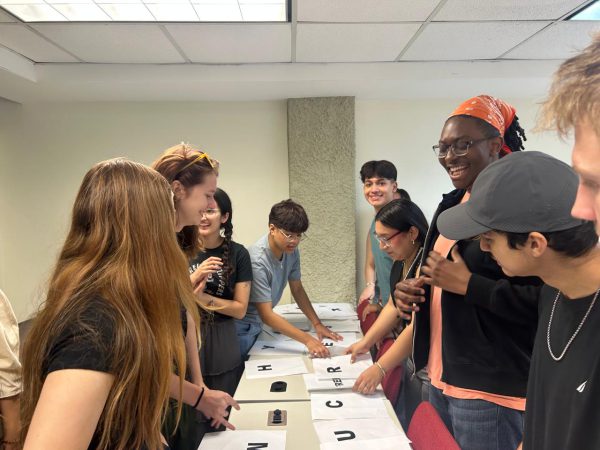
Spanish Class at Pontificia Universidad Catolica Madre y Maestra
K students participated in a Spanish class while visiting the Dominican Republic.
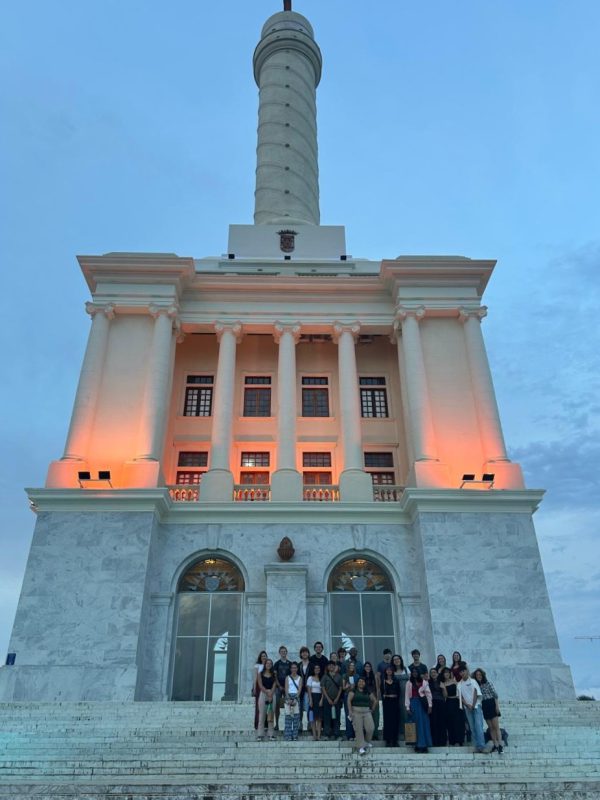
Students visit Monumento a los Heroes de la Restauracion on study abroad
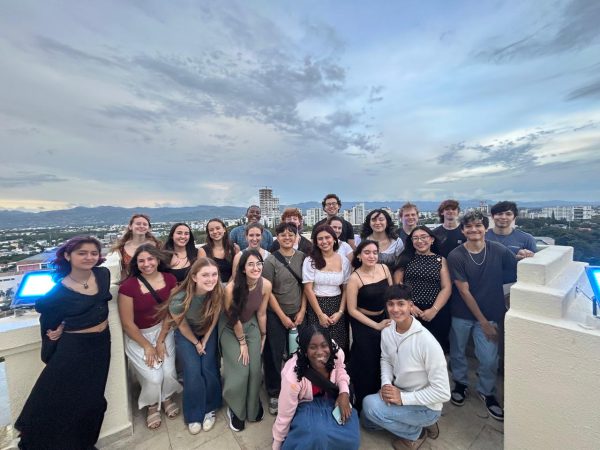
Students visited the Monumento a los Héroes de la Restauración, which was built for the 100th anniversary of the Dominican War of Independence, which was fought in 1844 to gain sovereignty from Haiti.

‘I’m Hooked’  

For Tom Clark ’27, the Dominican Republic trip became a lifeline to study abroad after he had to cancel plans for a longer program in Greece. The business major, who is dual-enrolling at Western Michigan University to pursue exercise science, realized too late that he couldn’t balance a two-term study abroad with his academic timeline.  

“I went through all the predeparture stuff, was all ready to go, and then I realized I wouldn’t be able to do it,” Clark said. “But right as I dropped it, I got an email about this trip to the Dominican Republic. I saw it was over winter break, so it wouldn’t take away from credits that I would need. It was perfect.”  

The trip marked Clark’s first time leaving the country, and the experience immediately challenged his assumptions about privilege and perspective.  

“I thought I was familiar with other cultures,” he said. “I thought of myself as an empathetic person who could put himself in the shoes of others. And then I actually took the trip, and my understanding was much different.”  

Simple differences struck him immediately. Getting off the airplane, he looked for a water fountain to fill his bottle only to realize public drinking fountains don’t exist in places without widespread access to clean water. The language immersion then proved to be both challenging and rewarding. Clark hadn’t taken a Spanish class in nearly a year, and the first few days were rough. But surrounded by Spanish speakers constantly—including his host parents, who spoke no English—he found his skills returning and improving rapidly. Those challenges, in fact, became opportunities for connection.  

Among Clark’s favorite moments was a joint class session with Dominican students learning English as a second language, meeting people his age from vastly different backgrounds, yet fundamentally similar. He made a friend named Casey who runs a fashion brand with 60,000 Instagram followers and is working toward getting a green card.  

The experience reframed how Clark thinks about language learning. In a classroom, he explained, students have varying levels of investment. On the trip, everyone was committed, making the learning more dynamic and applicable.  

“We were talking about how another language is like learning a superpower,” he said. “I learned I could travel to many countries and be perfectly fine. I could meet people and connect better. The Dominican is a tiny island, so I’m hooked on imagining what the rest of the world is like.”  
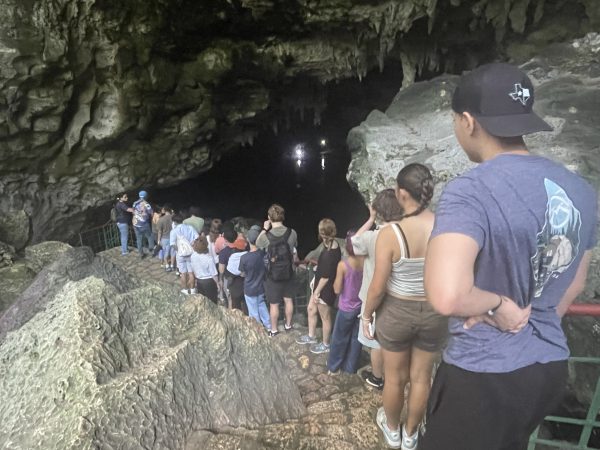
Tres Ojos National Park
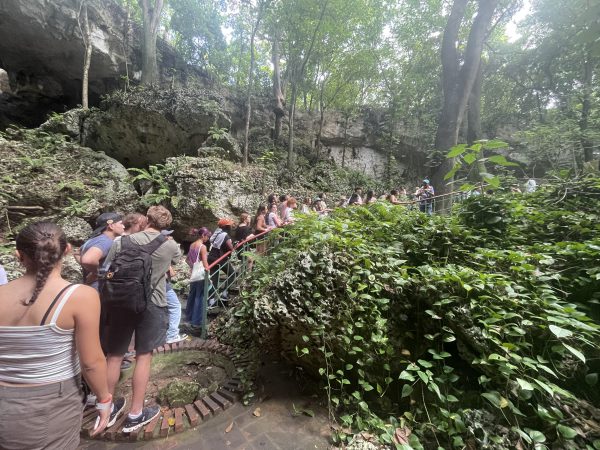
Tres Ojos, or Three Eyes National Park, is a 50-yard, open-air limestone cave.
Students at Tres Ojos National Park
Students walk through Tres Ojos National Park.

Discovering New Perspectives  

For Sarah Guerrero Gorostieta ’28, a first-generation college student, the Dominican Republic trip offered something unexpected: a chance to see her own culture through new eyes while discovering how much she still had to learn.  

“I have never learned so much in such a short amount of time about myself, my peers and an entirely new country,” Guerrero said. “With my Mexican heritage, I assumed because I’m Hispanic and because they’re Hispanic, there would be some similarities between us. There definitely were, but there was also so much nuance.”  

Although Mexico and the Dominican Republic were both colonized by Spain, Guerrero learned how French and African influences shaped Dominican culture differently. More importantly, she heard those histories directly from Dominicans themselves.   

Guerrero’s experience was framed with many memorable moments. She recalls feeling grateful for trying plantains for the first time, exploring caves and seeing the ocean.  

“I’d never felt so many emotions packed into one trip,” she said. “And I’m really excited to carry all of those lessons into study abroad.”  

Guerrero is next hoping to study at Belfast University in Northern Ireland, where she wants to explore political tensions and the media’s role in conflict—themes she first encountered in the Dominican Republic through a guest lecture on how the media weaponizes political relationships during elections.  
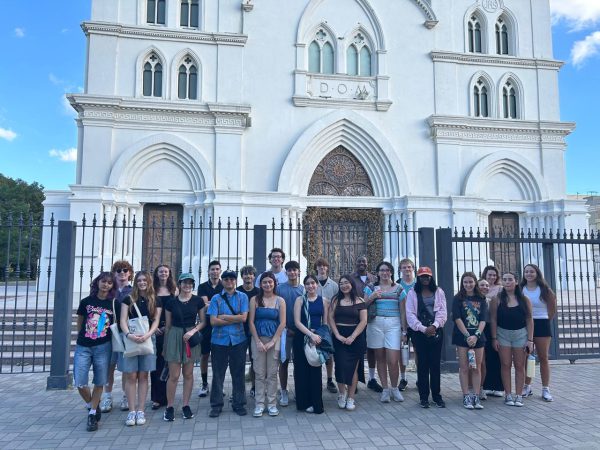
Santiago de los Caballeros Tour of the City
Students stopped at St. James the Apostle Cathedral during a tour of Santiago de los Caballeros in the Dominican Republic.
Downtown Santiago de los Caballeros
Associate Professor of Spanish Ivett López Malagamba (right) led the short-term study abroad experience through places such as downtown Santiago de los Caballeros.

Opening Doors for Student-Athletes  

For Riley Shults ’28, a runner on K’s cross-country team, the 10-day format meant he didn’t have to choose between his sport and international experience.  

The short-term trip to the Dominican Republic didn’t change Shults’ academic trajectory, he said, but it reinforced the direction he wanted to pursue. He is declaring an anthropology-sociology major in February and is now planning to study in Oaxaca, Mexico, during the winter of his junior year through a program focused on community engagement and Indigenous cultures.  

“I knew that I wanted to care about people, and I knew that I wanted to travel the world,” he said. “This program was the first real experience that I got to have of that.”  

One question lingered throughout the trip: Can such a short program truly transform students in the way longer study abroad experiences do? And for Shults, the answer is unequivocal.  

“One hundred percent,” he said. “I barely talked to anyone on that trip before it, and now I see them every day. Every little aspect fundamentally changed who we are because we were forced to think about someone other than ourselves. It’s not just about me anymore. It’s about the whole world.”  

The change came through small moments that accumulated into profound shifts. Shults discovered he loves beans and rice. He overcame his lack of confidence in his language skills and found himself thinking in Spanish. He engaged with complex political histories he’d only read about in textbooks as his host mother shared stories each morning about the country’s history under dictator Rafael Trujillo.  

“I used to think one way, and now I think this other way,” he said. “Study abroad pulls people out of their comfort zones. Once you push past that boundary your learning is only limited to what you allow yourself to find.”  

One particularly memorable moment came during a Sunday block party in a working-class neighborhood of Santiago. Community organizers welcomed the K group with music, announcements and open celebrations. 

Students danced alongside children, parents and grandparents in the streets. Shults found himself at the center of that celebration, dancing with elderly women who grabbed his red hair for good luck. He moved freely without self-consciousness in a way he’d never experienced at home.  

“Every single person is not caring about what other people say, they’re just moving,” he said. “It’s such a different culture than ours. Here, people don’t just dance. We’re always thinking about what other people are doing. But that’s not what they think. They’re just going to have fun.”  

His experience now surfaces in unexpected moments back on campus. In a class about water systems, Shults reflected on the reality that Dominican tap water isn’t safe to drink.  

“I’m sitting in class thinking, ‘I lived this,’” he said. “I lived this example where you don’t have water right on the tap.”  
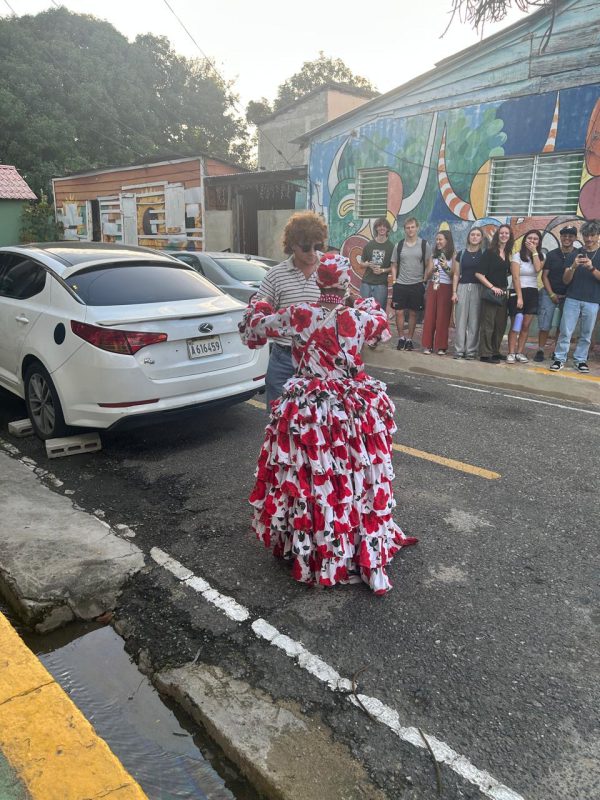
A resident of the Los Pepines neighborhood dances with Riley Shults '28
A resident of the Los Pepines neighborhood dances with Riley Shults ’28.
Visit to the Monumento a los Heroes de la Restauracion
The Monumento a los Héroes de la Restauración is the tallest building in Santiago de los Caballeros in the Dominican Republic.

Distinct Opportunities Bring Transformations  

Although the program lasts just 10 days, its impact extends far beyond winter break. López Malagamba noted that many students return with renewed interest in longer study abroad opportunities and greater confidence in navigating unfamiliar environments. For her, watching students undergo their transformations in just 10 days remains the most rewarding part of leading the program.  

“These students come back with a different understanding of what it means to be a global citizen,” she said. “They’ve lived with families who welcomed them. They’ve navigated challenges in a second language. They’ve sat with discomfort and come out stronger.   

“These programs remind students that the world is bigger than the U.S. and their immediate communities,” she said. “They learn that their actions matter, that their country has an impact elsewhere, and that shared humanity exists across borders. That’s the kind of learning that stays with you long after the trip ends.”  
Study Abroad Leads to Marine Research Adventure

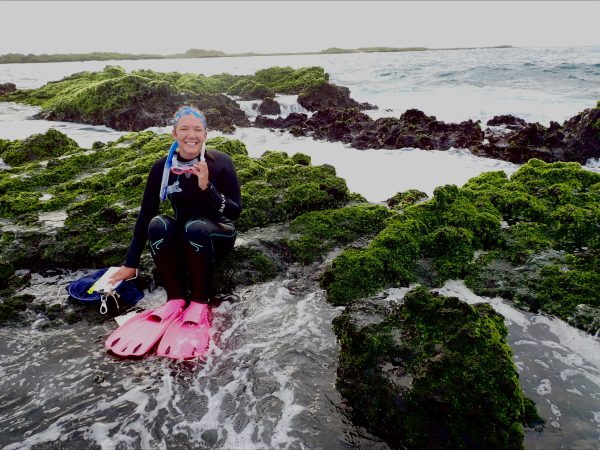
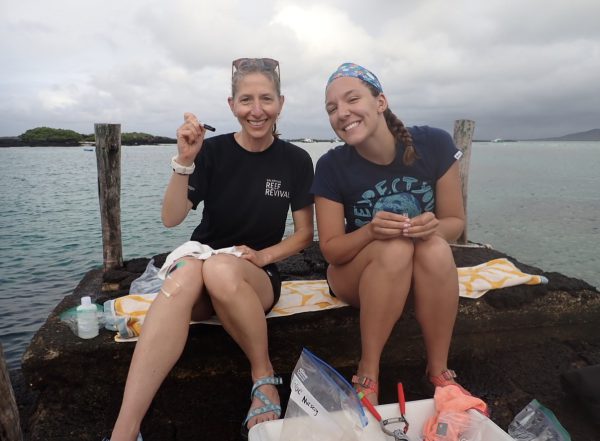
A student and professor performing marine research in the Galapagos Islands
Hailey Yoder ’26 (right) teamed up with Cheryl Logan, a professor at Cal State Monterey Bay, on labeling tubes for data collection in the field.
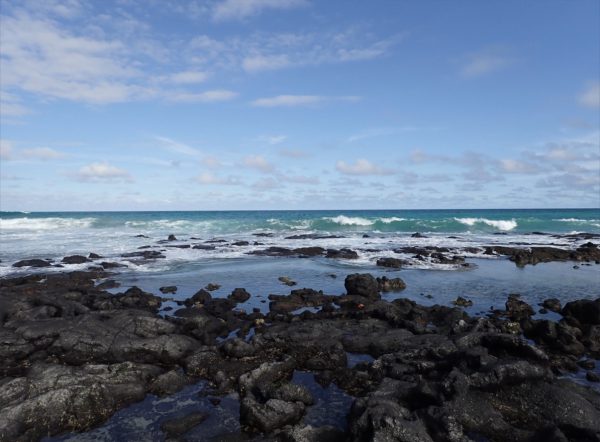
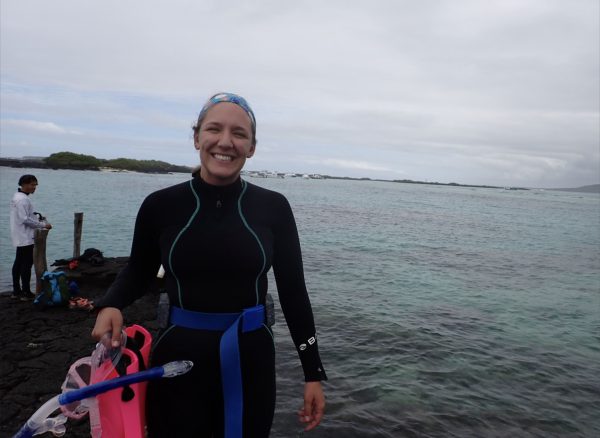
A view from the shore in the Galapagos Islands where Hailey Yoder performed marine research
Yoder’s favorite hike in the Galapagos Islands took her to a tide-pooling area where she saw starfish, small fish, crabs and small octopi.

When Hailey Yoder ’26 tells people she researches coral reefs, their response is often the same: “You live in Kalamazoo, Michigan. How do you do that?”  

For Yoder, a Kalamazoo College double major in biology and Spanish, the answer is both simple and extraordinary: It started with sending an email.  

That email, sent during her study abroad program in Ecuador, connected her with Margarita Brandt, a biology professor at the Universidad de San Francisco de Quito, who works with Galápagos Reef Revival. What began as a conversation about potential research ideas soon evolved into an opportunity to study coral reef restoration in the Galápagos Islands.  

“We just clicked and worked really well together,” Yoder said. “She invited me onto a project, and I really was just hoping that it would work out.”  

Bringing Coral Reefs Back to Life  

Yoder’s research starts with how climate change and ocean acidification have affected coral reefs in the Galápagos. The islands once boasted several coral reefs, but many have been wiped out by bleaching, leaving remaining structures vulnerable to complete destruction.  

The restoration process involves collecting coral fragments from around the islands and growing them in underwater gardens, where they’re suspended from ropes and nourished by ocean currents. Once mature, researchers implant them into the seafloor in organized patterns. To assess the impact, Yoder used GoPro cameras mounted in waterproof cases and weighted with zip ties—nothing fancy, she noted—placing them at consistent locations near restored coral sites. Through snorkeling expeditions, she positioned the cameras to capture the ecosystem unfolding around eight or nine individual corals. All the research was done under permits from Galápagos National Park and CITES, the Convention on International Trade in Endangered Species.  

The results have been striking. At the first site Yoder analyzed, two new fish species appeared after restoration. Afterward, four or five additional species flourished.  

Community at the Center  

What distinguishes this research is its deep connection to local communities. The project employs Galápagos residents, including one community member who maintains and monitors the corals year-round. Researchers also lead programs bringing women and children—particularly those without previous opportunities to explore their island’s underwater world—on snorkeling expeditions to witness the restoration firsthand.  

“There are intricacies to coming into someone else’s home to perform research,” Yoder said. “I tried to focus on community and the local knowledge that people have.”  

This community-centered approach culminated in a symposium in the Galápagos, where Yoder presented her research entirely in Spanish. She created a Spanish-language research poster and discussed her findings with community members invested in their island’s ecological future.  

“They were all super excited about it and thought it was really cool,” she said. “It was pretty fun to be able to have that connection, too.”  

Taking Marine Research to the National Stage  

Yoder’s work has gained recognition beyond the islands. This January, she traveled to Portland, Oregon, to present a poster at the Society for Integrative and Comparative Biology (SICB) conference, arriving just before K’s winter term began and returning during the first week of classes.  

The conference provided invaluable networking opportunities. A postdoctoral student from Boston’s National Institute of Health, who had previously worked with the same corals and researchers, offered career guidance and suggestions for future research directions. Yoder connected also with fellow undergraduates navigating similar paths.  

“With these conversations, I recognized that there’s not necessarily a right or wrong path to going into some sort of research like this,” Yoder said. “That was reassuring.”  

K’s Role in Marine Success  

Yoder credits K’s biology and Spanish departments along with the Center for International Programs with making her research possible. In all, they provided funds through: 

  • The Betty R. Gómez Lance Award in Latin American Studies, which was established by Lance after her retirement from K. It has been awarded posthumously until her passing in 2016; 
  • Jim and Deanna Tiefenthal Endowed Foreign Study Fund: established by Jim and Deanna (members of the class of 1966) in 2016 to support student international learning opportunities through K’s study abroad program; and 
  • Seminary Hill Sustainability Internship: established by Doug Doetsch ’79 and his wife, Susan Manning, to fund internships focused on sustainable agriculture or architecture.    
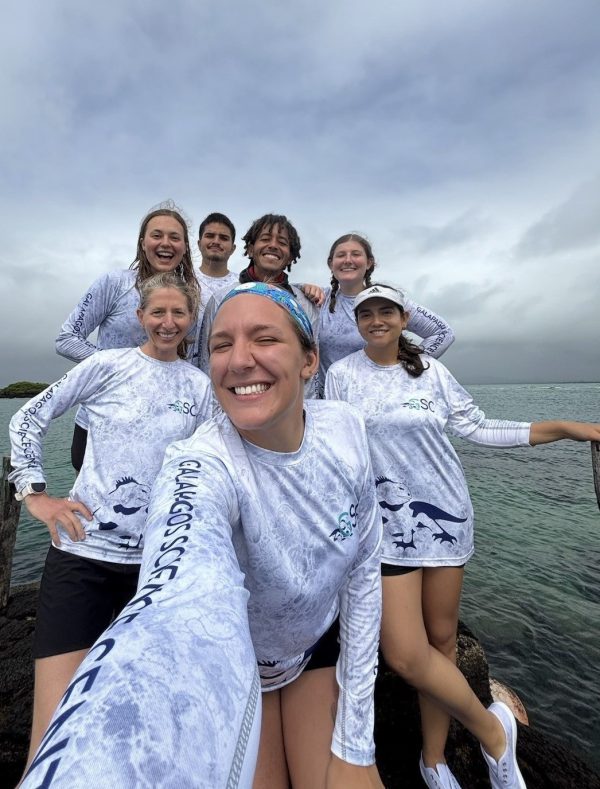
Marine research team poses near the ocean after a day of collecting data
Emma Saso (back row, from left), Daniel Velasco, José Barrios and Ava Besecker with Logan (front from left), Yoder and Catalina Ulloa after a full day of collecting data for marine projects.
Student in snorkeling gear while performing marine research
Yoder waited on the rocks right off of the bay where the coral sites are located, just after placing video cameras. “We waited here for 15 minutes as to not disturb the fish community and be out of the way before recollecting the cameras,” she said.
Student prepares to perform research in a wet suit
Yoder prepares to place cameras before snorkeling around to get a feel for the location and different plots and determine the most efficient way to take quality videos. 
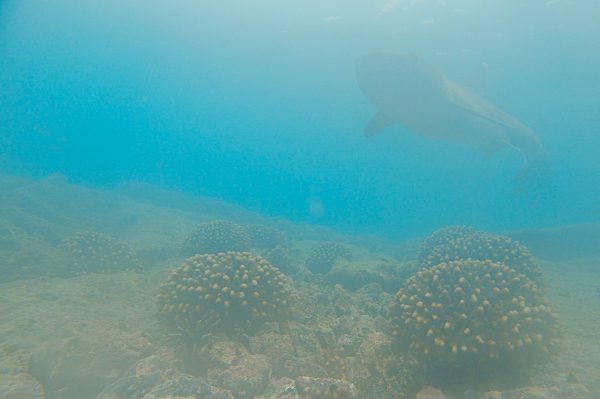
An underwater view of a coral reef and a shark
Yoder had GoPro cameras mounted in waterproof cases and weighted with zip ties so they could be placed at consistent locations near restored coral sites.

Associate Professor of Biology Santiago Salinas has been particularly supportive, helping Yoder refine her research question while providing guidance as she writes her SIP. Professor of Biology Binney Girdler has assisted with data visualization and helped Yoder narrow her focus. The department also helped fund her Portland conference trip.  

“They were supportive and beyond excited for me,” Yoder said. “To have a professor you look up to say that you’re doing something they’re proud of is so cool.”  

An Unexpected Love for Corals  

Yoder admits she initially gravitated toward sharks within the field of general biology, not coral reef or fish. However, the research transformed her perspective.  

“I gained this strong love for corals, because the way they work is so interesting, and they provide so many amazing services for the land and fish that they’re near,” she said.  

Her biology major, enhanced by marine research experience, positions her well for graduate school. She has applied to a master’s program to work with a different researcher studying the same coral reefs, with hopes of returning to the Galápagos over the next year to collect data from different reefs and expand her video collection. Her ultimate goal is to publish her research.  

“My knowledge is so much stronger because of the undergrad opportunity,” Yoder said. “But this master’s program will be a huge thing as well, because it will allow me to dive into the specifics and work more closely with coral scientists.”  

Advice for Future Hornets  

For prospective biology students, Yoder emphasized the opportunities available to those willing to pursue them. But opportunity requires initiative.  

“Sending the first email was just the first step of all of the things I’ve had a chance to do, because K gives you so many opportunities,” Yoder said. “You just need to be able to take advantage of them. Those resources will be there, but you have to reach out and ask for them. The answer is going to be ‘yes,’ if they can make it work.”  

Her message is clear: “Send the email and do the thing you want to do. Advocate for yourself.”  

For Yoder, that single email led to underwater gardens in the Galápagos Islands, international research presentations, professional connections across the marine biology field, and a future dedicated to understanding and protecting coral reef ecosystems—all from Kalamazoo, Michigan.  

K Welcomes New Faculty for 2025

Kalamazoo College is pleased to welcome the following faculty members to campus this fall: 

Visiting Assistant Professor of Biology Bonnie Ebendick

Ebendick arrived at K after earning her Ph.D. in biological sciences in August from Western Michigan University (WMU). She previously earned a bachelor’s degree in biochemistry and molecular biology/biotechnology, with a specialization in microbiology, from Michigan State University.

Before attending WMU, Ebendick worked as a research scientist at Michigan State, the University of Toledo and Iontox, LLC, beginning in 1999. Her teaching experience includes positions as a lecture teaching assistant and recitation teaching assistant at both Michigan State and WMU.

Visiting Assistant Professor Bonnie Ebendick
Visiting Assistant Professor of Biology Bonnie Ebendick joins the Kalamazoo College faculty.

Visiting Assistant Professor of English Kevin Fitton

Fitton recently earned his Ph.D. in English creative writing from WMU. He also holds a bachelor’s degree in English from Hope College, a master’s degree in New Testament from Gordon-Conwell Theological Seminary, and a Master of Fine Arts from Bennington College.

Before arriving at K, he taught first-year writing, children’s literature and creative writing workshops as a graduate assistant at WMU; courses in creativity and literature at Grand Valley State University; and academic writing at Olivet University.

Visiting Assistant Professor of English Kevin Fitton
Visiting Assistant Professor of English Kevin Fitton joins the Kalamazoo College faculty.

Assistant Professor of Chemistry
and Biochemistry Andrew Jensen 

Jensen arrived at K from the University of Michigan, where he was a postdoctoral researcher, a mentor for graduate and undergraduate researchers, and a guest lecturer for courses in chemical analysis, physical properties of analysis, environmental chemistry and mass spectrometry. He previously served as a graduate research assistant at the University of Colorado, Boulder and an undergraduate research assistant at Davidson College in North Carolina. 

Jensen earned a Ph.D. in analytical, environmental and atmospheric chemistry at the University of Colorado, Boulder and a bachelor’s degree in chemistry from Davidson College. 

Assistant Professor of Chemistry and Biochemistry Andrew Jensen
Assistant Professor of Chemistry and Biochemistry Andrew Jensen joins the Kalamazoo College faculty.

Visiting Assistant Professor of Economics and Business Matthew Schultz 

Schultz has prior teaching experience at Kellogg Community College, where he was an adjunct instructor for business courses specializing in economics; Lakeview School District, Climax-Scotts Community Schools and Battle Creek Central High School, where he taught marketing, accounting, entrepreneurship, business law, finance, business management, career preparation and computer science; and with the MiSTEM Network/Code.org, where he facilitated teacher training for the AP Computer Science Principles curriculum. 

Schultz received a Ph.D. in education from Indiana Wesleyan University, a master’s degree in career and technical education from WMU, and both a Master of Business Administration and a bachelor’s degree in business management from Cornerstone University. 

Visiting Assistant Professor of Economics and Business Matthew Schultz, new faculty, 2025
Visiting Assistant Professor of Economics and Business Matthew Schultz joins the Kalamazoo College faculty.

Assistant Professor of Spanish Language and Literature Brayan Serratos García

Serratos García recently earned a Ph.D. in Spanish and Portuguese Language and Literature from Vanderbilt University, where he also completed a master’s degree in the same field. He holds a bachelor’s degree in World Languages and Cultures with an emphasis in Spanish from Iowa State University. His research explores transoceanic connections among Europe, Asia, and the Americas during the Early Modern period, with particular emphasis on the contributions of Indigenous and local knowledge-producers.

Serratos García has held teaching positions as instructor, adjunct faculty, teaching assistant, and course coordinator at Vanderbilt University and Fisk University, as well as a teaching appointment at Beijing Normal University. He has taught a wide range of courses from introductory language classes to advanced seminars on Spanish and Portuguese literature and culture. In addition to Spanish and Portuguese, he speaks Chinese and Italian and has lived, studied, and conducted research across Latin America, Asia, Europe, and the United States.

Assistant Professor of Spanish Language and Literature Brayan Serratos García, new faculty 2025
Assistant Professor of Spanish Language and Literature Brayan Serratos García

K Selects Four Faculty as Endowed Chairs

Kalamazoo College has appointed four faculty members as endowed chairs, recognizing their achievements as professors. Endowed chairs are positions funded through the annual earnings from an endowed gift or gifts to the College. The honor reflects the value donors attribute to the excellent teaching and mentorship that occurs at K and how much donors want to see that excellence continue. The honorees are as follows.

Sarah Lindley, Robert W. and JoAnn Stewart Chair

Lindley, a professor of art, previously received an endowed professorship when she was named the Arcus Social Justice Leadership Professor of Art in 2017.

Since 2001, Lindley has taught a range of ceramics and sculpture courses, and has managed and maintained K’s ceramics, sculpture and woodshop studios and equipment. Lindley served as an Arcus Center for Social Justice Leadership Faculty Fellow in 2010–11, and in that capacity helped found the Community Studio in downtown Kalamazoo’s Park Trades Center. She has had several solo, two-person and group exhibitions featuring her own work regionally, nationally and around the world.

Lindley earned her Bachelor of Fine Arts degree from the New York State College of Ceramics at Alfred University. She earned a Master of Fine Arts degree in ceramics from the University of Washington. 

Portrait of Sarah Lindley
Sarah Lindley

Morgan Loechli, Dow Trustee Chair

Loechli, an assistant professor of physics, arrived at K in 2023 from Washtenaw Community College, where she was a part-time physics instructor while earning her doctorate.

Since then, Loechli has led six students in summer research and taught courses including Introductory Physics I and II, Introduction to Relativity and Quantum Physics, and Introduction to Climate Science. She conducted climate science research while earning her Ph.D. in applied physics at the University of Michigan. Loechli also has a master’s degree in applied physics from the University of Michigan and a bachelor’s degree in physics and mathematics from Dickinson College.

Portrait of Morgan Loechli
Morgan Loechli

Carlos Vazquez Cruz, Lucinda Hinsdale Stone Junior Chair

Vazquez Cruz has been an assistant professor of Spanish at K since 2022. His teaching interests include Spanish creative writing, Latin American contemporary narratives, Latin American poetry and the visual arts and music in Spanish Caribbean literatures. He has also written one hybrid book of mixed genres, two collections of stories, two novels, three collections of poetry and one book of essays, along with research articles in peer-reviewed journals. Five of his books have been awarded by the Puerto Rico PEN, and he received the Banco Santander Spanish Creative Writing Fellowship (NYU, 2008-2010), the New Voices Award (Festival de la Palabra de Puerto Rico, 2014) and the Letras Boricuas Fellowship (Flamboyán Foundation and the Andrew W. Mellon Foundation, 2022).

Vazquez Cruz holds a Ph.D. in Latin American literature with a graduate certificate in digital humanities from the University of North Carolina at Chapel Hill, a Master of Fine Arts in Spanish creative writing from New York University and a bachelor’s in Spanish education from the University of Puerto Rico at Rio Piedras.

Portrait of Carlos Vazquez Cruz, endowed chairs
Carlos Vazquez Cruz

Lanny Potts, James Stone Senior Chair

Potts, a professor of theatre arts, arrived at K in 1987 as the technical director for K’s Festival Playhouse. In addition to teaching classes in areas such as scenic design, lighting design and stage management, Potts serves as artistic director of the Festival Playhouse Theatre.

The Arts Council of Greater Kalamazoo awarded Potts last fall with a Community Medal of Arts. He also has received six Michigan Wilde Awards for Best Lighting for his work at Farmers Alley Theatre. At K, he earned the 2024–25 Lucasse Fellowship for Excellence in Scholarship, honoring his contributions in creative work, research and publication.

Potts has a Master of Fine Arts degree from Michigan State University and a bachelor’s degree from Valparaiso University.

Portrait of Lanny Potts, endowed chairs
Lanny Potts

Hive Five! K Student Wins Bee Hotel Contest in Spain

What began as a year on study abroad at the Universidad de Extremadura in Cáceres‎, Spain, ended in an international triumph for Annaliese Bol ’26, a Heyl scholar from Kalamazoo College.  

Bol, a biology and Spanish double major, blueprinted a bee hotel—a small structure designed to provide nesting, shelter and a safe space to lay eggs for solitary pollinators—and entered it into the Insectopia Festival held from June 2–6 in Jarandilla de la Vera, Spain. The event included a contest among representatives of eight universities across Europe to see who could diagram the best insect hideaway while contributing something educational to humans and helpful to local pollinator health and biodiversity.  

The design for Bol’s hotel featured a honeycomb pattern with a QR code that could lead interested passersby to the Insectopia website to learn more about the organization and how it supports pollinators.  

“Trying to implement large-scale change to support bees is very difficult,” Bol said. “My project’s goal was to lead people to little solutions that hopefully would compound into something bigger.”  

The only problem was that she was returning to the U.S. on June 5, while the festival was still ongoing. However, with some community engagement support from a professor and a master’s student, Bol and her team won the contest.  

“I was shocked, honestly,” she said. “I was traveling when my teammates called and asked, ‘Have you checked your email? We won!’”  

Bol’s reward is that Insectopia is now building her design, which measures about 18 inches high by 18 inches wide. It includes paper straw and wood blocks that will be important to pollinators in Spain because of its arid climate, especially with a lack of tall trees where pollinators normally can nest. The fact that the bee hotel directs others to the Insectopia website is important, too, as judges required entrants to include a plan for activating the community.  

“I like insects, but the artistic part of the project appealed to me because I don’t get to think creatively every day with my studies,” Bol said. “I also liked doing the research to figure out the best materials, and it was educational.”  

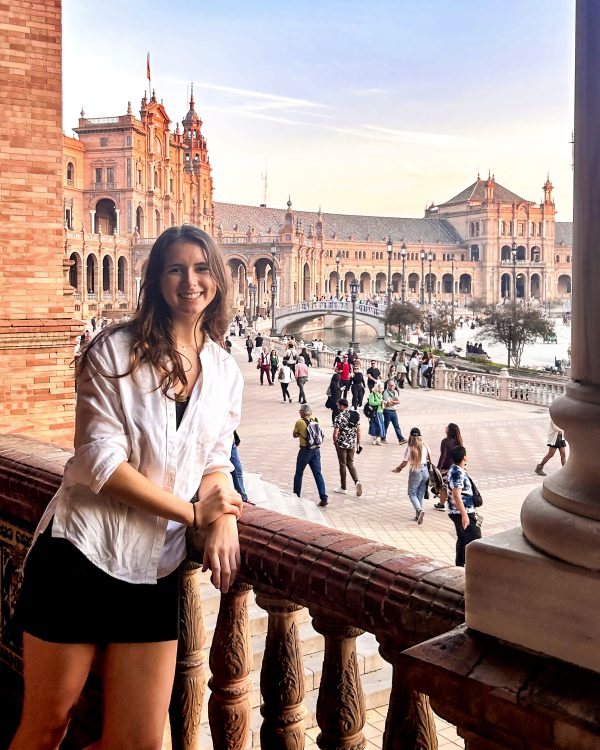
Bee hotel contest winner Annaliese Bol at the Plaza de España in Seville, Spain
Heyl scholar Annaliese Bol ’26 spent the 2024-25 academic year studying abroad in Spain. During that time, she competed with representatives of eight universities from across Europe to see who could diagram the best bee hotel to support pollinators and educate the public about bees. On her way back to the U.S., she found out she won the contest.

While abroad, Bol began working on an intercultural research project in which she developed a composting program at the Universidad de Extremadura to decrease waste. Simultaneously, she created a community garden that local teachers could use as a tool for their classrooms.  

At that time, some of her contacts, including a professor, mentioned the Insectopia contest, although Bol initially didn’t give it another thought. An Insectopia director later asked Bol what she would be doing this summer upon returning to the U.S. Her response: Working with Clara Stuligross, assistant professor of biology, on bee research for her Senior Integrated Project.  

“He said that Insectopia is all about bees, so I should be involved in it,” Bol said. “I said, ‘OK, cool,’ and they set me up. They gave me all the information and told me the goal was to design an environmentally friendly, but also educational, bee hotel.”  

As she reflects on her experience, Bol affirms the idea that study abroad widens one’s perspective and changes how students think about themselves and other cultures.  

“It was interesting and fun,” Bol said. “I made a lot of friends among Spanish students and other Europeans as well. It also made me appreciate my home here, too, in certain ways. I feel that in the United States, we have a perception of Europe being a much more advanced place to live. Maybe it was just because I was in a small Spanish town in the countryside, but it made me appreciate how we address problems here. Maybe it’s just from me attending K, but I feel like we’re always asking, ‘Why is something that way?’”  

At K, Bol is a cross country runner and a Crochet Club participant. This fall, she would like to form a K chapter of Women in Wildlife, a student organization consisting of women and non-binary people who want to work in wildlife-associated fields. Bol’s varied interests and commitment to community building have served her well both at home and abroad. Her time in Spain highlighted K’s distinctive approach to study abroad, with programs designed to foster that same kind of meaningful engagement she values on campus.  

“I met other American students while I was in Cáceres‎ and traveling around Europe,” Bol said. “When we talked about shared experiences, I asked what they did in their free time, and they didn’t have a lot to say. But K, especially in this program in Spain, makes it a goal to get you ingrained in the community. We could say we were tutoring kids or working on our volunteering projects. That really made my experience special.”  

New Student Travel Fund Honors Beloved Professor

When Margarita Costero Campos joined the Department of Romance Languages at Kalamazoo College in 1988, she was part of the Spanish program’s growth from one professor to three. Since then, Spanish has become its own department and expanded to eight combined full-time and part-time faculty members.

Recently, 28 sophomores signed up as Spanish majors at Declaration of Major Day. More than 975 Kalamazoo College students have studied in Spain, Mexico, Chile and Costa Rica since 2012.

Engagement with Spanish language and cultures is clearly strong, and a new fund in honor of Campos supports students who carry that torch forward.

Campos taught at K from 1988 to 1997 and passed away in May 2024 at 92 years old. Her family, including her widower, Dr. José Luis Campos; six children; and 13 grandchildren established the Margarita Costero Campos Student Travel Award in November 2024. The fund will assist academically dedicated students with travel to Spanish-speaking countries for purposes including research, conference presentations, internships and study abroad, with preference given to students who major or minor in Spanish.

The fund is an apt legacy for Campos. Born in Madrid, Spain, she was forced into exile—first in France, then in Mexico City—with her family when the Spanish Civil War broke out in 1936. Campos excelled as a student in Mexico City, particularly in language and literature. She studied for several years at the University of Texas, with a summer stint in Oxford that remained one of her fondest memories, said her son Isaac Campos.

“She loved teaching at Kalamazoo College,” he said. “It had been her lifelong dream to be a professor at a college or university, and when she achieved her position at K, she cherished it. She also believed that study abroad was perhaps the most important experience a student could have. While she was self-effacing to a fault, we know she would be thrilled to know that, long after her death, K students would continue to learn Spanish and study abroad with her support.”

Enid Valle, a professor of Spanish at Kalamazoo College, joined the faculty at K in 1989, a year after Campos.

“Margarita was teaching all the very advanced language classes,” Valle said. “Margarita was our expert in grammar, and she was passionate about it. She was delighted always to explain things, to figure things out, and she would give you every nuance possible.”

A learned and extremely well-read person, Campos spoke French and knew Latin and classical Greek in addition to Spanish and English. She actively participated in groups and programs across campus, such as the former Center for European Studies, and was involved in the establishment of one-year teaching assistantships for international students at K. In addition to excelling at evaluating and selecting texts for courses, she built strong relationships with colleagues and students.

“She was attentive to students’ needs and had a keen eye for students’ individual skill levels,” Valle said. “She was highly regarded among the students and very much liked.”

Ivett López Malagamba, associate professor of Spanish and chair of the Department of Spanish Language and Literatures, came to K in 2017, the year Spanish became its own department. Although Campos was long retired by then, she remained connected to K.

“Even though I never worked with her, I benefitted from her intellectual curiosity and lifelong learning,” López Malagamba said. The two met through a reading group with another colleague, and Campos once read and offered comments on an article that López Malagamba eventually published. Campos continued to serve as a resource for the whole department.

“Margarita and I became good friends throughout the years,” Valle said. “I kept consulting her, and so did other colleagues, after she retired. I remember one evening being stuck with some kind of grammar question, and I called her. It was that kind of a friendship, and she had that kind of expertise.”

After retirement, Campos would periodically return to speak to the Spanish 203 course whenever they would read the poem “Explico algunas cosas” by Chilean poet Pablo Neruda. The poem mentions a particular house in Madrid, in which Campos lived as a child.

Donate to the Margarita Costero Campos Student Travel Award 

To honor Margarita Campos’ legacy and support K students who want to further their studies with travel to a Spanish-speaking country, please make a gift online to the Margarita Costero Campos Student Travel Award (under “I’d like to support,” select “Other” and type Campos Student Travel Award in the designation box) or contact Lindsay O’Donohue at 269.337.7299 or lindsay.odonohue@kzoo.edu.  

Campos Student Travel Fund
Margarita Costero Campos taught at K from 1988 to 1997 and died in May 2024 at 92 years old. Her family, including her widower, Dr. José Luis Campos; six children; and 13 grandchildren established the Margarita Costero Campos Student Travel Award.
Campos Student Travel Fund
The student travel fund in Campos’ name will assist academically dedicated students with travel to Spanish-speaking countries for purposes including research, conference presentations, internships and study abroad, with preference given to students who major or minor in Spanish.

“She was so passionate about the Spanish language, and she could explain to you absolutely anything and everything,” Valle said. “We all miss her greatly.”

“Our mother was an extraordinarily hardworking and ethical person,” Isaac Campos said. “She was also totally dedicated to teaching and her students. She was the epitome of a great educator. We knew she would want to prioritize study abroad, student need and academic excellence, and so we worked with K to structure the award that way.”

The Spanish department worked with the Campos family to ensure that structure responds to or reflects the changing complexities of travel abroad.

“How do we support, and provide access for, students to complete intellectual projects that require travel or research abroad?” López Malagamba said. “We want this fund to benefit as many students as possible.”

Students who travel to Spanish-speaking countries aren’t only learning Spanish. They are studying film, economics, health systems, indigenous communities and more. They are preparing for future careers in teaching, law, chemistry, politics and more.

“Indeed, we’re educating them on language and political, social and economic issues of the Spanish-speaking world,” López Malagamba said. “Ultimately, for us in the Spanish department, intercultural experiences play a significant role in fostering ethical considerations and assessments. Our goal is for students to ponder questions such as: How do you adapt your values to the values of other cultures? How is your experience in connection with the Spanish-speaking culture shaping your values and your objectives in your personal or professional future?”

While abroad, whether studying or doing research, some students are able to make academic, philosophical and business connections that may lead to a job or a new career path after K.

“This is only our eighth year as a department, but we have very active students when it comes to engaging with the world beyond our Kalamazoo community,” López Malagamba said. “To be able to support them with this fund is very exciting.”

The fund will start providing financial support for travel to Spanish-speaking countries next academic year.

“We’re hoping that friends, former students, colleagues and anyone who believes in the importance of language education and study abroad will contribute whatever they can to grow the award for the benefit of generations of K students,” Isaac Campos said. “Our mother would’ve been so pleased to know that a certain former student, or colleague, or friend in the community helped to make this an especially meaningful gift to deserving students far into the future.”

Student Group Empowers Women to Seek Roles in Business

As International Women’s Day approaches on March 8, leaders of Kalamazoo College’s Professional Women’s Club (PWC) are reflecting on a successful term of empowering female-identifying students to explore their future career goals.

Open to all majors, PWC brings together students who are seeking to succeed in a variety of professional spaces, especially those where women remain underrepresented.

“With the diversity in academics at a liberal arts school like K, you have the ability to pursue many different passions,” said PWC co-President Alexa Wonacott ’25, who double majors in business and Spanish. “I think our club is cool because you’re working with biology students, psych students and more, and we all have something in common that we want to work on within ourselves. I think it’s awesome that K offers all these different paths, yet you still find a group of people that you have something in common with.”

Recent PWC events have included LinkedIn and résumé-writing workshops. They’ve also involved conversations with Amy MacMillan, who is the L. Lee Stryker Associate Professor of Business at K, and her daughter, Lindsay, a former vice president at Goldman Sachs, and current keynote speaker, author, writing coach and creative leadership expert. Lindsay’s discussions, for example, included elements regarding how to bring creativity into the corporate world.

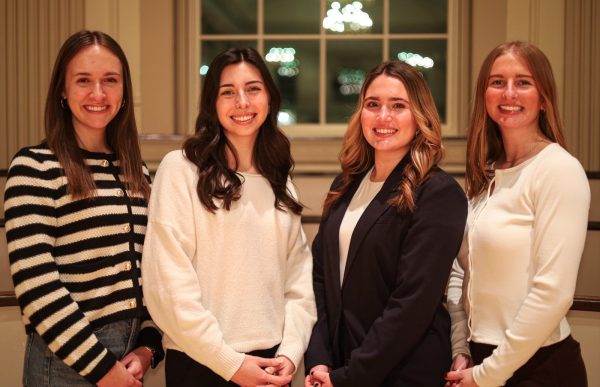
The Professional Women's Club leadership board, consisting of four women students, marks International Women's Day
The Kalamazoo College Professional Women’s Club leadership board includes Alexa Wonacott ’25 (from left), Bailey Callaway ’25, Grace Westerhuis ’26 and Amelia Rooks ’26.

PWC member Grace Westerhuis ’26 and co-President Bailey Callaway ’25 noted they were especially inspired by Lindsay’s message regarding how to fail successfully, and they said their experiences in the group as a whole have been beneficial.

“I thought it was important for me to practice my professional skills and try networking,” Westerhuis said. “Then, I really enjoyed connecting with other female-identifying students, learning about their majors and working together to create this environment where we’re all supporting each other and figuring out our careers and futures.”

“As a business major, I’ve noticed that there are always just a select few female-identifying students within any of my courses because we’re choosing a predominantly male field,” Callaway said. “I felt like it was very important to foster an environment where it was accepting of the women in our school, where we could have our ideas supported and uplifted.”

All three students said PWC has helped them figure out how they plan to proceed when they jump into careers as women in life after K. Callaway, for example, wants to work in hospital or healthcare administration.

“I’ve been surrounded by healthcare my entire life, but I definitely am not the type of person to go in on the clinical side,” she said. “I’ve enjoyed pursuing business, especially at K, so I want to help people, but maybe more in the background by being an administrator.”

Westerhuis, as a junior, still has some time to figure out what she wants to do, although she has enjoyed pursuing ethics and business development.

“I’m looking into finding a consulting path I enjoy, maybe in B to B, so I would like to give advice on how to practice good business ethics because I think our world needs that right now,” she said. “I also love to travel, so anything that can get me to another country sounds great.”

Like Westerhuis, Wonacott enjoyed her study abroad experience and loves to travel.

“I’m hoping to go back abroad after graduation,” she said. “I recently applied for a program that would take me back to Spain to teach for about a year. After that, I’d love to work in international business. I’m interested in large global markets, so some kind of intersection between leadership, travel and big business would be ideal.”

International Women’s Day can trace its roots to February 28, 1909, when the now-dissolved Socialist Party of America organized the first National Woman’s Day. In 1910, a German woman named Clara Zetkin proposed the idea of a global International Women’s Day, so that people around the world could celebrate at the same time. In 1975, the United Nations—which had dubbed the year International Women’s Year—celebrated International Women’s Day on March 8 for the first time. Since then, the U.N. has encouraged more countries to embrace the holiday and its goal of celebrating “acts of courage and determination by ordinary women who have played an extraordinary role in the history of their countries and communities,” according to the U.N.’s website.

Workplace inclusion and decision-making power remain key issues of discussion on International Women’s Day in 2025. In 2024, an S&P Global analysis of more than 1,100 companies showed that women hold about 25.1% of senior management or leadership roles. That figure is up slightly from 24% in 2022 and 23% in 2021, although representation clearly remains low, especially with women of color who hold only about 7% of all c-suite positions at major corporations. Women also hold only about 29% of all revenue-generating management roles in the U.S. and 24.9% of businesses’ board positions.

Wonacott, Westerhuis and Callaway agree that it’s important for PWC to present role models when helping other women learn how to succeed in business despite such odds. They point to alumnae such as Michelle Fanroy ’88, who occasionally visits business classes at K. She is the vice president of the Alumni Association Engagement Board, a member of the Kalamazoo College Board of Trustees, and the founder and president of Access One Consulting, which provides leadership development, mentoring program design and diversity planning and training to corporations.

Wonacott added that the group’s impact grows when students are able to engage one on one with the topics presented at each meeting.

“If somebody can come to our career workshop and leave feeling good about their résumé or their LinkedIn profile, that feels successful to me in the sense that we’re making sure everybody feels like they’ve gotten a lot out of a meeting,” she said.

Callaway emphasized that International Women’s Day is a chance for PWC to highlight and amplify important stories on campus, around the country and around the world.

“We throw around the word celebration a lot, but I feel like that is a good word to describe what the day is about,” she said. “That’s what we try to do as an organization on campus is just uplift, support and promote women.”

Three New K Grads to Teach in Spain

Three recent Kalamazoo College grads have earned opportunities to work as English language teaching assistants and cultural ambassadors in Spain starting this fall. 

Ali Randel, Andre Walker Jr. and Maggie Zorn, all from the class of 2024, have been selected for the North American Language and Culture Assistants Program (NALCAP) through the Education Office of the Embassy of Spain. They will work under the supervision of teachers in Spain to help Spanish students improve their English skills and understand American culture. 

NALCAP recipients receive a monthly stipend and medical insurance for 14–16 hours of assistant teaching per week. They make their own housing arrangements and are encouraged to immerse themselves in the language and culture of Spain while sharing the language and culture of the United States with the students they teach. The program runs from October 1 to May 31, and participants can choose to apply for a renewal. 

Map of Spain

Ali Randel

Randel double majored in English and Spanish at K; completed a journalism Senior Integrated Project (SIP) about health and wellness resources on campus; was a student participant, wellness intern and president her senior year with Hillel at K; and studied abroad in Cáceres, Spain. On study abroad, she met several NALCAP participants, including a K alum, which first piqued her interest in the program. She knew she wanted to return to Spain after graduation, and Director of Grants, Fellowships and Research Jessica Fowle helped her consider options and apply to programs including NALCAP. 

During her time in Spain, Randel hopes to continue improving her Spanish speaking skills, travel throughout Europe, and spend time with her host family from Cáceres. 

“When I was on study abroad, my speaking improved a lot, and I’m hoping that I can continue to improve that and also learn more about Spanish culture,” Randel said. “I loved it in Spain so much when I studied abroad, and I can’t wait to get back and experience it through a different lens, with high school students, in a professional role and in a different city.” 

Randel is placed at a high school in Bedmar y Garcíez, a small town in the southern Spanish province of Jaén. 

Ali Randel in Spain
Ali Randel ’24 has been selected for the North American Language and Culture Assistants Program (NALCAP) through the Education Office of the Embassy of Spain. She will be at a high school in Bedmar y Garcíez, a small town in the southern Spanish province of Jaén. 

Andre Walker Jr.

A psychology and Spanish double major, Walker incorporated both fields of study into his SIP by studying possible reasons bilingual people have been found to be more creative. During his time at K, Walker participated in the Black Student Organization, the Latinx Student Organization, Students for Justice in Palestine, and the volleyball club. He also studied abroad in Chile. 

While applying to NALCAP, Walker was finishing his SIP and reading about how other countries prioritize learning a second language, especially English. 

“In Spain, they start as early as primary, which I think is amazing, because the earlier you start, the more proficient you can become at a second language,” Walker said. “I want to see what the bilingual experience is outside of the United States, see how different and how beneficial it really is, and use that as a force to encourage more bilingual education here.” 

Walker will teach primary students in the city of Santiago de Compostela in the northwestern region of Galicia. He hopes to improve his Spanish, learn some of a regional language called Galego (closely related to Portuguese), travel, and possibly extend the research of his SIP. 

“I’m using this as a driving force of my long-term goals of wanting to use Spanish in the workplace,” Walker said. “I want to be able to advocate for the importance of hiring more bilingual people and the success they can bring for the overall work environment and spread the importance of bilingual education.” 

Andre Walker
Andre Walker Jr. ’24 ill teach primary students in the city of Santiago de Compostela in the northwestern region of Galicia through NALCAP.

Maggie Zorn

Zorn studied business and Spanish at K, was a swimming and diving student-athlete and studied abroad in Cáceres. Zorn also volunteered for the Mary Jane Underwood Stryker Center for Civic Engagement in Swim for Success, which offers swimming lessons to disadvantaged local children in a partnership with the City of Kalamazoo Parks and Recreation Department. 

Zorn has been placed in Almonte, a town in the southwestern Spanish province of Huelva in the region of Andalucía, with high school-age students. 

“I am very grateful for the opportunity to revisit Spain, as I went to Cáceres as a junior for study abroad,” Zorn said. “I am incredibly passionate about teaching, and as a Spanish major, I see this as a way to combine my interests; long term, I am hoping to potentially turn teaching into a career. I am most looking forward to learning more about the culture and enjoying the natural spaces.” 

Maggie Zorn
Maggie Zorn ’24 has been placed in Almonte, a town in the southwestern Spanish province of Huelva in the region of Andalucía, through NALCAP.

Alumna Widens Death Culture Studies With Sherbin Fellowship

Sherbin Fellowship recipient Sydney Salgado shakes hands with President Jorge G. Gonzalez at Commencement
Sydney Salgado ’24 shakes hands with Kalamazoo College President Jorge G. Gonzalez at Commencement. She is just the second K graduate to receive a Jerry Sherbin Fellowship, designed to send one graduating senior overseas to explore a topic of personal interest for one year.
Sherbin Fellowship recipient Sydney Salgado visited cemeteries in Mexico
Salgado performed ethnographic research regarding death culture in Mexico for her Senior Integrated Project (SIP) by interviewing people in the cemetery near Mexico City where her grandfather and uncle were buried.
Adornments at cemetery in Mexico
Salgado’s SIP included a chapter on material culture and relics that create connections between the living and the deceased.

When her uncle and grandfather died unexpectedly, Sydney Salgado ’24 traveled to Mexico to attend their funerals, and what she noticed was thought provoking.

Funerals in Mexico were more celebrations of life than mourners grieving over the deceased. They were about deceased individuals living on as eternal spirits. And even long after their loved ones had died, friends and families celebrated birthdays and anniversaries of the deceased and family at gravesites.

Such observations pushed Salgado to pursue ethnographic research around Latin American cultures and how they view death in unique ways. At first, that research involved a 74-page Senior Integrated Project (SIP), enthusiastically supported by Associate Professor of Religion Alyssa Maldonado-Estrada, and developed when Salgado interviewed people in the cemetery near Mexico City where her grandfather and uncle were buried.

“I showed up to the cemetery every day, and no matter what time it was, I could converse with families, a flower salesperson, people cleaning tombstones, or people serenading tombs, and I learned so much from their stories and experiences while seeing them through my own eyes,” Salgado said of her honors-earning work.

And now, a special Kalamazoo College fellowship will take her abroad again to extend that research through more Latin American cultures. Salgado—a triple major in religion, Spanish and international area studies in Latin America from Highland Park, Illinois—is just the second K graduate to receive a Jerry Sherbin Fellowship, designed to send one graduating senior overseas to explore a topic of personal interest for one year.

The fellowship was established by alumnus Robert Sherbin ’79 and named after his father. Sherbin participated in study abroad at K by traveling to the University of Nairobi, where he was one of just six undergrads from the U.S. and the only K student. Later, as a senior, he received a Thomas J. Watson Fellowship, an external grant through the Watson Foundation, that allowed him to create and follow through with a one-year project overseas.

Salgado’s SIP on death culture in Mexico included three chapters: the first exploring the sources of Mexican practices surrounding the dead in Aztec and indigenous beliefs such as the nine layers of death, the Day of the Dead and the eternal nature of the soul; the second on material culture and relics that create connections between the living and the deceased; and the third on the economy of death as the living can buy flowers, food, toys, snacks, tombstones and more, all for the sake of the dead, in the immediate vicinity of Mexican cemeteries. She expects to see similar themes and practices, but some surprises and unique characteristics as well, with her Sherbin Fellowship itinerary taking her to places such as Colombia, Peru, Puerto Rico and Argentina.

Vendor sells goods near a Mexican cemetery for the living to buy for their dead loved ones
Part of Salgado’s SIP research investigated the economy of death as the living can buy flowers, food, toys, snacks, tombstones and more, all for the sake of the dead, in the immediate vicinity of Mexican cemeteries.
Mexico cemetery with elaborate graves
Salgado’s Sherbin Fellowship itinerary will take her to places such as Colombia, Peru, Puerto Rico and Argentina.
Flowers and decorations adorn gravesites in Mexico
Locations such as Puerto Rico and Peru—with their large populations of indigenous people—could reveal practices even more rooted in indigenous traditions than in Mexico, Salgado said.

In Colombia, for example, Salgado hopes to find evidence of “no nombre” or “sin nombre,” which means “nameless.”

“Crime rates are high in a lot of Latin American countries, and I’d argue that’s the case for Colombia,” Salgado said. “With those crime rates in smaller towns, Colombians will adopt unclaimed bodies and bury them. They’re treated like saints, so in addition to going to church, Colombians go to the cemetery to ask for protection, love, forgiveness or whatever it is they need.”

Locations such as Puerto Rico and Peru—with their large populations of indigenous people—could reveal practices even more rooted in indigenous traditions than in Mexico, Salgado said. And with Argentina, she will have opportunities to visit cemeteries such as La Recoleta, which contains the graves of notable people such as Argentinian military leaders, presidents and political figure Eva Perón.

“I want to go there because I didn’t have time with my SIP to explore things like the art design of tombstones,” Salgado said. “In Latin America, different objects symbolize different things. If you have a tree with birds on your tombstone, for example, it signifies a mother separating from her kids. There’s so much that goes into the design and architecture of these mausoleums and tombs, especially with them being historic. I would love to know more about the personalization of each.”

Salgado will send quarterly updates to Sherbin, the College and the Center for International Programs (CIP) on her progress abroad. Plus, upon returning to the U.S., she will promote her experience during the 2025 fall term, inspiring students to apply for the fellowship themselves. But in the meantime, she would like to thank the people who supported her candidacy for the Sherbin fellowship.

“I would have never dreamed of this opportunity in a million years until now,” Salgado said. “Having this fellowship is amazing, especially for a first-generation, lower-income student who would never think this could happen. When I told my parents I was applying for this, they said, ‘Oh, my gosh, that’s so exciting.’ And now I get to tell them that I’m traveling the world.”

Alumna Swings for the Fences, Scores Baseball Job

After years of supporting her home state Atlanta Braves, Samantha Moss ’23 is aligning herself this Opening Day with a different team that often wears navy blue.

“I’m Team Umpire, 100%,” Moss said.

It might seem unusual for a fan to say that, but the Kalamazoo College alumna has a new job working for Major League Baseball: Moss, a timing operations administrator, is at MLB headquarters in New York, where she’s ready to assist on-the-field officials who need help interpreting the league’s new rules, especially those related to pitch clocks.

Starting last year, pitchers had 15 seconds to throw a pitch with the bases empty and 20 seconds with a runner on base. If a pitcher hadn’t started his delivery toward home plate before the pitch clock expired, he was charged with a ball. Plus, hitters needed to be in the batter’s box with eight seconds left on a pitch clock. If a batter delayed entering the box, he was charged with a strike.

Those rules were among several that helped drastically reduce the time it took to play a game from slightly more than three hours in 2022 to less than two and a half hours in 2023. This year, MLB has tweaked those rules in an effort to further speed up games. For example, a pitcher will have 18 seconds instead of 20 with runners on base to deliver his pitch this year. The league also is:

  • Decreasing the number of pitching mound visits a team is allowed each game to four in the first through eighth innings with an additional visit permitted in the ninth inning.
  • Adjusting when a pitch clock will reset after a dead ball situation such as a foul ball. Instead of waiting for a pitcher to retake the mound, the clock will restart as soon as the pitcher receives the ball.
  • Requiring any pitcher who warms up on the field to face at least one hitter. In the past, a manager commonly would remove his pitcher before a pitch was thrown if their opponent brought in a pinch hitter to gain an advantage in a lefty-versus-righty match-up.

The changes require trained people such as Moss, a former K softball player and economics and Spanish double major who knows baseball well, to provide administrative support when questions related to specific situations arise.

“Similar to the people in Replay, we’re watching all the games at once and waiting for pitch clock violations,” Moss said. “When they do happen, we’re acting on it, sending what we need to send to the right people to ensure the rules are followed precisely. We need to make sure we know the rules in and out and relay those rules to the umpires and the people who control the pitch clock during the games. It’s a well-oiled system for it only being in its first year. We’re there for when a problem arises during the game or if the umpires need to clarify a rule. If we’re noticing things happening on the field, we’re a different perspective to help out.”

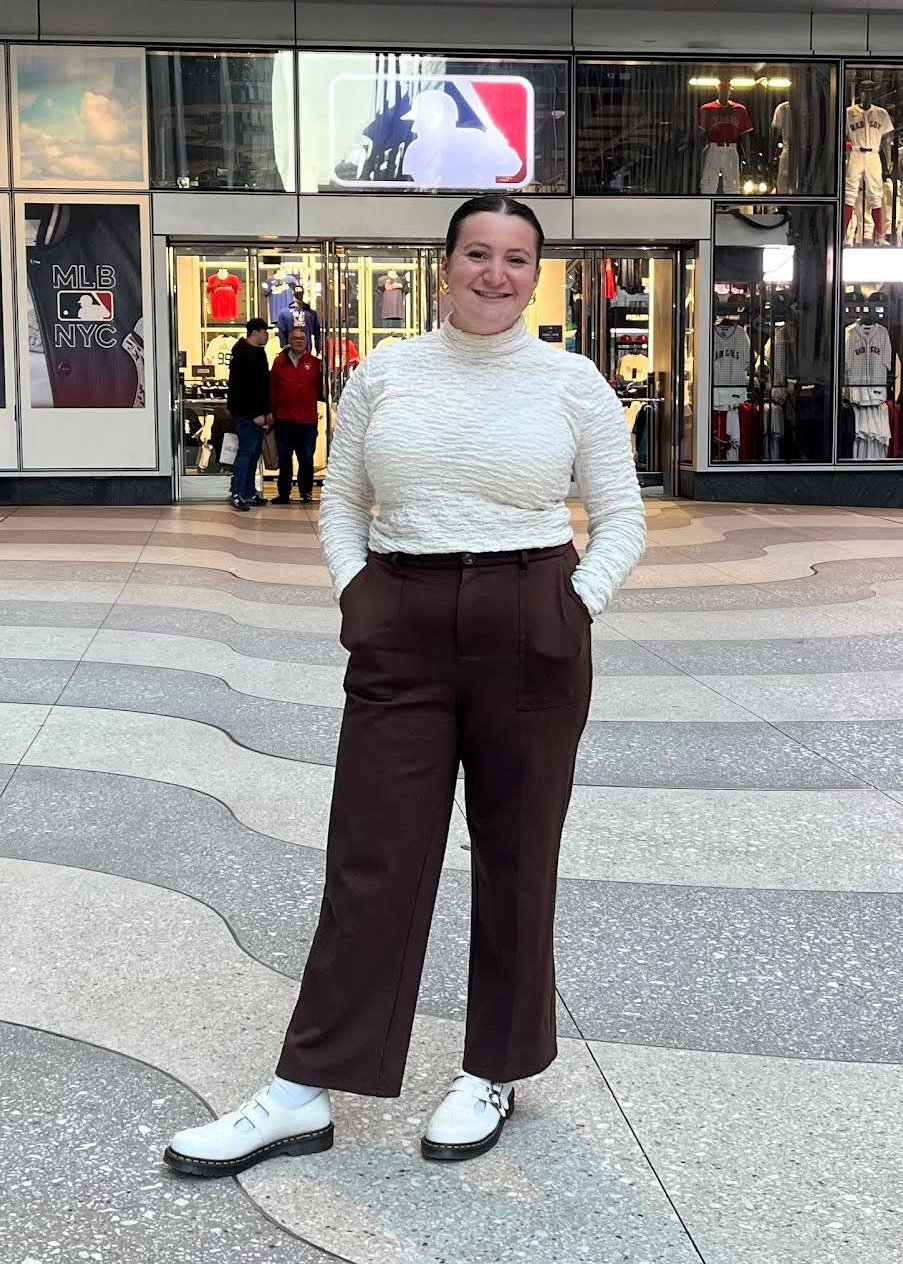
Samantha Moss in New York City, where she has earned a baseball job
Samantha Moss ’23 is serving Major League Baseball as a timing operations administrator this season in New York.
Samantha Moss celebrates a victory with her softball teammates
Moss, a former K softball player, will provide administrative support at MLB headquarters in New York when questions related to new rules arise on the field.

Moss first connected with MLB when she asked K baseball coach Mike Ott whether he knew anyone who works in the league. As luck would have it, Ott knows Jack Clark ’17, a K trustee and former Hornets baseball team captain, who started working with MLB in Replay Operations and now is its manager of draft operations. Thanks in part to Clark and a lot of continued networking, Moss attended baseball’s Winter Meetings last year and one of its events, Take the Field, a women-led conference.

“I always had an idea that I wanted to work in baseball when I started applying for jobs last year, but I wanted to be realistic, too,” Moss said. “I thought getting a corporate job is what I was supposed to do after I graduated from college. That conference was a game-changer for me. I got advice from women who are succeeding in the industry, and it opened my eyes to some possibilities I hadn’t considered before. I mark that as a pivot point in my career goals.”

Over the past year, Moss has coached and played softball in Sweden, worked in Grand Rapids and lived in Atlanta for a time while applying to about 90 baseball jobs. MLB, though, came along just in time for the season, and just two weeks after the call, Moss moved to New York.

“This just had to be what I did,” Moss said. “It’s one of those things where you say ‘yes’ and figure out the details for making it happen later.”

The full-time job is seasonal, although Moss is thrilled to be working in the sport and can’t wait to find out where her position might lead.

“I’m excited to be in the building with a lot of important baseball executives,” Moss said. “I feel like it’s a great place to network and see what opportunities there are around the league with MLB and with the individual teams. Baseball is a very fluid environment in terms of people’s positions and people are constantly moving in and out, up and down and all over. I don’t know what’s going to happen in the next year. I just know that I want to work in baseball. At the conference, somebody said, ‘Any job in baseball is a good job in baseball.’ And that’s so right. I’ll just trust my ability to make decisions this year and follow my gut in my career.”