A Republic, If You Can Keep It

When Americans think about the Revolution, they often picture the Boston Tea Party, the Siege of Yorktown, the signing of the Declaration of Independence, and the famous men who shaped these iconic events. Charlene Boyer Lewis ’87, the Larry J. Bell ’80 Distinguished Chair in American History, reminds us that the American Revolution wasn’t just fought by generals and statesmen; it unfolded in kitchens, camps, farms, and city streets, where women’s decisions, labor, and political thought shaped the outcome of the war. For Women’s History Month, Boyer Lewis reflects on how women across racial, economic, and political lines experienced and contributed to the founding of our Republic—their influence still shaping the nation 250 years later. 

Q: How should we rethink the role of women in the American Revolution?

Boyer Lewis: Women at the time did not have access to formal leadership or political roles. However, the American Revolution didn’t just happen with “those guys in Philadelphia” or the men fighting on the battlefield. A revolution is essentially a civil war, so there is no real distinction between the homefront and the battlefront. Roughly a third of the colonists were Loyalists, a third Patriots, and a third what historians call disaffected—they hadn’t really chosen a side. During the war and the period leading up to it, women were often calculating and making choices about their allegiance based on what was best for their families. Yes, there were some women who were making choices based on political ideology—Mercy Otis Warren, the poet and playwright; Martha WashingtonAbigail Adams, writing to John Adams to “remember the ladies.” Mrs. Benedict Arnold, whom I write about, started as a Loyalist flirt, then became a Patriot bride, and then became a very strident Loyalist when she and her husband committed treason. But most women were choosing whether to be a Patriot or a Loyalist based on which side their families were taking and what would be best for their families, their community, and their neighbors. As the British and Patriot forces moved around, women would often shift their loyalties to whichever troop had occupation at the time.

Once the Revolution started in 1775 and 1776, women had to choose sides, just like men did, and women very much understood that they were moving from being subjects in a monarchy to citizens in a republic. They understood the stakes.

Q: In what concrete ways did women participate in the Revolution, both before the fighting began and during the war itself?

Boyer Lewis: Most women spent the years leading up to the Revolution involved in the protests and boycotts against tea and British imported goods. The boycotts would not have been successful otherwise; you needed women to forego purchasing those items for their households. They were eschewing imported silk, cotton, and linen; they were gathering to share each other’s spinning wheels and looms to make homespun fabric, and they were conscious that in doing so, they were taking a stance against English oppression. Some of them said they felt nationalistic while they were doing it.
Kalamazoo College Professor of History Charlene Boyer Lewis, A Republic, if You Can Keep it
Charlene Boyer Lewis ’87 is the Larry J. Bell ’80 Distinguished Chair in American History at Kalamazoo College.
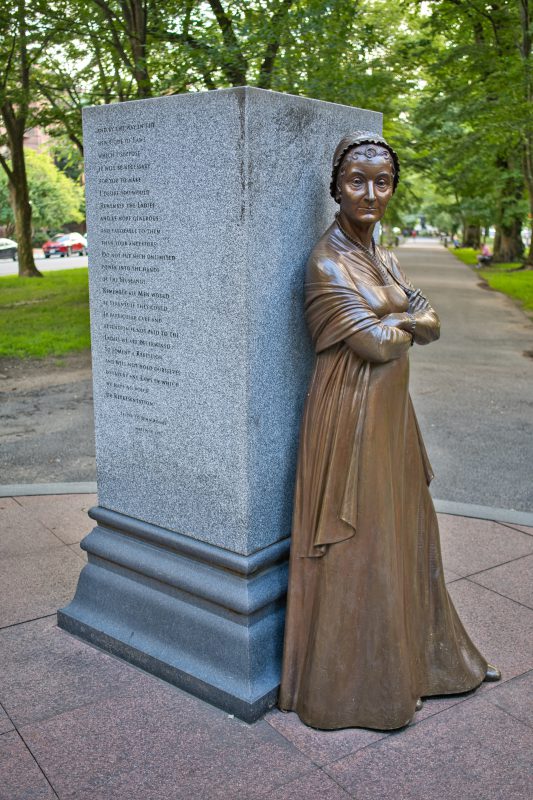
Abigail Adams bronze statue at the Boston Women's Memorial located on the Commonwealth Avenue Mall
A bronze sculpture of Abigail Adams by Meredith Bergmann at the Boston Women’s Memorial on Commonwealth Avenue Mall.

As the war started, women weren’t removed from warfare. When you live on a rural farm near a battlefield, the violence is going to come right into your home or your surrounding area. Women in these situations served multiple purposes for armies, bringing water, serving as laundresses and cooks, and taking care of wounded and sick men in their homes. Along with these really basic services to the army, they also provided sexual services to soldiers. That was, frankly, a really effective way for women to make money.

Women were also an important part of the army encampments, known as camp followers. Many had no choice but to follow their husbands, fathers, or brothers serving in the army, as they could not afford to stay at home, so they were feeding, laundering, and tending to sick men in the encampments. George Washington complained regularly that all these women, children, and literal baggage made it difficult to move an army quickly. But he also recognized their importance, and the women were provided half rations.

There are a handful of women that we know of who disguised themselves as men. A woman named Deborah Sampson was an ardent Patriot who wanted to go and fight. She cut her hair, bound her breasts, and fought in the Continental Army for a couple of years. Despite being wounded several times, it wasn’t discovered that she was a woman until she fell ill with fever and was found out by a doctor when he undressed her. He was shocked because everybody knew this soldier as Robert Shurtleff. Of course, they kicked her out immediately when they realized she was a woman. She received an honorable discharge, and 30 years later, she applied to Congress for a pension, like any other Continental Army soldier.  Congress sent Paul Revere to Massachusetts to interview her, and he found her case deserving. So, she became the first woman to receive a military pension in American history.

Most women experienced the Revolution from afar. They kept the farms going, kept the newspapers in print. Women ran taverns. They ran shops. They were picking up for the men and learning all sorts of skills. Abigail Adams actually made more money for the farm than when John Adams was running it. There are many letters back and forth between wives and their husbands about logistics, like, when should I sell the corn? When do I plant? They start with lots of questions, and over time, the women become more and more confident. Instead of saying, when do I do this? They say, “Oh, I sold all the corn last month.” They now know how to take care of it.

But there was a scary side to this independence. In any war, troops often use violence to subdue a population, so women were sexually assaulted; they were physically abused. Women watched in terror while their houses were turned topsy-turvy as soldiers looked for money, weapons, clothing—anything to sell—because soldiers were allowed to come in and pilfer. Women lived with that terror every day during this war, and it’s clear many of them suffered later from trauma. This is what I mean by no separation between the homefront and the battlefront: there was no safe homefront. The battlefront was everywhere. You could walk the street and be hassled by a soldier. You could walk the street and be questioned at bayonet point as to which side you are on.

Women also smuggled things over lines using the fact that they were women and not combatants. Women were very good spies because soldiers were often hesitant to accost women and say, “What’s on your person?” So, women often tucked things under their dresses. We know of one story where two women were walking the Philadelphia line, going from British into Patriot territory, and soldiers thought they were pregnant, but under their alleged bellies were leather shoes, leather belts, and some food.

Q: How did the Revolution unfold differently for Black and Native American women?

Boyer Lewis: We tend to think of slavery as a southern phenomenon, but at the time of the Revolution, there were enslaved people in every single one of the 13 Colonies. It was the British who first offered freedom to enslaved people, and they offered it very early on. It wasn’t altruistic; they understood this was good strategy, offering freedom to those enslaved under Patriot masters. Thousands took that offer, and the number of Black Loyalists was tremendous. Whenever the British came near a Patriot farm or homestead, enslaved women fled, and they would take their children with them to look for freedom behind British lines. Many ended up in different parts of the British Empire—Canada, for instance, New Brunswick, Nova Scotia—and the British gave them farms there. Some of them ended up in England. Tragically, when the British started running out of supplies, some of these women were sold into slavery in the Caribbean, which is basically a death sentence. The Americans also eventually offered freedom and land to enslaved men who joined them, so many Black men fought valiantly for the Continental Army, in the hopes of surviving the war and owning their own land.

Other enslaved women and their families took advantage of the chaos of war to run away. Historians estimate that 25,000 to 30,000 enslaved Africans chose to run, usually north, to cities like Philadelphia or Boston, where it was easy to slip in and not be noticed.

Enslaved people were also hearing the Patriots’ language of liberty, independence, and equality, and were writing petitions, or having white allies write petitions on their behalf, petitioning legislatures in Massachusetts, Connecticut, and Rhode Island to abolish slavery, arguing that it was oppositional to what the Patriots advocated. Many Patriots understood that slavery was antithetical—Massachusetts, for instance, abolished slavery immediately. Vermont, the first new state after the Revolution, did not allow slavery. So, the voices of these enslaved women were having an impact.

There’s a marvelous poet named Phyllis Wheatley, who was owned by a Massachusetts family, and they taught her English, Greek and Latin. She gets published during the Revolution, and she writes poetry to George Washington and to some of the other Continental Army officers. She’s a very ardent Patriot, and George Washington actually writes her back, complimenting her on her genius. He even invites her to visit camp.

But Black women also experienced the most violence during the war. When soldiers came to a homestead, farm, or town house, and there was an enslaved or even a free Black servant, they were the ones most likely to be abused or dragged into helping the army. When white families were running short of food, they would feed their own family first over their enslaved people, so Black women experienced starvation more than white women did.

Just like white women, Black women and Native American women were taking stances and choosing sides. Molly Brant, an Iroquois woman, was a highly influential Loyalist among her tribe. She ended up getting a sizeable pension from the British government for her efforts during the Revolution.

Q. What did the Revolution change—or not—about women’s role in political life?

Boyer Lewis: Ultimately, these changes were very temporary. When the men returned, the women didn’t want to keep running the farm, the store, or the tavern, and they gave back that responsibility. However, they were still aware of themselves as political beings and very much engaged in the political conversations of the time. You can look at letters, and it’s clear that women gained more confidence in the household, and there’s probably a more equal sense of give and take with their husbands.

But while the Patriot revolutionaries got rid of a lot of British laws that they decided were too oppressive, too tyrannical, they never questioned the inferiority of women. They never questioned the law, which is known as coverture, that establishes how, upon marriage, a woman legally ceases to exist and is subsumed by her husband’s identity. As I mentioned earlier, Abigail Adams argues to John Adams in an incredibly famous letter, “Remember the ladies.” She says, “Remember, all men will be tyrants if they could.” She’s asking him to remove coverture in the Declaration of Independence, using the language of the Revolution. John Adams writes back to her, “As to your extraordinary code of laws, I cannot but laugh.” Coverture remains untouched after the war.

Yet one huge impact of the Revolution is the idea that, if women were political beings and had political thoughts, what role would they play in this new republic? Women will be acknowledged as citizens. They’ll be counted in the census, counted for the House of Representatives, and taxed as citizens, but they’re not going to be given any political rights.

So, a group of progressive-minded men and progressive-thinking women crafted a role in the 1780s and 1790s for women that was known as Republican Motherhood, and this is how women were meant to contribute. They were going to raise good, virtuous citizens—meaning boys—who would continue to sacrifice their private interests for the good of the Republic. Women—middle- and upper-class women—saw Republican Motherhood as a way to act politically.

One important outcome of Republican Motherhood is that it demanded that women be educated. This led to a huge surge in women’s education in the coming decades. This idea that women have equal intellect and should be educated to serve the Republic is tremendous. There’s no going back.

The young women who then go to school in the early 1800s will be the ones who lead the women’s rights movement in the 1840s—Susan B. Anthony, Elizabeth Cady Stanton, all are the beneficiaries of this notion of Republican Motherhood. Elizabeth Cady Stanton at Seneca Falls in 1848 rewrites the Declaration of Independence in terms of women’s independence, and where Thomas Jefferson referenced the tyranny of King George, Elizabeth Cady Stanton referenced the tyranny of men over women. It’s a marvelous full-circle moment. The American Revolution didn’t change women’s lives that dramatically, but by 1848 they’re going to use the language of the Declaration of Independence to call for their rights.

Q: How does expanding the story of the Revolution reshape our understanding of who made our republic possible and what it takes to sustain it?

Boyer Lewis: In 1787, Elizabeth Willing Powel, a prominent social figure and friend of the Washingtons, asked Benjamin Franklin, “Well, Doctor, what have we got, a republic or a monarchy?” And he famously replied, “A republic, if you can keep it.”

If we want to tell a story as inclusive as possible about the American Revolution, we have to center women’s experiences equally with men’s experiences. Where was this Revolution fought? It was fought everywhere, in every single city, in every town, on every farm. The women were shaping the Revolution as much as any man with a musket or as much as any founding father who signed his name to the Declaration of Independence.

Women’s participation in boycotts became just as important as Patrick Henry standing up and saying, “Give me liberty or give me death.” They were protesting the Stamp Act, the Sugar Act, and the Townshend Acts. They were writing to newspapers. They were forming organizations to collect money for the Continental Army. Women were the ones who kept the farms and shops running. Without them, there would have been nothing left to fight for—and no republic to keep.

Charlene M. Boyer Lewis is a professor of history at Kalamazoo College. She is the author of Ladies and Gentlemen on Display: Planter Society at the Virginia Springs, 1790-1860 and Elizabeth Patterson Bonaparte: An American Aristocrat in the Early Republic. Her current project is a biography of Margaret Shippen Arnold titled Traitor, Wife: Peggy Shippen Arnold and Revolutionary America, forthcoming from Norton in 2027.
Wynton Marsalis to Discuss Jazz, American Culture at Kalamazoo College

Jazz musician, band leader and composer Wynton Marsalis will join the Rev. Millard Southern III on the campus of Kalamazoo College for a conversation about Marsalis’ life in music, the history of jazz in the evolution of American culture, and the role arts education plays in a democratic society.

Part of the American Studies Speaker Series, the conversation will be hosted by Charlene Boyer Lewis, the Larry J. Bell ’80 Distinguished Chair in American History. It will take place at 11 a.m. Monday, February 2, in K’s Dalton Theatre at Light Fine Arts. The event is free and open to the public with advance registration required.

Marsalis is the managing and artistic director of Jazz at Lincoln Center, the director of jazz studies at The Juilliard School and president of the Louis Armstrong Educational Foundation. A world-renowned trumpeter, he is the winner of nine Grammy Awards, and he is the only musician to win a Grammy in two categories—jazz and classical—in the same year. In 1997, he became the first jazz musician to win the Pulitzer Prize for Music for his oratorio Blood on the Fields. His other honors include the National Medal of Arts in 2005, the National Humanities Medal in 2015 and the U.N. Messenger of Peace in 2001, in addition to honorary doctorates from universities such as Harvard, Yale and Princeton.

A native of New Orleans, Marsalis has produced more than 100 albums and performed in more than 66 countries while advocating for jazz as a living art form and exploring its connections to democracy, social justice and American identity.

Southern, a Chicago native, is an AME-ordained minister, jazz musician, writer, social activist and Western Michigan University doctoral candidate. His dissertation explores the intersection of race, religion, cultural democracy and the music of Wynton Marsalis. Since 2021, he has served as pastor of Allen Chapel AME Church in Kalamazoo, leading efforts to revitalize the city’s Northside neighborhood. He is also a Shared Passages instructor at K, where he has offered courses such as Let Freedom Swing and Paris Noir. The latter was inspired by a 2023 research grant to study Black art, jazz and culture in Paris. He holds a bachelor’s degree in economics from Drake University and a Master of Divinity from Union Theological Seminary in New York.

The conversation is supported by the Kalamazoo College American Studies Department with special funding from the Arcus Center for Social Justice Leadership and additional support from the Department of Music and College Advancement.

“Wynton Marsalis regards jazz and its improvisational qualities as fundamentally American—and, in form and content, as contributing to current social justice efforts,” Boyer Lewis said. “His visit to our campus is part of a wonderful continuum in an important strand of K’s history that began with abolitionist founders James and Lucinda Hillsdale Stone, including connections to Sojourner Truth and Frederick Douglass, and runs to and through figures such as James Baldwin, Angela Davis and Francis Fox Piven. We are lucky to have him as our 2026 American Studies Speaker.”

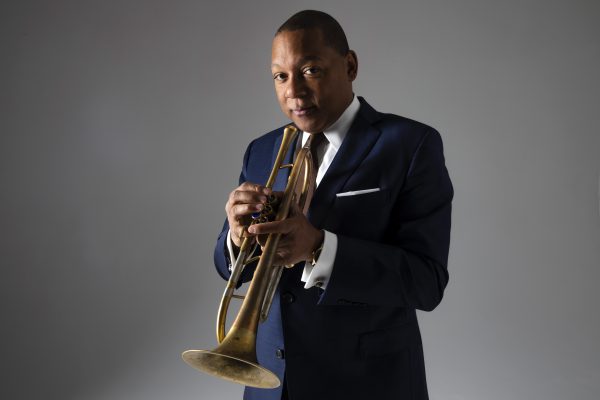
Wynton Marsalis with his trumpet
Wynton Marsalis will speak Monday, February 2, at Kalamazoo College as a part of the American Studies Speaker Series.
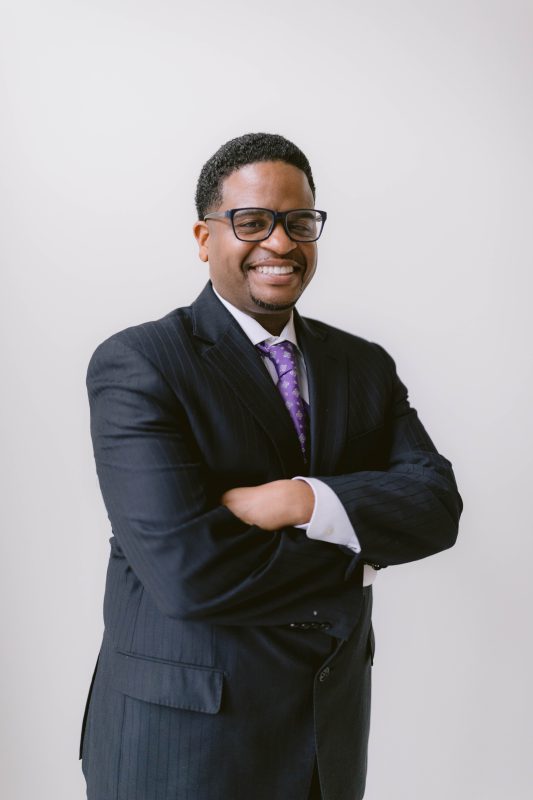
Portrait of Millard Southern
The Rev. Millard Southern III will join Marsalis for a conversation about the jazz great’s life in music, the history of jazz in the evolution of American culture, and the role arts education plays in a democratic society.

Five Faculty Receive Tenure

Five Kalamazoo College faculty members have been awarded tenure and promotion to associate professor, recognizing their excellence in teaching, scholarship and service. This milestone also signifies the College’s confidence in the contributions these faculty will make throughout their careers. The Board of Trustees-approved tenure recipients are: 


Anne Marie Butler, Art History
and Women, Gender and Sexuality

Butler specializes in contemporary Tunisian art within contexts of global contemporary art, contemporary global surrealism studies, Southwest Asia North Africa studies, gender and sexuality studies, and queer theory. At K, she teaches courses such as Art and Gender, Queer Aesthetics, Performance Art and core WGS classes. She has supervised 13 Senior Integrated Projects (SIPs).

Outside the classroom, Butler has co-edited the book Queer Contemporary Art of Southwest Asia North Africa (Intellect Press, 2024) and published four articles, as well as a book chapter. She is a recipient of an Andy Warhol Foundation Arts Writers Grant and of a research grant from American Institute of Maghrib Studies. She is the current Junior Faculty Fellow at the Arcus Center for Social Justice Leadership, has served on the Sherbin Fellowship Post-Baccalaureate Research Award committee, and is co-convener of the Great Lakes Colleges Association’s WGS Collective. She is also a volunteer assistant K swimming and diving team coach, and volunteers at the YWCA and at Kalamazoo Animal Rescue. 

Butler holds a Ph.D. in global gender and sexuality studies from the State University of New York-Buffalo, an M.A. in arts politics from New York University, and a B.A. in art history and French from Scripps College. 

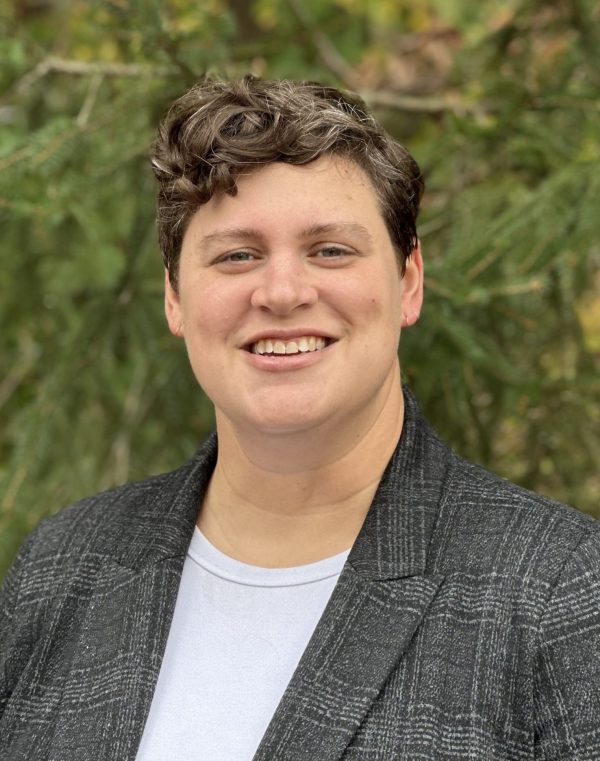
Anne Marie Butler

Marilyn Evans, Classics 

Evans specializes in the archaeology of Roman urbanism, exploring the origins and early development of communities in central Italy. She has excavated sites across the Mediterranean, and for the past 15 years in the ancient Latin city of Gabii. At K, Evans teaches courses across the Classics curriculum, covering ancient language, literature, history and archaeology. She also has effectively integrated community engagement into her Neighborhoods in Ancient Cities course by working collaboratively with the Center for Civic Engagement and the Building Blocks community housing group.  

Evans has supervised four SIP students, including two during summer research at archaeological digs in Gabii, Italy, outside of Rome. Her published work includes four peer-reviewed articles and two book chapters. She has served on K’s Educational Policies Committee, as regional vice president for the Classical Association of the Midwest and South, and on the editorial board of Rhea Classical Reviews

Evans earned her Ph.D. in Classical Archaeology from the University of California, Berkeley, her M.A. in Classical Languages from the University of Georgia and her B.A. in Classical Studies and Anthropology, from Memorial University of Newfoundland.

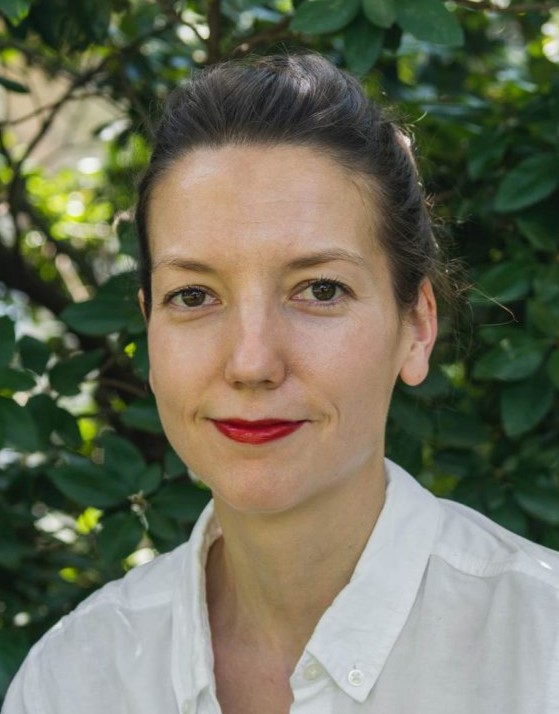
Marilyn Evans

Benjamin Naka-Hasebe Kingsley, English

Kingsley’s specialty is poetry and he also has published works of fiction and nonfiction. His teaching centers on the poetry sequence within the English department: Introduction to Creative Writing, Intermediate Poetry Workshop, and Advanced Poetry Workshop.

Kingsley is the author of three books which have won over a dozen national awards, including the Association for Asian American Studies Award for Outstanding Achievement, the Library of Virginia Literary Award, and the American Fiction Award. He has published poetry, fiction and creative nonfiction in more than 100 journals and/or anthologies, including Poetry, Poets.org, Tin House, Boston Review, The Georgia Review, New England Review, The Southern Review and Oxford American. His collections are Dēmos: An American Multitude (Milkweed Editions, 2021), Colonize Me (Saturnalia Books, 2019) and Not Your Mama’s Melting Pot (University of Nebraska Press, 2018).

At K, Kingsley has twice been named a Most Valuable Professor, once by basketball student-athletes and once in football. He has also twice been named an Alpha Lamda Delta Inspiring Professor in back-to-back years.

Kingsley earned an M.F.A. from the University of Miami and an M.A. from the University of Pennsylvania.

Assistant Professor of English Benjamín Naka-Hasebe Kingsley
Benjamín Naka-Hasebe Kingsley

Rochelle Rojas, History

Rojas specializes in the early modern Western world and the transatlantic history of the early Spanish empire while focusing on the lived experiences of a wide range of people. She has supervised 11 SIPs, written two peer-reviewed articles, and authored a book, Bad Christians and Hanging Toads: Witch Crafting in Northern Spain 1525-1675, which was released this month by Cornell University Press. She has been awarded an American Association of University Women Short-Term Research Grant and an American Historical Association Albert J. Beveridge Grant.

Rojas has served as a member of K’s Academic Standards Committee and the Justice, Equity, Diversity and Inclusion Committee. She has been a member of search committees for the vice president of finance and administration; director of grants, fellowships and research; and faculty searches in biology and chemistry. She holds bachelor’s and master’s degrees in education from the University of Florida, and a master’s degree along with a Ph.D. in history from Duke University.

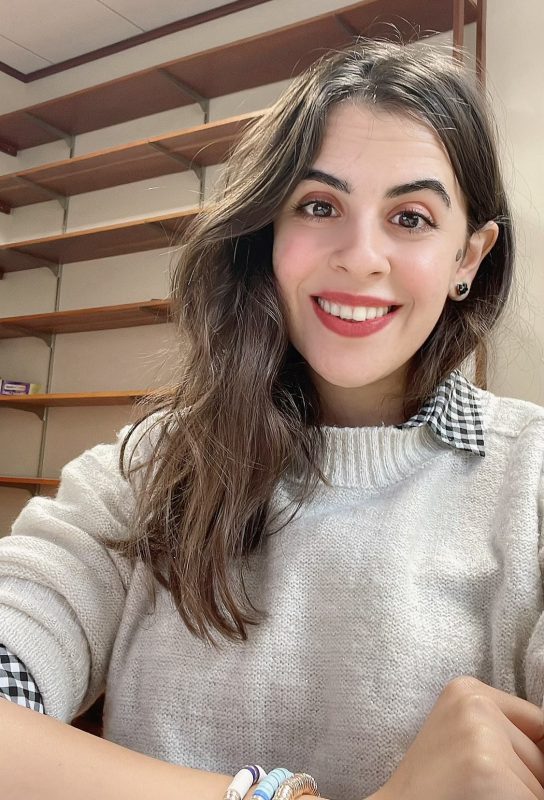
Tenure recipient Rochelle Rojas
Rochelle Rojas

Blakely Tresca, Chemistry

Tresca teaches organic chemistry at K while striving to bring research into the classroom. He has mentored more than 30 research students and supervised 14 SIPs with more than 50% of his research mentees attending graduate programs at institutions such as the University of Michigan, the University of Wisconsin and Washington University in St. Louis.

Tresca has had five published articles and recently received a $250,000 grant from the National Science Foundation (NSF). The NSF funds will help his students develop a lab partnership with some of their counterparts at the University of Toronto while performing research with peptoid nanomaterials.

At K, Tresca has served on the Educational Policies Committee (EPC), where he participated in revising SIP guidelines and last year’s teacher’s assistant policy. Beyond EPC, he has been an advisor to K’s student chapter of the American Chemical Society (ACS) while working with the local ACS professional chapter. He’s also been the Michigan representative to the Midwest Association of Chemistry Teachers at Liberal Arts Colleges Board.

Tresca holds a bachelor’s degree from Trinity University along with a master’s degree and a doctorate from the University of Oregon.

Tenure recipient Blakely Tresca
Blakely Tresca

Moritz Lecture Welcomes Author, Professor

An award-winning author and assistant professor of history at Princeton University will visit Kalamazoo College this week to deliver the annual Edward Moritz Lecture presented by the Department of History. 

Corinna Zeltsman will discuss her book Ink under the Fingernails: Printing Politics in Nineteenth-Century Mexico in a public event at 5:30 p.m. Thursday, November 7, in Dewing Hall, Room 103. A livestream will also be available. 

As a trained letterpress printer, she researches the history of printing books, political culture and labor in Latin America. She is currently working on a project that mixes the material, political and environmental history of paper in postcolonial Mexico. 

Zeltsman’s book, which received the Howard F. Cline Book Prize in Mexican History from the Latin American Studies Association, addresses individuals and factions who embraced the printing press as a key weapon in the broad struggle for political power during Mexico’s independence era. It takes readers into printing shops, government offices, courtrooms and the streets of Mexico City to reconstruct the negotiations and contests that surrounded print through a century of political transformation, from the late colonial era to the Mexican Revolution. 

The history department’s annual Edward Moritz Lecture honors the late professor Edward Moritz, who taught British and European history at K from 1955–88 and served for many years as the department chair. For more information on this event, contact Abigail Davenport-Walker at Abigail.Davenport-Walker@kzoo.edu

Portrait of Moritz Lecture Speaker Corinna Zeltsman
Princeton University Assistant Professor of History Corinna Zeltsman will discuss her book, “Ink under the Fingernails: Printing Politics in Nineteenth-Century Mexico,” during the Edward Moritz Lecture at Kalamazoo College.

K Welcomes New Faculty for 2024

Kalamazoo College is pleased to welcome the following faculty members to campus this fall:

Visiting Assistant Professor of Chemistry Kelsey Aldrich

Aldrich arrives at K from Duquesne University, where she earned a Ph.D. and served as a graduate teaching assistant in biochemistry. Her educational background also includes a Bachelor of Science in chemistry with American Chemical Society (ACS) certification from Grove City College, where she was an undergraduate teaching assistant in organic, analytical and general chemistry.

Aldrich will teach a Shared Passages Seminar course this fall titled Cultured: The History and Science of Fermented Foods. In winter spring terms, she will teach classes in general chemistry and biochemistry. Her professional affiliations include membership in the ACS and the American Society for Biochemistry and Molecular Biology (ASBMB).

New Faculty Member Kelsey Aldrich
Visiting Assistant Professor of Chemistry Kelsey Aldrich

Visiting Assistant Professor of English Erika Carbonara

Carbonara recently earned her Ph.D. in English from Wayne State University. She additionally holds a master’s degree from Oakland University and a bachelor’s degree with university honors from Wayne State.

She specializes in early modern literature with an emphasis on gender, sexuality, and kink studies. In her previous teaching positions, she has taught a wide range of courses from introductory composition to literature classes focused on Renaissance literature, children’s literature, and women’s literature. This term she will lead a course on social justice from a literary perspective with a focus on issues, events, movements and historical moments while emphasizing areas of power difference such as race and ethnicity, disabilities, class, gender and sexuality. 

New faculty member Erika Carbonara
Visiting Assistant Professor of English Erika Carbonara

Visiting Assistant Professor of Mathematics Rachel Chaiser

Chaiser’s educational background includes a master’s degree and a Ph.D. in mathematics from the University of Colorado Boulder, and a bachelor’s degree with honors in mathematics from the University of Puget Sound.

In Boulder, she served as a part-time graduate instructor in linear algebra for non-math majors and calculus courses, a graduate teaching assistant in precalculus and an advanced undergraduate research mentor. At K this fall, she will teach calculus with lessons in algebra, precalculus and analytic geometry.

New faculty member Rachel Chaiser
Visiting Assistant Professor of Mathematics Rachel Chaiser

Visiting Assistant Professor of Psychology Sharon Colvin

Colvin has teaching experience with the University of Pittsburgh School of Education as an instructor, leading students with research methods and applied research; and the University of Maryland First-Year Innovation and Research Experience (FIRE) as an assistant clinical professor. Before getting her PhD., she was a youth services librarian for 10 years. At K, Colvin will teach educational psychology in fall, which applies the principles of psychology to the practice of teaching.

Colvin holds a Ph.D. in learning sciences and policy from the University of Pittsburgh School of Education, Health and Human Development; a master’s degree in library science from the Simmons University Graduate School of Library and Information Science; a master’s degree in mind, brain and education from the Harvard University Graduate School of Education; and a bachelor’s degree in psychology from Wellesley College.

New faculty member Sharon Colvin
Visiting Assistant Professor of Psychology Sharon Colvin

Visiting Assistant Professor of Chemistry Caitlin Coplan

Coplan arrives at K from Northwestern University, where they recently earned a Ph.D. in physical chemistry. They also hold a bachelor’s degree with honors in physical and educational chemistry from the University of Utah.

Coplan has prior professional and teaching experience as an instructor as a part of the Arch program for incoming first-year students, and a teaching assistant for general chemistry and nanomaterials courses at Northwestern. They have also served as an interim undergraduate chemistry advisor, College of Science student ambassador, and teaching assistant in general chemistry at the University of Utah. At K, they will teach analytical chemistry this fall.

New faculty member Caitlin Coplan
Visiting Assistant Professor of Chemistry Caitlin Coplan

Visiting Assistant Professor of Biology Mahar Fatima

For the past seven years, Fatima has served the University of Michigan, first as a postdoctoral researcher and then as a research laboratory specialist. Her research interests include studies of the sensory neural circuits under physiological or pathological conditions, the molecular mechanisms required to interpret sensory information, and how relations between neural and non-neuronal systems contribute to chronic pain, chronic itch, and pulmonary disorders. This fall, Fatima will teach neurobiology at K, addressing the structure and function of the nervous system with topics including the cell biology of neurons, electrophysiology, sensory and motor systems, brain development, and nervous system dysfunction.

Fatima earned a Ph.D. from the National Brain Research Centre in India along with master’s and bachelor’s degrees in biochemistry and life sciences respectively from the University of Allahabad.

New faculty member Mahar Fatima
Visiting Assistant Professor of Biology Mahar Fatima

Visiting Assistant Professor of Religion Shelby King

King holds a master’s degree and Ph.D. in religious studies from the University of California, Santa Barbara (UCSB) along with a bachelor’s degree in psychology from Texas State University, San Marcos.

Her teaching areas include the history of religion in America, religion and popular culture, religion and American politics, theories and methods in religion, and theories of genders and sexualities. Her professional memberships include the American Academy of Religion, and the UCSB Center for Cold War Studies and International History.

New faculty member Shelby King
Visiting Assistant Professor of Religion Shelby King

Visiting Assistant Professor of Mathematics Cemile Kurkoglu

Kurkoglu comes to K from Denison University, where she had been a visiting assistant professor, teaching undergraduate mathematics and statistics courses since 2021. 

Kurkoglu holds a Ph.D. in mathematics from Indiana University Bloomington, where she served as an associate instructor for algebra, calculus and finite mathematics courses and she assisted for graduate mathematics courses. She also has a master’s degree from Bilkent University and a bachelor’s degree from Hacettepe University. Her graduate-level coursework included abstract and commutative algebra, number and representation theory, and ordinary and partial differential equations, real and complex analysis, and topology.

New faculty member Cemile Kurkoglu
Visiting Assistant Professor of Mathematics Cemile Kurkoglu

Visiting Assistant Professor of History Josh Morris

Morris is arriving at K from Wayne State University, where he has been a visiting assistant professor at Grand Valley State University since 2021. Elsewhere, he has served St. Clair County Community College, the University of Toledo and Wayne State University as an adjunct faculty member; a graduate teaching assistant at Wayne State and Cal State University Pomona; and a lecturer for the Los Angeles Workers’ Center and the University of California, Irvine.

Morris holds a Ph.D. from Wayne State, a master’s degree from CSU Pomona, and a bachelor’s degree from the University of California, Santa Barbara, all in history. His professional memberships include the American Historical Association, the Organization of American Historians, the Historical Materialism Society for Critical Research in Marxism, the Labor and Working-Class Historical Association and the Historians of American Communism.

New faculty member Joshua Morris
Visiting Assistant Professor of History Joshua Morris

Assistant Professor of Anthropology and Sociology Koffi Nomedji

Nomedji holds a Ph.D. in cultural anthropology from Duke University, a master’s degree in economics from Oklahoma State University, and bachelor’s degrees in sociology and economics from the University of Lomé, Togo, West Africa. At Duke, Nomedji taught courses in introductory cultural anthropology, the digital revolution, the anthropology of money, and development and Africa.

New faculty member Koffi Nomedji
Assistant Professor of Anthropology and Sociology Koffi Nomedji

Visiting Assistant Professor of Computer Science Nick Polanco

While recently earning a Ph.D. in computer science at Michigan State University, Polanco conducted research in automotive cybersecurity specific to autonomous vehicles. He also was a teaching assistant in artificial intelligence, computer organization and architecture, software engineering, computer systems, discrete structures, mobile applications and development, and database systems.

At K, Polanco will teach courses in introductory computing and programming basics for JavaScript and web development this fall.

Nick Polanco
Visiting Assistant Professor of Computer Science Nick Polanco

Director of African Studies and Assistant Professor of Anthropology Dominique Somda

Somda has arrived at K from the Institute for Humanities in Africa (HUMA) at the University of Cape Town, South Africa, where she was a research fellow. She also has past appointments as traveling faculty with the International Honors Program (IHP) at study abroad and world learning sites in the U.S., Spain, Jordan, India, Nepal, Senegal, South Africa, Brazil, Argentina and Chile; as a visiting assistant professor in the Department of Anthropology at Reed College and the Department of Anthropology and Center for Africana Studies at the University of Pennsylvania; as a visiting scholar in anthropology at the London School of Economics; as a postdoctoral fellow at the Université Paris Nanterre in France; and as a teaching and research fellow at the University of Paris Nanterre.

Somda has a Ph.D. and two master’s degrees in ethnology and comparative sociology from the University of Paris Nanterre, and a master’s and bachelor’s in philosophy from the University Clermont Auvergne.

Somda will lead a course this fall at K titled On Being Human in Africa. The course will examine the experiences of Africans through racialized and gendered existences, their affective relations, their ways of relating to and caring for each other and the land; and explore what it means to think and write about Africa with representations and discourses including fiction, academic writing and social media.

Dominique Somda
Director of African Studies and Assistant Professor of Anthropology Dominique Somda

Assistant Professor of Biology Clara Stuligross

Stuligross was a postdoctoral scholar at the University of California, Riverside prior to K. She holds Ph.D. in ecology from the University of California, Davis, and a bachelor’s degree in environmental studies from Earlham College.

Stuligross studies the impacts of environmental stressors on native bee ecology and recently received a federal grant to study the effects of climate change on bees. She also has professional experience as a museum educator at the Carnegie Museum of Natural History in Pittsburgh, where she taught science outreach programs and developed hands-on climate change education lessons. At K this fall, she will teach Biology Explorations.

Clara Stuligross
Assistant Professor of Biology Clara Stuligross

Visiting Instructor of Chinese Ruyuan Yang

Yang has a master’s degree in teaching Chinese to non-native speakers from the Beijing Language and Culture University, and a bachelor’s degree in teaching Chinese as a second language from Yunnan Normal University in Kunming, China.

Yang previously has taught college-level courses in beginning, intermediate and advanced Chinese at K; basic and intermediate Chinese, and Chinese dance and culture at Western Michigan University; and integrated Chinese and Chinese listening and speaking courses at Beijing Language and Culture University. Yang’s courses this fall include beginning and intermediate Chinese.

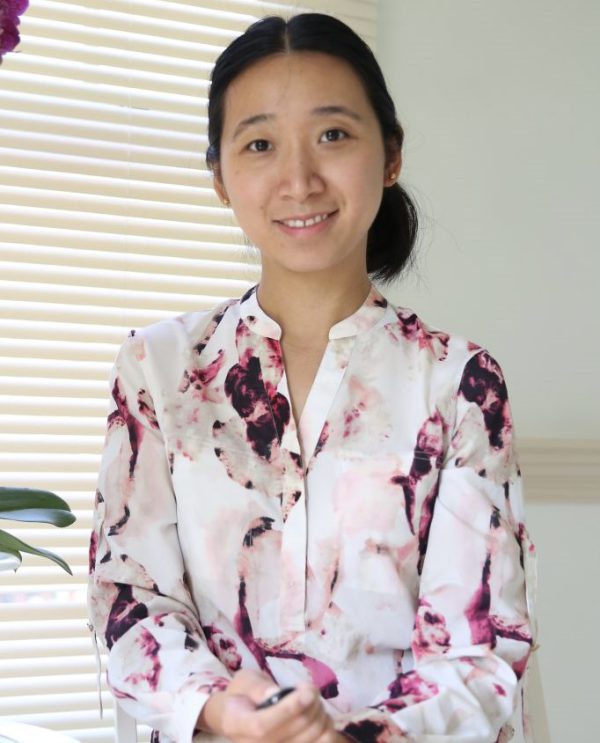
Visiting Instructor of Chinese Ruyuan Yang

German Exchange Program Chooses K Alumnus

Kalamazoo College alumnus Peter Fitzgerald ’23 will promote global understanding and collaboration for one year in Germany through the Congress-Bundestag Youth Exchange (CBYX) for Young Professionals. 

In his time at K, Fitzgerald was a double major in history and political science. He also minored in music, had a concentration in American studies, played men’s tennis, and served in three political internships between U.S. House candidate Jon Hoadley, Michigan Rep. Darrin Camilleri ’14 and Michigan Governor Gretchen Whitmer and their campaigns. 

Now, however, Fitzgerald and 74 other American participants chosen from 500 applicants will attend a two-month intensive language course, study at a German university, and complete an internship in the field of international relations through the CBYX. 

The bilateral CBYX exchange program, established through the U.S. Congress and German Bundestag (Parliament), allows participants to stay with host families in Germany, where they will act as citizen ambassadors to promote a positive image of the U.S. abroad, and create lifelong friendships and professional connections to enhance German-American relations. 

Although each internship over the CBYX’s 40 years has been different, 93% of participants have reported gaining a new understanding of the U.S. and its role in the world, 92% said they improved their communication skills, and 91% reported gaining an appreciation for other cultures and a curiosity about the world. American host communities also benefit from the program when they welcome German participants in return to homes, schools and organizations in the U.S. 

For more information about CBYX, visit exchanges.state.gov/cbyx or contact Cultural Vistas, a nonprofit exchange organization promoting global understanding and collaboration among individuals and institutions, at cbyx@culturalvistas.org

Exchange program participant Peter Fitzgerald
Peter Fitzgerald ’23 is among 74 Americans going to Germany for one year as a part of the Congress-Bundestag Youth Exchange for Young Professionals. They will act as citizen ambassadors to promote a positive image of the U.S. abroad.

Moritz Lecture to Feature University of Delaware Professor

A writer, author and professor will visit Kalamazoo College to deliver the 2024 Moritz Lecture at 5:30 p.m. Thursday, April 18, in 103 Dewing. A livestream will also be available. 

University of Delaware Professor of English Martin Brückner will discuss “The Social Life of Maps in Early America: A Material History of Design, Technology and Nation-Building.” Brückner has been the acting director and director of the Winterthur Program in American Material Culture, a co-director of the Center for Material Culture Studies, a co-director of the Delaware Public Humanities Institute, and a visiting curator of the Winterthur Museum. He also is known for writing more than 30 essays for journals such as American Quarterly, American Art, American Literary History and English Literary History; and two award-winning books, The Social Life of Maps in America, 1750-1860 (2017) and The Geographic Revolution in Early America: Maps, Literacy, and National Identity (2006). 

Brückner’s honors have included the Fred B. Kniffen Book Award, the Louis Gottschalk Book Prize, and numerous grants and fellowships from the Andrew W. Mellon Foundation, the National Endowment for the Humanities, the Program in Early American Economy and Society at the Library Company of Philadelphia, the American Antiquarian Society and the Obama Institute for Transnational American Studies at the University of Mainz in Germany. 

The history department’s annual Edward Moritz Lecture honors the late professor Edward Moritz, who taught British and European history at K from 1955–1988 and served for many years as the department chair. For more information, contact the Office of Alumni Engagement at alumni@kzoo.edu or 269.337.7300. 

2024 Moritz Lecture Speaker Martin Brückner
University of Delaware Professor of English Martin Brückner will be the featured presented in the 2024 Moritz Lecture.

Author, Historian to Deliver Thompson Lecture

An author and historian of religion in the Americas with training in Latinx history; American race, ethnicity and immigration; and the American West and Mexico borderlands will deliver the 2023 Thompson Lecture, sponsored by Kalamazoo College’s religion department, at 7 p.m. Wednesday in the Olmsted Room. 

Lloyd Barba is assistant professor of religion and Latinx and Latin American Studies at Amherst College. His most recent and ongoing research on the Sanctuary Movement (1980s to present day) brings together questions from religious history and immigration studies to understand the context of social activism and politics. His teaching incorporates these research topics but more broadly asks questions about the many communities that comprise American religion. 

Barba’s lecture, titled The Sacred Amid Exploitation: How Mexican Farmworkers Forged a Religious Movement in California’s Big Business Ag (1916–1966), will draw from his new book, Sowing the Sacred, to demonstrate that Mexican Pentecostal farmworkers carved out a robust socio-religious existence despite harsh conditions while producing a vast record of cultural vibrancy. 

The Paul Lamont Thompson Lecture, named for the K president who served from 1938–1949, brings in speakers who enrich the ethical understanding of the College’s position in society. The lecture was established by a gift from Thompson’s sons and daughters-in-law to recognize the crucial role he played in guiding the College through the Depression and World War II. 

Thompson Lecture Speaker Lloyd Barba
Lloyd Barba, an assistant professor of religion at Amherst College, will speak Wednesday in the 2023 Thompson Lecture.

Political Internships Provide Experience, Connection for K Senior

Growing up in various countries overseas, Peter Fitzgerald ’23 considered northern Michigan to be home base. Now a series of political internships have helped the Kalamazoo College senior connect more with his adopted home and envision a possible future. 

With a dad who was a Foreign Services officer, Fitzgerald was born in Australia, and his parents now live in the Washington, D.C., area. In between, they lived in Denmark, Ukraine, Morocco and Belgium. 

Every summer, however, he would spend with his grandparents in northern Michigan. His mom and cousins would stay there, too. 

“We moved around so much,” Fitzgerald said. “That was a place to call home. In relation to other Foreign Service kids, it was unusual to have that kind of stability. I was always grateful to have that place that didn’t change.” 

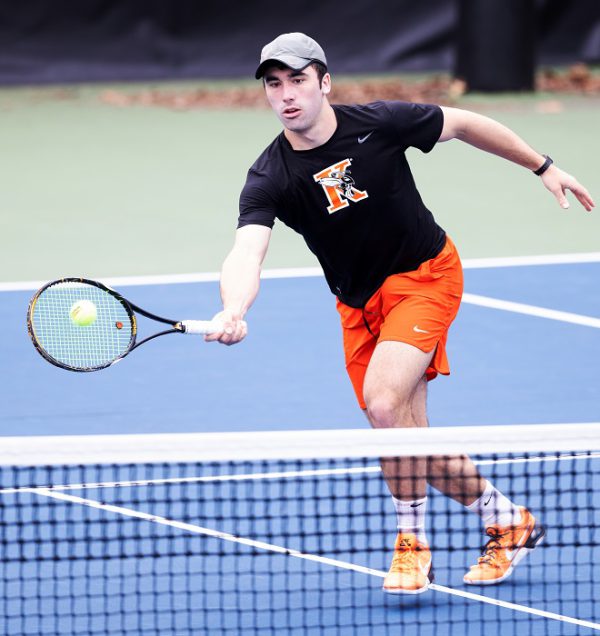
Peter Fitzgerald playing tennis
Peter Fitzgerald ’23 has played tennis his four years at K in addition to being a member of College Democrats, playing classical guitar, singing in the choir and pursuing a double major in history and political science, minor in music, and concentration in American studies.
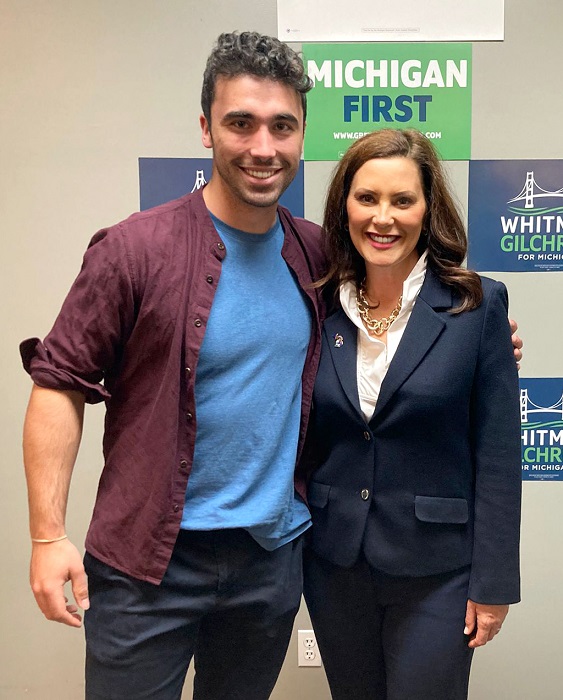
Political intern Peter Fitzgerald poses with Michigan Governor Gretchen Whitmer
Peter Fitzgerald ’23 has completed three political internships in his time at K, including a summer 2022 internship with Michigan Governor Gretchen Whitmer’s office.

That sense of Michigan as home, combined with both a cousin and a Foreign Services acquaintance attending K and a K representative visiting Fitzgerald’s Belgium high school, made K the only school Fitzgerald even considered attending. After taking a gap year in Belgium, he started at K in fall 2019. 

Fitzgerald is a double major in history and political science. He is also working on a minor in music and a concentration in American studies. The K-Plan’s open curriculum has made it possible for him to explore a variety of interests and discover new ones. 

“I knew that I loved political science,” Fitzgerald said. “I didn’t really plan on doing another major besides that, and then I took a history course with Dr. Boyer Lewis and I just loved it.” 

He plays classical guitar and has sung in the choir, filled a leadership role in the College Democrats, and has played tennis all four years at K. 

“I feel that having those interests and having a lot of leeway in what courses you take connects you to a lot more of the school than you otherwise would have the opportunity to experience,” Fitzgerald said. 

At the beginning of winter term his first year, Fitzgerald was on Handshake looking for opportunities outside campus when he came across internships in Democrat Jon Hoadley’s 2020 U.S. House campaign for Michigan’s 6th congressional district, which includes Kalamazoo. 

“I was curious if there was something I could do, along with my academics, to get to know the Kalamazoo area better,” Fitzgerald said. 

He worked on Hoadley’s campaign, primarily making phone calls and canvassing, for about two months before the COVID-19 shutdown sent him to his parents in D.C. 

“It was rewarding getting a start in the political world,” Fitzgerald said.  

It was rewarding enough that when summer 2021 rolled around, Fitzgerald sought out another political internship, this time with Darrin Camilleri ’14, a member of the Michigan House of Representatives, representing District 23, south of Detroit. 

Come summer 2022, Fitzgerald applied via Handshake for an internship with Michigan Governor Gretchen Whitmer’s office. He took advantage of K connections, reaching out to Christopher Yates ’83, who also played tennis at K and was recently appointed a Court of Appeals judge by Whitmer, to ask if Yates had any connections within the campaign. Within a couple days, Fitzgerald was contacted for an interview, and soon after that, he was in Detroit working for the governor’s office for three months. 

This internship involved a lot of planning, coordinating and logistics for small business stops, community events and constituency groups, such as Native Americans for Whitmer.  

“I would reach out to the small business owner, or whoever, make a plan, promote it and get people to attend,” Fitzgerald said. “We would drive to these events, two and a half, three hours, for a 15-minute visit with the governor. It wasn’t glamorous a lot of the time, but it felt really important, meaningful and worthwhile. It felt like we were making a difference.” 

The internships have affirmed Fitzgerald’s interest in political work, perhaps with the State Department, and helped him envision some of the possibilities that lie along that path. 

“I learned a lot,” Fitzgerald said. “I met a lot of people who could probably make more money doing other jobs, but they’re working for something that they believe in fundamentally. I felt like I had a relationship with Michigan, from spending my summers here growing up, but this job opened my eyes to people’s lives that I wouldn’t normally have interacted with. I still think I’m on a path where I’d like to work for the federal government, but also, I can see that people’s issues are really localized. People care about what’s in front of them.” 

Working for the governor’s office was both humbling and uplifting for Fitzgerald. 

“People have come up to me and asked me about issues in Michigan thinking that I had power over policy issues,” he said. “Even though I couldn’t do anything, just to be able to listen to people and share with someone who had that power felt really meaningful.” 

The internships also helped Fitzgerald draw connections between coursework and real life. 

“It makes an experience a lot more meaningful when you are able to make connections,” Fitzgerald said. “Whether it was from my American history course or my political science course, there were pertinent things I could draw from in relation to the issues we were talking about this summer. I am also bringing things I’ve done on this campaign back to K.” 

Connections to people have also been key to Fitzgerald’s K experience. Networking and professional contact with alumni such as Camilleri and Yates, personal interest from President Jorge G. Gonzalez, academic inspiration from Professor of History and Director of the American Studies and the Women, Gender and Sexuality programs Charlene Boyer Lewis ’87, and guidance from men’s tennis Head Coach Mark Riley all combine to make K feel like a new home base for Fitzgerald. 

“I think initially, I had some dissonance between knowing that I’m from here but never having lived really in the U.S.,” Fitzgerald said. “I felt out of my element for a time, but the people, my mentors and the friends that I have now, made it possible for me to feel like even though I did come with a different background, even though I felt maybe a little discombobulated at first, that there were people that I could rely on and who would support me.” 

K Professor Co-Edits Book on Women Who Knew George Washington

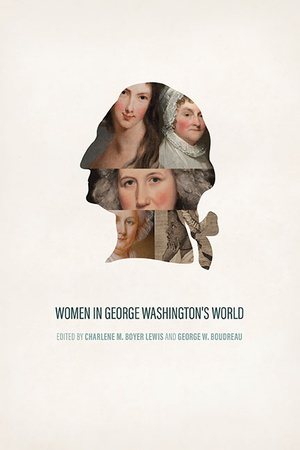
Cover of book on women in the life of George Washington
Professor of History Charlene Boyer Lewis is a co-editor
of “Women in George Washington’s World.”

Although women’s historians have written about women in the American Revolution since the 1970s, many people still think of the war as a men’s event. 

Women in George Washington’s World (University of Virginia Press, 2022) aims to be part of a new wave of efforts to reframe the American Revolution as a war that heavily involved women. Published this month, the book is co-edited by Charlene Boyer Lewis ’87, Kalamazoo College professor of history and director of the American Studies and the Women, Gender and Sexuality programs.  The book includes an essay written by Boyer Lewis on Peggy Arnold, the wife of infamous traitor Benedict Arnold. 

“For too long when people think of the American Revolution, they think of men, they think of soldiers and they think of the guys in Philadelphia who signed the Declaration of Independence,” Boyer Lewis said. “This is part of the project to rethink and re-present the American Revolution as a war that included women, a war that affected women, a war that women affected.”  

A 2018 symposium at George Washington’s Mount Vernon in Virginia about women and George Washington, where Boyer Lewis and her co-editor, George Boudreau, were both presenters, served as the inspiration for the book. 

“It’s a collection of essays written by academic historians as well as public historians,” Boyer Lewis said. “We have people who are out in the museum world and historical societies contributing to this as well as academics, so it’s a broad range of kinds of historians. They were all wonderful and the book turned out to be exactly what we wanted it to be.” 

Including public historians was part of an intentional effort to create a history book that was accessible to a general audience. Also key to that effort was a focus on story telling. 

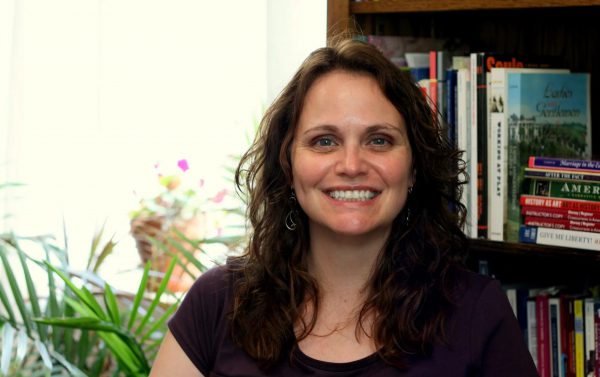
Kalamazoo College Professor of History Charlene Boyer Lewis
Kalamazoo College Professor of History Charlene Boyer Lewis ’87

“Historians have to tell a good story along with a good argument or interpretation of the past,” Boyer Lewis said. “This was put out by an academic press and peer reviewed by scholars. Every essay meets scholarly academic standards, and at the same time, every single one of those chapters tell really good stories that I think people are going to enjoy reading.” 

The essays feature famous women such as Martha Washington, Abigail Adams and Phyllis Wheatley, lesser-known women such as Elizabeth Willing Powel, and unknown women, including women enslaved by the Washington family. Boyer Lewis recounted a story of one such woman who ran away while Washington was president and was never caught despite his efforts to track her down. 

“It was important to us to look at a wide variety of women in George Washington’s world,” Boyer Lewis said. “Women who loved him, women who cared for him and also women who challenged him and frustrated him.” 

This is the first editing endeavor for Boyer Lewis, who is the author of two books, Elizabeth Patterson Bonaparte: An American Aristocrat in the Early Republic (University of Pennsylvania Press, 2012) and Ladies and Gentlemen on Display: Planter Society at the Virginia Springs, 1790-1860 (University of Virginia Press, 2001). She found the collaboration with Boudreau to be fruitful as they brought different strengths to the project, and the overall process to be surprisingly smooth. 

“Everybody said, ‘No, you don’t want to edit a book, it’s like herding cats,’” Boyer Lewis said. “My contributors were wonderful so it went a lot more smoothly than I had thought. There was a lot of passion and commitment to this work that made it easier.”

That passion and commitment proved key when the COVID-19 pandemic hit mid-project.

“George and I had all these plans of being together in person and working on the book, and that didn’t happen,” Boyer Lewis said. “There were lots of phone calls, lots of zoom calls. There were archives that people needed to go and do research in that were closed.”

Even without COVID restrictions, research for the book was a complicated affair.

“The archives of the time were meant to preserve the records of men,” Boyer Lewis said. “We’re dealing with small amounts or almost non-existent records of women. Even somebody like Martha Washington, whom you would think there must be copious amounts of sources—she burned everything. So even piecing together her life can be a challenge, let alone the enslaved women who worked for the Washingtons. That is real detective work.”

National Archives Museum
online book talk 

  • Tuesday, July 26 from 1 to 2 p.m.
    Women in George Washington’s World  
  • Co-edited by Charlene Boyer Lewis, Kalamazoo College professor of history and director of the American Studies and the Women, Gender and Sexuality programs, and George W. Boudreau, historian of early Anglo-America and public history. 
  • Co-editors Boyer Lewis and Boudreau will discuss their book, a collection of essays examining women at the time of the American Revolution who had complex relationships with George Washington and the roles those women played in shaping the nation, with Lorri M. Glover, professor of history, Saint Louis University. View on YouTube 
  • Women in George Washington’s World is widely available for purchase. 

Each subject presented her own challenges. Poet Phyllis Wheatley left many poems but few letters or other records. Although Abigail Adams left copious correspondence with her husband, John Adams, using those letters to analyze her relationship with and thoughts about George Washington is convoluted. Contributors writing about enslaved women went through the most “mental gymnastics,” Boyer Lewis said, to “sift through and find two sentences in a letter where a white slave owner is talking about the enslaved woman and get as much out of those sentences as they can. 

“This book highlights how difficult women’s history is to do, yet how successfully it can be done.” 

As a women’s historian, Boyer Lewis found the completed work reaffirms what she has known and taught for years—that women are an important part of history. 

“When you use George Washington as the connection, and then you start looking at the women all around George Washington, it seems simple to say, but women are everywhere,” Boyer Lewis said. “They’re everywhere. Washington lived his life surrounded by women, and surrounded by women he listened to, who he was willing to be advised by. If we can show how much women mattered in George Washington’s life, then it will be a lot easier to make it clear how much women mattered everywhere else. If George Washington is having his life affected by women constantly, for better and for worse, women who worked with him and women who thwarted him, so did everybody else. It was just wonderful to have that reaffirmed for me that women are everywhere and they’re mattering everywhere.”