Ten Days Opened a World Through Short-Term Study Abroad  

For some Kalamazoo College students, study abroad can feel out of reach—too long, too expensive or too intimidating to fit into already full academic and personal schedules. But for 23 students who spent 10 days in the Dominican Republic during winter break, a short-term, faculty-led program offered something transformative: a first step into global learning that reshaped how they see the world and themselves.  

Led by Associate Professor of Spanish Ivett López Malagamba, the immersive experience brought students to Santiago de los Caballeros, a mid-sized city in the Dominican Republic, where they lived with host families, conducted daily academic work and navigated life almost entirely in Spanish.   
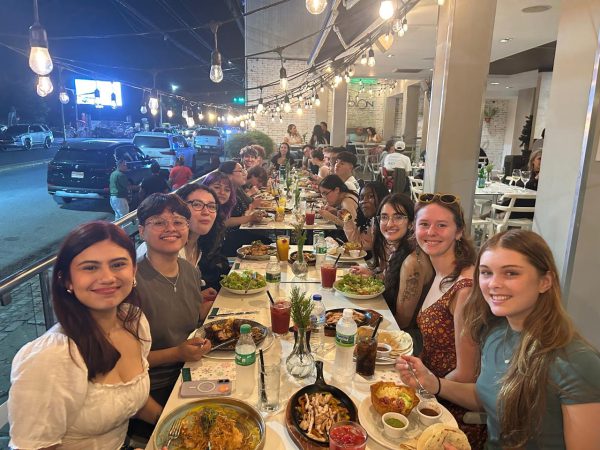
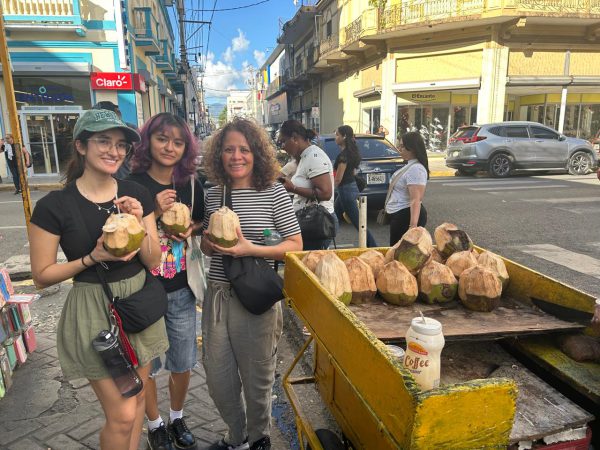
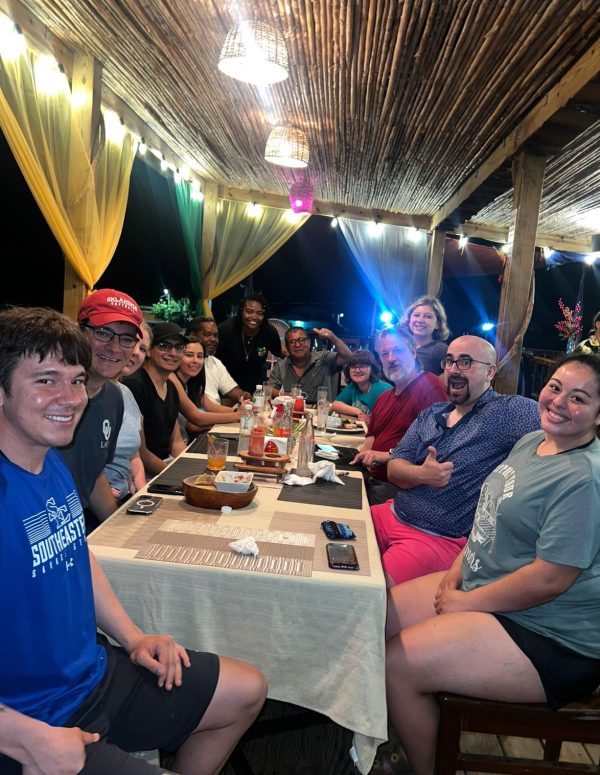
Students sitting at an outdoor table in the Dominican Republic while on short-term study abroad
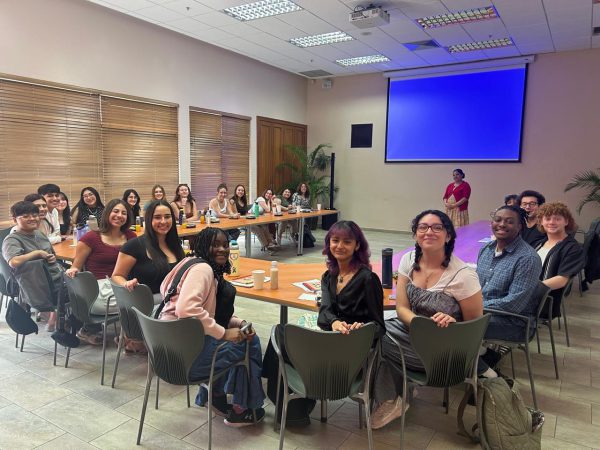
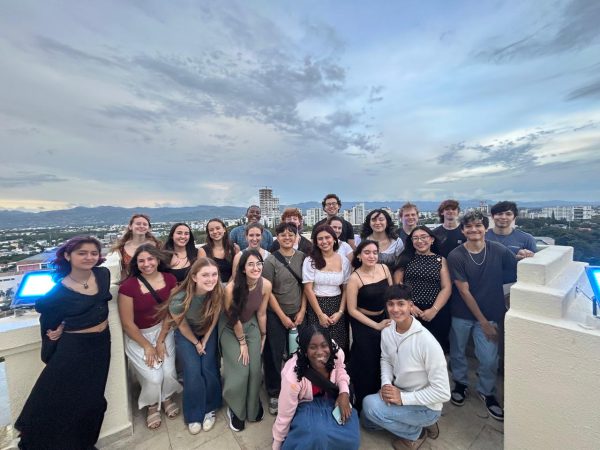
Kalamazoo College students who participated in short-term study abroad over winter break were welcomed to the Dominican Republic with a special dinner.
Students participate in an orientation during short-term study abroad in the Dominican Republic
Students participated in an orientation when they arrived in the Dominican Republic.

An Accessible Path to Global Learning  

The short-term program targets students who may face barriers to longer study abroad opportunities, including first-generation college students, students of color, student-athletes and those balancing multiple commitments on campus. It was first launched as a pilot program in 2019, funded through a grant from the Mellon Foundation, which supported faculty planning, along with Center for International Programs funds. Additionally this year, the Ambassador Martha L. Campbell and Consul General Arnold H. Campbell Foreign Study Endowment and the Robert J. Kopecky ’72 Endowed Study Abroad Fund helped high-need students afford the experience. The Campbell Endowment was established in 2009 to support and enhance the foreign study experience for K students. The Kopecky fund was established in 2022 to help maximize the number of students who participate in study abroad while encouraging students to explore the culture around them during their international experience. 

For some participants, the Dominican Republic trip marked their first time traveling internationally or even boarding an airplane.  

“For them, this was not just an academic experience; it was a personal milestone,” López Malagamba said.  

Academically, the program is tied to the Spanish curriculum. Students must have completed Spanish 201, the final course in K’s language requirement sequence for Spanish. In the fall, participants enroll in a preparatory course and attend predeparture sessions focused on Dominican history, race relations, politics and the country’s deep connections to the United States and the Caribbean. And once they are in the Dominican Republic, the learning is nonstop.  

“Every day is academic,” López Malagamba said. “Even when students are on a beach or in a community celebration, they are learning—about economics, migration, tourism, race, history and the environment.”  
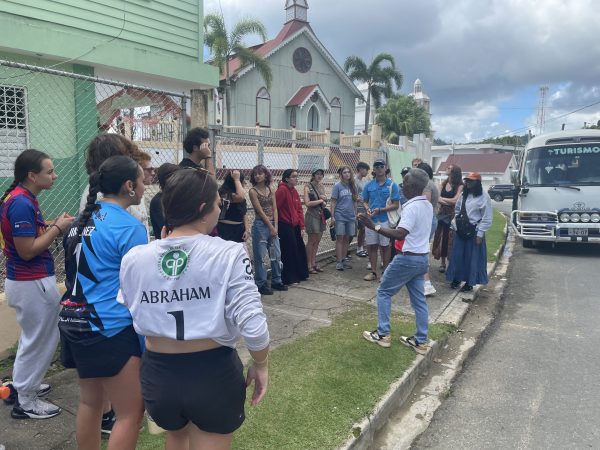
Students visit Samana in the Dominican Republic during short-term study abroad
In the coastal region of Samaná, students encountered a lesser-known chapter of shared history: communities founded by formerly enslaved people from the U.S. who settled there in the 19th century.
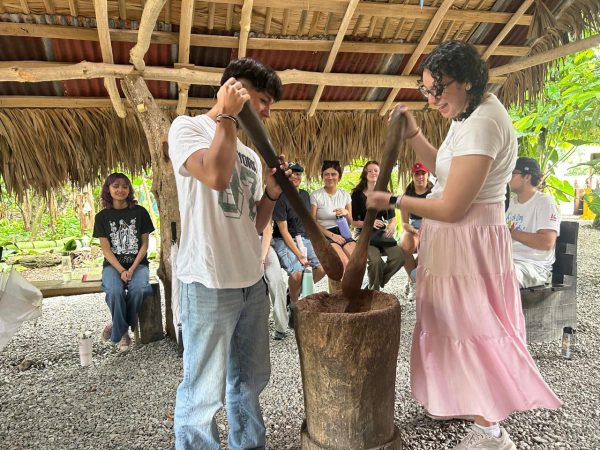
Chocolate making at Sendero del Cacao
Students had a chance to make chocolate while learning about the country’s export economy through cocoa farming, studying the role of tourism in shaping cities, and examining the deep ties between the Dominican Republic and the United States. 

Learning Beyond the Classroom  

Students explored the Dominican Republic through lectures, guided visits and hands-on experiences that reinforced themes from their language coursework, including urban life, nature, the arts and professions. They learned about the country’s export economy through cocoa farming, studied the role of tourism in shaping cities, and examined the deep ties between the Dominican Republic and the United States.  

In the coastal region of Samaná, students encountered a lesser-known chapter of shared history: communities founded by formerly enslaved people from the U.S. who settled there in the 19th century. A guide, himself a descendant of those settlers, shared how English once flourished in the region before being suppressed and how that legacy still shapes Dominican identity.  

“These are moments where students realize that U.S. history doesn’t stop at our borders,” López Malagamba said. “It lives in other places, in other people’s stories.”  

Environmental justice was another key focus. Students learned how coastal communities balance the economic need for tourism with the protection of ecosystems, national parks and marine environments that sustain local livelihoods.  

Living with host families added another layer of immersion and challenge. Students had to adapt to new routines, unfamiliar foods and different cultural expectations, all while communicating in a second language.  

“There’s always a moment where students feel overwhelmed,” López Malagamba said. “They miss their familiarity. They realize how hard it is to express themselves fully. But then something shifts.”  

That shift often comes in small victories: asking for directions, explaining a preference at the dinner table or successfully navigating a conversation they once would have avoided.  

“By the end, students realize, ‘I can do this,’” she said. “That confidence is powerful.”  
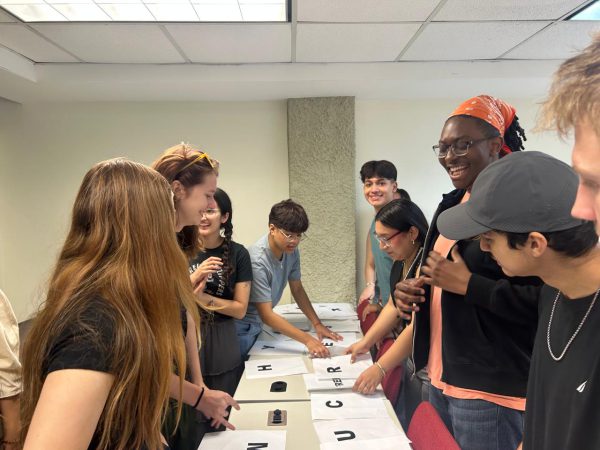
Spanish Class at Pontificia Universidad Catolica Madre y Maestra
K students participated in a Spanish class while visiting the Dominican Republic.
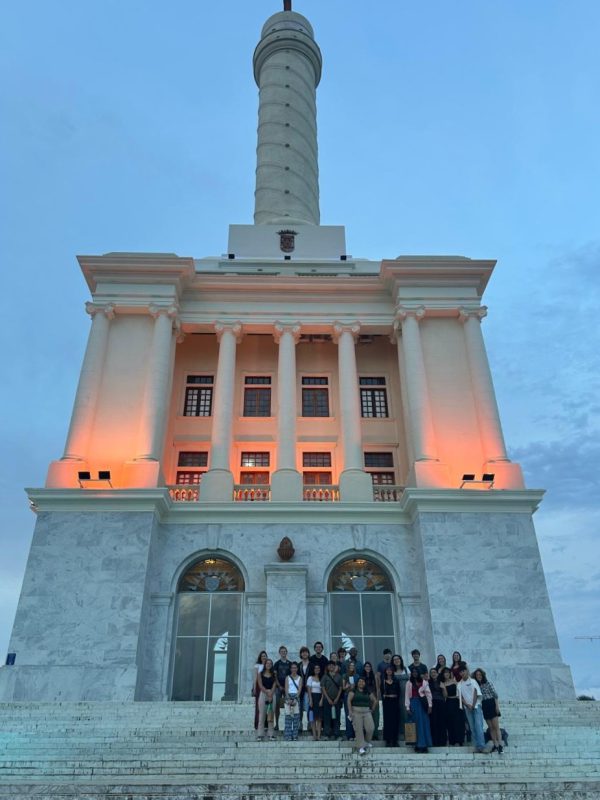
Students visit Monumento a los Heroes de la Restauracion on study abroad
Students visited the Monumento a los Héroes de la Restauración, which was built for the 100th anniversary of the Dominican War of Independence, which was fought in 1844 to gain sovereignty from Haiti.

‘I’m Hooked’  

For Tom Clark ’27, the Dominican Republic trip became a lifeline to study abroad after he had to cancel plans for a longer program in Greece. The business major, who is dual-enrolling at Western Michigan University to pursue exercise science, realized too late that he couldn’t balance a two-term study abroad with his academic timeline.  

“I went through all the predeparture stuff, was all ready to go, and then I realized I wouldn’t be able to do it,” Clark said. “But right as I dropped it, I got an email about this trip to the Dominican Republic. I saw it was over winter break, so it wouldn’t take away from credits that I would need. It was perfect.”  

The trip marked Clark’s first time leaving the country, and the experience immediately challenged his assumptions about privilege and perspective.  

“I thought I was familiar with other cultures,” he said. “I thought of myself as an empathetic person who could put himself in the shoes of others. And then I actually took the trip, and my understanding was much different.”  

Simple differences struck him immediately. Getting off the airplane, he looked for a water fountain to fill his bottle only to realize public drinking fountains don’t exist in places without widespread access to clean water. The language immersion then proved to be both challenging and rewarding. Clark hadn’t taken a Spanish class in nearly a year, and the first few days were rough. But surrounded by Spanish speakers constantly—including his host parents, who spoke no English—he found his skills returning and improving rapidly. Those challenges, in fact, became opportunities for connection.  

Among Clark’s favorite moments was a joint class session with Dominican students learning English as a second language, meeting people his age from vastly different backgrounds, yet fundamentally similar. He made a friend named Casey who runs a fashion brand with 60,000 Instagram followers and is working toward getting a green card.  

The experience reframed how Clark thinks about language learning. In a classroom, he explained, students have varying levels of investment. On the trip, everyone was committed, making the learning more dynamic and applicable.  

“We were talking about how another language is like learning a superpower,” he said. “I learned I could travel to many countries and be perfectly fine. I could meet people and connect better. The Dominican is a tiny island, so I’m hooked on imagining what the rest of the world is like.”  
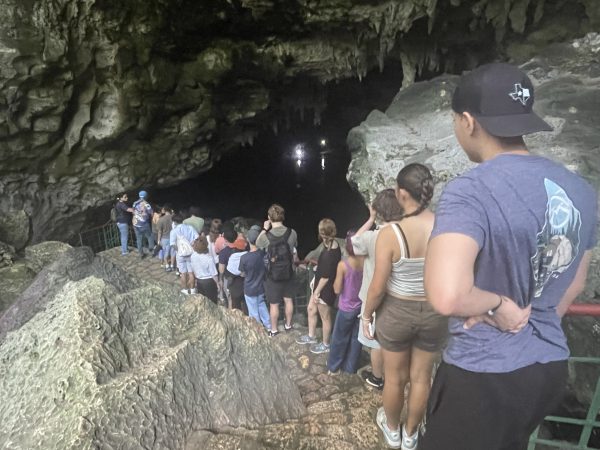
Tres Ojos National Park
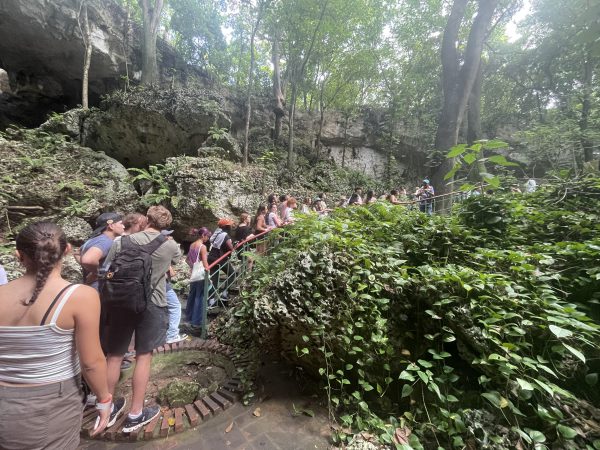
Tres Ojos, or Three Eyes National Park, is a 50-yard, open-air limestone cave.
Students at Tres Ojos National Park
Students walk through Tres Ojos National Park.

Discovering New Perspectives  

For Sarah Guerrero Gorostieta ’28, a first-generation college student, the Dominican Republic trip offered something unexpected: a chance to see her own culture through new eyes while discovering how much she still had to learn.  

“I have never learned so much in such a short amount of time about myself, my peers and an entirely new country,” Guerrero said. “With my Mexican heritage, I assumed because I’m Hispanic and because they’re Hispanic, there would be some similarities between us. There definitely were, but there was also so much nuance.”  

Although Mexico and the Dominican Republic were both colonized by Spain, Guerrero learned how French and African influences shaped Dominican culture differently. More importantly, she heard those histories directly from Dominicans themselves.   

Guerrero’s experience was framed with many memorable moments. She recalls feeling grateful for trying plantains for the first time, exploring caves and seeing the ocean.  

“I’d never felt so many emotions packed into one trip,” she said. “And I’m really excited to carry all of those lessons into study abroad.”  

Guerrero is next hoping to study at Belfast University in Northern Ireland, where she wants to explore political tensions and the media’s role in conflict—themes she first encountered in the Dominican Republic through a guest lecture on how the media weaponizes political relationships during elections.  
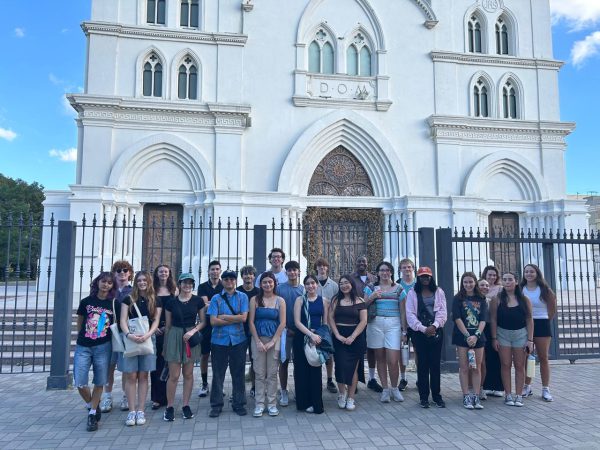
Santiago de los Caballeros Tour of the City
Students stopped at St. James the Apostle Cathedral during a tour of Santiago de los Caballeros in the Dominican Republic.
Downtown Santiago de los Caballeros
Associate Professor of Spanish Ivett López Malagamba (right) led the short-term study abroad experience through places such as downtown Santiago de los Caballeros.

Opening Doors for Student-Athletes  

For Riley Shults ’28, a runner on K’s cross-country team, the 10-day format meant he didn’t have to choose between his sport and international experience.  

The short-term trip to the Dominican Republic didn’t change Shults’ academic trajectory, he said, but it reinforced the direction he wanted to pursue. He is declaring an anthropology-sociology major in February and is now planning to study in Oaxaca, Mexico, during the winter of his junior year through a program focused on community engagement and Indigenous cultures.  

“I knew that I wanted to care about people, and I knew that I wanted to travel the world,” he said. “This program was the first real experience that I got to have of that.”  

One question lingered throughout the trip: Can such a short program truly transform students in the way longer study abroad experiences do? And for Shults, the answer is unequivocal.  

“One hundred percent,” he said. “I barely talked to anyone on that trip before it, and now I see them every day. Every little aspect fundamentally changed who we are because we were forced to think about someone other than ourselves. It’s not just about me anymore. It’s about the whole world.”  

The change came through small moments that accumulated into profound shifts. Shults discovered he loves beans and rice. He overcame his lack of confidence in his language skills and found himself thinking in Spanish. He engaged with complex political histories he’d only read about in textbooks as his host mother shared stories each morning about the country’s history under dictator Rafael Trujillo.  

“I used to think one way, and now I think this other way,” he said. “Study abroad pulls people out of their comfort zones. Once you push past that boundary your learning is only limited to what you allow yourself to find.”  

One particularly memorable moment came during a Sunday block party in a working-class neighborhood of Santiago. Community organizers welcomed the K group with music, announcements and open celebrations. 

Students danced alongside children, parents and grandparents in the streets. Shults found himself at the center of that celebration, dancing with elderly women who grabbed his red hair for good luck. He moved freely without self-consciousness in a way he’d never experienced at home.  

“Every single person is not caring about what other people say, they’re just moving,” he said. “It’s such a different culture than ours. Here, people don’t just dance. We’re always thinking about what other people are doing. But that’s not what they think. They’re just going to have fun.”  

His experience now surfaces in unexpected moments back on campus. In a class about water systems, Shults reflected on the reality that Dominican tap water isn’t safe to drink.  

“I’m sitting in class thinking, ‘I lived this,’” he said. “I lived this example where you don’t have water right on the tap.”  
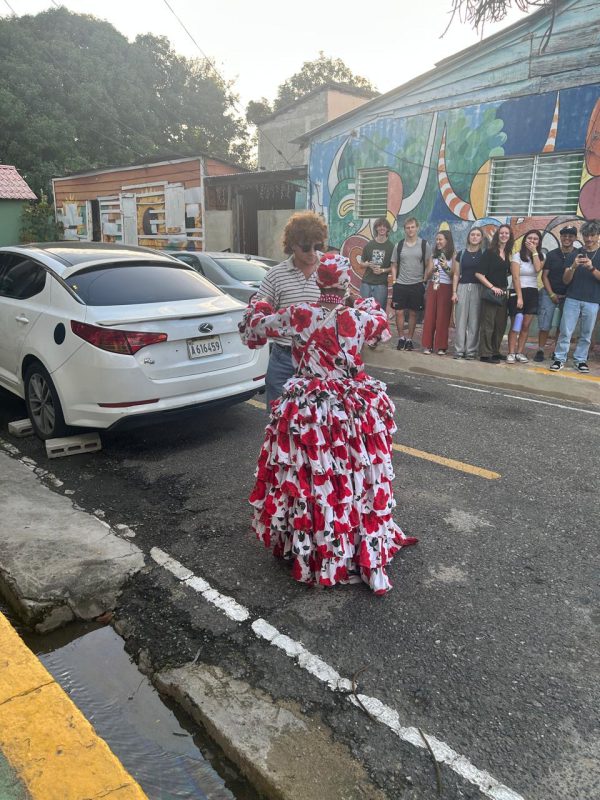
A resident of the Los Pepines neighborhood dances with Riley Shults '28
A resident of the Los Pepines neighborhood dances with Riley Shults ’28.
Visit to the Monumento a los Heroes de la Restauracion
The Monumento a los Héroes de la Restauración is the tallest building in Santiago de los Caballeros in the Dominican Republic.

Distinct Opportunities Bring Transformations  

Although the program lasts just 10 days, its impact extends far beyond winter break. López Malagamba noted that many students return with renewed interest in longer study abroad opportunities and greater confidence in navigating unfamiliar environments. For her, watching students undergo their transformations in just 10 days remains the most rewarding part of leading the program.  

“These students come back with a different understanding of what it means to be a global citizen,” she said. “They’ve lived with families who welcomed them. They’ve navigated challenges in a second language. They’ve sat with discomfort and come out stronger.   

“These programs remind students that the world is bigger than the U.S. and their immediate communities,” she said. “They learn that their actions matter, that their country has an impact elsewhere, and that shared humanity exists across borders. That’s the kind of learning that stays with you long after the trip ends.”  
Study Abroad Leads to Marine Research Adventure

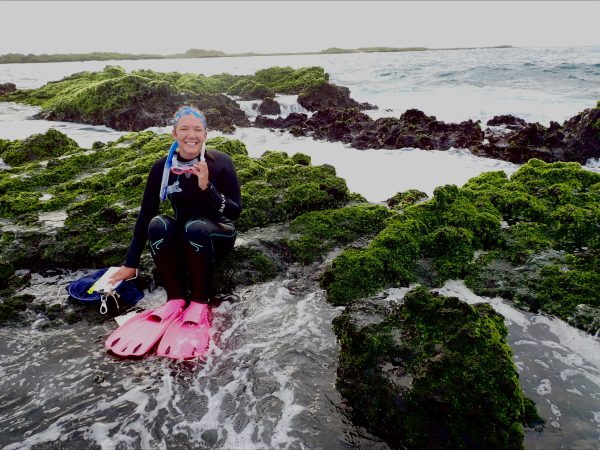
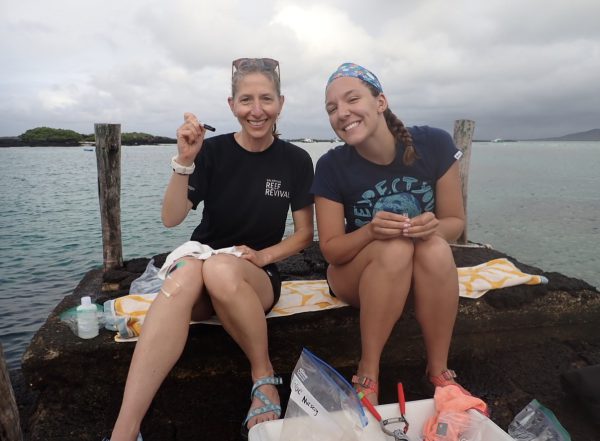
A student and professor performing marine research in the Galapagos Islands
Hailey Yoder ’26 (right) teamed up with Cheryl Logan, a professor at Cal State Monterey Bay, on labeling tubes for data collection in the field.
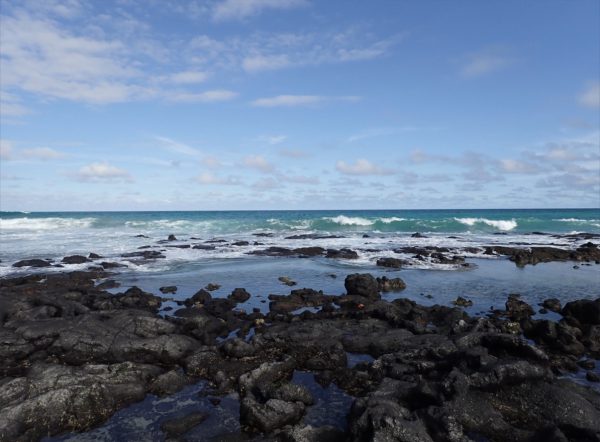
A view from the shore in the Galapagos Islands where Hailey Yoder performed marine research
Yoder’s favorite hike in the Galapagos Islands took her to a tide-pooling area where she saw starfish, small fish, crabs and small octopi.

When Hailey Yoder ’26 tells people she researches coral reefs, their response is often the same: “You live in Kalamazoo, Michigan. How do you do that?”  

For Yoder, a Kalamazoo College double major in biology and Spanish, the answer is both simple and extraordinary: It started with sending an email.  

That email, sent during her study abroad program in Ecuador, connected her with Margarita Brandt, a biology professor at the Universidad de San Francisco de Quito, who works with Galápagos Reef Revival. What began as a conversation about potential research ideas soon evolved into an opportunity to study coral reef restoration in the Galápagos Islands.  

“We just clicked and worked really well together,” Yoder said. “She invited me onto a project, and I really was just hoping that it would work out.”  

Bringing Coral Reefs Back to Life  

Yoder’s research starts with how climate change and ocean acidification have affected coral reefs in the Galápagos. The islands once boasted several coral reefs, but many have been wiped out by bleaching, leaving remaining structures vulnerable to complete destruction.  

The restoration process involves collecting coral fragments from around the islands and growing them in underwater gardens, where they’re suspended from ropes and nourished by ocean currents. Once mature, researchers implant them into the seafloor in organized patterns. To assess the impact, Yoder used GoPro cameras mounted in waterproof cases and weighted with zip ties—nothing fancy, she noted—placing them at consistent locations near restored coral sites. Through snorkeling expeditions, she positioned the cameras to capture the ecosystem unfolding around eight or nine individual corals. All the research was done under permits from Galápagos National Park and CITES, the Convention on International Trade in Endangered Species.  

The results have been striking. At the first site Yoder analyzed, two new fish species appeared after restoration. Afterward, four or five additional species flourished.  

Community at the Center  

What distinguishes this research is its deep connection to local communities. The project employs Galápagos residents, including one community member who maintains and monitors the corals year-round. Researchers also lead programs bringing women and children—particularly those without previous opportunities to explore their island’s underwater world—on snorkeling expeditions to witness the restoration firsthand.  

“There are intricacies to coming into someone else’s home to perform research,” Yoder said. “I tried to focus on community and the local knowledge that people have.”  

This community-centered approach culminated in a symposium in the Galápagos, where Yoder presented her research entirely in Spanish. She created a Spanish-language research poster and discussed her findings with community members invested in their island’s ecological future.  

“They were all super excited about it and thought it was really cool,” she said. “It was pretty fun to be able to have that connection, too.”  

Taking Marine Research to the National Stage  

Yoder’s work has gained recognition beyond the islands. This January, she traveled to Portland, Oregon, to present a poster at the Society for Integrative and Comparative Biology (SICB) conference, arriving just before K’s winter term began and returning during the first week of classes.  

The conference provided invaluable networking opportunities. A postdoctoral student from Boston’s National Institute of Health, who had previously worked with the same corals and researchers, offered career guidance and suggestions for future research directions. Yoder connected also with fellow undergraduates navigating similar paths.  

“With these conversations, I recognized that there’s not necessarily a right or wrong path to going into some sort of research like this,” Yoder said. “That was reassuring.”  

K’s Role in Marine Success  

Yoder credits K’s biology and Spanish departments along with the Center for International Programs with making her research possible. In all, they provided funds through: 

  • The Betty R. Gómez Lance Award in Latin American Studies, which was established by Lance after her retirement from K. It has been awarded posthumously until her passing in 2016; 
  • Jim and Deanna Tiefenthal Endowed Foreign Study Fund: established by Jim and Deanna (members of the class of 1966) in 2016 to support student international learning opportunities through K’s study abroad program; and 
  • Seminary Hill Sustainability Internship: established by Doug Doetsch ’79 and his wife, Susan Manning, to fund internships focused on sustainable agriculture or architecture.    
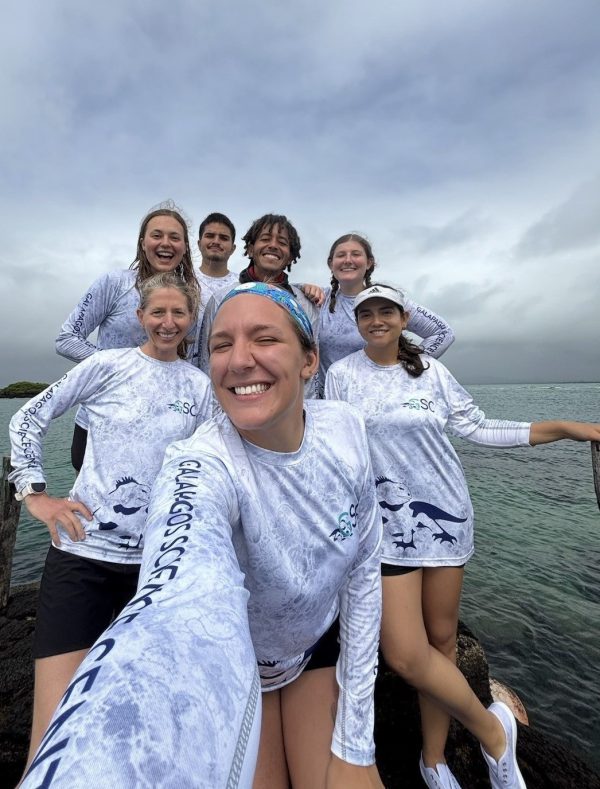
Marine research team poses near the ocean after a day of collecting data
Emma Saso (back row, from left), Daniel Velasco, José Barrios and Ava Besecker with Logan (front from left), Yoder and Catalina Ulloa after a full day of collecting data for marine projects.
Student in snorkeling gear while performing marine research
Yoder waited on the rocks right off of the bay where the coral sites are located, just after placing video cameras. “We waited here for 15 minutes as to not disturb the fish community and be out of the way before recollecting the cameras,” she said.
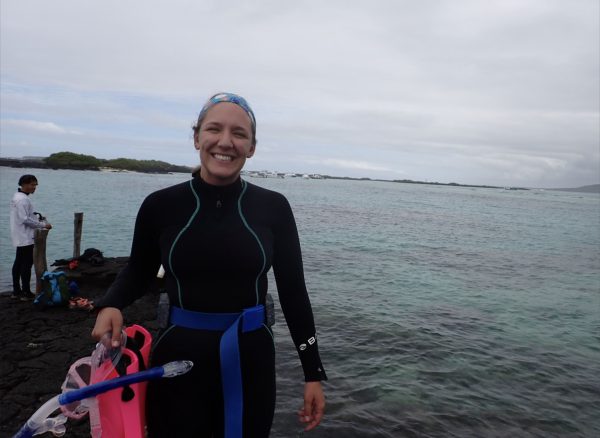
Student prepares to perform research in a wet suit
Yoder prepares to place cameras before snorkeling around to get a feel for the location and different plots and determine the most efficient way to take quality videos. 
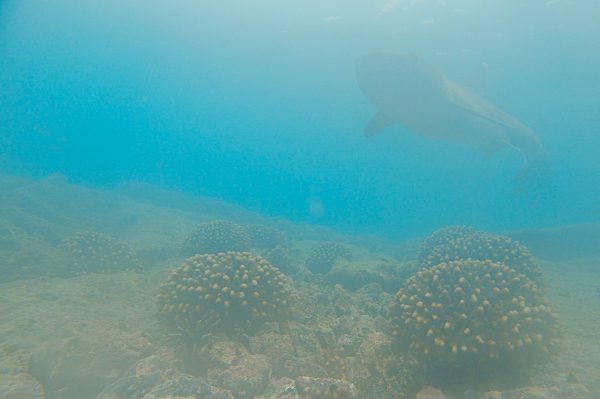
An underwater view of a coral reef and a shark
Yoder had GoPro cameras mounted in waterproof cases and weighted with zip ties so they could be placed at consistent locations near restored coral sites.

Associate Professor of Biology Santiago Salinas has been particularly supportive, helping Yoder refine her research question while providing guidance as she writes her SIP. Professor of Biology Binney Girdler has assisted with data visualization and helped Yoder narrow her focus. The department also helped fund her Portland conference trip.  

“They were supportive and beyond excited for me,” Yoder said. “To have a professor you look up to say that you’re doing something they’re proud of is so cool.”  

An Unexpected Love for Corals  

Yoder admits she initially gravitated toward sharks within the field of general biology, not coral reef or fish. However, the research transformed her perspective.  

“I gained this strong love for corals, because the way they work is so interesting, and they provide so many amazing services for the land and fish that they’re near,” she said.  

Her biology major, enhanced by marine research experience, positions her well for graduate school. She has applied to a master’s program to work with a different researcher studying the same coral reefs, with hopes of returning to the Galápagos over the next year to collect data from different reefs and expand her video collection. Her ultimate goal is to publish her research.  

“My knowledge is so much stronger because of the undergrad opportunity,” Yoder said. “But this master’s program will be a huge thing as well, because it will allow me to dive into the specifics and work more closely with coral scientists.”  

Advice for Future Hornets  

For prospective biology students, Yoder emphasized the opportunities available to those willing to pursue them. But opportunity requires initiative.  

“Sending the first email was just the first step of all of the things I’ve had a chance to do, because K gives you so many opportunities,” Yoder said. “You just need to be able to take advantage of them. Those resources will be there, but you have to reach out and ask for them. The answer is going to be ‘yes,’ if they can make it work.”  

Her message is clear: “Send the email and do the thing you want to do. Advocate for yourself.”  

For Yoder, that single email led to underwater gardens in the Galápagos Islands, international research presentations, professional connections across the marine biology field, and a future dedicated to understanding and protecting coral reef ecosystems—all from Kalamazoo, Michigan.  

Study Abroad Journey Opens Doors to International Relations 

When Harper Schrader ’26 arrived last year in Jordan for her study abroad experience, she had never spoken a word of Arabic. Three months later, she returned to Kalamazoo College not only fluent enough to navigate daily life in the Middle Eastern nation, but also with ideas for a career path that would take her back across the globe. 

Today, she interns remotely for the Jordanian embassy in Washington, D.C., combining her passions for journalism and international relations. 

“I definitely couldn’t have imagined this experience had I not attended K,” Schrader said. “Being able to study abroad and graduate on time—while also getting to do my (Senior Integrated Project) abroad and the internship—is cool.” 

Schrader, a Kalamazoo native who came to the College through the Kalamazoo Promise, was drawn to K specifically because of its study abroad opportunities. Unlike some institutions where studying overseas can delay graduation or limit academic options, K’s flexible curriculum allowed her to pursue international experiences without sacrificing other opportunities. 

Choosing the Road Less Traveled 

When it came time to select a study abroad destination, Schrader deliberately avoided the well-trodden paths to Europe that many students take. She considered Senegal and Korea before narrowing her focus to the Middle East, ultimately choosing Jordan, which is also known as the Hashemite Kingdom of Jordan. 

“I wanted to go somewhere that a lot of people weren’t going,” she said. “I was more interested in the Middle East, so that’s how I narrowed it down.” 

A conversation with a Jordanian international student during her sophomore year helped seal the decision. That student provided invaluable insights into the program and what daily life in Jordan would be like, easing Schrader’s concerns about diving into an entirely new culture and language. 

The program, run through CET Academic Programs—one of K’s partner organizations with centers in China, Brazil and Jordan—required students to take a language pledge upon arrival, committing to speak only Arabic. For Schrader, who had no prior experience with the language, this was daunting. 

“I was a little nervous, but it actually helped having the language pledge, because I was in an environment where that was all I was hearing,” she said. “I started picking up words without realizing it.” 

The program began with two intensive weeks of Arabic instruction before students launched into elective courses. Schrader and her cohort attended classes at a center within walking distance of their apartments, where they were paired with “jirans”—an Arabic term that loosely translates to “neighbors”—who were Jordanian university students that helped with assignments and led cultural excursions around the city. 

Adjusting to a New Reality 

Jordan is home to numerous ancient attractions including two of Schrader’s favorites: Petra, which is an ancient city famous for its rock-cut architecture and water engineering near the modern town of Wadi Musa; and the Citadel, an archaeological site and historic landmark on the highest hill in downtown Amman, offering panoramic city views while showcasing layers of history from the Bronze Age through the Roman, Byzantine and Umayyad period. 

For Schrader, exploring these historical treasures became a highlight of her stay, although the experience still had its adjustments and challenges. She began wearing a hijab the day she arrived in Jordan, a personal decision that felt natural in her new environment. 

An unexpected challenge emerged as she navigated the range of perspectives represented among the American students in the program. Many were preparing for government service careers and approached learning Arabic purely in terms of future policy or security work. This experience deepened her commitment to approaching international relations and journalism with cultural sensitivity and respect, values that would shape her academic and professional pursuits. 

Pursuing Journalism in Amman 

Schrader hadn’t thought seriously about journalism until she took an introductory course with Professor of English Marin Heinritz ’99 during her first spring semester. Yet watching journalists like Clarissa Ward and Anthony Bourdain on CNN had already planted seeds of interest, and the class caused those seeds to grow. 

In Jordan, she enrolled in a media course focused on the Middle East, where discussions covered cultural considerations in reporting and the role of social media during the Arab Spring. The class visited the Jordan Times newspaper, where students met with the editor-in-chief to discuss reporting in the region. 

“There are a lot of differences between the U.S. and Jordan when it comes to the customs of interacting with people,” Schrader said. “For example, it wouldn’t be common to have a male person interviewing a woman there, or a woman interviewing a male.” 

She also noted that topics such as royal families and religion are often approached more cautiously if at all out of respect for cultural sensitivities. 

“Someone wouldn’t write something negative about the small Christian population, for example, because it would be seen as disrespectful,” she said. 

Schrader had initially planned to intern with the Jordan Times during her study abroad semester, but scheduling conflicts prevented it. Undeterred, she returned to Jordan this past summer and spent three months working with the English-language newspaper, focusing primarily on digital content and video editing. 

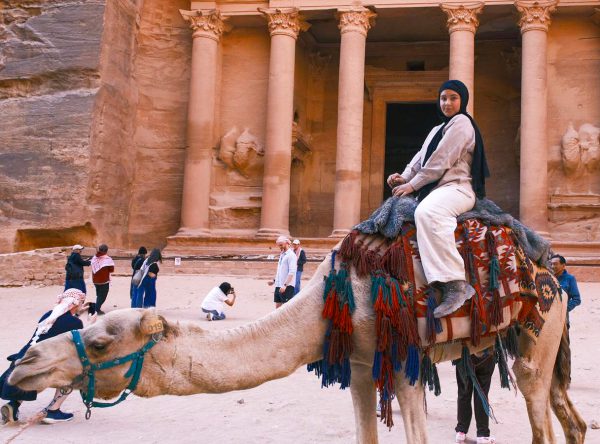
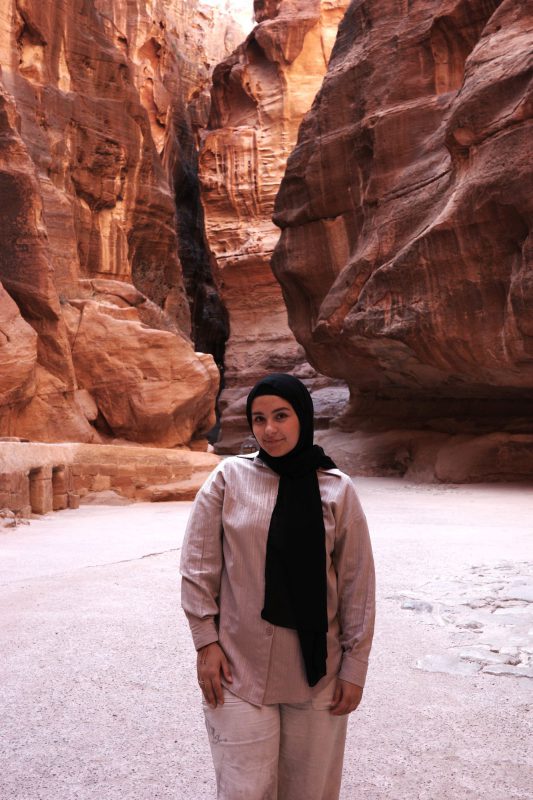
Harper Schrader rides a camel outside Petra while on study abroad in Jordan
Harper Schrader ’26 visited several historical sites in Jordan including Petra, which is an ancient city famous for its rock-cut architecture and water engineering.
Harper Schrader on study abroad in Jordan near the ancient city of Petra
Schrader obtained an internship with the Jordanian embassy in Washington, D.C., shortly after returning from study abroad.
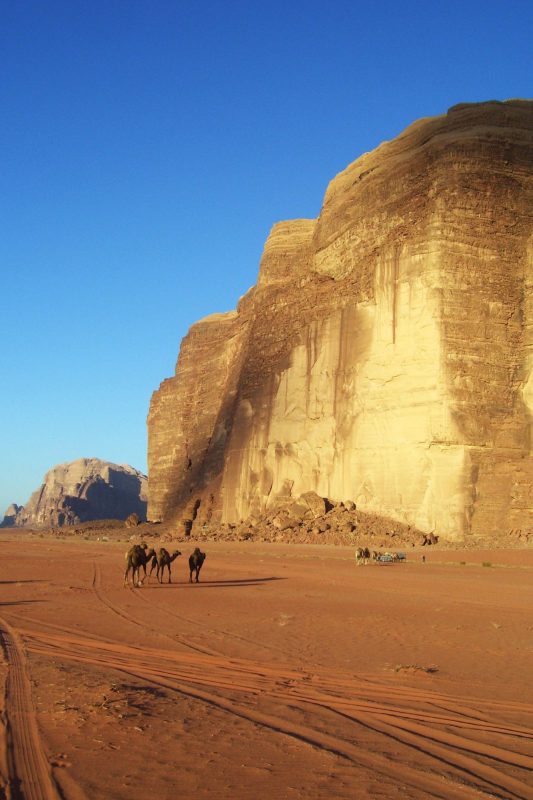
Wadi Rum in Jordan
Wadi Rum, meaning Valley of the Moon or Valley of High Places, is Jordan’s famous desert valley known for red sands, rock formations and ancient inscriptions.

From Study Abroad Student to Intern 

When Schrader returned from Jordan in September, she brought with her not just memories and language skills but a professional opportunity that perfectly merged her interests. A roommate from her study abroad program had worked for the Jordanian embassy, and when Schrader reached out about internship possibilities, the timing proved fortuitous. 

“I applied, not really thinking I would get it just because I don’t have any experience in international relations, but I did get it,” she said. 

Now, working remotely with the embassy’s Information Bureau in Washington, D.C., Schrader monitors press releases, think tank events and social media posts by politicians, compiling them into reports while helping to draft media statements. 

“It’s really fun for me to combine an international relations interest with journalism,” she said. “It’s like the perfect intersection.” 

The position, which she plans to continue until around June, has its limits as only Jordanian citizens can be hired for full-time positions. Yet it has already opened doors and created valuable connections. She has worked with officials close to the ambassador and met other students passionate about Jordan and the Middle East. 

Confronting Media Narratives 

Through her work monitoring international media coverage, Schrader has developed strong opinions about how the Middle East is represented in Western journalism. Although she believes Jordan itself is portrayed fairly, she’s critical of the coverage of other countries in the region. 

“I think especially places like Iraq or Palestine are dehumanized,” she said. In fact, she’s found herself relying less on mainstream outlets such as the New York Times and the Washington Post, instead turning to social media to follow journalists on the ground, particularly in Gaza. 

Jordan hosts refugees from Iraq, Palestine, Syria and Yemen, bringing international recognition. The country maintains a delicate balance—about 60% of Jordan’s population is estimated to be of Palestinian origin, which can create tension when the king maintains relationships with the United States and other Western powers. 

“In Jordan, of course, it can feel frustrating for people if seeing the king, for example, be friends with the United States when a majority of the population there is Palestinian,” Schrader said. “But when you put it into the perspective of Jordan having little natural resources, their biggest strength is that they’re a peaceful country.” 

This understanding of geopolitical complexities is precisely what Schrader hopes to bring to her future career. She’s currently applying to master’s programs to pursue a thesis examining how different regions and wars are represented in media, with a particular focus on how media can manufacture consent for conflicts and military actions. 

Looking Forward 

Schrader’s journey from Kalamazoo to Jordan and back again has been shaped by supportive mentors, including Professor of English Babli Sinha, who serves as her SIP advisor despite Schrader never having taken her classes. 

“She’s inspired me the most,” Schrader said. “She doesn’t make me limit myself when it comes to journalism. She encouraged me with journalism and to follow what I’m passionate about.” 

For her SIP, Schrader wrote a narrative journalism piece about her two visits to the West Bank and Jerusalem during her time in Jordan, including a stay with a family in Bethlehem. “It’s been rewarding to write what I’m passionate about,” she said. 

On campus, she helps run both the student newspaper, The Index, and the literary magazine, The Cauldron. She’s also been involved with Students for Justice in Palestine since her first year and helped revive the Muslim Student Association after returning from study abroad. 

When asked what she’d want Americans to know about Jordan, Schrader’s answer cuts to the heart of why cross-cultural exchange matters. 

“I think that it can be easy to let what we’ve been told about the Middle East come to mind when we’re first thinking about these countries, but it’s really important to go there and to talk to the people,” she said. “You’ll realize that the people your age—and people in general —are more like us than we think. I think that’s the biggest thing.” 

For Schrader, study abroad wasn’t just an academic experience or a chance to see the world. It was a transformative experience that helped her discover her calling. From struggling through her first Arabic conversations to working for a foreign embassy, she’s living proof that stepping outside one’s comfort zone can lead to extraordinary opportunities. 

“It helped me meet other people interested in the same things I’m interested in and opened my eyes up to what I can do outside of what I’m studying at K, which is cool,” she said. 

K Alumnus Wants Study Abroad to Change Lives in Oklahoma

More students at Southeastern Oklahoma State University (SEOSU) have applied for passports and are prepared to see the world thanks in part to a Kalamazoo College alumnus inspired by his own study abroad experiences.

Kyle Lincoln ’10 is an associate professor of history at Southeastern Oklahoma State University in Durant, Oklahoma, about 100 miles northeast of Dallas, Texas. He also has been appointed the university’s study abroad director. The university last year had just 14 out of more than 6,000 enrolled students participating in study abroad, but the number overall is trending higher under Lincoln’s watch.

“I can remember starting to talk about going on study abroad when I was a first-year student at K, and now I can talk to our students to plant the idea with them,” Lincoln said. “Someone else then sits near our students in class while saying something like, ‘When I was in Vienna, something amazing happened.’ That’s when students pull the trigger and decide to go. Horizontal marketing like that is pretty powerful for us. And to me, it’s gratifying to know the number of students participating in study abroad here is growing. If we can get it up to about 10% participation, that would be a legacy number for me.”

SEOSU primarily serves students from a 12-county area in the state, all of which consistently rank among the 50 counties in the country with the lowest average household incomes. Additionally, approximately 46% of SEOSU’s students identify as students of color, including about 28% who identify as Native American. Despite these long odds, Southeastern excels in supporting its students through their graduation date and beyond, and consistently ranks in the top 10 universities in the country in graduating Native American students. When Lincoln arrived, there were few opportunities for students to pursue international immersion. Many students come from high-financial-need backgrounds and historically underserved communities, where optional educational opportunities like study abroad were not commonly seen as accessible.

A fledgling study abroad program began about 10 years prior to Lincoln’s arrival, when the honors program director at SEOSU decided that her students needed to see more of the world through short-term study abroad opportunities. Other students were invited along, yet participation stayed low. Lincoln, though, had gained experience leading study abroad programs while teaching at Webster University during graduate school, and he told officials at his new institution that he could dedicate himself to furthering its international immersion efforts.

Lincoln has since helped develop opportunities for full-semester, half-semester and summer-term programs offered through exchange partnerships, federally-funded programs, special fellowships offered by the Oklahoma State Regents for Higher Education, and competitive programs for foreign language study. But much of that development started almost by accident.

“The person who was planning to lead a program to Greece my first year at Southeastern ended up leaving the university,” Lincoln said. “I couldn’t say no when the honors director asked if I wanted to go. From there, we’ve been adding more faculty-led trips. We’ve gone to Belize and Guatemala, and we’re getting ready to go to Spain next year. We went to Iceland this last spring, too. Right now, we have five full-semester programs. I have a proposal on our president’s desk to add about 20 sites in 13 or 14 countries within the next year. That’s a pretty substantial increase in the programs we would be offering, especially for a school that doesn’t really have a dedicated study abroad office except for me.”

Lincoln, who is originally from Ionia, Michigan, said he visited K during high school when Steven Cairns ’93, Ionia’s AP history teacher, encouraged him to do so. The College’s brick-lined streets and trees, which reminded him of home, ultimately helped him decide to attend. As a K student, he took Latin classes and began learning Greek in classics department courses before spending a term abroad in Rome.

He has modeled some of SEOSU’s study abroad structure on his experience at K.

“I remember doing the background work to apply for graduate school and looking at my transcript,” he said. “I noticed I didn’t have separate transcripts from K and from studying abroad. I didn’t think about that for a long time, but it stuck in the back of my head, and we now do something similar at Southeastern. All the students that enroll in study abroad for semester or summer-term programs, enroll in classes that have a prefix of ‘Intl,’ which is international studies with me. Then, as the course codes fluctuate based on what classes they’re taking somewhere else, they stay enrolled at Southeastern despite being at Webster’s campus in Athens or the Universidad Nebrija campus in Madrid. From a practical perspective, that lets them stay on course to graduate. It also keeps enrollment verification for the state of Oklahoma, tribal funders, regional funders, philanthropic organizations or regional scholarships.”

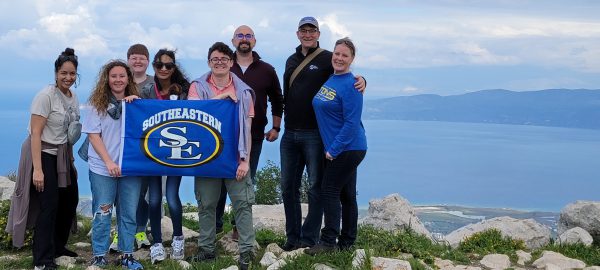
Kyle Lincoln takes Southeast Oklahoma State students on study abroad
Kyle Lincoln ’10 (third from right) is a study abroad director and associate professor of history at Southeast Oklahoma State University. Lincoln has helped develop opportunities for full-semester, half-semester and summer-term programs at his institution.
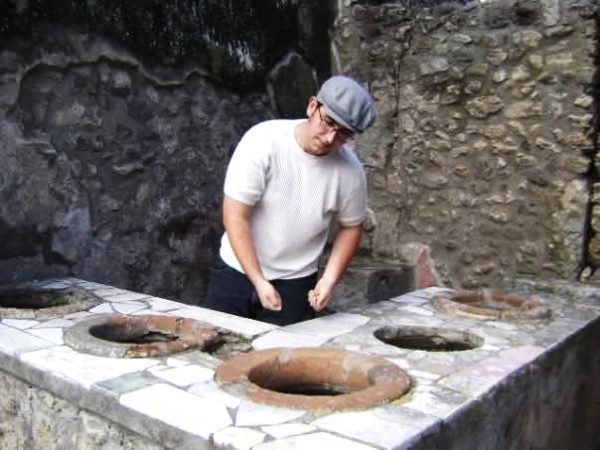
Kyle Lincoln on study abroad in Rome
As a Kalamazoo College student, Lincoln took Latin classes and began learning Greek in classics department courses before spending a term abroad in Rome.
Kyle Lincoln with students on study abroad
Lincoln’s own study abroad experience at K meant so much to him that he now takes SEOSU students to places such as Belize and Guatemala.

Such a practice helps students maintain their access to university services, too.

“It makes the advising part easy for me, and it also means that the students can, for example, stay in contact with campus health services if they need to because they’re still enrolled with us,” Lincoln said. “They haven’t just gone to another university and enrolled in classes there. One study abroad director horror story I have that had a happy ending: I had a student whose appendix burst while she was in Geneva. Having that happen 4,000 miles from home is scary, but she called me and the campus directors, which allowed us to get some paperwork started. Her biggest complaint by the end? Why was the hospital food in Geneva better than cafeteria food at home!”

As a result, she made a full recovery without any out-of-pocket costs and still benefited from her study abroad experience. Lincoln said it puts students’ minds at ease when they know something about what they can expect and that their school has experience with what to do in emergencies.

The biggest challenge ahead is now building a lasting study abroad culture at SEOSU, which traditionally had students saying, “People like us don’t do that; that’s a rich-kid thing or an East Coast thing.” Lincoln brings to the institution the same belief that was instilled in him at K: that immersive, global experiences should be encouraged and accessible to all students, not just a privileged few.

“The financial challenges are often real for our students, yet building a lasting culture of study abroad at Southeastern has been the bigger challenge,” Lincoln said. “I will tell my students that they go with people they don’t know yet, but I do know them, and we can trust them. There might even be real opportunities abroad they can’t get at our campus or maybe we don’t have the faculty that can give them the variety that they want in their education. There’s also a transformative power in being in the place where something is happening.”

And so far, student feedback after study abroad has been encouraging, indicating the school is ready to ramp up participation.

“At this point, we’re seeing a 100% success rate,” he said. “One hundred percent of the students who go come back and ask questions like, ‘Can I go again? How do I do this forever? Can you tell me what programs for graduate school focus on international education? Is there a way to live abroad and get a master’s degree?’

“I want to make sure my students see study abroad as an opportunity that’s more accessible than they might think and a chance to do something life changing. I want it not to be a question of whether they can go, but when.”

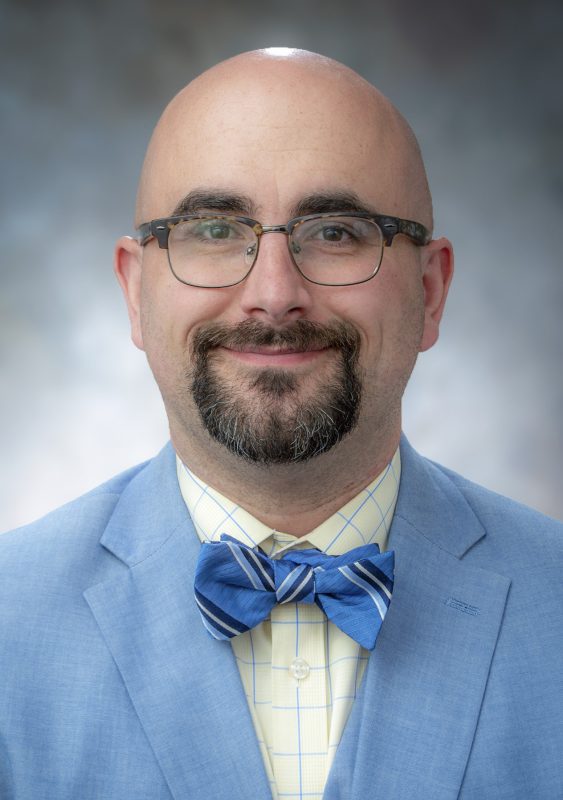
Portrait of Kyle Lincoln
Lincoln previously led study abroad experiences as a graduate student at Webster University after graduating from K.

Fulbright Helps Provost Explore Student Opportunities in Japan

A two-week experience in Japan recently helped Provost Danette Ifert Johnson work toward establishing new Kalamazoo College study abroad partnerships and opportunities for students.

The Fulbright Scholars Program honored Ifert Johnson with an International Education Administrators (IEA) Award, which allows U.S. higher education administrators to learn about participating countries’ higher education systems. The people involved exchange information on best practices, explore the potential for new partnerships with institutions of higher education in the host country, and raise the profile of their home institution within the host country and the U.S. cohort.

Ifert Johnson specifically visited the students, faculty and staff at several institutions including the University of Tokyo, Tsuda University, Hiroshima Shudo University, Kansai University, and existing K study abroad partners Sophia University and Waseda University. Her cohort also met with officials from Education USA and the Japanese Ministry of Education, Culture, Sports, Science and Technology (MEXT). During the program, they each completed an individual project for which Ifert Johnson visited International Christian University and Kyorin University.

In addition to Japan, IEA alumni have visited France, Germany, Taiwan, Korea and India.

“Given K’s strong commitment to study abroad, I was initially interested in participating so that I could better support our institutional efforts,” Ifert Johnson said. “IEA programs exist in several countries around the world, so I worked with Center for International Programs Executive Director Margaret Wiedenhoeft to determine what would be of greatest strategic benefit to us and our students. I was honored to be selected to represent K abroad and I’m looking forward to seeing how our new and strengthened relationships benefit our students.”

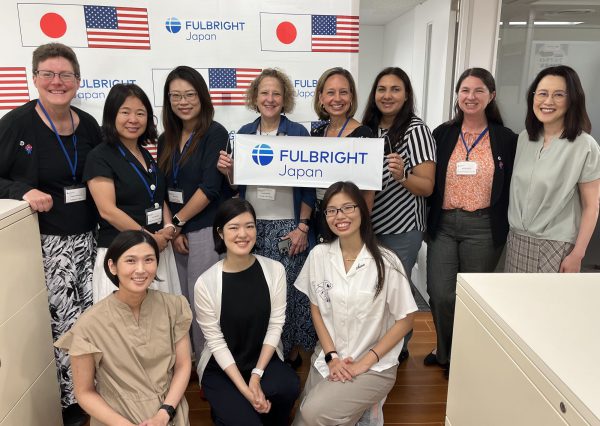
Provost Danette Ifert Johnson visits study abroad partners in Japan through the International Education Administrators Award provided by the Fulbright U.S. Scholars Program
Provost Danette Ifert Johnson (top left) specifically visited the students, faculty and staff at several institutions including Kalamazoo College study abroad partners Sophia University and Waseda University through an International Education Administrators Award provided through the Fulbright U.S. Scholars Program.

Fulbright, Language Fellows Draw Global Spotlight

Eleven recent graduates are pursuing their passions around the world during the 2025–26 academic year. As Fulbright scholars and teaching assistants, they’re continuing a rich tradition of post-grad international learning and service—and carrying Kalamazoo College’s spirit of exploration around the globe.

Fulbright

Erik Danielson ’25, Alex Nam ’25, Leo McGreevy ’25, Stacy Escobar ’21 and Joseph Horsfield ’25 are Fulbright scholars in the U.S. Student Program.

In partnership with more than 140 countries, the Fulbright U.S. Student Program is the federal government’s flagship for international educational exchange as it offers opportunities in graduate study, conducting research and teaching English abroad. K has earned recognition as a top producer of Fulbright students for six consecutive years. Graduating seniors apply through their educational institution. Alumni apply as scholars through their institution or as at-large candidates. As a nod to their academic merit and leadership potential, Danielson, Nam and McGreevy will serve Fulbright in Austria; Escobar will travel to Guatemala; and Horsfield will go to Ireland.

Danielson, Nam, McGreevy and Escobar will work as English teaching assistants (ETAs). In their roles, they will serve as teachers and cultural ambassadors while promoting an understanding of the U.S. and its culture, learning about their host country, and engaging with their communities.

Horsfield will attend the Royal College of Surgeons in Ireland (RCSI) and begin a Ph.D. program that has been offered to only two U.S. students each year since 2019. The opportunity, based in Dublin, encourages scientists to develop innovative research projects related to cancer; neurological and psychiatric disorders; population health and health services; biomaterials, medical devices and pharmaceutical sciences; surgical science and practice; or vascular biology. Fulbright will cover the first year of Horsfield’s educational costs and RCSI will cover the last three.

NALCAP

Fuzail Ahmed ’25, Maya Hester ’25, Sierra Hieshetter ’25 and Alexa Wonacott ’25 have received Spanish government teaching assistantships through the North American Language and Culture Assistants Program (NALCAP) of Spain. And Madeline Hollander ’25 and McKenna Lee Wasmer ’25 will fulfill government teaching assistantships through NALCAP in France.

The Education Office of the Embassy of Spain, located in Washington, D.C., promotes the NALCAP opportunities in Spain, seeking diverse educational outreach and long-lasting ties between American and Spanish citizens. France Education International maintains the program for France with a desire to cooperate globally in education along with technical and vocational training while supporting the teaching of French around the world.

Both programs have similar structures with Hollander, Wasmer, Ahmed, Hester, Hieshetter and Wonacott each expecting to be abroad for seven to eight months beginning in October. Afterward, the participants may apply for renewal.

NALCAP recipients receive a monthly stipend and medical insurance for 12–16 hours of assistant teaching per week depending on their program. They make their own housing arrangements and are encouraged to immerse themselves in the language and culture of their host countries while sharing the language and culture of the United States with the students they teach.

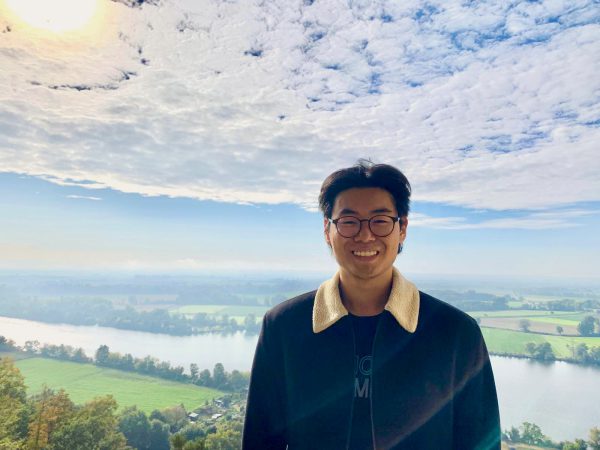
Fulbright Scholar Alex Nam in C
Alex Nam ’25 will be one of five Kalamazoo College alumni abroad in the 2025–26 academic year while serving the Fulbright U.S. Student Program as an English teaching assistant in Austria. He is pictured during his study abroad experience in Regensburg, Germany.
Alexa Wonacott on study abroad in Spain
Alexa Wonacott ’25 will return to Spain this year thanks to the North American Language and Culture Assistants Program. She will be an English teaching assistant through a program offered by the Education Office of the Embassy of Spain.

“I’m proud of the Kalamazoo College students and alumni who seek opportunities like these because they support international cooperation on issues that are shared around the world,” Center for International Programs Executive Director Margaret Wiedenhoeft said. “Each honoree is an example of the curiosity, courage and global perspective we aim to cultivate in K representatives throughout their lives. The fellowships are not just awards. They’re opportunities to engage deeply with the world, seek challenges in new environments, and grow academically and personally. Their success reflects the strength of our programs and the passion our students bring to global learning.”

Hive Five! K Student Wins Bee Hotel Contest in Spain

What began as a year on study abroad at the Universidad de Extremadura in Cáceres‎, Spain, ended in an international triumph for Annaliese Bol ’26, a Heyl scholar from Kalamazoo College.  

Bol, a biology and Spanish double major, blueprinted a bee hotel—a small structure designed to provide nesting, shelter and a safe space to lay eggs for solitary pollinators—and entered it into the Insectopia Festival held from June 2–6 in Jarandilla de la Vera, Spain. The event included a contest among representatives of eight universities across Europe to see who could diagram the best insect hideaway while contributing something educational to humans and helpful to local pollinator health and biodiversity.  

The design for Bol’s hotel featured a honeycomb pattern with a QR code that could lead interested passersby to the Insectopia website to learn more about the organization and how it supports pollinators.  

“Trying to implement large-scale change to support bees is very difficult,” Bol said. “My project’s goal was to lead people to little solutions that hopefully would compound into something bigger.”  

The only problem was that she was returning to the U.S. on June 5, while the festival was still ongoing. However, with some community engagement support from a professor and a master’s student, Bol and her team won the contest.  

“I was shocked, honestly,” she said. “I was traveling when my teammates called and asked, ‘Have you checked your email? We won!’”  

Bol’s reward is that Insectopia is now building her design, which measures about 18 inches high by 18 inches wide. It includes paper straw and wood blocks that will be important to pollinators in Spain because of its arid climate, especially with a lack of tall trees where pollinators normally can nest. The fact that the bee hotel directs others to the Insectopia website is important, too, as judges required entrants to include a plan for activating the community.  

“I like insects, but the artistic part of the project appealed to me because I don’t get to think creatively every day with my studies,” Bol said. “I also liked doing the research to figure out the best materials, and it was educational.”  

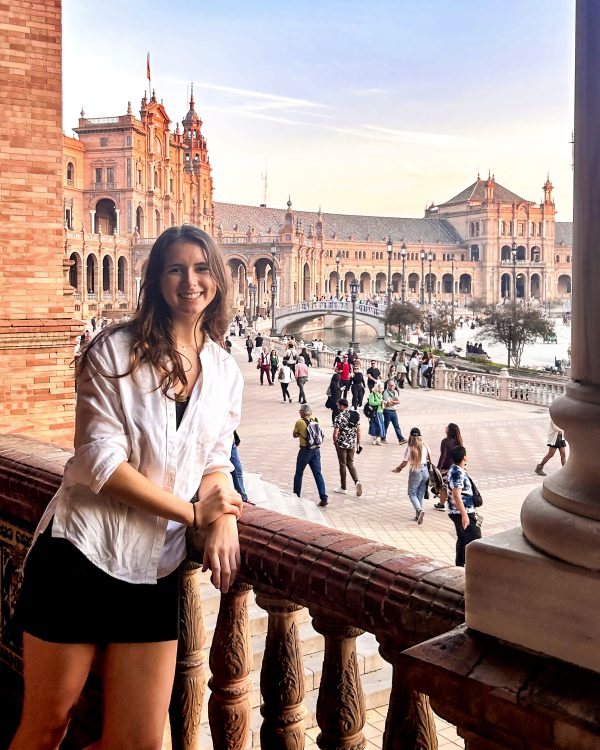
Bee hotel contest winner Annaliese Bol at the Plaza de España in Seville, Spain
Heyl scholar Annaliese Bol ’26 spent the 2024-25 academic year studying abroad in Spain. During that time, she competed with representatives of eight universities from across Europe to see who could diagram the best bee hotel to support pollinators and educate the public about bees. On her way back to the U.S., she found out she won the contest.

While abroad, Bol began working on an intercultural research project in which she developed a composting program at the Universidad de Extremadura to decrease waste. Simultaneously, she created a community garden that local teachers could use as a tool for their classrooms.  

At that time, some of her contacts, including a professor, mentioned the Insectopia contest, although Bol initially didn’t give it another thought. An Insectopia director later asked Bol what she would be doing this summer upon returning to the U.S. Her response: Working with Clara Stuligross, assistant professor of biology, on bee research for her Senior Integrated Project.  

“He said that Insectopia is all about bees, so I should be involved in it,” Bol said. “I said, ‘OK, cool,’ and they set me up. They gave me all the information and told me the goal was to design an environmentally friendly, but also educational, bee hotel.”  

As she reflects on her experience, Bol affirms the idea that study abroad widens one’s perspective and changes how students think about themselves and other cultures.  

“It was interesting and fun,” Bol said. “I made a lot of friends among Spanish students and other Europeans as well. It also made me appreciate my home here, too, in certain ways. I feel that in the United States, we have a perception of Europe being a much more advanced place to live. Maybe it was just because I was in a small Spanish town in the countryside, but it made me appreciate how we address problems here. Maybe it’s just from me attending K, but I feel like we’re always asking, ‘Why is something that way?’”  

At K, Bol is a cross country runner and a Crochet Club participant. This fall, she would like to form a K chapter of Women in Wildlife, a student organization consisting of women and non-binary people who want to work in wildlife-associated fields. Bol’s varied interests and commitment to community building have served her well both at home and abroad. Her time in Spain highlighted K’s distinctive approach to study abroad, with programs designed to foster that same kind of meaningful engagement she values on campus.  

“I met other American students while I was in Cáceres‎ and traveling around Europe,” Bol said. “When we talked about shared experiences, I asked what they did in their free time, and they didn’t have a lot to say. But K, especially in this program in Spain, makes it a goal to get you ingrained in the community. We could say we were tutoring kids or working on our volunteering projects. That really made my experience special.”  

Life’s Road Leads Class Speaker, Sherbin Fellow Around the World

A winding road that led Akinyi Okero ’25 from Kenya to China, the U.S., France and Senegal will soon lead her to the lectern at Kalamazoo College’s Commencement and on to countries such as South Africa, Morocco, Greece and the Netherlands. 

Okero, an international student from Nairobi, will address her fellow graduates on Sunday, June 15, as the speaker for the class of 2025 before she travels the world for 10 months as this year’s Sherbin Fellow. 

The fellowship—consisting of a grant that gives a graduating senior at K an opportunity to explore a topic of personal interest outside the U.S.—was established by alumnus Robert Sherbin ’79 and named after his father. Sherbin participated in study abroad at K by traveling to the University of Nairobi, where he was one of just six undergrads from the U.S. and the only K student. Later, as a senior, he received a Thomas J. Watson Fellowship, an external grant through the Watson Foundation, that allowed him to create and follow through with a one-year project overseas. 

Okero—the third beneficiary of the fellowship following Elle Waldron ’23 and Sydney Salgado ’24—attended high school at the United World College Changshu in China before choosing Kalamazoo College. 

“K was one of many schools I could have come to in the U.S., but I specifically liked that K would allow me to focus my education on my strengths while I still learned a breadth of knowledge from different disciplines thanks to its flexible liberal arts system,” Okero said. “For example, I knew the natural sciences were not my strength, and most other universities and colleges would’ve required that I study a core curriculum which would force me to study sciences like physics, biology or chemistry. Here at K, I followed my own plan. It was also important for me to find a small and close-knit environment where I could shine in my own way. K has worked out well, and I am beyond grateful to be this year’s Sherbin Fellow and the student Commencement speaker.” 

Okero didn’t expect to provide a Commencement speech when she applied to be a graduation weekend speaker. Instead, she originally hoped to talk at Baccalaureate on Saturday, June 14, in front of a much smaller audience at Stetson Chapel. But after setting aside the introverted side of her personality and the initial surprise, she said she grew excited to address her classmates. Attendees can expect her to provide a nostalgic view into her four years at K and how they have shaped who she has become. 

“There’s one line where I say ‘the 18-year-old I was then is not the 22-year-old I am now, but I have retained the same essence. I am bolder and louder in some ways and softer in others,'” Okero said. “Overall, I am definitely brighter, and I think that that stands true for all of us in the class of 2025.” 

Okero studied abroad in Strasbourg, France, and she performed the research for her Senior Integrated Project (SIP) by traveling to Dakar, Senegal, and Nairobi, Kenya, where she learned about contemporary African art and explored how it reflects identity and shapes unity. 

“Dakar is a city that I’ve come to enjoy visiting and Nairobi will always be home,” Okero said. “Despite the majority of my studies being in the social sciences, I have always been creative and wanted to expand my focus by merging my interests. That’s what my SIP allowed me to do.”  

The experience, supported by grants through the Center for International Programs and K’s Office of the Provost, confirmed for Okero how much she enjoys traveling, and she said that it’s become an intrinsic part of her. 

“I love getting to know a place by having conversations with people while I travel,” Okero said. “It’s incredible how much I learn just by being in a space that is out of my comfort zone. I first experienced that while studying at UWC Changshu China, where I learned more about myself and others in ways that I don’t think I could have by simply reading books or watching the news about the place. Coming to the U.S., I have experienced the same thing, and I thought, ‘Why not continue this?’ This opportunity with the Sherbin Fellowship is just that.” 

Okero is the vice president and a former president of the Refugee Outreach Collective at K, a student organization that raises awareness regarding refugees and their struggles, while connecting volunteers with nonprofit organizations that offer displaced people the resources they need. She is also president of KalamaAfrica, a student organization that celebrates African and diaspora cultures at K. In that same spirit, she will travel to South Africa, Morocco, Greece, the Netherlands and possibly Malaysia thanks to the Sherbin Fellowship. All of them, she said, have populations of migrants and histories of a variety of ethnicities living together.  

“I want to learn more about the history, reasoning and culture of each place,” she said. “I want to know how the migrants keep their culture, and how the host communities are reacting to an influx of new people in their space. Are they accommodating or are they more averse to it? As an international student, I have had to constantly consider how to hold onto my own culture, while allowing my new experiences to shape me. This has prompted my project for the fellowship, and because of it I can explore this same phenomenon both for migrants and host communities.” 

Okero is in the process of solidifying the specifics of her itinerary and is hopeful for a reflective and adventure-filled experience. In the meantime, she would like to thank the alumnus who is making her experience possible. 

“In having conversations with him, I could see how much we both understand the importance of traveling to new spaces and learning more about yourself and people in the process,” she said. “I also enjoyed hearing from him about his time at K. He studied abroad in my country, Kenya, and then told me that he lived in Hong Kong, so we realized that we both have lived in Kenya, the U.S. and regions of China. It was evident that we have a mutual understanding of how travel can affect one’s life in the best way possible. I’m so grateful that someone is championing that opportunity for others.” 

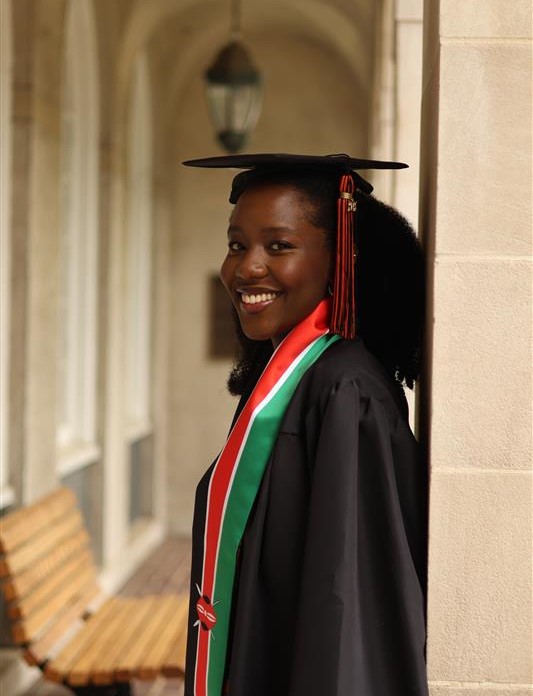
Sherbin Fellow Akinyi Okero
Akinyi Okero ’25 will address the class of 2025 at Commencement on Sunday, June 15.
Sherbin Fellow Akinyi Okero
Okero, an international student from Kenya, studied abroad in Strasbourg, France.
Sherbin Fellow Akinyi Okero
Okero, who visited Senegal while conducting her SIP, will visit countries such as South Africa, Morocco, Greece and the Netherlands as the 2025 Sherbin Fellow. 

Student Praises Host Family, France as the Crème de la Crème

Three people sightseeing in France
Shruti Debburman ’26 has found a home away from home on study abroad in Clermont-Ferrand with her host parents, Arielle and Stéphane Calipel, pictured here on the Puy de Combegrasse volcanic peak.
Two people sightseeing in France
Study abroad in Clermont-Ferrand has been a dream come true for Debburman, pictured here with Olivia Cannizzaro ’26 at vendanges (grape harvesting).
Student at a pipe organ
A double major in French and psychology with a minor in music, Debburman has studied pipe organ at the conservatory of Clermont-Ferrand during her study abroad.

Living in France is everything Shruti Debburman ’26 dreamed of since she was 9 years old. 

In fact, Debburman had been in Clermont-Ferrand on study abroad from Kalamazoo College for only two weeks before she started to feel that the six-month study abroad program—which had seemed overwhelming in advance—would not be long enough.  

“I got here at the end of August, and once I was here, time went by so differently,” Debburman said. “Time started to move very quickly, and I knew that in six months I was not going to be ready to leave, and that I would want more time. I am so happy here; I don’t want to leave when there’s so much to do that I’m not going to be able to have done by February. I wouldn’t be fluent enough, and I don’t want to leave not being as fluent as possible. And I thought, this is a once-in-a-lifetime opportunity, why not take full advantage of it?” 

With the support of program administrators, her parents and her host family, Debburman extended her stay from a February end date into the middle of May. 

“I want to make the most of it, to really speak French without giving in to English, to push myself in terms of grammar and vocabulary and speaking correctly,” Debburman said. “I would like to make some more French friends, and I’m excited to travel more.” 

Growing up in Lake Bluff, Illinois, as a fan of both reading and baking, Debburman got hooked on France thanks to a French cookbook of her mom’s from Le Cordon Bleu culinary institute. 

“It’s really complicated, all the types of doughs you can make, all the types of sauces, all the types of creams,” Debburman said. “I read the thing cover to cover, and I was like, ‘I must learn how to do this. And I need to learn about France, because all of this is so cool, and it must be an interesting country that it comes from.’ I was at a Montessori school and we didn’t have a language class, but what’s incredible about Montessori is that it encourages students to spend time pursuing their interests during the school day, so for example, our assistant teacher had studied French in college, so she was giving me little French lessons on the side.” 

K appealed to Debburman based on small class sizes, flexible curriculum and emphasis on study abroad. While her intention to major in French persisted, she took advantage of the ability to explore other areas of interest, considering a second major first in history, then in classics, then music. Currently, she has declared a double major in French and psychology with a minor in music. 

For study abroad, Jan Solberg, professor of French and Francophone studies, encouraged Debburman to consider Clermont-Ferrand. 

“It’s a very immersive program, but it’s also a small and very supportive program,” Debburman said. “I think she knew it was the right place for me.” 

The Clermont-Ferrand program runs during K’s fall and winter terms in partnership with Institution Saint Alyre, an educational establishment that includes primary and secondary schools as well as higher education. Students live with host families and take classes in French language, culture and civilization designed especially for K students as well as classes in French literature and philosophy or modern world history and economy alongside Saint-Alyre students. They complete an Integrative Cultural Project (ICRP) and volunteer at the international short film festival held in Clermont in early February before returning to Kalamazoo for spring term. 

An anxious flier, Debburman remembers feeling surprisingly calm while soldiering through the journey to France, including a long flight delay, being met at the airport by the program’s resident director and her host dad, and her host dad driving her to their home. There she met her host mom and a younger daughter who lives on her own but came for dinner and brought her boyfriend—and the travel caught up with her. 

“It was such a long day, and I gave everyone the most scatterbrained impression of myself,” Debburman said. “I’m normally pretty put together on the outside, but I was so worried about making a good impression that I kind of forgot how to speak French. My host mom is fluent in English, thankfully, so there were some moments of half English, half French going on, and it was a lot. But everyone was wonderful, incredibly welcoming and kind. I was worried about being an imposition, and they did such a good job making me feel like I was not intruding or an imposition and I felt like part of the family right away.” 

Her host family has been a highlight of her time in Clermont. Having grown up as an only child, Debburman relishes the opportunity to experience family dinners, game nights and life with siblings. 

She also loves getting to know Clermont-Ferrand, which she finds an interesting city with a manageable size. The city’s population of just under 150,000 is roughly double the population of Kalamazoo, but with a size of about 16 square miles, it covers between half and three quarters as much land as Kalamazoo. 

“You can walk most places downtown,” Debburman said. “I have a 10-minute walk most places, because I’m close to the middle. If you’re going somewhere farther out, there is decent public transportation. It’s not super cosmopolitan, so you have to speak French and get good at it quickly.” 

Improving French fluency is also necessary in the coursework, which Debburman found challenging at first.

“Classes were more lecture heavy than in my classes at K. In French, especially, and in the rest of the humanities, K classes are mostly discussion based. It also felt fast. The first couple of weeks, I was just writing stuff down as fast as possible, without having a clue what I was writing. But then it got easier. The more I was around the language, I started understanding it better, until it felt like I was actually learning the material in class.” 

Student sightseeing at the Mémorial de Caen
The study abroad program at Clermont-Ferrand proved a perfect fit for Debburman, pictured at the Mémorial de Caen.
One student sightseeing at the Loire River
Debburman, pictured at the Loire River, extended her study abroad in Clermont-Ferrand when she decided six months was not enough time.
Four people sightseeing in France
In Clermont-Ferrand, Debburman visits the Chateau de Chavaniac, the Marquis de Lafayette’s childhood home, with Jacob McKinney ’26, Françoise Evangelista, resident director, and Didier Croze, civilization teacher.

Learning French literature and economics alongside French students offers an intriguing contrast for Debburman—one class right in her wheelhouse, the other brand new to her, and both with a distinctively French perspective. 

In addition, Debburman and (until February) the other two K students studying in Clermont-Ferrand this academic year attend a French language class, a French culture and civilization class, and a time set aside for extra support with the economics teacher, where they review material from class or go deeper on topics that are relevant to their interests. 

“Those classes are very flexible,” Debburman said. “It’s what we need to learn or what we want to learn. 

Our teachers are absolutely fabulous. They’re so engaging.” 

Debburman also takes pipe organ lessons at the Regional Conservatory for music, dance and theatre, and she completed her ICRP at the Conservatory, researching and writing about the history and current state of the pipe organ in France.  

For the ICRP, each student chooses a topic or question of interest to him or her and completes 40 hours of work on a site and 10 interviews with professionals in the field, often tied to an internship. Having played piano since she was 5 years old and viola since high school, Debburman grew interested in the academic side of music at K and started pipe organ lessons during her first year. 

“I didn’t realize how absolutely in love I would end up with the instrument,” Debburman said. While true mastery of many instruments requires an early start, pipe organists often begin as teenagers, because they need to have achieved their full height and a level of piano competence. 

“It’s usually a weird connection—in French, they call it ‘un coup de foudre,’ which is like love at first sight,” Debburman said. “It literally translates to crack of lightning, so it’s like love struck; you hear it or you play it for the first time, and it’s like destiny, you just know it’s your instrument.” 

Struggling to find 10 pipe organ professionals in Clermont even with her contacts at the Conservatory, Debburman expanded her interviewees to include students of the pipe organ, which enriched her final product. 

“I didn’t think of doing that at first, but I found that the students put a lot of thought into it, they answered very thoroughly, and I feel like some of the insights that I got from them were more creative and out of the box,” Debburman said. “The kids still have that enthusiasm in them, a spark. It was interesting to have the kids explain how they fell in love with it while it’s still fresh for them.” 

Debburman did get to meet (and interview) professionals—people who are important in the pipe organ world—and she had the opportunity to play historic instruments in the process. 

In her time abroad, Debburman has traveled to many places; Normandy, Florence and London were highlights for her, offering natural beauty, architecture, history and amazing food. 

“We went skiing in the Alps,” Debburman said. “I think that would be a collective highlight for all of us. I’d never skied in my life. I was terrified, and it was really fun. It’s the coolest possible place to try it.” 

Since the two other K students left Clermont in February, some things have stayed the same for Debburman—her host family was happy to extend her stay; most of her classes remained consistent—while other things have shifted. In addition to adjusting to the absence of her fellow Hornets, Debburman has been thinking about her Senior Integrated Project (something related to medieval feminist literature), started a French book club with her former resident director, and added a Latin class with high school students to her schedule. 

“That’s been an interesting experience, because translating Latin to English is one thing, but translating Latin to French, one language that is not my first language to other language that’s not my first language, is complicated,” Debburman said. “It’s also interesting being with high school kids, because they have so much energy. They talk differently, and they’re a lot more willing to test out their English. They ask a lot of questions that tell you a lot about how French people see the U.S.” 

Her K-specific classes are now one-on-one, opening opportunities to explore topics of particular interest for Debburman. 

“In French, we don’t have much grammar to do, and the teacher has been bringing in documents on all these different French women of interest, like one of the lawyers who was instrumental in legalizing abortion, a female artist, female scientists. I’m focusing on a lot of medieval history with my history teacher. It’s very flexible, very individualized, which is a special opportunity, because that’s not usually how school works. This is unique, and I think it’s valuable to my education.” 

Debburman’s experiences in France have improved her fluency, flexibility, communication and confidence. 

“Study abroad has changed my life,” she said. “I’m so grateful for everything that’s happened and will happen for the next couple of months. I have a family here for life now, I’ve gotten to see incredible places, I’ve met wonderful people. I’ve gotten to play organs that are 200 years old. I’ve made new friends. I’ve reconnected with old friends from high school, and that’s been lovely as well. It’s very much a dream come true to be here and to be enjoying it so much. I am sure that little me would be so proud and absolutely over the moon.” 

She hopes other French students will consider Clermont-Ferrand. 

“It’s an extremely special program, and all the people in the program, the teachers, the families, the satellite families you can do activities with, they’re all wonderful,” Debburman said. “There are so many unique opportunities, and you will not regret going there. It was one of the best decisions of my life.” 

Connecting Back: From France to Kalamazoo

While reflecting on her study abroad experience in Clermont-Ferrand, Shruti Debburman ’26 also appreciates other opportunities K has offered her, both on and off campus. 

“Being part of Kalamazoo Philharmonia, K Phil, has been a big part of my time at K. I did not get in on my first try, but got in on the second try, so it felt very fulfilling. I play viola, and K Phil is mostly community members with a pretty small group of students, which means that we as students get close. Some of the closest friends I have at K are from orchestra.” 

Debburman has worked in the Music Department office as well as the Office of Religious and Spiritual Life (ORSL), through which she also takes part in Interfaith Student Leaders. 

“ORSL was another place I made some of my closest friends,” she said. “When I first came to K, I was not sure that K was the right place for me. My second term, I found Interfaith, and it’s been a community that has made my experience at K so wonderful. It’s made me grow and think, and it’s pushed me, and I love that.” 

In the ORSL Cavern space, Liz Candido, College chaplain, has proven an important mentor for Debburman. 

“She’s been supportive throughout my ups and downs at K, and also so open and encouraging of all the weird questions I throw at her,” Debburman said. “I have a tendency to walk into the Cavern at the start of my shift and have some theological question that I’d been thinking about, and she is so kind and talks me through it. We go into the history and the language, like the Greek, and it’s so interesting. She’s been very encouraging of my interest in theology and helpful whenever I’ve done something in classes that involves something religion-related.” 

In the French department, Jan Solberg, professor of French and Francophone studies, has offered invaluable support and connection. 

Three students sightseeing in France
Debburman, Cannizzaro and Adrien Chandioux, a Saint-Alyre student, visit the Manoir de Clos Lucé, Leonardo da Vinci’s home.

“She was my first French professor at K, and the way she taught French, it made me keep loving the language,” Debburman said. “I had definitely had my moments of hating it; every single year of high school, I said, ‘I’m going to drop French next year.’ She helped me love the language, and she’s been incredibly supportive of me academically; she’s helped me through some of my decisions and classes. In terms of life, she’s been there for me throughout my time at K and has been super supportive. And she’s in orchestra, too, so that’s fun. She’s there in every part of my life.” 

During the summers, Debburman has completed an internship at the National Alliance on Mental Illness in their North suburban office of Chicago and research at Rosalind Franklin University in West Chicago.  

Returning to Kalamazoo for her last year, Debburman looks forward to returning to Interfaith and collective music making as well as tackling her Senior Integrated Project. Beyond that, she plans to apply for a fellowship or scholarship that would allow her to spend more time abroad post-graduation exploring her interests before settling into a Ph.D. and research path. 

New Student Travel Fund Honors Beloved Professor

When Margarita Costero Campos joined the Department of Romance Languages at Kalamazoo College in 1988, she was part of the Spanish program’s growth from one professor to three. Since then, Spanish has become its own department and expanded to eight combined full-time and part-time faculty members.

Recently, 28 sophomores signed up as Spanish majors at Declaration of Major Day. More than 975 Kalamazoo College students have studied in Spain, Mexico, Chile and Costa Rica since 2012.

Engagement with Spanish language and cultures is clearly strong, and a new fund in honor of Campos supports students who carry that torch forward.

Campos taught at K from 1988 to 1997 and passed away in May 2024 at 92 years old. Her family, including her widower, Dr. José Luis Campos; six children; and 13 grandchildren established the Margarita Costero Campos Student Travel Award in November 2024. The fund will assist academically dedicated students with travel to Spanish-speaking countries for purposes including research, conference presentations, internships and study abroad, with preference given to students who major or minor in Spanish.

The fund is an apt legacy for Campos. Born in Madrid, Spain, she was forced into exile—first in France, then in Mexico City—with her family when the Spanish Civil War broke out in 1936. Campos excelled as a student in Mexico City, particularly in language and literature. She studied for several years at the University of Texas, with a summer stint in Oxford that remained one of her fondest memories, said her son Isaac Campos.

“She loved teaching at Kalamazoo College,” he said. “It had been her lifelong dream to be a professor at a college or university, and when she achieved her position at K, she cherished it. She also believed that study abroad was perhaps the most important experience a student could have. While she was self-effacing to a fault, we know she would be thrilled to know that, long after her death, K students would continue to learn Spanish and study abroad with her support.”

Enid Valle, a professor of Spanish at Kalamazoo College, joined the faculty at K in 1989, a year after Campos.

“Margarita was teaching all the very advanced language classes,” Valle said. “Margarita was our expert in grammar, and she was passionate about it. She was delighted always to explain things, to figure things out, and she would give you every nuance possible.”

A learned and extremely well-read person, Campos spoke French and knew Latin and classical Greek in addition to Spanish and English. She actively participated in groups and programs across campus, such as the former Center for European Studies, and was involved in the establishment of one-year teaching assistantships for international students at K. In addition to excelling at evaluating and selecting texts for courses, she built strong relationships with colleagues and students.

“She was attentive to students’ needs and had a keen eye for students’ individual skill levels,” Valle said. “She was highly regarded among the students and very much liked.”

Ivett López Malagamba, associate professor of Spanish and chair of the Department of Spanish Language and Literatures, came to K in 2017, the year Spanish became its own department. Although Campos was long retired by then, she remained connected to K.

“Even though I never worked with her, I benefitted from her intellectual curiosity and lifelong learning,” López Malagamba said. The two met through a reading group with another colleague, and Campos once read and offered comments on an article that López Malagamba eventually published. Campos continued to serve as a resource for the whole department.

“Margarita and I became good friends throughout the years,” Valle said. “I kept consulting her, and so did other colleagues, after she retired. I remember one evening being stuck with some kind of grammar question, and I called her. It was that kind of a friendship, and she had that kind of expertise.”

After retirement, Campos would periodically return to speak to the Spanish 203 course whenever they would read the poem “Explico algunas cosas” by Chilean poet Pablo Neruda. The poem mentions a particular house in Madrid, in which Campos lived as a child.

Donate to the Margarita Costero Campos Student Travel Award 

To honor Margarita Campos’ legacy and support K students who want to further their studies with travel to a Spanish-speaking country, please make a gift online to the Margarita Costero Campos Student Travel Award (under “I’d like to support,” select “Other” and type Campos Student Travel Award in the designation box) or contact Lindsay O’Donohue at 269.337.7299 or lindsay.odonohue@kzoo.edu.  

Campos Student Travel Fund
Margarita Costero Campos taught at K from 1988 to 1997 and died in May 2024 at 92 years old. Her family, including her widower, Dr. José Luis Campos; six children; and 13 grandchildren established the Margarita Costero Campos Student Travel Award.
Campos Student Travel Fund
The student travel fund in Campos’ name will assist academically dedicated students with travel to Spanish-speaking countries for purposes including research, conference presentations, internships and study abroad, with preference given to students who major or minor in Spanish.

“She was so passionate about the Spanish language, and she could explain to you absolutely anything and everything,” Valle said. “We all miss her greatly.”

“Our mother was an extraordinarily hardworking and ethical person,” Isaac Campos said. “She was also totally dedicated to teaching and her students. She was the epitome of a great educator. We knew she would want to prioritize study abroad, student need and academic excellence, and so we worked with K to structure the award that way.”

The Spanish department worked with the Campos family to ensure that structure responds to or reflects the changing complexities of travel abroad.

“How do we support, and provide access for, students to complete intellectual projects that require travel or research abroad?” López Malagamba said. “We want this fund to benefit as many students as possible.”

Students who travel to Spanish-speaking countries aren’t only learning Spanish. They are studying film, economics, health systems, indigenous communities and more. They are preparing for future careers in teaching, law, chemistry, politics and more.

“Indeed, we’re educating them on language and political, social and economic issues of the Spanish-speaking world,” López Malagamba said. “Ultimately, for us in the Spanish department, intercultural experiences play a significant role in fostering ethical considerations and assessments. Our goal is for students to ponder questions such as: How do you adapt your values to the values of other cultures? How is your experience in connection with the Spanish-speaking culture shaping your values and your objectives in your personal or professional future?”

While abroad, whether studying or doing research, some students are able to make academic, philosophical and business connections that may lead to a job or a new career path after K.

“This is only our eighth year as a department, but we have very active students when it comes to engaging with the world beyond our Kalamazoo community,” López Malagamba said. “To be able to support them with this fund is very exciting.”

The fund will start providing financial support for travel to Spanish-speaking countries next academic year.

“We’re hoping that friends, former students, colleagues and anyone who believes in the importance of language education and study abroad will contribute whatever they can to grow the award for the benefit of generations of K students,” Isaac Campos said. “Our mother would’ve been so pleased to know that a certain former student, or colleague, or friend in the community helped to make this an especially meaningful gift to deserving students far into the future.”