When Nat Ward ’26 begins their full-time job as an avian field biologist with HWA Wildlife Consulting next week in Laramie, Wyoming, they will launch a career shaped by four years of study, fieldwork and discovery at Kalamazoo College.
The biology major will help monitor raptors and other wildlife around wind-energy facilities across Wyoming and neighboring states, helping ensure that birds such as eagles can safely navigate areas with wind turbines. They will record bird activity, identify species through visual and audio observations, document wildlife interactions and help reduce bird fatalities.
Ward is eager to begin the position, which draws directly on the skills they developed through their K education, including ecological field methods, species identification, environmental data collection and conservation research.
“I built personal relationships with professors that helped me understand how they got to where they are,” Ward said. “I used that to inform my decisions and directions. That, along with the classes I’ve taken and everything I’ve learned, has prepared me for the future. When I graduate, I’ll be set.”
Ward plans to walk at Commencement at 10 a.m. Sunday, but their K story began with a simple campus visit alongside a cousin. A student guide extolled the benefits of study abroad, small class sizes and the overall community, and Ward realized they had found the right college.
“I knew from high school on that I really wanted to go to K thanks to that visit, so much so that I only applied to about three schools,” they said. “I knew that if I got in, I’d immediately be coming here.”
When they arrived, Ward initially planned to pursue veterinary medicine. That changed after taking Ecology and Conservation with Professor of Biology Binney Girdler, a course that introduced them to environmental science and wildlife management. The experience allowed Ward to imagine a future working with animals while addressing broader environmental challenges.
“I because interested in wildlife management immediately when I saw all of the experiences that Dr. Girdler had throughout her career, as well as the different career paths I could follow with a biology degree,” Ward said. “I could see her passion come through in her teaching. As I’ve taken more classes with her, I’ve developed a more personal relationship with her, and that’s a nice thing about K: the professors know you by name and you know them by name.”
That sense of direction expanded during Ward’s junior-year study abroad experience in Thailand, where they explored environmental systems, sustainability and culture through an immersive, field-based program.
In Chiang Mai, Ward studied the region’s history, government and environmental issues. After traveling north, they worked with indigenous communities to learn about sustainable farming practices, including integrated pest-management techniques that rely on natural ecological relationships rather than chemical pesticides.
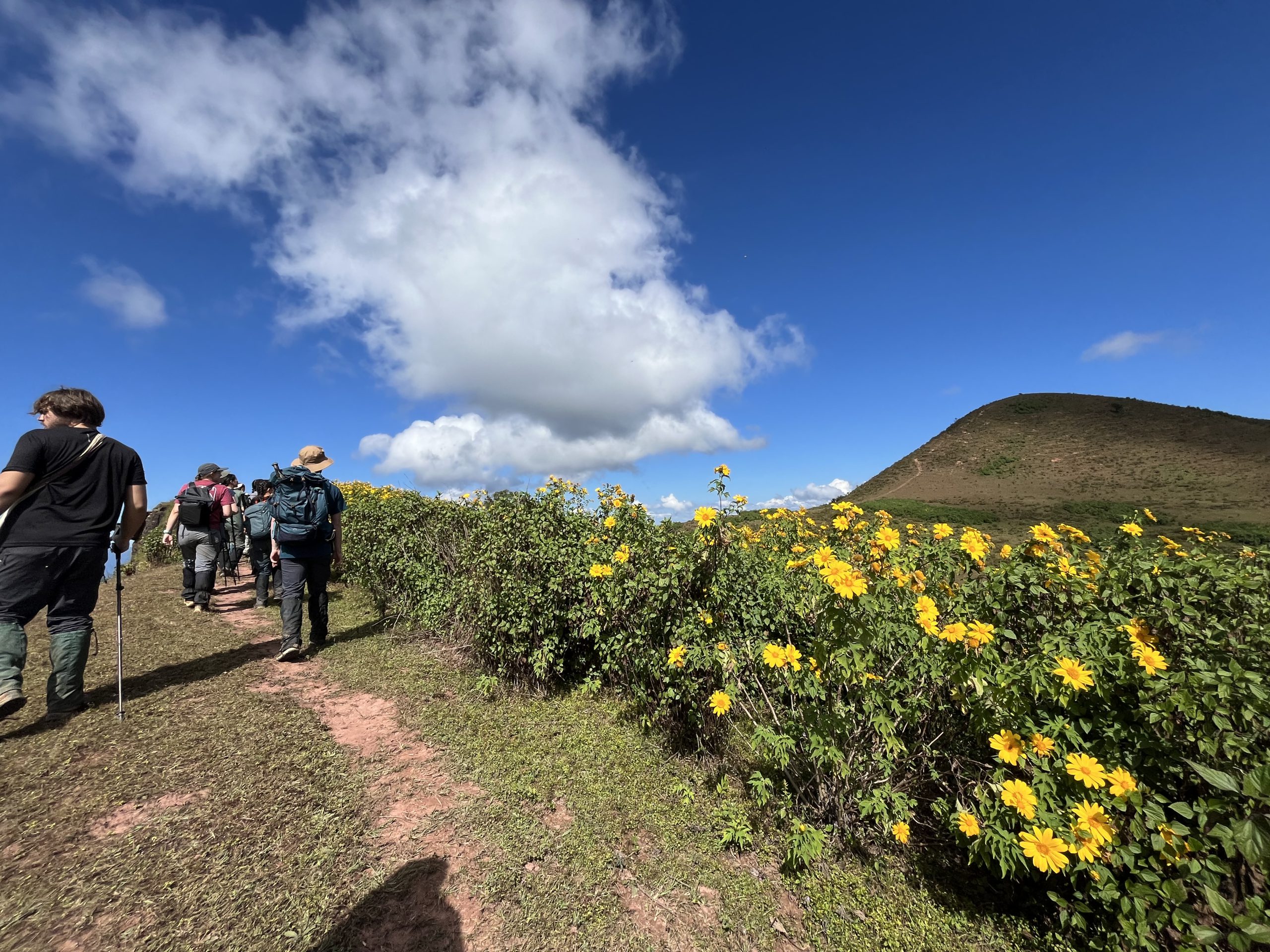
Ward also hiked between villages through forested regions while conducting plant transects, identifying species and examining how land-management practices affect biodiversity. After heading south, they kayaked between islands along traditional Indigenous routes and snorkeled in coastal waters, identifying species while studying ocean ecology.
Their most memorable experience, however, came during a six-week internship focused on animal monitoring.
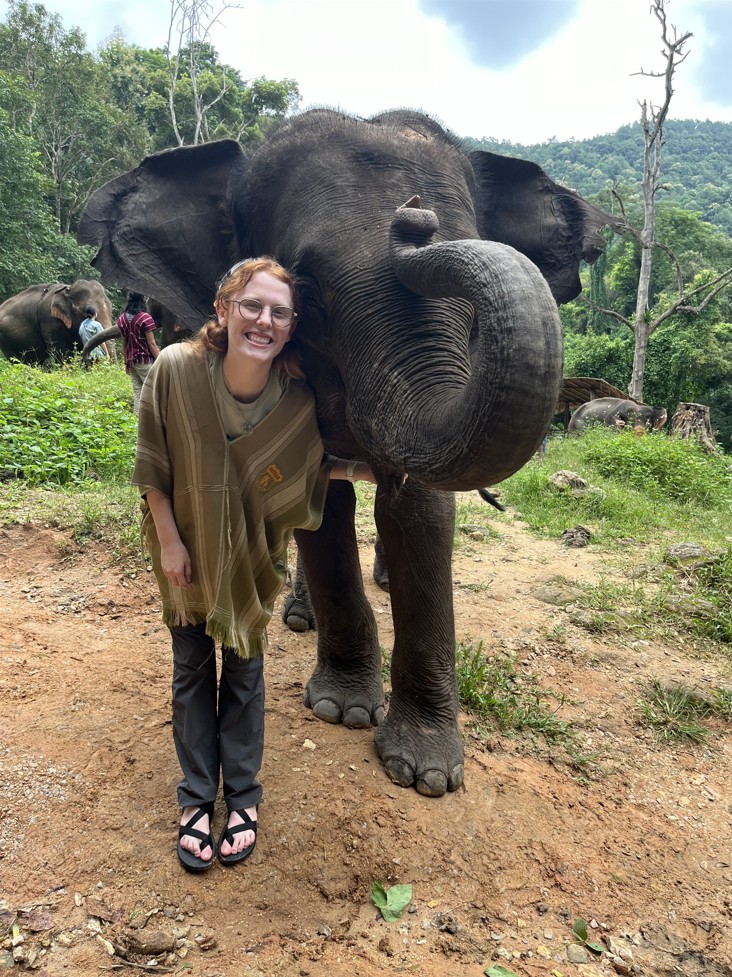
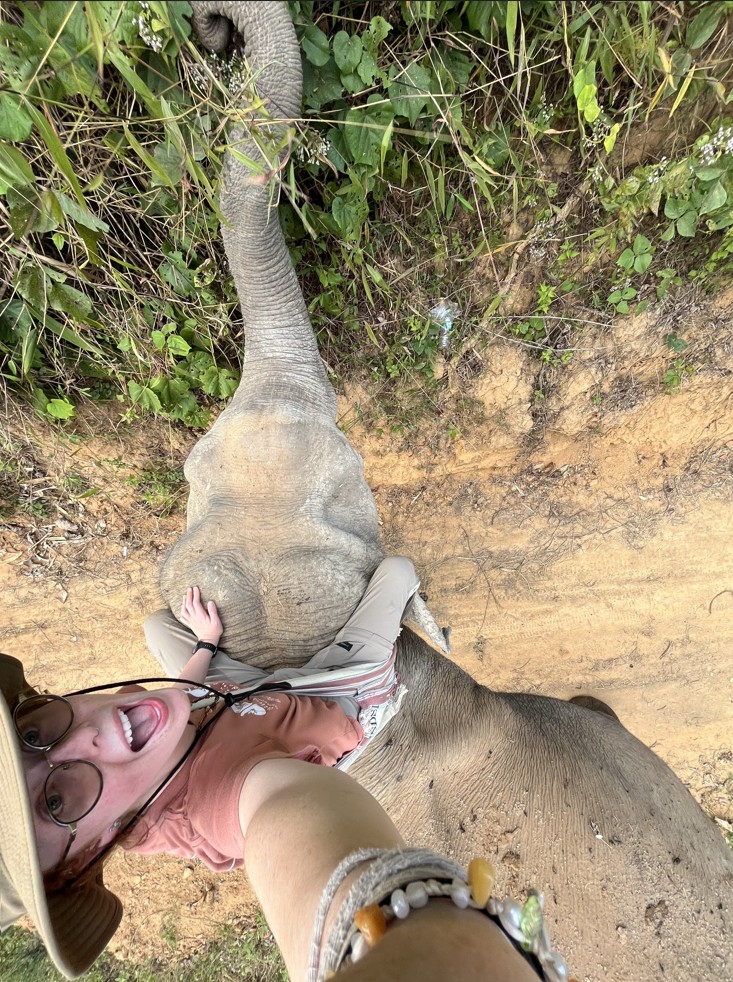
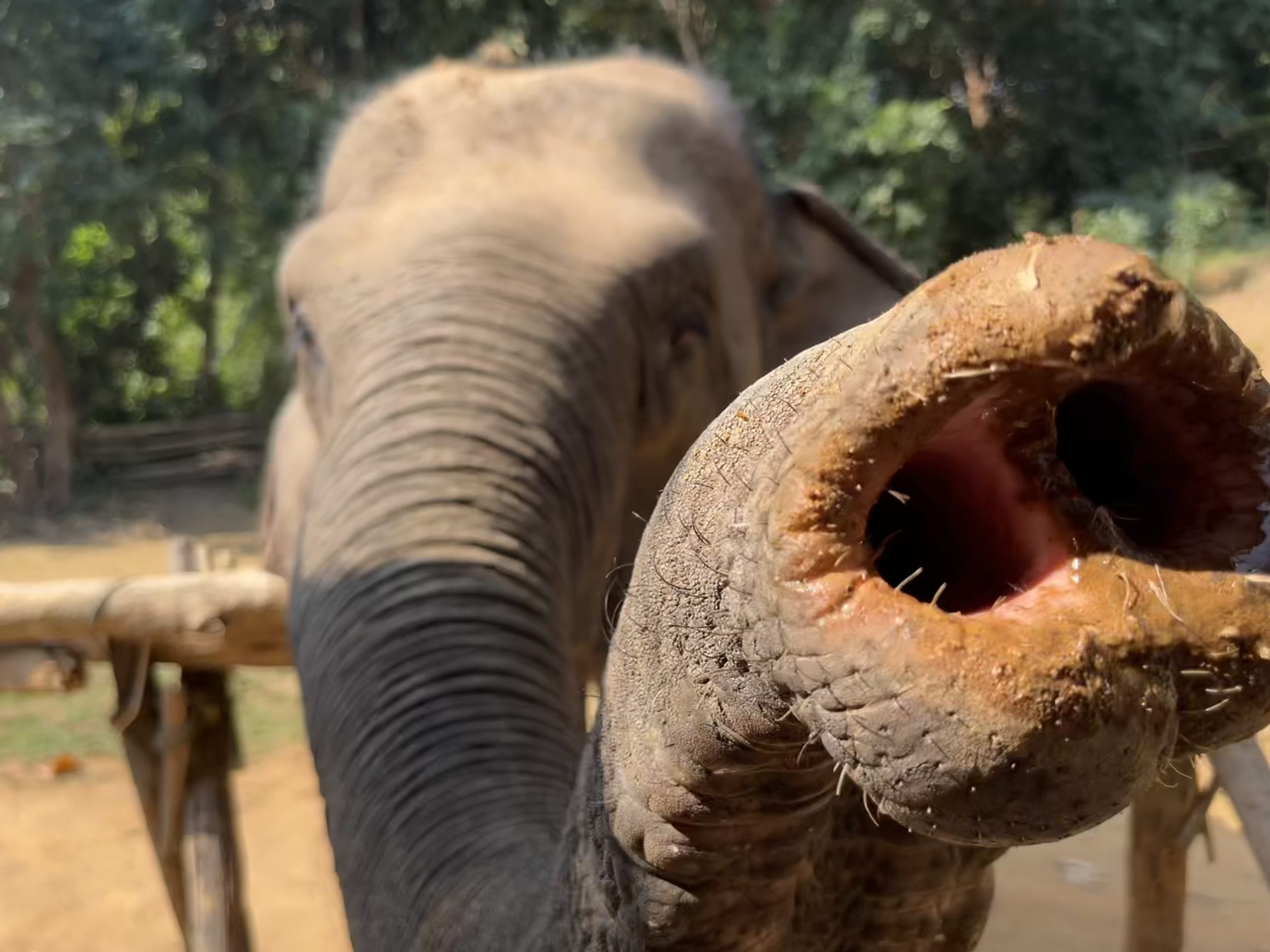
“I worked at an elephant camp and sanctuary, where we would take the elephants down from the jungle every day and make sure they were cared for, fed and bathed,” Ward said. “I miss it dearly.”
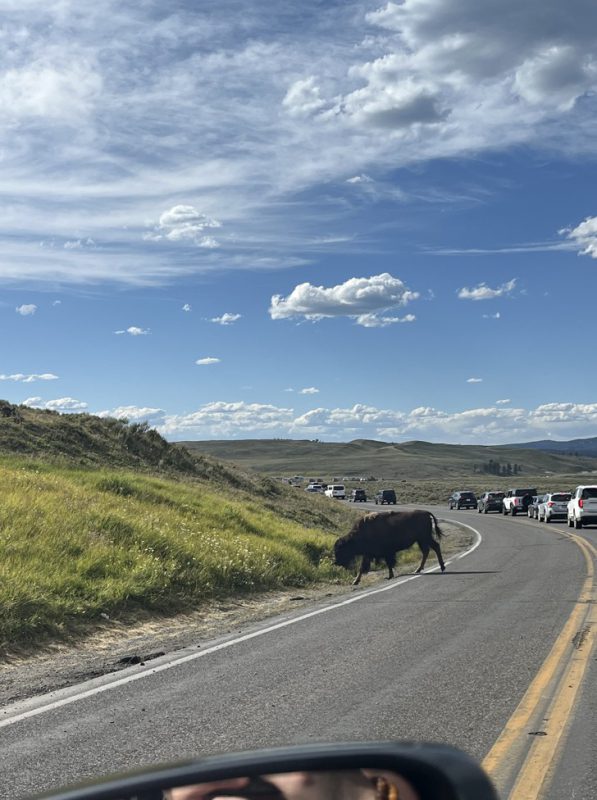
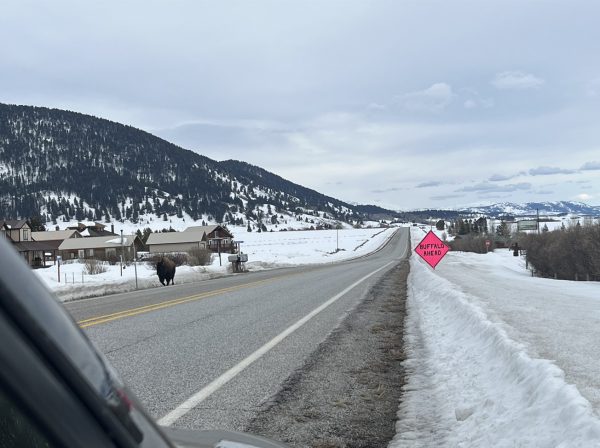
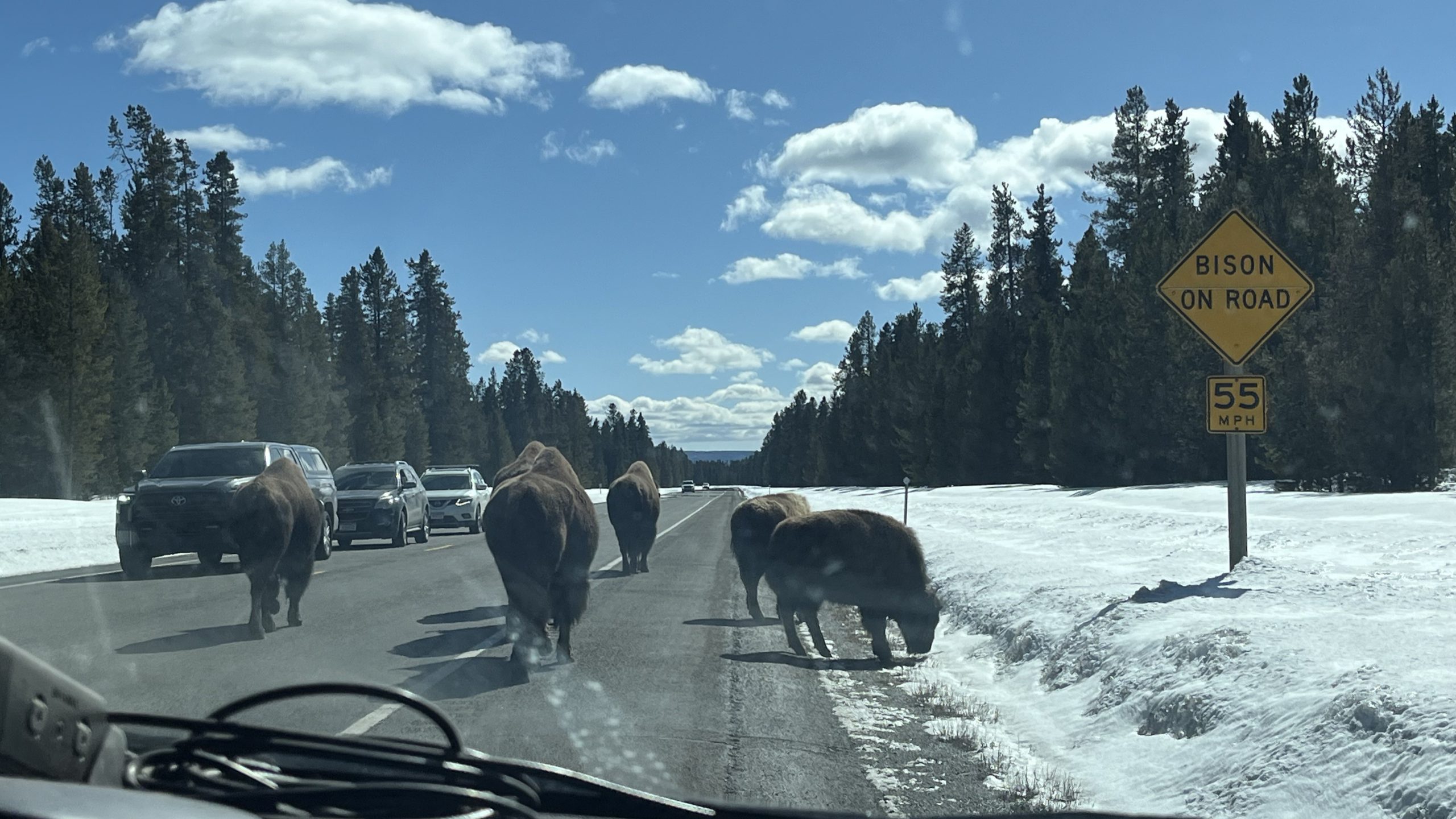
Back in the United States, Ward continued building their skills through their Senior Integrated Project (SIP), which took them to West Yellowstone, Montana. There they worked with Buffalo Field Campaign, a nonprofit dedicated to ending the harassment and killing of Yellowstone bison.
The project focused on brucellosis, a disease affecting bison populations in the Yellowstone ecosystem, and examined its role in ongoing policy discussions surrounding the nation’s last continuously wild bison population. Through the work, Ward explored the intersection of wildlife biology, public policy and conservation management.
Ward’s research also highlighted contemporary challenges facing the species. Because Montana classifies bison as livestock rather than wildlife, animals that move beyond Yellowstone National Park boundaries can be captured or killed despite their ecological and cultural significance.
“With that, I know there is legislation on the federal level that can further affect where bison are and are not allowed to roam,” Ward said. “On the opposite side, elk and other ungulates are allowed to roam freely with no kind of legislation in place in that area, so it’s hypocritical.”
The experience provided Ward with firsthand insight into the scientific, political and social dimensions of conservation work. Just as importantly, it introduced them to the landscapes of the American West, where they now hope to build a career.
“The mountains are gorgeous, and there’s just a vast amount of nature,” Ward said. “You’re able to walk around and see elk, moose, bears, owls and more.”
As Ward heads west again, they carry with them the experiences, mentorship and global perspective that transformed a prospective pre-veterinary student into a wildlife professional ready to help protect species and ecosystems across the region. And it all started with a campus visit four years ago.
“Environmentalism appeals to me because I see how much it impacts our daily lives,” Ward said. “I know how the ecosystem works and how we fit into it. With climate change and other environmental issues prevalent, I can see how I could make a change in the field, and that’s really appealing.”