K Staffer’s Honors Reflect Insight on More-Affordable Study Abroad

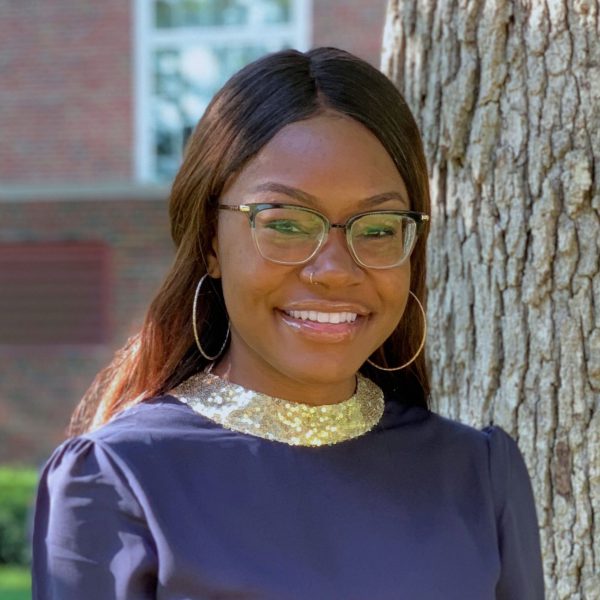
Portrait-of-Asia-Bennett-More-Affordable-Study-Abroad
Study abroad and international student adviser Asia Bennett
is an inaugural Gilman Scholarship ambassador, showing she
can help Pell Grant-eligible students make
study abroad more affordable.

If you’re concerned that the cost of study abroad might prevent you from going overseas as an undergraduate, you have an advocate in Kalamazoo College’s Center for International Programs.

As an inaugural Gilman ambassador over the next two years, study abroad and international student adviser Asia Bennett will inform and advise colleagues at U.S. colleges and universities about the Benjamin A. Gilman International Scholarship Program. In that role, awarded to her this month, Bennett will share her expertise and best practices across the country, while also continuing to guide students at K in the Gilman application process.

Since 2001, the Gilman scholarship has given more than 33,000 students with limited financial means up to $5,000 to study or intern abroad through the U.S. Department of State’s Bureau of Educational and Cultural Affairs. Those students include between three and five K students for each of the past eight years.

“I think serving as an ambassador can help me debunk the idea that studying abroad has to be expensive,” Bennett said. “This is part of what our office does. We can let students know about scholarship opportunities so study abroad can be more affordable.”

By awarding funds competitively to students with limited financial means, the Gilman program assures that students from traditionally underrepresented groups will participate in study abroad opportunities. Applicants must be U.S. citizens, undergraduate students in good standing at their institutions and federal Pell Grant recipients.

By going abroad, Gilman recipients develop skills critical to national security and economic prosperity.

“I think a lot of our students count themselves out,” Bennett said. “They see the Gilman Award is a big national scholarship. They might think it’s not for them because it’s too competitive. I can help students see that they too can apply. I hope to be that voice and that face of the Gilman here on campus so students are more eager to apply.”

Students interested in applying for the Gilman International Scholarship can contact Bennett for application coaching, essay tips and more information at Asia.Bennett@kzoo.edu.

Flu-Vaccine Efforts Lead to National Recognition

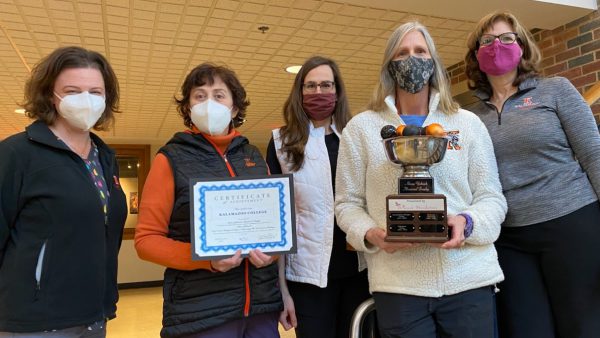
Student Health Center staff gathered with flu vaccine recognition awards
Kalamazoo College’s Student Health Center representatives were presented with a
traveling trophy and certificate when they finished first in Michigan and third in the
country in the Small College Division of the Alana Yaksich College and University
Flu Vaccination Challenge.

The Kalamazoo College Student Health Center (SHC) is celebrating the national recognition it’s receiving for its efforts in fighting the flu on campus.

K finished first in Michigan and third in the nation in the Small College Division of the Alana Yaksich College and University Flu Vaccination Challenge. The challenge, sponsored by Alana’s Foundation, measures the number of students vaccinated against influenza at each of the 21 institutions participating across 11 states. The SHC administered 385 shots to students this fall including 180 through two on-campus vaccine clinics with the pharmacy OptiMed and 205 through walk-in service at the health center.

“K students know that when they receive the vaccine they’re not only protecting themselves, but the entire K community from the flu,” Student Health Center Director Lisa Ailstock said. “Our vaccination numbers prove that and we in the health center take great pride in this recognition.”

In 2009, Alana Yakisch’s family established Alana’s Foundation, a non-profit organization dedicated to educating people about the severity of influenza and the importance of yearly flu vaccinations for children and adults alike. Alana was 5 years old in 2003 when she died of flu-related complications that caused swelling and injuries to her brain. According to Alana’s Foundation, more than 200,000 people nationwide are hospitalized each year from the flu and an average of 36,000 die despite a vaccine’s availability.

“I continue to be amazed how the colleges and universities at the participating institutions have embraced this challenge and really made a difference in the yearly efforts to increase vaccination rates among the vulnerable student population and their community,” said Zachary Yakisch, Alana’s father and the founder and director of Alana’s Foundation.

K students still interested in receiving a flu shot may do so on a walk-in basis during normal business hours or through a yet-to-be scheduled clinic this term. For more information, contact the health center at 269.337.7200

Kalamazoo College Names New Vice President for Business and Finance

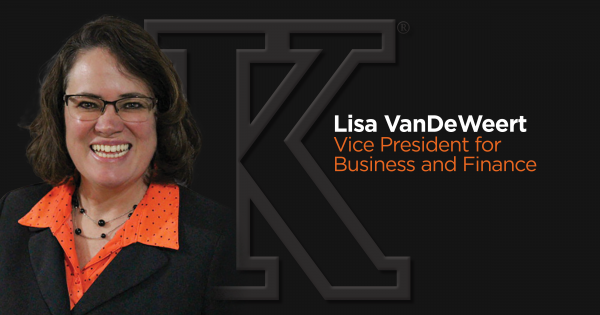
Chief Financial Officer: Photo says Lisa VanDeWeert Vice President for Business and Finance
Kalamazoo College has named Lisa VanDeWeert as the institution’s next
vice president for business and finance and chief financial officer (CFO).

Kalamazoo College has named Lisa VanDeWeert as the institution’s next vice president for business and finance and chief financial officer (CFO). VanDeWeert, vice president and CFO at Aquinas College, will begin her new role on February 16, 2022.

“Lisa brings significant expertise in higher education finance and business operations to K,” said Kalamazoo College President Jorge G. Gonzalez. “Her work with a wide range of colleges and non-profit institutions, her leadership experience within a small liberal arts college, and her commitment to cultivating collaborative partnerships with various stakeholders will make her a great fit at our institution.”

As Aquinas’ chief financial officer and a member of the president’s leadership cabinet, VanDeWeert is responsible for leading accounting, finance, information technology services, human resources, campus safety, physical plant, and operations such as conferencing and events and the campus bookstore. Prior to Aquinas, VanDeWeert served as a certified public accountant at Rehmann, supervising and reviewing audits in a variety of industries, including higher education and nonprofit organizations. Prior to Rehmann, VanDeWeert spent 15 years providing audit services and leading teams at PricewaterhouseCoopers in Grand Rapids.

VanDeWeert is a member of the National Association of College and University Business Officers and serves as CFO group chair for Michigan Independent Colleges and Universities (MICU). She also serves on the Executive Committee and Board of Directors for Goodwill Industries of Greater Grand Rapids. VanDeWeert holds a Bachelor of Science in accounting from State University of New York College at Oswego.

“I am excited to be joining Kalamazoo College and I’m looking forward to blending my skills and talents with those of the capable leaders and team members at K,” said VanDeWeert.

VanDeWeert was selected after a nationwide search conducted by an on-campus committee with the assistance of Storbeck Search, an executive search firm specializing in the education and non-profit sectors. Comprised of faculty, staff and trustees, the committee was chaired by Vice President for Advancement Karen Isble.

Lecture to Address Ancient India’s Mahabharata

Assistant Professor of Religion Sohini Pillai to Discuss the Mahabharata
Assistant Professor of Religion Sohini Pillai

Assistant Professor of Religion Sohini Pillai will represent Kalamazoo College at 9 a.m. Eastern time Sunday in a YouTube lecture titled “The Multiplicity of the Mahabharata Tradition” that she will present through Karwaan: The Heritage Exploration Initiative.

The initiative is an independent, student-led initiative based in India, which aims to revive the love for India’s heritage and history and inspire young minds. Throughout the pandemic, it has organized scholarly online lectures on Indian history, culture, art, literature, film and religion. 

The ancient Sanskrit Mahabharata (c. 300 BCE–300 CE) is a massive epic poem 15 times the length of the Bible that focuses on the war over the Bharata kingdom between two sets of paternal cousins in the royal Kuru family, the five Pandavas and the 100 Kauravas. Pillai said the Mahabharata has been presented as poems, dramas, ballads, novels, short stories, comic books, television shows, feature films, children’s fantasy series, podcasts, YouTube videos, social media posts and more.   

Pillai’s talk Sunday will illustrate the rich multiplicity of the Mahabharata tradition through the close examination of 12 renderings of a single Mahabharata episode that was created over a span of at least 2,000 years. She will focus on the most disturbing and popular scenes in the Mahabharata tradition, the attempted disrobing of Draupadi, the shared wife of the Pandavas, and the heroine of the epic.  

In May 2021, Pillai co-edited a volume with Nell Shapiro Hawley of Harvard University titled Many Mahabharatas, which was published by State University of New York Press. Some of the Mahabharatas she will discuss Sunday will be prominently featured in her current book project which is tentatively titled Krishna at Court: Devotion, Patronage and the Mahabharata in Premodern South Asia.

The talk will be available free of charge to the public at the Karwaan initiative’s YouTube channel.  

A True Liberal Arts CIO

By Stacy Nowicki
As CIO Greg Diment ’84 retires, Kalamazoo College Library Director Stacy Nowicki reflects on his impact to the College.

Retiring CIO Greg Diment
After graduating in 1984, Greg Diment worked at Pfizer for 20 years,
becoming the global director of clinical data management. He
returned to K as the IT director, later becoming CIO.

The title “chief information officer” might evoke images of a tie-wearing tech guru. Yes, Greg Diment often wore a tie, and yes, he knows his tech. But true to the liberal arts education he received here at K, Greg is much more multifaceted. This came through in his leadership style. After working with Greg for nearly 16 years, I can say he was supportive, empathetic and curious. He knew what he didn’t know—a characteristic I believe all of us in Information Services appreciated—and would make a point of asking for information so he could make solid, data-driven decisions. He also has a quick wit, and though we often groaned at his puns, he could make a situation lighter with a laugh and a dash of optimism.

Greg’s journey at Kalamazoo College began in the early 1980s. A math major and computer science minor, Greg studied abroad in Germany and completed a student teaching externship in the education department, teaching mathematics and computing at a high school. I remember having conversations with Greg about how much more difficult teaching is than it appears, and I can’t help but think that his own teaching and study abroad experiences gave him some insight into how he approached supporting students and faculty. After graduating in 1984, he worked at Pfizer for 20 years, becoming the global director of clinical data management.

Greg seemed to easily make the transition from the corporate world to higher education. I remember Greg spoke very clearly in his campus presentation during his interview for IT director. He was impressive—someone “in tech” who could communicate abstract concepts in plain English! He had a clear commitment to supporting students in that interview which made him stand out from the rest. If he joins our team, I thought, we will be in good hands. In 2005, Greg started the next phase of his career at Kalamazoo College as IT director.

We are lucky that a year later Greg took on the role of CIO, inheriting a merged organization of IT, media, web services, the library and an addition of educational technology. With a staff of such diverse talents, roles and mindsets, Greg made a point of becoming familiar with each aspect of Information Services. He shadowed library staff for a day, asking questions about each function and getting to know us. And that was key to Greg’s style: he really wanted to know us in IS and he cared about us as people. When the pandemic hit, he attended our daily virtual library staff meetings almost every day. At first he was concerned that his presence would chill our conversations, but it was quite the opposite. Greg had garnered so much trust that we appreciated his support by being there, answering our questions and providing a calming influence. He was an advocate for us and all of our colleagues in IS.

This is why, when a job needed to be done, people naturally turned to Greg. And Greg took on some tough assignments. He represented K to the West Main Hill neighbors during lively discussions about the athletic field lights. He coordinated campus master planning. He oversaw Facilities Management in between hiring CFOs and led the process of classroom renovations. All of this in between his accomplishments as CIO: Greg helped implement myriad needed technology improvements at K (a new phone system, email system, enterprise resource planning system and campus WiFi, to name a few). Oh, and there’s that little thing of a pandemic where K suddenly pivoted to online teaching. (I say, with pride, that Greg and my colleagues in IT made it look easy and it certainly was not.)

Greg had a reputation for being capable, flexible and easy to work with. Coupled with his characteristic sangfroid and dedication to K, this made him the logical choice for big jobs that required diplomacy and thoughtfulness. I will always value Greg’s perspective, humor and support. He accomplished much of his important work humbly and without great fanfare. Greg moved Kalamazoo College forward in so many ways that our campus community will appreciate and build upon for years to come.

Talk Offers Flavor of Artist’s Olfactory Work

Olfactory artwork
Anicka Yi’s “Force Majeure,” 2017, is made out of Plexiglas, aluminum, agar,
bacteria, refrigeration system, LED lights, glass, epoxy resin, powder-coated
stainless steel, light bulbs, digital clocks, silicone and silk flowers. Yi has created
art containing olfactory effects.

An Asian American conceptual artist whose work includes a mix of fragrance, cuisine and science along with collaborations with biologists and chemists will be the subject of a Kalamazoo College faculty member’s presentation at noon on December 7 at the Kalamazoo Institute of Arts.

Visiting Assistant Professor of Art and Art History Eunice Uhm will discuss Anicka Yi, a Korean American artist, who has created memorable works of art that have famously contained olfactory effects. Uhm’s presentation will analyze how Yi’s work transgresses the boundaries that are established and sustained by the conventions of Western aesthetics to investigate the racialized and gendered politics of space. The presentation considers the deodorization of the museum in the context of a larger cultural and political process of deodorization in the U.S. that simultaneously excludes smell from aesthetic judgments and establishes aromatic phenomena to be “non-Western” or primitive. 

Born in 1971 in Seoul, Yi began working as an artist about 15 years ago after a career in fashion. Yi’s work has won her top honors, including the Guggenheim Museum’s $100,000 Hugo Boss Prize in 2016, which included an exhibition there the next year. Yi’s work elicits visceral sensorial responses in the visitor, demonstrating the subversive aesthetic possibilities of smell to underscore and negotiate biopolitics of race and gender. 

Uhm, who serves as a postdoctoral curatorial fellow at K and the Kalamazoo Institute of Arts, specializes in modern and contemporary art, with a transnational focus on the United States and East Asia. Her work examines the conditions of migration and the diasporic aesthetic subjectivities in the works of contemporary Japanese and South Korean art from the 1960s to the present. She has previously taught courses on modern and contemporary art, East Asian art, and Asian American studies at Ohio State University. She has organized panels and presented her work on Asian American art at national conferences.  

In-person and virtual tickets to Uhm’s presentation are available at the Kalamazoo Institute of Arts’ website.  

K Honors 10 Faculty Members as Endowed Chairs

Kalamazoo College has appointed 10 faculty members as endowed chairs, recognizing their achievements as professors. Endowed chairs are positions funded through the annual earnings from an endowed gift or gifts to the College. The honor reflects the value donors attribute to the excellent teaching and mentorship that occurs at K and how much donors want to see that excellence continue.

The honorees are:

  • Francisco Villegas, the Arcus Center for Social Justice Leadership junior chair;
  • Leihua Weng, the most senior faculty member in Chinese;
  • Cyndy Garcia-Weyandt, an endowed chair in critical ethnic studies;
  • Alyssa Maldonado-Estrada, the Marlene Crandall Francis Endowed Chair in the Humanities;
  • Kathryn Sederberg, the Lucinda Hinsdale Stone Endowed Chair;
  • Regina Stevens-Truss, the Dorothy H. Heyl Senior Endowed Chair in Chemistry;
  • Blakely Tresca, the Harriet G. Varney Endowed Chair in Natural Science;
  • Amy Elman, the William Weber Endowed Chair in Social Science;
  • Autumn Hostetter, the Kurt D. Kaufman Endowed Chair; and
  • Richard Koenig, the Genevieve U. Gilmore Endowed Chair in Art.
Francisco Villegas among endowed chairs

Francisco Villegas

Villegas, an assistant professor of sociology at K, was a sociology lecturer at the University of Toronto Scarborough from 2014 to 2016 before arriving in Kalamazoo.

Villegas specializes in the topics of immigration, race, citizenship, deportability and illegalization. He has a doctorate in sociology in education from the Ontario Institute for Studies in Education at the University of Toronto, a master’s degree in Mexican American studies from San Jose University, and a bachelor’s degree in psychology and social behavior from the University of California Irvine.

Kalamazoo County launched a community ID program in 2018, allowing residents to obtain it, including those otherwise unable to get a state ID, with Villegas serving as the ID advisory board chair. At this point, more than 3,000 residents have obtained one.

Leihua Weng among endowed chairs

Leihua Weng

Weng, an assistant professor of Chinese language and literature, has taught at K beginning Chinese and advanced Chinese, as well as different content courses in English, such as women in China, urban China and Chinese films. 

Weng’s research interest includes (trans-)nationalism and globalization in literature and films, traditions and modernity, and postmodern literary theories. She received her Ph.D. in comparative literature at the University of South Carolina, a Master of Arts at Peking University, and a Bachelor of Arts at Zhejiang University. She taught at Sarah Lawrence College and Pacific Lutheran University before she came to K. 

Cyndy Garcia-Weyandt among endowed chairs

Cyndy Garcia-Weyandt

García-Weyandt, an assistant professor of critical ethnic studies, has taught courses at K in environmental studies such as Body, Land and Labor; and Plant Communication Kinship, as well as courses in critical ethnic studies such as Argument with the Given, a writing seminar exploring dreams, storytelling, poetry, art activism, memoir, and personal narratives as sources of knowledge and social change. She is coordinator and co-founder of Proyecto Taniuki (“Our Language Project”), a community-based project in Zitakua, Mexico.

In the Taniuki, she collaborates with urban indigenous communities in language revitalization efforts. Her research areas include indigenous knowledge systems, land pedagogy, urban indigenous peoples of Mexico, indigenous art and performances, and ontology.  García-Weyandt’s ancestral homeland is in San Juan Sayultepec Nochixtlán, Oaxaca, México. She is a poeta, an immigrant, a first-generation college student, and former community college transfer student. She has a Ph.D. and master’s degree in culture and performance, and a bachelor’s degree in anthropology, all from the University of California, Los Angeles.

Alyssa-Maldonado-Estrada

Alyssa Maldonado-Estrada

Maldonado-Estrada, an assistant professor of religion, is the author of Lifeblood of the Parish: Men and Catholic Devotion in Williamsburg, Brooklyn, an ethnography about masculinity and men’s devotional lives in a gentrified neighborhood in New York City. She teaches classes at K on religion and masculinity, urban religion, Catholics in the Americas and the religions of Latin America.

Outside K, Maldonado-Estrada is a co-chair of the Men and Masculinities Unit at the American Academy of Religion and is an editor of Material Religion: The Journal of Art, Objects, and Belief. She also was chosen for the 2020-2022 cohort of Young Scholars in American Religion at Indiana University-Purdue University Indianapolis’ Center for the Study of Religion and American Culture.

Earlier this year, Sacred Writes—a network of religion scholars committed to helping a broad global audience understand the significance of their work—selected Maldonado-Estrada to be one of 24 scholars from around the world receiving a Public Scholarship on Religion for 2021. Maldonado-Estrada received her doctorate in religion from Princeton University and her bachelor’s degree in sociology and religion from Vassar College.

cMUMMA Academic Rigor GERMAN Sederberg (prof) 2018 lo 7186.JPG

Kathryn Sederberg

Sederberg, a co-chair in the Department of German Studies, will be honored in a virtual ceremony November 20 by the American Association of Teachers of German (AATG) as one of five national recipients of the Goethe‐Institut/AATG Certificate of Merit. The honor recognizes her achievements in furthering the teaching of German in the U.S. through creative activities, innovative curriculum, successful course design and significant contributions to the profession.

Sederberg teaches beginning, intermediate and advanced German as well as Contemporary German Culture and the senior seminars on varying topics. She holds a bachelor’s degree from St. Olaf College and a Ph.D. from the University of Michigan.

Regina-Stevens-Truss-teaching

Regina Stevens-Truss

Stevens-Truss, a professor of chemistry and biochemistry, has taught at Kalamazoo College since 2000. She teaches Chemical Reactivity, Biochemistry, Medicinal Chemistry and Infection: Global Health and Social Justice.

Research in her lab focuses testing a variety of compounds (peptides and small molecules) for antimicrobial activity. She is also the current director of the Howard Hughes Medical Institute Inclusive Excellence grant awarded to the College’s science division in 2018.

Stevens-Truss earned a bachelor’s degree from Rutgers University and a Ph.D. in medicinal chemistry from the University of Toledo. She held two fellowships at the University of Michigan between 1993 and 1999, one of which was a lectureship in medicinal chemistry.

Blakely-Tresca

Blakely Tresca

Tresca, an assistant professor of chemistry, has been at K since 2018. He’s a supermolecular chemist with additional research interests in organic chemistry. He co-leads the College’s annual Kalamazoo American Chemical Society networking event, allowing students to discuss chemistry careers with industry professionals.

Tresca holds a bachelor’s degree from Trinity University, and a master’s degree and Ph.D. from the University of Oregon. He was a postdoctoral researcher at Lawrence Berkeley National Lab in the Molecular Foundry.

Amy Elman

Amy-Elman

Elman, a professor of political science, has taught a variety of courses within the political science, women’s studies and Jewish studies departments. During her tenure at K, she has also been a visiting professor at Haifa University in Israel, Harvard University, SUNY Potsdam, Middlebury College, Uppsala University in Sweden and New York University.

Elman has received two Fulbright grants, a fellowship from the National Endowment for the Humanities and a grant from the Sassoon International Center for the Study of Anti-Semitism at Hebrew University. She has written three books: The European Union, Antisemitism and the Politics of Denial (2014); Sexual Equality in an Integrated Europe (2007); and Sexual Subordination and State Intervention: Comparing Sweden and the United States (1996). She also edited Sexual Politics and the European Union: The New Feminist Challenge (1996). She has a bachelor’s degree from Brandeis University and a master’s degree and Ph.D. from New York University.

Autumn-Hostetter

Autumn Hostetter

Hostetter, a professor of psychology, has expertise in cognitive psychology—specifically, the psychology of language and spatial cognition. She has taught classes at K including Cognition, Experimental Research Methods, the Psychology of Language and Mind, and the first year seminar Harry Potter Goes to College.

She maintains an active research lab on campus exploring how we use our bodies to help us think and communicate. She provides many opportunities for Kalamazoo College students to participate in research, both as participants and as research assistants. Some recent publications have appeared in journals such as the Psychonomic Bulletin and Review, Psychological Research, the Quarterly Journal of Experimental Psychology, Teaching of Psychology, and the Journal of Nonverbal Behavior. Many of her publications feature Kalamazoo College students and alumni as co-authors. Hostetter earned a bachelor’s degree from Berry College and a Ph.D. from the University of Wisconsin-Madison.

Richard Koenig among endowed chairs

Richard Koenig

Koenig began teaching art and photography courses such as Digital Photography, Analog Photography, Alternative Photographic Processes and several seminars at K in 1998.

His fine art work, Photographic Prevarications, was shown in six one-person exhibits in as many years (from 2007 to 2012). Koenig’s long-term documentary project Contemporary Views Along the First Transcontinental Railroad spawned four articles (between 2014 and 2019). In 2020, Koenig collaborated with four others on a multi-media exhibit, Hoosier Lifelines: Environmental and Social Change Along the Monon, 1847-2020, which was shown this year at the Grunwald Gallery of Art at Indiana University and the Carnegie Center for Art and History in New Albany, Indiana.

Koenig received his Bachelor of Fine Arts from Pratt Institute and his Master of Fine Arts from Indiana University.

German Studies Co-Chair Earns National Teaching Honor

German Studies Co-Chair Kathryn Sederberg Teaches at a Blackboard
German Studies Co-Chair Kathryn Sederberg will be honored in a
virtual ceremony November 20 by the American Association
of Teachers of German (AATG).

Kathryn Sederberg, the Lucinda Hinsdale Stone Assistant Professor of German and a co-chair of the German Studies Department at Kalamazoo College, will be honored in a virtual ceremony November 20 by the American Association of Teachers of German (AATG).

Sederberg will receive the Goethe‐Institut/AATG Certificate of Merit for her achievements in furthering the teaching of German in the U.S. through creative activities, innovative curriculum, successful course design and significant contributions to the profession. Recipients each year are nominated by their peers.

“This is a great honor and I am glad to be recognized for my work,” she said. “I am grateful to the amazing community of German students here whose energy and enthusiasm motivate me as an educator. Teaching at K has enabled me to be creative, take risks, and try new things, like the ‘Babylon Berlin’ course designed around the hit TV series, or a unit on the forest with a field trip to the arboretum. It’s in part because of the culture at K that I have been able to experiment in my classes and develop interdisciplinary material with connections to gender studies, environmental studies or Jewish Studies. I really enjoy teaching in a small program where I can work with students from 101 to the advanced seminars, see their growth and even stay in touch with them as alumni.”

Sederberg teaches beginning, intermediate and advanced German as well as Contemporary German Culture and the senior seminars on varying topics. She holds a bachelor’s degree from St. Olaf College and a Ph.D. from the University of Michigan, and is one of five educators between high schools and colleges from around the country to earn the honor this year.

“With their dedication to excellence in German language instruction, these award recipients promote the transatlantic friendship between the U.S. and German‐speaking countries and foster the much-needed intercultural awareness so their students lead successful lives in a globalized world,” AATG President Doug Philipp said.

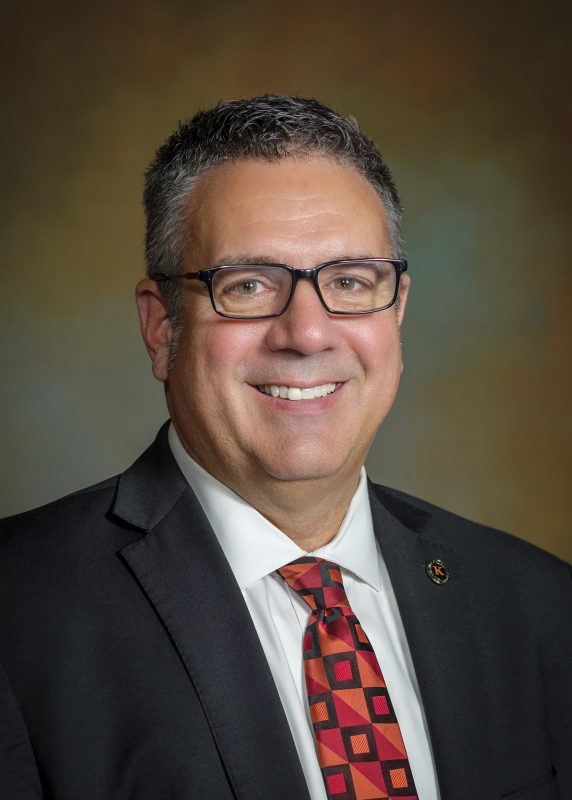
Five Questions with VP for Student Development Malcolm Smith

Vice President for Student Development J Malcolm Smith
Vice President for Student Development
and Dean of Students J. Malcolm Smith

In August, Kalamazoo College welcomed J. Malcolm Smith as its new vice president for student development and dean of students. Smith came to K from Salve Regina University in Newport, Rhode Island, where he also served as the vice president for student affairs and dean of students. Prior to Salve, Smith worked at a variety of institutions, including John Carroll University, Ohio University and University of Illinois at Chicago. He brings extensive experience to K in areas such as student conduct and advocacy; retention efforts; diversity, equity and inclusion; Title IX administration; housing management; budget oversight; and crisis management. Recently, we sat down with Malcolm to talk about his background and goals for student development at K.

Q. Malcolm, how did you become involved in student development and student life as a profession?

A. I always like to say I got into this specific line of work by telling a joke. Let me give you a bit of backstory: As an undergrad, I changed majors a few times. I ended up with an elementary education and music degree, and then after graduation I went into business. I was working for a company and within six months I’d become the number one account manager in the region—yet I was working 60, 70, 80 hours a week and I wasn’t necessarily happy. During undergrad at Ohio University, I had done a research program called STARS (Student Achievement in Research and Scholarship). For completion of that program, I had a fellowship available to me if I wanted to go to graduate school in state of Ohio. So, I’m in this job that wasn’t very fulfilling, and I went to the person who ran the Academic Advancement Center at OU—I had been a tutor for a number of subjects so we knew each other well—and she said, “Malcolm, you really liked helping students, have you thought about higher ed?” She took me down to meet with the faculty of the master’s program and I ended up going into the program.

When I left my job, my regional VP said, we’ll hold your job for you if you decide to come back. And about halfway into my grad program, I walked into the assistant dean’s office and I said, I think I’m going to leave the program and go back to work. She said, “Why don’t you stay here for the summer and work for me, and if you still want to leave in August, I’ll support it.” So, there I was, working in the dean’s office, and one day I overheard the assistant dean talking with another director about how it was the last day of applications for an assistant director of conduct, and he’d gotten great candidates but he wished he had more diversity. So, as I’m walking through the office, I say—as a joke—“I’ll get you my resume.” They call me back and the guy says, “Are you serious?” I say, “No, I’m a grad student in career development, why would I apply for an assistant director of conduct?” Long story short, requests were made and I had my resume ready by five o’clock and I ended up going through the interview process. Later, the director calls me to let me know they had hired someone else who had 15 years of experience. I said, “Outstanding, I really appreciate the opportunity, I learned a lot.” And then they offered me a different assistant director position that they created for me. And that’s how I told a joke and moved from career development to conduct…and the rest is history. As a higher ed professional, I think I’ve been able to do well in the work because I truly care about students and I care about the people I work with. Student affairs and conduct is emotionally heavy work in many instances, so I’ve always tried to support the people on my team.

Q.  What attracted you to K?

When we moved to Rhode Island, my wife, Nichole, and I decided we’d stay there for three to five years. We ended up being there for eight. But we always hoped to come back to the Midwest, if the right position at the right school opened up at the right time.

I had talked to consultants about positions at other schools—some of which are as close as 15 minutes to my mother’s house. But when K popped up, I sent an email to Nichole and said, I think we should look at this one. I went through the process and I enjoyed my time with the committee from the very beginning. I liked President Gonzalez immediately. And then I came to the interview—it was during the pandemic and they brought me out to see the school and then I sat in the conference room and talked with people on the computer. But the people I got to meet were really impressive to me. And it was a very difficult decision because I was extremely happy at Salve. I called the president and it was tough telling her I was thinking of leaving. But I think that the ultimate moment when I decided to say yes was after she talked to Jorge. She said, “Malcolm, I hate to say it, but he’s a wonderful man, and if I had to lose you, it’s okay to lose you to someone like Jorge Gonzalez.”

So, we said yes. And we’re very happy we did. It’s a really good place doing a lot of really good work. In my whole career, I’ve been trying to help move institutions toward doing everything it can to prioritize building a transformational educational process. I think K has done a lot of good work in this space—we’re not perfect, but we’re truly working to engage all of our students and our alumni. I thought, well, wouldn’t it be interesting to take my skill set and see what I can do in a place that already has a really strong foundation, and see if I can help maximize that. So professionally, that was the call for me.

Q. What are your goals, short term and long term, for the Office of Student Development?

First and foremost, I think it’s important to integrate myself fully into the team and to build a team atmosphere around a shared vision. So, one of my objectives will be to develop a set of goals that the entire division can buy into and see themselves in, which ties into the strategic plan for the College.

Another goal of mine is to do program reviews of all the offices and departments that are in the division to ensure that we’re using best practices or moving toward best practices. I also want to continue to ensure that our staff in the division understands the values of diversity and inclusion, and are integrating those values into the work they do, the programs we are running and the discussions they’re having. And as we move forward, I want ensure that students are always going to be first. It does not mean we’re always going to agree with students, but student needs will always be primary for me.

The biggest long-term goal that I can see is that we have to improve our residential experience. The residence halls need either a great deal of work or need to be replaced, and probably a combination of the two.

And finally, I want to make sure that the programs that come out of Student Development are aligned with the instructional learning outcomes and the academic mission, and are value-added for the students.

Q. It’s exciting to have everyone back together on campus this year. How do you like to connect with students? What’s your approach?  

My approach is to be accessible to students at all times. They’ll see me having lunch in the dining hall every day, I’ll be at events. Last night I was at the SAC picnic. I’ll be at sporting events and I’ll be at performances. I’ll be walking on campus during the day, and I want to spark conversations with people and be present. And then the approach in that presence I think is to be kind, is to lead with love and to recognize that whoever’s in front of you is what’s important at the moment.

Q. On a personal note, what are three things people may be surprised to learn about you?

  1. I would say that to relax, my go-to is either cooking or gardening—I think because it’s one way to show love to my family and to friends.
  • My game of choice is chess. Although the game has not chosen me—I’ve chosen it.
  • Regardless of having just come from Rhode Island, I’m not a beach guy. My go-to vacation would be in cities, mostly because of the food. My favorite city is probably Chicago—amazing food, amazing architecture and great culture!