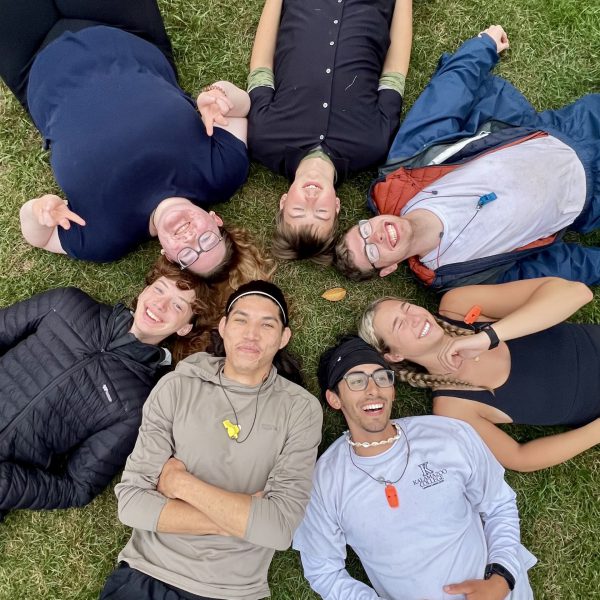
LandSea Pre-Orientation Program Earns National Recognition

When first-year students arrive at Kalamazoo College, many carry with them the same questions: Will I fit in? Will I find my people? Can I handle what college throws at me? For those who begin their college experience with K’s LandSea outdoor pre-orientation program, national data suggest the answers are increasingly “yes.”

 According to the 2025 Outdoor Orientation Benchmarking Survey (TOOBS), LandSea continues to stand out among peer institutions nationwide for helping students build communication skills, perspective-taking and problem-solving. The survey ranked K’s program first nationally in several leader-trust metrics and in resilience, which measures students’ increased confidence in handling difficult situations after participating. Research shows these qualities help students persist academically and socially throughout their education.

For LandSea and Outdoor Programs Director Jory Horner, the results are affirming.

“It’s gratifying,” Horner said. “We put a lot of time and energy into this program, especially into leader training, and it’s nice to see that investment showing up in meaningful ways for both participants and leaders.”

Not Just for ‘Outdoor People’

Held each year before first-year orientation, the optional LandSea pre-orientation program includes hiking, camping, paddling, rock climbing and nights under the stars. But Horner dispels the idea that the program is only for seasoned outdoor enthusiasts.

“Most of the students who come on LandSea aren’t outdoorsy people at all,” he said. “We have students who have never slept outside before.”

For some, the experience can feel intimidating at first. Yet that discomfort often becomes one of the program’s most powerful teaching tools.

“One of the things TOOBS measures is a student’s ability to face challenges after the trip,” Horner said. “That’s something we’ve scored highly on for many years.”

The numbers reflect what students themselves describe when they return to campus.

“We hear students say things like, ‘I just got back from LandSea, and I did more than I thought I could,’” Horner said. “They’ll say, ‘There’s no test that’s going to scare me now.’ That mindset carries over into academics and everything else.”

Participants live and travel in small groups, typically of eight to 10 students, working together for 18 days in the Adirondack Mountains. There’s also a shorter six-day option at Camp Merrie Woode in Kalamazoo for students who want more creature comforts. In both experiences, students cook meals together, navigate trails, problem-solve and manage daily challenges as a unit alongside people they have just met.

“You’re learning how to live closely with a small group, how to communicate and how to handle differences,” Horner said. “These are the same skills students need when they’re back on campus.”

Measuring What Matters—After the Dust Settles

TOOBS is sent to students at about 25 participating colleges each year, around six weeks into the fall term—after classes have begun, friendships have formed, and the realities of college life have set in. K has participated since about 2012, placing LandSea within an ongoing national conversation about how experiential education supports student transition.

The survey uses a “proxy pretest” approach, asking students to think back on how they perceived their skills, confidence, and perspectives before LandSea and then assess how those changed afterward. The method, developed and presented through research connected to the University of New Hampshire and scholar Brent J. Bell, aims to measure growth rather than surface-level enthusiasm.

“That timing is really important,” Horner said. “If you ask students about a program like this right when they finish it, they’re riding the high of the experience. TOOBS lets that afterglow wear off and asks them to reflect once they’ve had time to compare LandSea to everything else they’re experiencing at college.”

‘Finding My People’

Research connected to TOOBS consistently shows that students’ biggest fear entering college is not academic rigor, but whether they will fit in and find a sense of belonging. By the time LandSea students arrive on campus for orientation, many already have a core group they recognize, trust and feel comfortable with during the first challenging weeks.

The outcomes measured by TOOBS align closely with internal data collected by K’s Office of Institutional Research. An analysis comparing LandSea participants and non-participants between 2012 and 2022 revealed consistently higher outcomes for those who completed the program. LandSea participants showed higher retention rates, greater persistence to graduation, and higher cumulative GPAs than their peers.
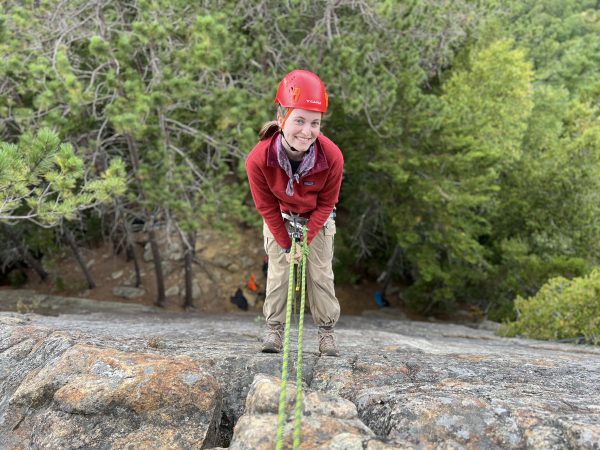
LandSea Pre-Orientation rock climbing
Tess Peters ’29 was among the LandSea Adirondacks participants last fall.
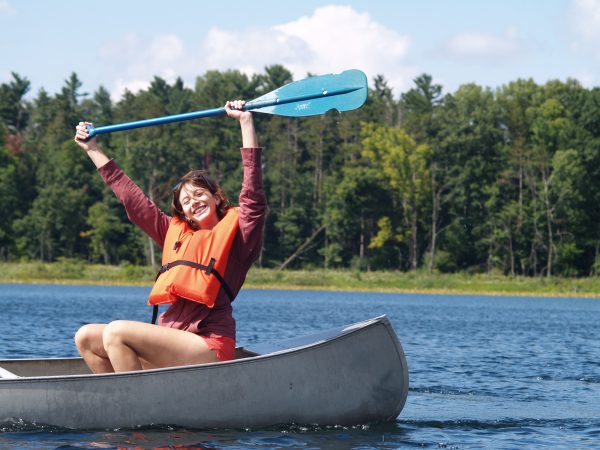
LandSea Pre-Orientation canoeing
Bea Putman ’26 was among the LandSea Kalamazoo leaders last fall.
LandSea Leaders
Although LandSea is designed for incoming students, Director Jory Horner emphasizes that its success rests heavily on student leaders.
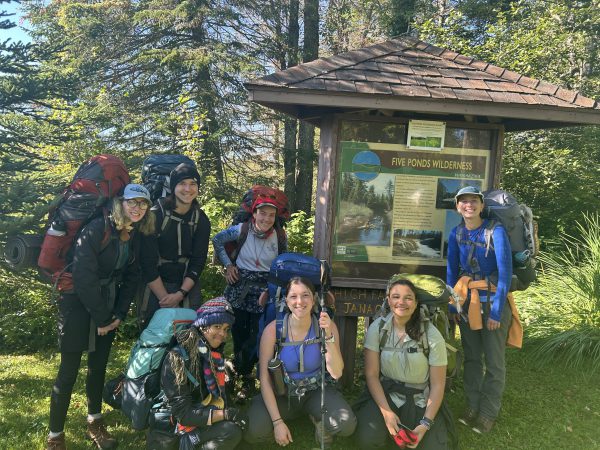
LandSea backpacking group
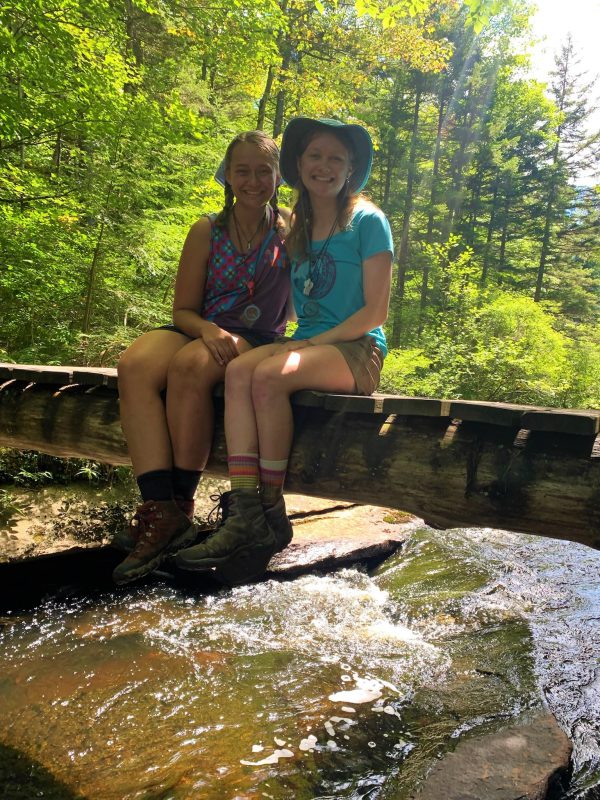
The LandSea program includes activities such as hiking, camping, paddling and rock climbing.

Support LandSea

Help LandSea continue to set the standard for pre-orientation excellence. Make a gift to ensure future students have a strong start to their K journey. 

“For us, that’s really validating,” Horner said. “It confirms that the things we’re focusing on—belonging, trust, confidence—actually matter in measurable ways.”

LandSea Leaders Make it Possible

Although LandSea is designed for incoming students, Horner emphasizes that its success rests heavily on student leaders.

“They give an incredible amount of time,” he said. “They’re balancing classes, jobs and other commitments, and then they dedicate weeks to training in leadership, wilderness medicine and emergency response.”

Many leaders are drawn not by the outdoors, but by the chance to help others.

“The number one reason they give is, ‘I wanted to help ease the transition to K for the next incoming class,’” Horner said. “They take that responsibility seriously.”

And as LandSea continues to earn national recognition, Horner sees the results not as a conclusion but as affirmation.

“Our goal has always been to help students start college feeling capable, connected and supported,” he said. “Seeing those outcomes reflected in the data makes all of us really proud.”
Woman’s Fall Tests LandSea Leaders’ Mettle, Training

LandSea Leaders Ava Apolo and Julia Leet
LandSea leaders Julia Leet ’22 (left) and Ava Apolo ’25
received accolades from emergency medical services
officials after they helped a woman who had fallen,
causing a seven- to eight-inch gash on her leg that revealed a bone.

Imagine being in a remote area of the Adirondack Mountains with a companion when you hear something that sounds like a scream. A storm is approaching and darkness is falling. Not many people would instinctively know what to do or call on themselves to respond.

Ava Apolo ’25 and Julia Leet ’22, however, encountered that scenario as leaders this fall on LandSea, Kalamazoo College’s outdoor pre-orientation program that occurs before first-year students arrive on campus. They said the scream had the innocuous intonation of a bird call that Boy Scouts are known to use in the area, but it could’ve also been indicative of an emergency.

“We had set up camp at a location called High Rock, which is close to a canoe waterway,” Apolo said. “At first, we thought, ‘Who’s making that noise?’”

They decided to investigate. That’s when they found a woman who had fallen, causing a seven- to eight-inch gash on her leg that revealed a bone. Her adult daughter had screamed when she found her mom lying on the ground. The women had precious few supplies, no cell service and no way of getting help other than the two LandSea representatives.

“We determined it was safe for us to help, so Julia was the first to go down to their location with a med kit and I followed right after,” Apolo said.

Apolo and Leet knew exactly what to do. Both received wilderness medical training they were grateful to have as a part of their preparations for LandSea.

“Our patient wasn’t panicking and she communicated with us very well, which was helpful,” Apolo said. “Julia was the first on the patient, putting pressure on the wound, and I had a Garmin that works as a device for us to stay in contact with our directors. We also have an option to press SOS, which gave us a countdown and allowed us to talk with our directors and emergency response. I’d never had an experience with a real medical response like that. At first, I was freaking out inside, but I had to quickly flip a switch to act.”

The accident victim’s husband arrived on scene as it started to rain. Apolo and Leet had to cover their patient and begin thinking about what they might need to treat while brainstorming an evacuation plan.

“I definitely felt our training kick in,” Leet said. “We were following a scenario, except it was real life. We were taking her vitals, making sure our patient was as comfortable as possible. It was getting dark and we were making a lot of judgment calls as to the best way to help her. The family had arrived by canoe and they couldn’t canoe in the dark to get out. Our adrenaline was pumping.”

Many of those judgment calls were determined through Leet’s conversation with the fall victim.

“We’ve been taught that when someone falls, you have to be really sure that they didn’t hit their head because that can cause the most serious of injuries and you don’t often notice the signs of a head injury until a lot later, when it can be too late,” Leet said. “I consistently was asking her, ‘Are you sure you didn’t hit your head?’ and I was checking her LOC, which is level of consciousness. If that starts to go down, it’s an indication that there could be some sort of internal trauma to the brain.”

Their other concerns were for the victim’s loss of blood and her loss of feeling in her feet.

“She had a pretty big wound and I didn’t know what might’ve been severed,” Leet said. “I was consistently checking movement, circulation in her feet and stopping the bleeding.”

More than two hours into the rescue work, emergency medical services arrived on all-terrain vehicles.

“We had two fire department chiefs that showed up, two EMTs (emergency medical technicians), a forest ranger and some volunteers,” Apolo said. “The volunteers did the heavy lifting of getting her on a backboard.”

Once off the hill, the fall victim was taken into a U.S. Army helicopter.

“No private companies were allowing helicopters out at the time and the Army donated their services,” Apolo said. “Because of that, the patient and her family didn’t have to pay the thousands in hospital fees that a helicopter ride to the hospital would require.”

At this point, Apolo and Leet had finished their job. The family and first responders alike congratulated the K duo and expressed their appreciation.

“When they came down, they were prepared for the worst-case scenario,” Apolo said. “They realized her bleeding was stable, so they relaxed for a second, but were still quick about getting her evacuated. They said that we did a good job and there wasn’t anything different they had to do because Julia had also cleaned the wound once the bleeding stopped. They complimented us and the chiefs’ departments acknowledged on social media that we had responded, which was really cool.”

“Once the first responders came in, we were pretty much hands off,” Leet added. “We didn’t want to be in the way, which was kind of strange because we had spent a few hours talking to someone and we felt we got to know a good amount about her life. Then we knew that we would never see her again. The daughter expressed gratitude to us and so did the chiefs in the fire department, and then we tried to go on with our night.”

All that was left was the debriefing. LandSea and Outdoor Programs Director Jory Horner and Assistant Director of Outdoor Programs Jess Port had a bare minimum of information regarding the emergency after receiving the SOS, so it was necessary to update them and the LandSea logistics leaders.

“The only information Jess and Jory got when we pressed the SOS button on the Garmin was, ‘Patrol B1 pressed SOS,’” Apolo said. “They don’t get information of who was involved, so at first, they were concerned it was a participant. When it wasn’t, it took down their stress level. It was new for them to see how EMS brought in their response teams.”

Meanwhile, the first-year students were aware of what happened, but removed from the scene, which helped them keep each other calm. As soon as the fall victim was evacuated, Apolo and Leet had dinner with the first-year students and informed them of what transpired.

“When we had a group debrief, they didn’t express distress from the situation; this affirmed that they were not strongly affected by it and a good amount separated from what happened,” Apolo said.

Yet for the two wilderness emergency responders, the crisis was a life-changing experience within the already life-changing experience of LandSea.

“Having the experience helped me know how a similar experience might affect me emotionally, and also what I might want to consider more in an emergency in the future like the weather and keeping the patient warm,” said Apolo, a biochemistry major who is considering medical school and a career in emergency medicine or women’s health. “I would definitely feel more prepared should I need to do it again in the future.”

“I think it’s good evidence that I can do hard things,” Leet said. “I was a psychology and Spanish double major. I want to become a marriage and family therapist, and pursue psychology to a higher degree. Although it’s not always a medical crisis, a mental-health crisis isn’t all that different in how you respond to it, so I think this was great practice for me. This kind of scenario tests your ability to stay strong and communicative, while making the right choices as best as you can.”

Appreciation from the LandSea Director

“This accident had many conditions that made it very challenging: unstable weather and intermittent thunderstorms; a long rescue that lasted into the late evening, well after dark; and managing both their own group of students and a patient outside of their group, nearly 4 miles down a trail within a designated wilderness area, which does not allow motorized vehicles. Despite these challenges, Ava and Julia did a great job. They remained calm, cared for the patient and her family, communicated the important information to dispatch using their satellite messenger, and saw to it that their own group remained safe and comfortable amidst stormy conditions during the multi-hour ordeal. These are the kinds of situations that our leaders train for during the nine-day wilderness first responder training that they attend as part of their LandSea trip leader role, but handling a real patient and all of the variables of an extended evacuation in the outdoors still presents a lot of challenges. The crews from Star Lake and Cranberry Lake Fire and Rescue who responded to the scene and evacuated the patient to the trailhead made multiple comments about how impressed they were with Ava and Julia’s response and treatment on the scene. From our perspective, we were equally thankful that they and the DEC Forest Rangers could help with the challenging work of evacuating the patient to the trailhead. After the trip had concluded a few days later, we wanted to debrief their group to see if the students needed to process any of what happened that day. Apparently, Ava and Julia did such a great job of remaining calm and keeping their group comfortable during the rescue that the students on the trip seemed a little confused which day we were even talking about when we were referring to the ‘incident’ that they experienced. That, to me, was a real indication of how well they handled themselves—that they could juggle the various responsibilities of that day so well that for the students in their group it felt like ‘just another day.’”

— LandSea and Outdoor Programs Director Jory Horner

Outdoor Orientation Program Prepares Students for Success

Incoming students who participate in LandSea, Kalamazoo College’s outdoor orientation program, have opportunities to meet their peers, gain self-confidence, earn a partial physical education credit and develop classroom skills even before moving to campus. Two K administrators will attest to that after participating in and reaffirming the program’s success.

8 students and 2 admistrators participating in LandSea Outdoor Orientation Program
Vice President for Student Development and Dean of Students Sarah Westfall and Associate Dean of Students Brian Dietz traveled to the 6-million-acre Adirondack State Park in New York State to observe and experience the outdoor orientation program called LandSea, ongoing through Monday, and meet many of the 66 students participating.

Vice President for Student Development and Dean of Students Sarah Westfall and Associate Dean of Students Brian Dietz traveled to the 6-million-acre Adirondack State Park in New York State to observe and experience the outdoor orientation program, ongoing through Sept. 3, and meet many of the 66 students participating. The 18-day program is in its 44th year, and was among the first of its kind in the country.

The state park features the largest system of hiking trails in the country, along with 3,000 lakes and ponds, 1,200 miles of rivers, and the state’s highest mountains. K students are divided into six to nine patrols for the outdoor orientation program, with at least two trained leaders per patrol. After three days of training, they challenge themselves on the rivers, lakes, trails and peaks through one of two choose-your-own adventures, Expedition or Basecamp, both with a climb-and-rappel day, a service-and-reflection component and a day of rafting.

The Expedition adventure consists of backpacking and canoeing, and allows participants the choice of extending the distance of the backpacking or canoeing portion of the trip. The Basecamp adventure offers more of a group camping experience, with bunks in canvas tents at Massawepie Lake. The students build skills including canoeing, hiking and backpacking, with opportunities for day trips and expanded service projects.

Friendships that begin during LandSea often remain fundamental connections for a lifetime. Plus, participants of outdoor orientation trips such as LandSea are more likely to develop social connectedness, feelings of belonging, campus involvement and independence with increased retention rates and higher grade-point averages. To best understand these benefits, Westfall and Dietz said it was important to examine the program first hand.

“We’ve always thought LandSea was great, although we’re paid to worry,” Westfall said.

Westfall and Dietz, though, saw how Outdoor Programs Director Jory Horner and Assistant Director Sara Stockwood had the students prepared for everything from necessities such as water sterilization, to common challenges such as hot days and cold nights, to possible emergencies such as lightning storms.

“Any student who comes to K should do this,” Westfall said. “Don’t let finances be a barrier because Outdoor Programs helps find gear for participants, and scholarships are available to help cover other program costs for students who demonstrate financial need. And don’t let a thought like ‘I don’t camp’ be a barrier. This program is for everyone. We hear from families who say their student is a different person after LandSea.”

The success of the program, Dietz said, is evaluated long-term based on whether the participating students stay at K and graduate, gain confidence, maintain their friendships as alumni, recognize their growth and learn about environmental responsibility. Here’s what some students have said:

  • “It is unforgettable, and when you climb a mountain, it teaches you that you can overcome any obstacle.”
  • “It was one of the best things I’ve ever done. I’ll carry it with me forever.”

“I had never been to LandSea,” Dietz said. “I was intrigued by the logistics with it being in a 6-million-acre park, but you never know what it’s like until you see it. All the work (Horner and Stockwood) do is amazing. It’s neat to see new students in that element.”

Professor Emeritus of Physics David Winch Has Died

Professor Emeritus of Physics David Winch
David Winch, Professor Emeritus of Physics

The Kalamazoo College community is saddened to learn of the death of Professor Emeritus of Physics David Michael Winch, age 78. David, of Taos, New Mexico, passed away unexpectedly October 7, 2013 while riding his bicycle. David taught at the College from 1967 to 2001. Before coming to K he taught at John Carroll University, Clarkson College of Technology, the United States Air Force Academy, and British Open University. He conducted research for the National Aeronautics and Space Administration, the Argonne National Laboratory, and the Desert Research Institute.

Winch was an enthusiastic bicyclist, and was often seen on campus on his bicycle. He usually biked the 13-mile round trip from his home to K. He also loved the out-of-doors, especially mountains, and he co-founded the College’s popular LandSea wilderness first-year orientation program.

In addition to physics, he was deeply involved in science education at all levels. He believed that science is best learned using a hands-on approach, and he believed that science is best learned through collaboration and group work. He was a founding board member of the Kalamazoo Area Mathematics and Science Center, a magnet school for gifted high school math and science students in Kalamazoo County. He also was a teacher and director with ScienceGrasp, a national program that encouraged elementary school teachers to use hands-on science teaching strategies in their classrooms. During his career he received more than $2.8 million in grants on behalf of science education, and he published more than a dozen articles and presentations on physics education for various learning levels. In one of those publications he wrote, “An infant reaches for a brightly colored object; tiny fingers squeeze the object, exploring its shape and texture. The infant shakes the object to see if it rattles and almost certainly puts the object in her mouth. She uses all of her senses to experience the sizes, shapes, colors, sounds, and textures of her world. A child is naturally curious and begins at an early age the lifelong business of learning about this world in which we live. This innate curiosity is perhaps most evident during the period of human development marked by the question ’Why?’ It can be frustrating to deal with a child who wants to know ’why,’ yet it can also be refreshing to have renewed contact with this childlike curiosity. Science tries to answer the ’why’ of the physical world. It is a grand journey, guided by a myriad of questions and a few answers. We, as teachers, are guides in this journey of exploration.” Winch said that the most important element of his pedagogy was to “ask questions and then keep quiet,” and he noted the difficulty of the latter for teachers. And yet the duration of the period of silence following a question, said Winch, is (to paraphrase an aphorism about teaching often ascribed to Socrates) the difference between kindling a flame and filling a vessel.

After moving to Taos in 2002, he served as president of the Upper Las Colonias Neighborhood Association. He loved Taos. He also loved skiing, kayaking, canoeing, He is survived by his wife, Suzanne Winch; children, Michael Winch, Janet McBarnes, Martin Winch, Douglas Winch (Lisa), Kenneth Winch, Robert Kuiper, Shelli Kuiper, Joseph Kuiper (Kim); and 11 grandchildren, two great-grandchildren, many other family and friends. A memorial service in New Mexico will be held at a later date. In lieu of flowers, please make a donation to C.A.R.E. or the American Red Cross.

A memorial service for David will be held Sunday October 20, 1:30 p.m., in Stetson Chapel on the K campus followed by a reception in the Olmsted Room, Mandelle Hall. An obituary appears in the Kalamazoo Gazette.