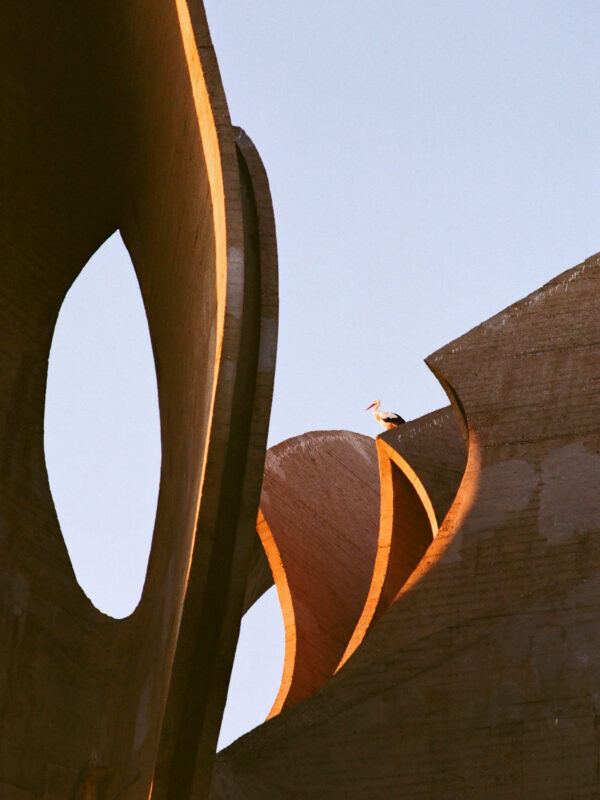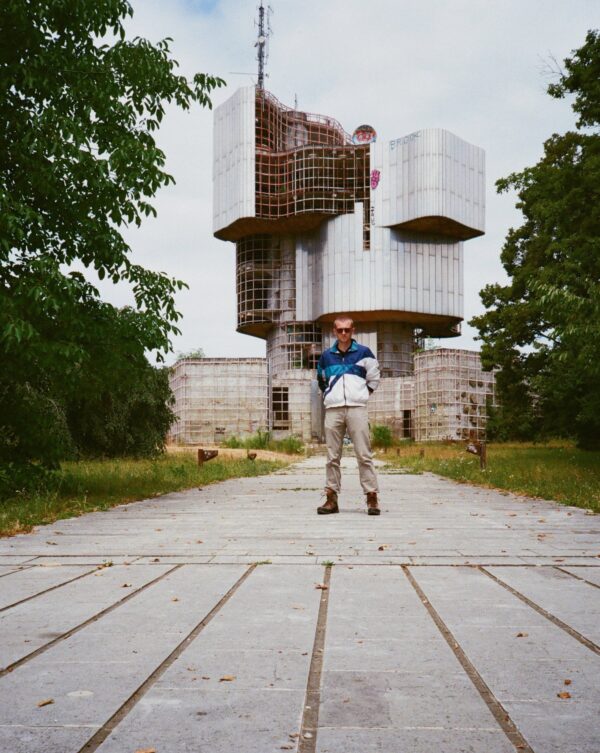
A chance encounter at a Croatian memorial inspired Noah Peters ’27 to investigate how societies remember, reinterpret and preserve the past.
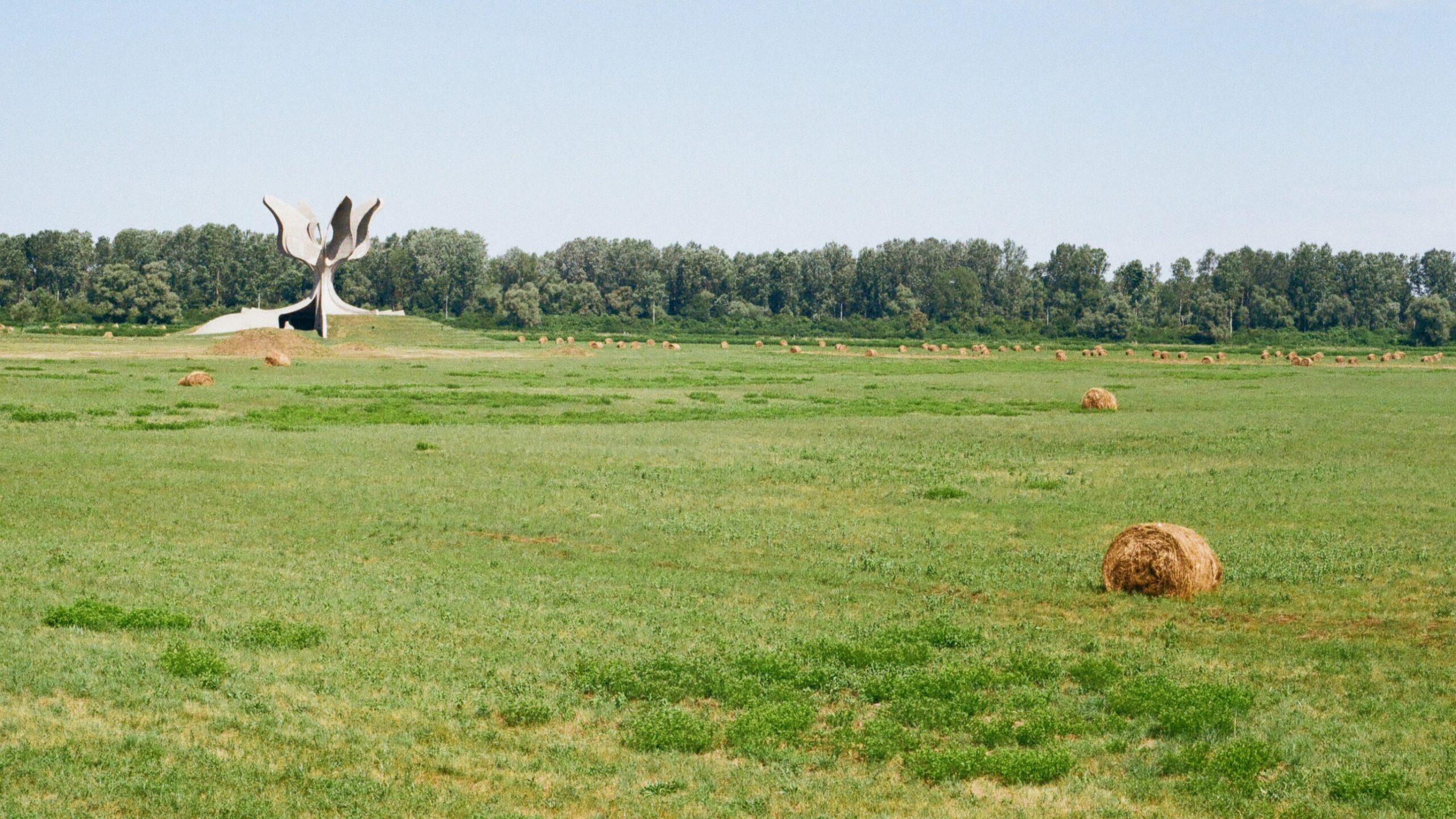
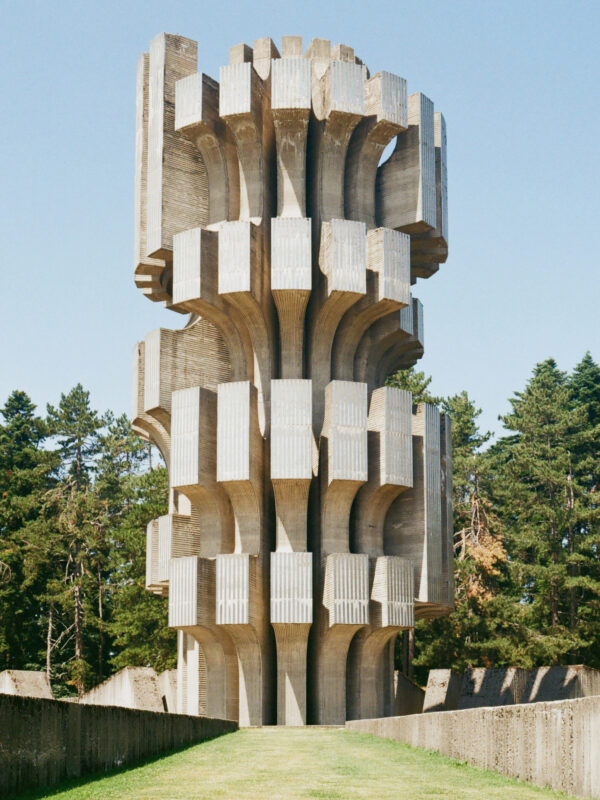
Peters stopped in the small Croatian village of Jasenovac after a massive stone flower caught his attention. He lifted his camera in a place still scarred by fighting between Croatian forces and a Yugoslav Army/Bosnian Serb paramilitary coalition.
At the time, Peters didn’t understand what the monument commemorated or how much the unplanned stop would change his journey. It was early in a 10-week solo backpacking trip through Europe, immediately after a study abroad experience in Aberdeen, Scotland.
He had few plans beyond seeing new places, taking photographs and eventually returning to Kalamazoo College. But the structure drew him into a history he had never studied—one that stayed with him throughout his travels and reshaped his academic plans.
Called Kameni Cvijet, or The Stone Flower, the monument commemorates victims of Jasenovac, a World War II concentration camp established by the fascist Ustaše regime in what was then the Independent State of Croatia. Serbs, Jews, Roma, political opponents and others were imprisoned and killed there.
After visiting, he began reading about the site and realized, in his words, that it represented “a theatre of the Second World War and of the Holocaust that is not particularly known or paid attention to in the West.”
A self-taught photographer and history and political science double major, Peters already had an interest in Eastern Europe and the former Yugoslavia. His visit to Jasenovac gave those interests a new focus and pushed him to turn his curiosity into a formal research project.
Peters came to K from Grand Rapids, Michigan, partly because of study abroad and the pre-orientation program LandSea. He was drawn to opportunities for adventure and exploration, but he never expected those interests to become part of his academic work. As he continued through Eastern Europe, visiting concentration camps and memorial sites in Hungary and Poland, he began comparing what the sites commemorated, how they presented their histories and what they asked visitors to understand.
From Backpacking to Research
Peters’ questions soon grew beyond a single monument: Why do Croatia, Serbia and Bosnia and Herzegovina tell different stories about World War II? How had the dissolution of Yugoslavia reshaped memories of the conflict? What could the monuments themselves reveal about those changing interpretations?
The resulting Senior Integrated Project (SIP) combined historical research with photojournalism, drawing on both of his majors while allowing him to investigate how political forces continue to shape public memory. As he explored the subject, he discovered it was far bigger than a single project could hold.
“I’ve thought about this project every single day since, and it has been endless refining of a topic and an area of research that a career could be dedicated to,” he said.
Competing Memories
In Yugoslavia, World War II involved Nazi occupation, domestic fascist regimes, competing resistance movements, ethnic conflict and genocide. Peters explained that socialist Yugoslavia developed an account of the conflict that emphasized partisan resistance and liberation after the war.
After Yugoslavia dissolved in the 1990s, governments and communities increasingly commemorated the war through competing national frameworks. Even the death toll at Jasenovac is difficult to establish, in part because records were destroyed or inaccessible and postwar accounts were shaped by political and ethnic conflict.
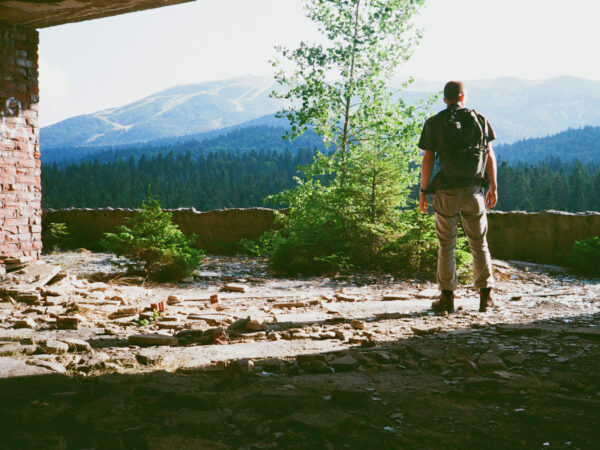
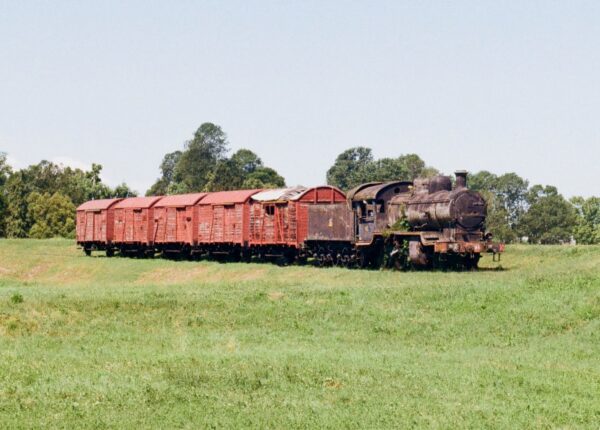
Peters examined how those differences appeared at the sites themselves, including which monuments were maintained and which were damaged as an inadvertent consequence of war, while others were deliberately vandalized and destroyed. Their condition, he said, can indicate which histories governments and communities choose to recognize.
“You can’t really destroy them, demolish them or take them down because that would be very overt revisionism,” he said. “But you can leave them and allow them to be overgrown without nationally recognizing them anymore.”
Seeing History Through a Camera
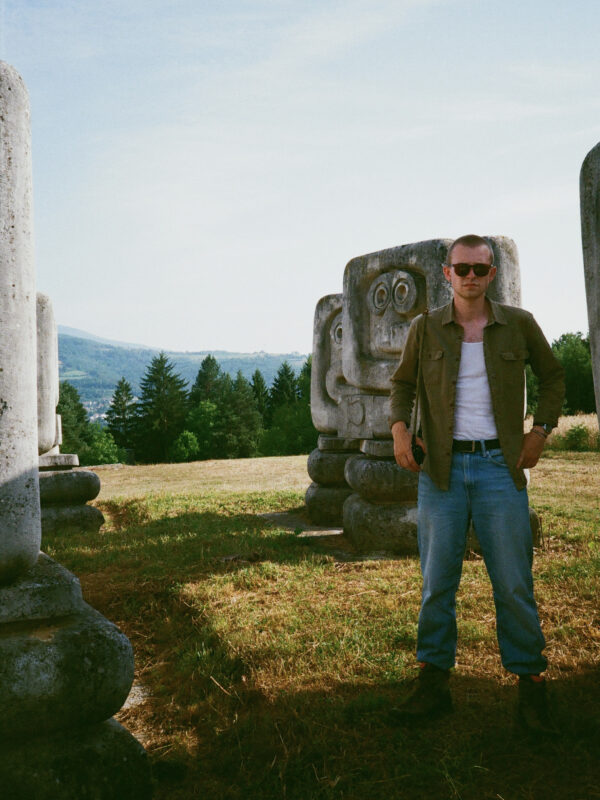
Photography gave Peters a way to document and compare those differences. What began as a personal interest became central to examining how monuments communicate through their design, condition and surroundings, even before a visitor reads a plaque or understands the historical context.
“Many Western viewers of these monuments don’t know the context in which they were built,” he said. “Just like I did at one point, they gravitate toward these sites because they look cool. But while they are fascinating, they still represent how easy it is to impose different narratives on historical sites.”
By placing the monuments within a shared visual record, Peters could consider how public memory is preserved, altered or allowed to fade. His photographs invite viewers to ask who built the structures, what they were intended to commemorate and how their meanings have changed.
Bringing the Research Home
Peters presented his work at K’s summer research symposium in August. Surrounded largely by STEM projects, he used his photographs to draw visitors to his poster and introduce them to a history many had not encountered.
The experience reinforced his hope of bringing greater attention to Jasenovac and its contested history, particularly among English-speaking audiences in the United States. Support from the College through the Cook-Lahti Award for Undergraduate Research or Creative Activity provided Peters with the resources to pursue his questions thousands of miles from campus after his initial study abroad experience.
Peters is quick to name the mentors who supported his project. Christina Carroll, associate professor of history, and Jessica Fowle, director of health careers, fellowships, and undergraduate research helped turn his initial curiosity into a research agenda, encouraging him to pursue the topic more deeply and seek the funding that made his return trip to Europe possible.
“Dr. Carroll has been this consistent, driving force for me. She has pushed me to make the most of my time here at K and on this topic,” he said. “Jessica helped me apply for the grant, refine my research proposal and get a clear idea of what I wanted to do, both for myself and to present to the grant committee.”
It became the kind of opportunity he hopes other K humanities students will seek out.
“Be ambitious with what you want to research,” he said. “Be ambitious with how far you want those grants to take you, and where those funds can take you. The grounds for creating opportunities for yourself are here for anyone. It’s not easy, but all it takes is persistent work.”
Looking Beyond the Monument
Peters now plans to pursue graduate study and continue investigating public memory in the former Yugoslavia, particularly at Jasenovac. Photojournalism also remains a possibility.
The Stone Flower first taught Peters to look beyond a monument’s appearance. His research has since taught him to examine what public memorials preserve, what they leave unspoken and who has the power to shape their meaning.