
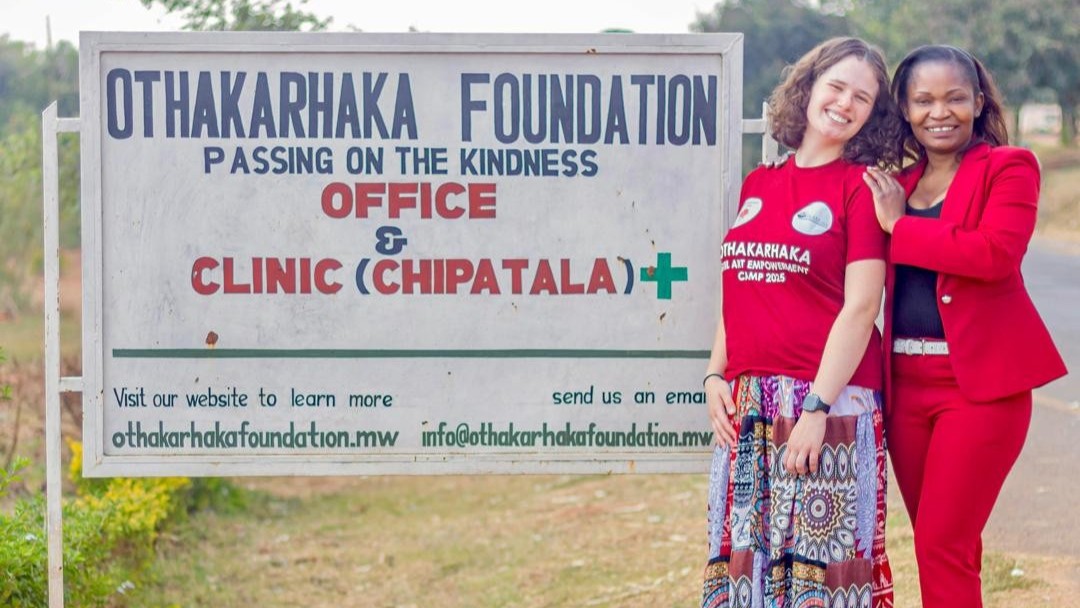
The first time Meghan London ’26 set foot in Malawi, Africa, she didn’t yet know she would one day build her Senior Integrated Project (SIP) around a nonprofit organization there. But standing in the heat with her family in 2023, watching women pause their work in the fields to greet visitors they were just meeting, she began to understand something she would carry back with her to Kalamazoo College: generosity can thrive even where resources don’t.
That realization now sits at the heart of London’s work. A double major in anthropology and political science, she has spent the past year documenting the efforts of the Othakarhaka Foundation, a group that helps girls overcome barriers to education. Her project, housed in critical ethnic studies, draws on interviews, field research, and personal experience to tell the stories of young women whose lives have been reshaped by their access to education.
Secondary school requires fees in Malawi, and in many families, boys are prioritized when resources are limited. Additionally, London quickly learned that the barriers facing girls extend beyond tuition costs.
“Girls may be expected to take care of relatives or spend hours helping their families by collecting firewood,” London said. “Othakarhaka looks at all of those factors.”
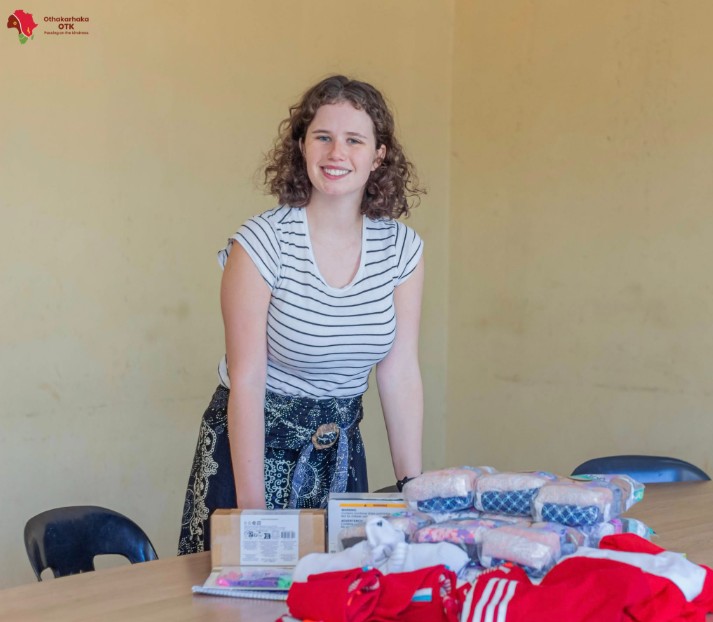
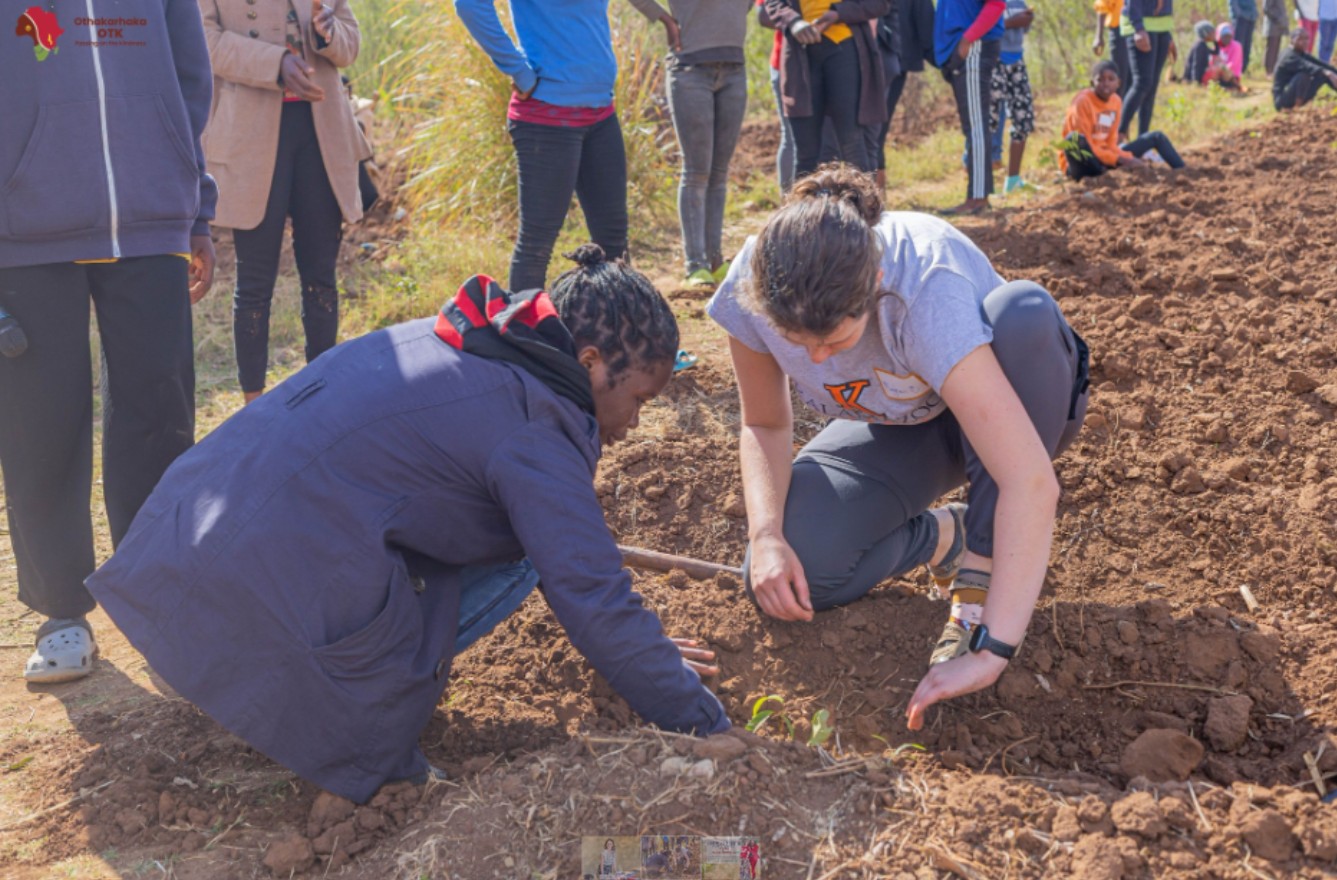
That holistic approach became a central theme of her research. The organization, for example, plants trees closer to villages so that girls don’t have to travel long distances for firewood. It operates a health clinic, so illness doesn’t derail education. It provides meals, bicycles, and even a library, implementing small interventions that collectively enhance attendance.
In July 2025, with support from the Center for International Programs, London returned to Malawi for two weeks to conduct her fieldwork. She interviewed about a dozen young women, most between the ages of 18 and 25, all of whom had been connected to Othakarhaka. Their stories, she said, were varied but shared common threads.
“Some were still in school, some were teen mothers, and many had faced financial barriers,” London said. “But all of them talked about how much the organization helped them continue their education and improve their lives.”
In Malawi, pregnancy often ends a girl’s formal education. Schools don’t allow pregnant students to attend, and returning after childbirth is rare. Othakarhaka works to change that, advocating for young mothers and helping them reenter school when possible. For London, those interviews were among the most meaningful parts of her project.
“They were so determined,” she said. “Some wanted to start businesses, some wanted to go into trades like welding, and one wanted to go to law school. Many of them said they wanted to give back by passing on the kindness once they were able to.”
That phrase “passing on the kindness” is a model for how the Othakarhaka Foundation operates, and it’s embedded into what they aim to do. Program volunteers are encouraged to support others when they can. That creates a cycle of community investment that London found both practical and inspiring.
“It’s not just about receiving help,” she said. “It’s about becoming someone who can help others.”
About the Othakarhaka Foundation
The Othakarhaka Foundation is a nonprofit organization based in Mulanje, Malawi, dedicated to increasing educational access for girls through a holistic approach that addresses financial, social and logistical barriers. Programs include school-fee sponsorship, a health clinic, a library, a sewing school, tree-planting initiatives, and girls’ empowerment camps. The organization is supported by thousands of volunteers and donors worldwide. Learn more at the Othakarhaka Foundation website or donate to the organization online.
While in Malawi, London also observed a girls’ empowerment camp hosted by the organization. Dozens of participants gathered to learn arts, music and dance, culminating in a community performance.
“The goal is for girls to feel like they can accomplish things, that their education matters, and that people care about them,” London said.
Her work has been guided by Associate Professor of English Shanna Salinas. But London is also quick to credit those on the ground in Malawi, particularly the organization’s founders—Ida Puliwa Mwango and Ted Mt Mwango—for making the experience possible.
“They were incredibly generous with their time and support,” she said. “They invited me to stay at their house for a week, and they drove me to and from the organization. My project wouldn’t exist without them. They’re inspiring people, especially Ida. She is determined to change the world. I hope I can be a lot like her because she’s doing something meaningful.”
That perspective is already shaping London’s future. After graduation, she hopes to work in sustainable development, ideally with organizations that take the kind of long-term, community-centered approach she observed in Malawi.
“I want to create positive change,” she said. “And I think this kind of work, building systems that actually last, is important.”
For now, her project stands as an academic achievement and a personal turning point with a story of connection that began with a family trip and grew into a deeper commitment to global equity. At its core is a simple idea, carried across continents and communities alike: that kindness, when passed on, can multiply.
“This shows how valuable education is and how it can really change someone’s life,” London said. “A quality that I really took away from the organization and the work it does is that it encourages those it helps to ‘pass on the kindness’ once they are able to, helping others the way they were helped through volunteering, donations, and other forms of support. My SIP shows that the work Othakarhaka does has been incredibly meaningful for many different individuals.”