Behind Closed Doors

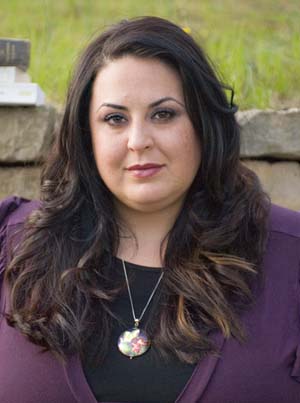
Photo by Van Forsman

I want to talk about being uncomfortable—or, rather, being comfortable with what is uncomfortable—in order to learn and progress as an individual in a progressive society. Maybe this means I want to talk about art, or education, or both.

How important is disquiet to learning? How comfortable must I become with discomfort in order to progress as an educated citizen? I have been thinking about these questions a great deal lately, based on my experience with the recent art exhibit at K, “Behind Closed Doors.” The exhibit was sponsored by Arcus Center for Social Justice Leadership (ACSJL) and appeared in various locations around campus during winter term (Dow Science Center, Mandelle Hall, Anderson Athletic Center, Dalton Theatre, ACSJL, Hicks Center, among others)
The exhibit featured a comment box open to anyone—faculty, staff and students of K as well as members of the general community. The exhibit’s purpose was to get people to have a conversation that they might not normally have about segregation and racism in our country.

Artist and Kalamazoo native J.D. Brink took two old doors, scarred them with bullet holes and shattered their windows. Perhaps the most violent stroke employed by the artist was affixing two original signs, one on each door: “Whites Only” and “Colored Only: No Whites Allowed”. The art exhibit was first displayed in Balch Playhouse on the opening night of The Mountaintop, a dramatic depiction of the Reverend Martin Luther King’s last night alive, set in Room 306 of the Lorraine Motel in Memphis, Tennessee, on the eve of his assassination on April 4,1968.

Author Aunye Scott- Anderson

The comment box offered people the chance to engage with Brink’s artwork and become part of a silent conversation with the campus community. A forum was held on February 26 in the social justice center to converse about the significance of the exhibit. Arcus Center Fellows Kiavanni Williams ‘18 and Erin Butler ‘18 revealed the comments from the box for reflection and discussion.

Unfortunately the event was poorly attended. I shared the nearly empty room with Kiavanni and Erin. The comments were neatly taped to the backs of smooth wooden doors like paintings in a gallery. The three of us read each comment to ourselves. Some comments provided personal anecdotes of racism experienced in the U.S., others questioned the purpose of the exhibit and seemed to resent the discomfort it inspired. Some were hauntingly irreverent about racism in the present day, and too many showed a troubling ignorance of the history of Black people in America (a group that includes persons of various backgrounds: African-American, Afro-Caribbean, Caribbean, Afro-Latino, African, and a number of mixed raced individuals). Twenty-six people commented, all anonymously, and, sadly, the comments ranged from overt racism to a disturbing obliviousness to the issue of racial discrimination in America as a present day issue.

I was most struck by what each comment shared: a sense of deep and brooding discomfort. It is indeed jarring to see, in 2016, a “Whites Only” and “Coloreds Only” sign, and several commenters wanted the exhibit removed. As a Black woman I have made a habit out of ignoring stares and holding my tongue when I hear people appropriate aspects of my culture for pleasure. I have felt the stiffness of a classroom where I am one of just a few Black students. I have endured jokes that stab instead of tickle. My freshman year I felt #unsafeatK and that sensation still lingers. My African-American peers as well as other students of color on this campus have also experienced the discomfort that those dilapidated doors with Jim Crow signs seemed to inspire in every building they stood.

To me, those doors are too familiar; I’d seen them before in the eyes of some who judged me entirely by my skin, in the eyes of politicians and teachers throughout my life. The duration of that discomfort has no doubt made a callus over once vulnerable parts of myself and my soul. But it has also made me aware, made me tolerant to the wiles of ignorance, and made me strong. It is through discomfort that we can truly discover the purest elements of our humanity. Hopefully struggle and education will guide us to a greater understanding of what needs to occur for all to live in peace.

K Awarded Top Civic Engagement Honor

2016 Civic Engagement Scholars

Kalamazoo College is Michigan’s 2016 Engaged Campus of the Year! Michigan Campus Compact (MiCC) recently announced K’s selection for the honor by a team of national reviewers at MiCC’s Awards Gala, held at Michigan State University’s Kellogg Center in East Lansing.

K students, faculty, staff and community partners represent the College
K students, faculty, administrators and community partners represented the College at the 2016 Michigan Campus Compact awards ceremony in Lansing.

The Engaged Campus of the Year Award recognizes an institution of higher education for exemplary commitment to the education of students for civic and social responsibility; genuine and sustained investment in community relationships; and a commitment to service learning and civic engagement opportunities for students across all disciplines.

In particular, the award is a tribute to the work of the College’s Center for Civic Engagement. Through service-learning courses and student-led programs, the CCE has engaged more than 5,500 K students in long-term, reciprocal partnerships to foster academic learning, critical problem-solving, and a lifetime of civic engagement while strengthening the community. “The students have worked with thousands of community residents, some 50 different organizations, and in more than 30 different community-based courses,” says CCE director Alison Geist.

Mallory McClure Innovations in Community Impact
K senior Mallory McClure ’16 accepted the Innovations in Community Impact award for K’s Swim for Success program.

Kalamazoo College also earned an MiCC Innovations in Community Impact award for its program Swim for Success (SFS). The Innovations Award recognizes creative and measurably effective approaches to community problem solving. SFS is a swimming program for local children that takes place on K’s campus three evenings a week. It is a partnership between K and the City of Kalamazoo led by Civic Engagement Scholars Kevin Ewing and Mallory McClure. More than 20 K students are involved as tutors or swim coaches in the program. Kevin and Mallory are both members of the college swim team and are also coaches in the SFS program. K students also provide tutoring onsite one hour before swimming lessons begin.

In addition, Susmitha Daggubati ’16 received MiCC’s 2016 Commitment to Service Award for students. The Commitment to Service Award recognizes outstanding students for their commitment to service. Students are chosen specifically for either the breadth or depth of their community involvement or their service experience(s) and the demonstration of meaningful reflection of those experiences.

Susmitha Daggubati Commitment To Service
K senior Susmitha Daggubati ’16 received the MCC’s 2016 “Commitment to Service” award.

Michigan Campus Compact is a coalition of college and university presidents who are committed to fulfilling the public purpose of higher education. The organization promotes the education and commitment of Michigan college students to be engaged citizens.

Call for Response to Zika in Puerto Rico

Associate Professor of Anthropology Adriana Garriga-LópezAssociate Professor of Anthropology Adriana Garriga-López is a member of a group of experts that co-authored an essay and call to action titled “Public Statement on Zika Virus in Puerto Rico.” The essay appeared in Savage Minds (15 March 2016) with the Spanish language version forthcoming in a few days. The authors are members of the Society for Medical Anthropology’s Zika Interest Group. Among other courses at K, Garriga-López teaches “Medicine and Society.” She is an expert on the intersection of politics, societies, social justice, disease and epidemics and completed her doctoral work on the confluence of these forces in the HIV epidemic in Puerto Rico.

The essay on the Zika virus notes the influence of water and waste management, church proscriptions, the corporate use and development of experimental insecticides, and U.S. Congressional policy on the advent and future course of the epidemic in Puerto Rico. Zika is a public health emergency, and the essay calls for Zika prevention actions to benefit the people of Puerto Rico. Those actions include: “provide and install window screens in homes and businesses, assist in water systems management, and distribute vector surveillance and control strategies  In particular, public health authorities can assist with disposing of any waste that might collect water in order to minimize mosquito populations.

“The CDC has a Dengue station headquarters in San Juan, PR and should use that station as a base to conduct Zika prevention and mosquito mitigation campaigns. All prevention and research activities on the island should follow the principles of open access and collaboration appropriate for a public health emergency.  Furthermore, given the strongly suspected association between Zika, microcephaly, and Guillain-Barré syndrome, the CDC should be on high alert for these cases in Puerto Rico and prepared to deal with these diseases as they arise.

“Finally, care and support must be provided to pregnant women and their families who have or will experience Zika infection. Puerto Rico birth outcomes have been worsening since the advent of the economic crisis. The infant mortality rate climbed to 9.5 per 1000 live births for 2012. This burden is exacerbated by the large number of health professionals that have recently emigrated from the island.

“It is imperative that the Medicaid cap be removed for the island and resources mobilized immediately to fight this public health emergency, particularly in terms of prenatal and reproductive health care. Prevention of transmission, expanded medical care, reproductive rights, and long term sustainability of the water infrastructure should be the priorities, beyond the tourist and hotel areas. We call for assistance to local initiatives and support for already existing community structures, and affirm Puerto Rico’s right to defend the health of its population.”

Happy Birthday, Center for Civic Engagement

Center for Civic Engagement turns 15 this yearThe Mary Jane Underwood Stryker Center for Civic Engagement (CCE) turns 15 this year, and its hard to imagine better origins. It began as a joint brainstorming effort between students, faculty and several community partners with the intent on redefining what a liberal arts education was all about. Students were not just de facto city residents while they studied at K; they were community assets as well. Annually, about 600 K students participate in service-learning in some way with the CCE.

From work on sustainability issues to girl’s and women’s empowerment to health and economic equality to food justice, CCE programming engages students in work that promotes social justice, further pushing the College’s mission to create lifelong learners.

“For some of our students, it’s the first time they’ve witnessed first-hand a variety of ‘isms,’” says Alison Geist, CCE’s director. “We put students on the front lines of many societal issues in a way that sitting in a lecture or classroom just can’t.”

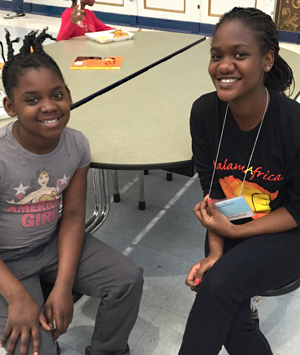
Center for Civic Engagement (CCE) turns 15 this yearSusmitha Daggubati ’16 mentors a second-grader at Woodward Elementary School in Kalamazoo’s Stuart Neighborhood, adjacent to K’s campus. Daggubati, a senior majoring in chemistry and earning a concentration in biochemistry and molecular biology, is in her second year at Woodward and serves as a Civic Engagement Scholar, a kind of on-site leader who mentors other K students working at sites across the community, scheduling their shifts and organizing meetings to brainstorm programming ideas.

Daggubati moved with her family to the Kalamazoo area from their native India ten years ago. Still very much tied to her Indian roots, her time in service-learning has also given her a greater understanding of the complex social issues at play in American society “In many classes, we learn the theories about the roots of so many social problems,” she says. “But I am able to make those connections to the real world when I’m involved. It keeps me rooted in the realities of the world, and it has given me a greater understanding of American culture.”

Tom Thornburg is the managing attorney at Farmworker Legal Services, a non-profit agency based in Bangor, Mich., a small community about 25 miles west of Kalamazoo, in an agricultural area where hundreds of migrant workers flock each year to work in fields and orchards. His agency assists these workers – overwhelmingly Hispanic – with everything from language services to information on their legal rights to informing them of resources available to them. He’s been working with the CCE for almost a decade, and the K students who’ve come through his doors have become an invaluable resource.

“The students from K are some of the brightest, best-equipped and most professional volunteers we get,” Thornburg says. “They come here with a sense of enthusiasm to help, a sense of what to do, an autonomy. They’re excellent, right up there in many ways with the law students we have working here.”

Over the years, hundreds of the nearly 2,000 students Associate Professor of Psychology Karyn Boatwright has taught have participated in service-learning programs, in a diverse group of local agencies, from the Kalamazoo Public Schools to Planned Parenthood to Goodwill Industries.

Through more than 30 different courses at the College designed with community partners, faculty at K have engaged thousands of students, community residents and leaders to create opportunities for experiential learning and impact derived organically and intentionally from service-learning work.

Says Boatwright, “The CCE and their students consistently impress upon us the need for reflection to ensure that we are not only connecting the proverbial dots, but understanding the political and social connections between success and social factors. Civic engagement experiences improve the quality of learning for our students and strengthen our community.”

The College’s solid commitment to developing the next generation of leaders who are observant, lifelong learners intent on crafting solutions to problems plaguing a suffering world is stronger now than ever. Concludes Geist: “The founders of K were always interested in social justice, and our programming is a manifestation of that. It’s the idea that we should be creating a fellowship of learning, not just working in ivory towers tucked away from society.”

(Text by Chris Killian; photo by Keith Mumma)

Social Justice Building Designer Honored as Architect of the Year

Social Justice Building Designer Honored as Architect of the YearJeanne Gang designed Kalamazoo College’s Arcus Center for Social Justice Leadership (ACSJL). The journal The Architectural Review has awarded her its Architect of the Year award, citing both excellence in design and working sustainably and democratically with local communities. The article reads, in part, “The Architect of the Year award celebrates Studio Gang’s Arcus Center for Social Justice Leadership at Kalamazoo College, Michigan, which took a novel tri-axial form. The first building purposed for social justice, Gang’s democratic and participatory design process involved the organization, students and public who now work from the Center.”

The ACSJL works to develop emerging leaders and sustain existing leaders in the fields of human rights and social justice. As a learning environment and meeting space, it brings together students, faculty, visiting scholars, social justice leaders, and members of the public for conversation and activities aimed at creating a more just world.

Colloquium About Blackness to Occur at Kalamazoo College

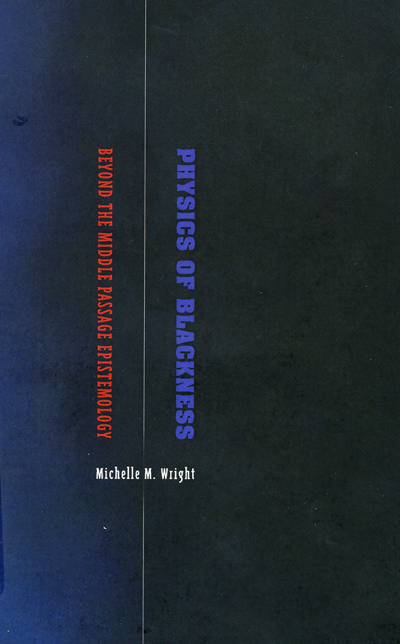
Colloquium About Blackness at KKalamazoo College will present the Physics of Blackness Colloquium on March 31 and April 1. March 31 features a lecture (7 p.m. in Dalton Theatre) by Michelle M. Wright, Professor of African American Studies and Comparative Literary Studies at Northwestern University, and author of The Physics of Blackness: Beyond the Middle Passage Epistemology. Wright’s lecture is titled “Blackness by Other Names: Beyond Linear Histories.” On the next day (April 1, 5 p.m. in the Arcus Center for Social Justice Leadership) will follow an interactive event developed by the Beyond the Middle Passage Organizers. That group includes Justin Berry, assistant professor of political science; Nakeya Boyles ’16; Quincy Crosby ’17; Reid Gómez, the Mellon visiting assistant professor of ethnic studies; Allia Howard ’17; Bruce Mills, professor of English; and Shanna Salinas, assistant professor of English. “Wright looks at the argument of race, particularly Blackness, and the ways that argument plays out in economic, political and physically embodied ways,” says Gómez. “Her work will help us look at differences within difference and move beyond thinking in categories.”

According to Gómez, the colloquium will stress three themes, all of which relate to one another: horizontal connections instead of vertical frameworks; the inability of temporally linear progress narratives (which often structure the notion of Blackness) alone to realize the broad and complicated truth and meaningfulness of Blackness; and a “See Me-Hear Me” approach during the colloquium that will ask participants to enter each others’ lives in meaningful ways. Wright’s book uses concepts from physics to expand thinking and discussion beyond linearity that makes “it difficult to understand or accept people, places, or event that do not easily fit inside a single narrative,” explains Gómez. Toward that end Gómez has helped facilitate “The Physics of Blackness at Kalamazoo College,” a blog in the form of a mosaic that makes approaching the subject of Blackness nonlinear and dynamic.

Nonlinearity is the true nature of the physical universe, wrote Gómez in a summary of Wright’s book. Such nonlinearity doesn’t preclude all cause and effect, but instead complicates it. Gómez writes that Wright “cautions against cause and effect laws that make history solely the consequence of oppression, where Blackness only appears in terms of resistance to, or the direct result of, that oppression.” The ability to think and discuss freed from such overly narrow restrictions allows us to “reimagine choice and agency in relationship to Blackness,” says Gómez, “the choice to ’notice and wonder’ at what is left out of linear progress narratives, and to conceive of self outside those terms.”

The Beyond the Middle Passage Organizers group invites colloquium participants to help one another prepare for the event by sharing talking points, images and points of entry into Wright’s theory via Instagram _bmp._ and Twitter @_bmpo_.

K-Plan and the Peace Corps

William Schlaack and a fellow learner
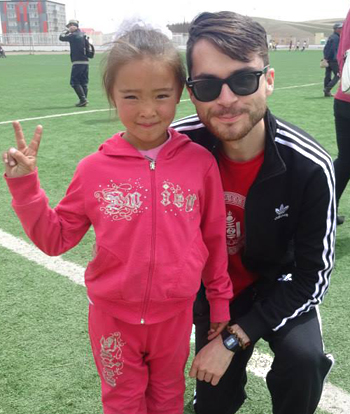
William Schlaack ’12 and a fellow learner

Kalamazoo College ranks 14th among small colleges and universities nationwide in terms of the number of graduates who volunteer to serve in the Peace Corps. Since the agency was created in 1961, 288 K graduates have served overseas. Currently, nine K alumni are serving worldwide. One of them is William Schlaack ’12, who has served in Mongolia as an education volunteer since 2014 (see interview below). William majored in German and religion. He participated in the Farms 2K student organization, worked for K’s library and studied abroad in Erlangen, Germany.

Two other Michigan school received recognition on the large school list. University of Michigan ranked sixth (48 volunteers) and Michigan State University ranks 22nd (33 volunteers).

Kalamazoo College is no stranger to the Peace Corps. In 2006, it ranked as the eighth top volunteer-producing school among small universities and colleges. One of the most moving stories about the Peace Corps experience is shared by alumnus David Easterbrook ’69. You can hear him tell it (“When You See Rose Kennedy in the Market“) on Story Zoo.

What are your main volunteer projects and secondary projects?
(William Schlaack) I teach at the Mongolian University of Science and Technology in Darkhan aimag (province). Most of my time is spent co-teaching, lesson and curriculum building and leading extracurricular activities such as English club, teacher’s club and hiking club.

For secondary projects, I’ve been working with local non-governmental organizations and schools on regional Special Olympics competitions. So far two regions have held their first ever events. One other project I have been working on is life skills classes at the regional prison, so far I’ve been able to give workshops on anger and stress management that have been highly rewarding.

Outside of planned projects I think one of the best aspects of Peace Corps is the daily cultural exchange that takes place between volunteers and host country nationals. These interactions go beyond projects and really build great friendships and foster understanding between cultures.

How did your alma mater help prepare you for international service, or lead you to Peace Corps?
(WS) Kalamazoo provides wonderful study abroad and service learning opportunities that really help shape a global perspective that’s oriented toward service on a local and global scale.

What/who inspired me to serve in the Peace Corps?
(WS) I became inspired to serve in the Peace Corps as a result of volunteering with Books to Prisoners (a program that provides free books to Illinois inmates and also helps operate two jail libraries in the Urbana-Champaign area) and Project READ (an adult ESL program run out of Parkland Community College in Champaign, Illinois). I wanted to take some time off after earning my master’s degree to participate in some sort of national service that would combine international experience and allow me to leave a positive impact on a new community.

What are your career aspirations?
(WS) After Peace Corps I plan on working in a library, but also continuing my volunteer work in whatever local community I wind up in. Peace Corps has strengthened my project management skills and given me unique problem solving experiences that I hope to bring to my future workplace and community.

What’s been your favorite part of service?
My favorite part of service has been serving and growing in a community so rich with tradition and culture which has given me the opportunity to experience so many amazing encounters and find common interests and passions. Day-to-day life is often so surprising and hardly a day goes by that I don’t learn more about myself and my community.

Bring Some Friends With Curious Minds

William Weber Lecture in Government and SocietyAssistant Professor of Political Science Justin Berry (and members of his “Voting, Campaigns and Elections” class) knew that the 2016 William Weber Lecture in Government and Society was too big an opportunity not to share widely. The late January event featured Martin Gilens, author and professor of politics at Princeton University, speaking on the subject “Economic Inequality and Political Power in America.” Dr. Berry reached out to the one high school student who attends his class and he, in turn, gathered many of his high school classmates to attend the lecture. After the event, he wrote to Dr. Berry: “I have to say, I really do appreciate your willingness to let a mob of high school kids participate in the event. We spent the next day in class having a heated discussion regarding the topics that were covered within Dr. Gilens’ speech. I believe that I speak for all that attended when I say that it was a very informative and memorable event. Our government teacher was disappointed that he couldn’t attend, but he had prior obligations. I do know that for next year he will try to bring back some of his students to have them sit in on the lecture, making it an annual event.” Well done, Dr. Berry! The photo shows Professor Gilens (third from right) with some of the high school attendees. The William Weber Lecture in Government and Society was founded by Bill Weber, a 1939 graduate of K, and it is administered by the Department of Political Science. Past lecturers have included David Broder, E.J. Dionne, Frances Fox Piven, Van Jones and Joan Mandelle, among others.

Morowa Yejidé ’92, author of “Time of the Locust,” will give a reading at Kalamazoo College on Feb. 16

orowa Yejide_2
Morowa Yejidé ’92 reads from her work at 7 p.m. Tue., Feb. 16 in the Arcus Center for Social Justice Leadership.

The Kalamazoo College Department of English will host a reading and discussion with author Morowa Yejidé ’92 at 7:00 p.m. Tuesday, Feb. 16 in the Arcus Center for Social Justice Leadership, 205 Monroe Street, on the K campus. The event is free and open to the public.

Yejidé’s novel “Time of the Locust” was a 2012 finalist for the PEN/Bellwether Prize. Her short stories have appeared in Adirondack Review, Istanbul Review, and other literary publications. Her short story “Tokyo Chocolate” was a 2009 Pushcart Prize nominee that was also anthologized by Britain’s “Best of the Willesden Herald Series” and praised by the Japan Times. Yejidé was also a 2015 NAACP Image Award nominee and is currently a PEN/Faulkner Writers in Schools author.

Time of the Locust, her debut novel, is described as a deeply imaginative journey into the heart and mind of seven-year-old Sephiri, an autistic boy who can draw scientifically accurate renderings of prehistoric locusts but never speaks, makes eye contact, or smiles. The book explores the themes of a mother’s devotion, a father’s punishment, and the power of love.

orowa Yejide Cover_PRINT FINAL_April 17 2014Morowa Yejidé (pronounced: Moe-roe-wah Yay-gee-day) earned her B.A. degree from Kalamazoo College in international area studies and her M.F.A. degree in creative writing from Wilkes University, in Wilkes-Barre, Pa. She is a research faculty member at Georgia Institute of Technology and an adjunct faculty member at the University of Maryland. She lives in Washington, D.C., with her husband and three sons.

During her visit to K, Morowa will also meet with students in the African American Literature class taught by Professor of English Bruce Mills, Ph.D., and the Intermediate Fiction Workshop taught by Professor of English Andy Mozina, Ph.D.

Read more about Morowa Yejidé and her work on her website (http://morowayejide.com) and on the Michigan Colleges Alliance “Alum of the Day” webpage (http://wearetheindependents.com/alumni/morowa-yejide) where she reveals her favorite place to hang out on the K campus.

Welcome back to campus, Morowa. (The library is even better than when you were a student!)

Economic Inequality and Political Power in America

Martin Gilens
Martin Gilens

Martin Gilens will deliver the 2016 William Weber Lecture in Government and Society on January 25 at 8 p.m. in the Mandelle Hall Olmsted Room on the Kalamazoo College campus. The event is free and open to the public. Gilens is professor of politics at Princeton University, and the title of his lecture is “Economic Inequality and Political Power in America.” It is based on his recent book titled Affluence and Influence. Dr. Gilen’s research examines representation, public opinion and mass media as they relate to inequality and public policy. His work has been extensively reported in the media. “While his finding that the wealthiest minority in this country are the only ones who impact policy outcomes is not novel,” said Justin Berry, assistant professor of American politics at K, “the empirical evidence he provides for this common perception is overwhelming.” Gilens has held fellowships at the Institute for Advanced Study in Princeton, the Center for Advanced Study in the Behavioral Sciences at Stanford, and the Russell Sage Foundation. He is a member of the American Academy of Arts and Sciences, and he taught at Yale University and UCLA prior to joining the faculty at Princeton. He also wrote the book Why Americans Hate Welfare: Race, Media and the Politics of Antipoverty Policy. The William Weber Lecture in Government and Society was founded by alumnus William Weber, class of 1939. Past lecturers in the series have included David Broder, E.J. Dionne, Frances Fox Piven, Spencer Overton, Van Jones and Joan Mandelle, among others.