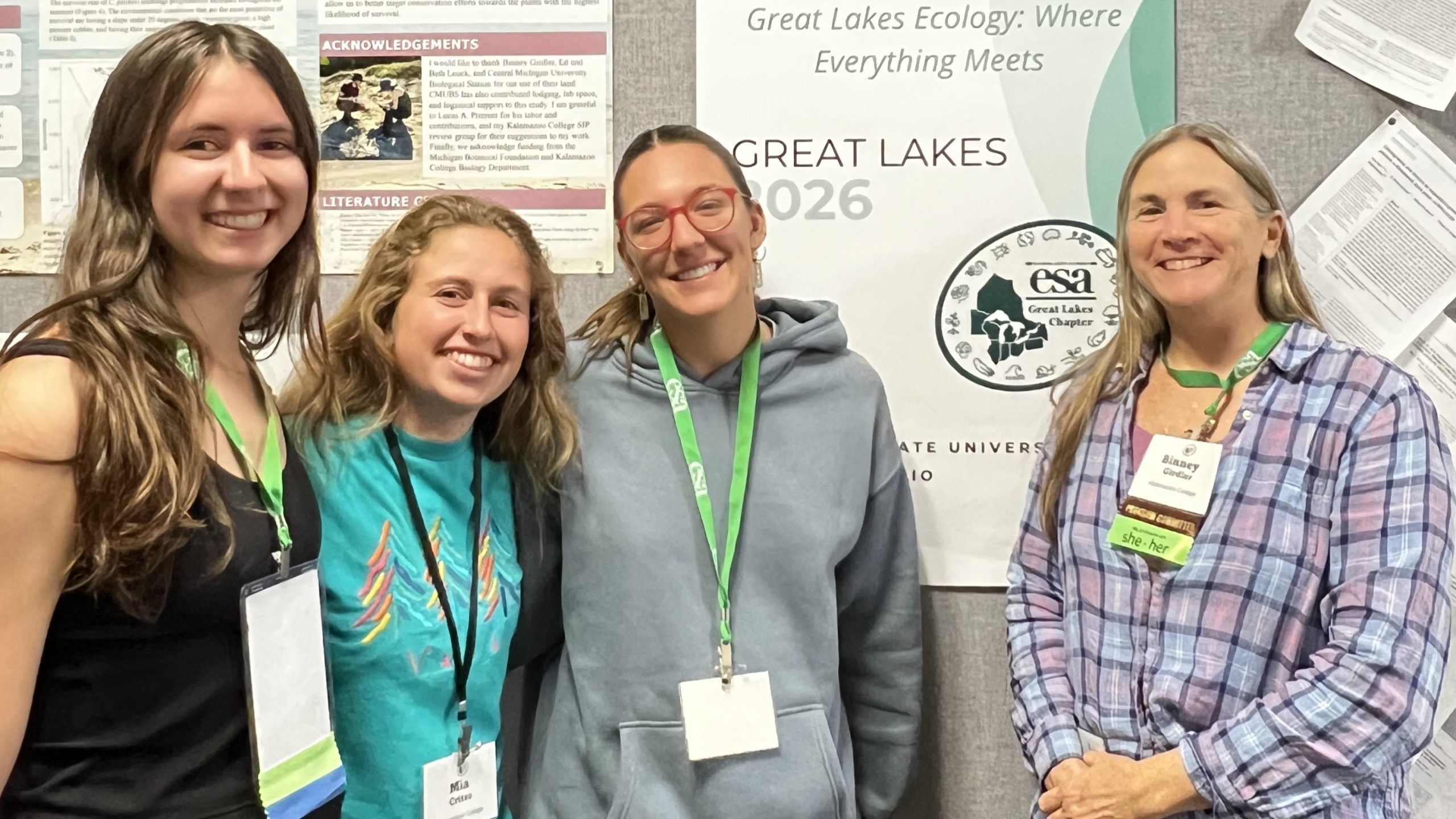
Three students recently represented Kalamazoo College at the 2026 meeting of the Great Lakes Chapter of the Ecological Society of America (ESA) in Cleveland, Ohio, where two of them swept the top undergraduate honors for their research presentations.
Annaliese Bol ’26 received the conference’s award for Best Undergraduate Talk, while Mia Crites ’26 earned Best Undergraduate Poster. Fellow student Hailey Yoder ’26 also attended the conference alongside Professor of Biology Binney Girdler to present Senior Integrated Project (SIP) research.
Bol presented findings from research she conducted with Assistant Professor of Biology Clara Stuligross, examining how heat waves affect blue orchard bees, a native solitary bee species that plays an important role in agricultural pollination.
“Two hundred to 300 of these blue orchard bees can do the same work in an acre of almond trees as two hives of honeybees,” Bol said. “Two hives is about 90,000 honeybees, so these bees are efficient pollinators.”
Her project explored whether heat stress during the bees’ larval stage hurts their future ability to reproduce. Bol said her findings offered some encouraging news amid broader climate concerns.
“We found some interesting evidence that the bees aren’t being affected by heat waves in the way that we studied them,” she said. “It’s rare to find good news when you’re working with climate-change science.”
Bol said the conference gave her valuable experience presenting research ahead of K’s Diebold SIP Symposium for the Department of Biology, and she connected with ecologists from across the Great Lakes region, including participants from the United States and Canada.
“It was just a super fun experience,” Bol said. “If any students have the opportunity to go present their work, they should just do it.”
After graduating this spring, Bol plans to pursue a master’s degree in animal behavior at Stockholm University in Stockholm, Sweden.
Crites presented research from her SIP completed in the lab of Associate Professor of Biology Santiago Salinas. Her project investigated whether adaptation to pollution affects the ability of Atlantic killifish populations to respond to thermal stress.
“My main goal with this SIP was just to gain some experience in the lab as an undergrad, specifically in designing and running an experiment, and then writing the paper afterward,” Crites said. “I accomplished most of my goals, got a taste of what research is really like, and feel more prepared leaving K to venture on in the scientific world.”
The conference marked the first time Crites had attended and presented at a professional academic gathering.
“Talking to other conference goers that share a similar love for biology helped me to solidify that this is something that I want to continue to be involved in and have a large passion for,” she said.
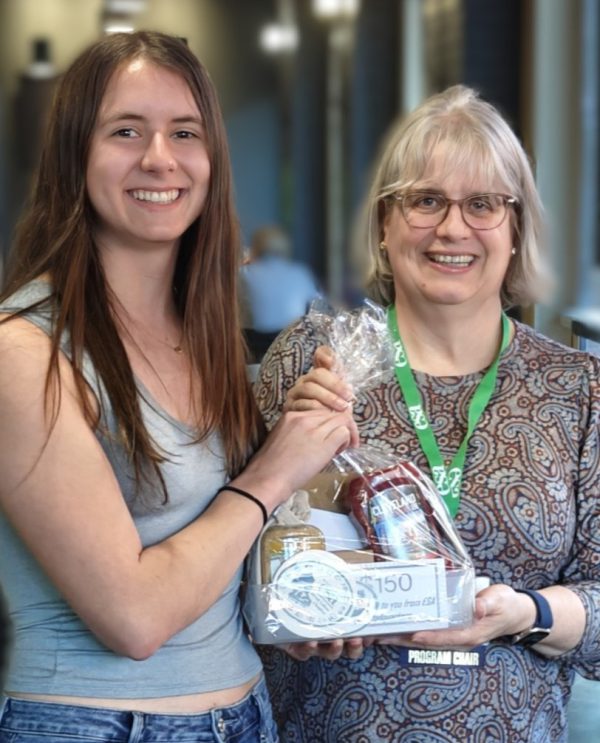
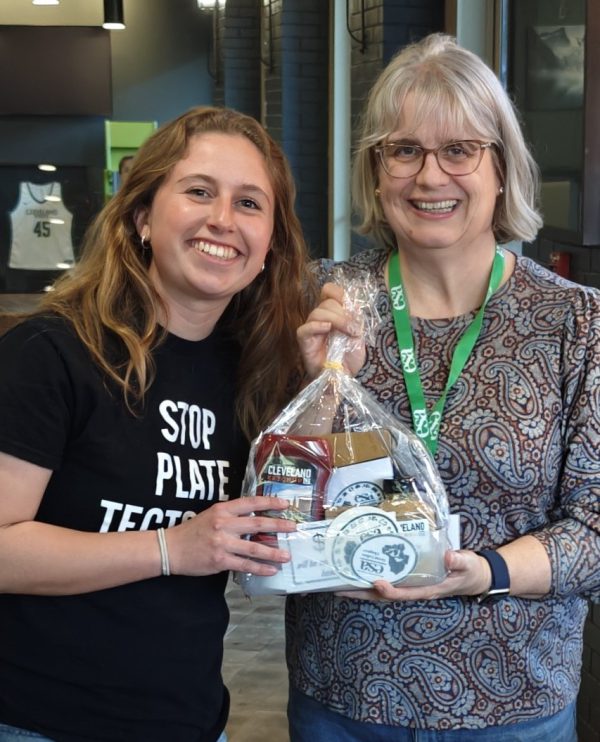
At the conference banquet, Bol and Crites received award certificates, $150 prizes from the ESA and gift baskets that were presented by the Great Lakes Chapter’s past chair, Andrea Corbett of Cleveland State University.
Crites said the experience reinforced her interest in pursuing ecology and evolutionary biology after graduation.
“As of right now, I don’t have any plans locked in for after graduation, but I’d like to travel a bit, ideally find a seasonal job or two working in a biology lab, and then eventually go back to grad school to study ecology and evolutionary biology,” she said.
More Ecology Research
Also presenting at the Great Lakes ESA conference was Hailey Yoder ’26, whose SIP has made waves of its own with her hands-on coral reef restoration work in the Galápagos Islands. Read more about her SIP.