
Blindfolded professors dumped in a cornfield. A campus scandal that landed in The New York Times. And a 19th-century Charles Dickens novel with more in common with true crime podcasts than most people would guess. Welcome to Novels and Podcasts, a distinctive new English course at Kalamazoo College.
The winter course, led by Professor of English Ryan Fong, drew students from across disciplines into a conversation about how serial storytelling works and why it still resonates today. At the center of the syllabus sat Dickens’ Bleak House, an 1852–53 masterwork about an inheritance lawsuit, tangled secrets and systemic injustices in Victorian England. Students compared it with groundbreaking true-crime podcasts such as Serial, which has captivated millions with its own drip-feed of suspense, scandal and revelation.
The parallels, it turns out, were hard to ignore.
“Most of Dickens’ novels were written in serialized installments over many months,” Fong said. “In this class, I wanted to explore the continuities between that form of storytelling—when it became popular in the 19th century—and how it shows up today in podcasting, where stories unfold incrementally over time.”
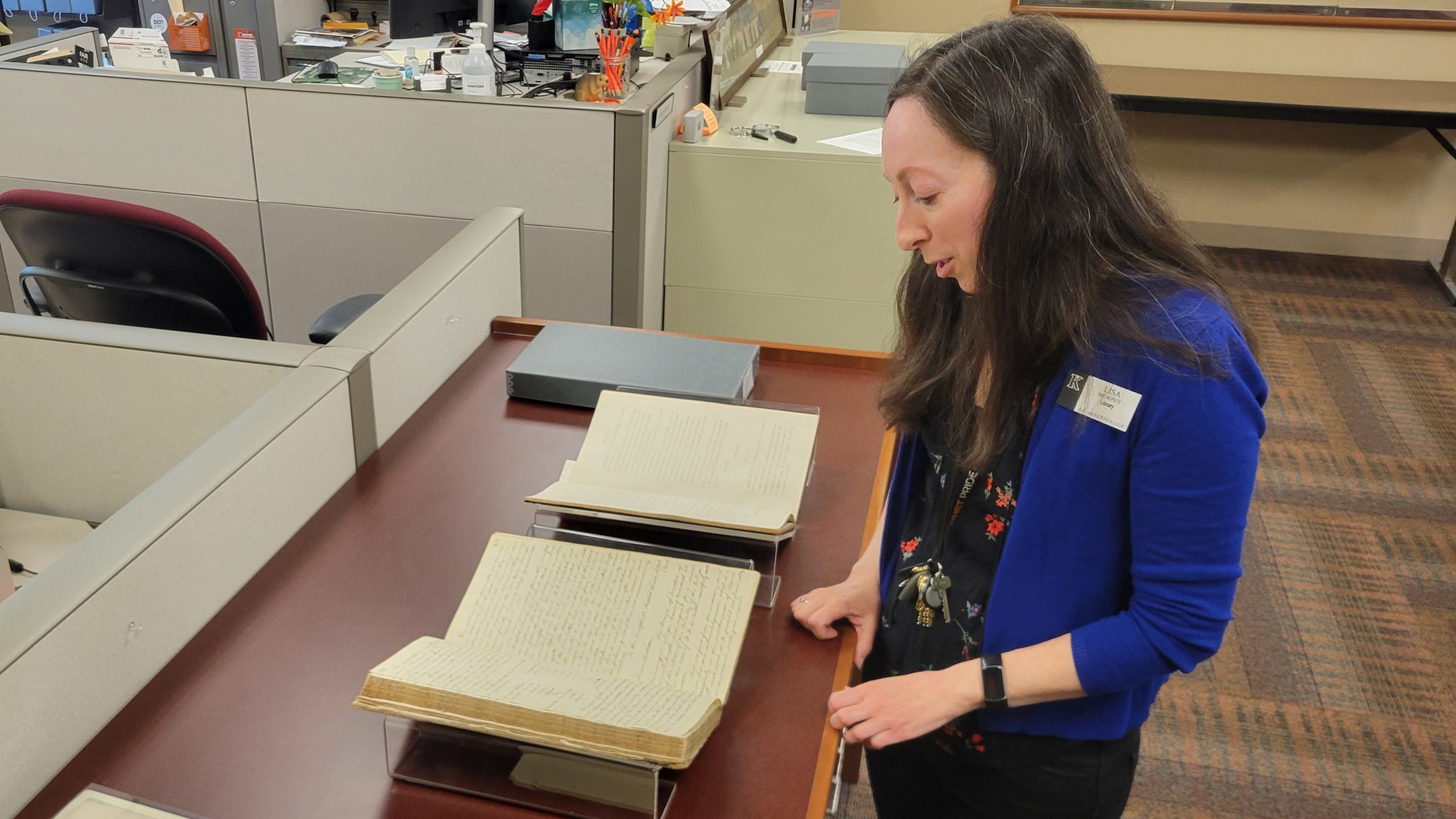
For their final project, students in the course didn’t write papers—they made podcasts. Working in groups, they designed five-episode series using materials from the College Archives before recording episodes in the library’s audio lab. Students used documents, old editions of the Index student newspaper, historical faculty meeting minutes and photographs curated by College Archivist Lisa Murphy ’98 to inform their storytelling. Reference Librarian Kelly Frost also helped students deepen their research through specialized library guides, and Elena Pulliam in the Rare Book Room showed students two serialized versions of works by Dickens: Bleak House and Little Dorrit.
Those archival discoveries became the backbone of their storytelling. The students’ explorations ranged widely across K’s history, but a couple of groups zeroed in on a notorious 1890 campus kidnapping prank so outrageous that it landed in national headlines. Students transformed the episode into serialized audio narratives, echoing the same suspense techniques they studied in Dickens and modern podcasts.
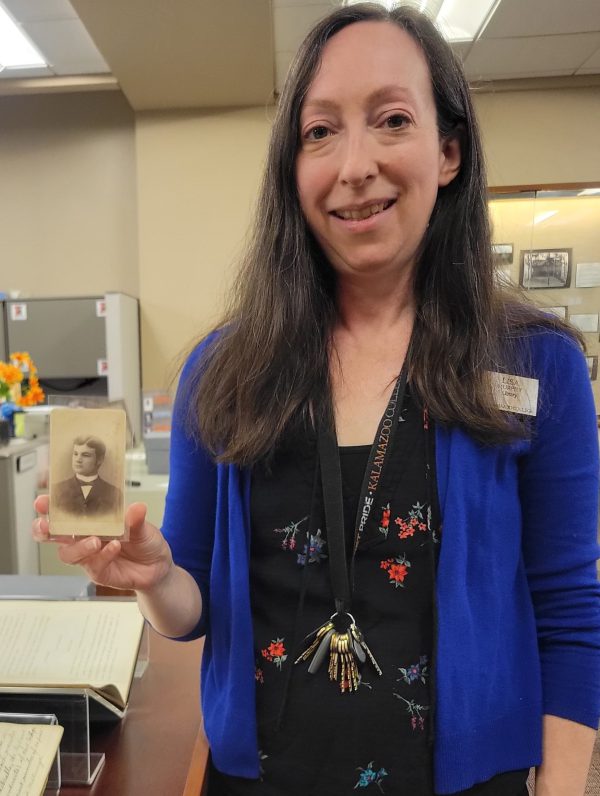
“The story was that two professors stopped by Upper Hall, which was the men’s dorm,” Murphy said. “They had been invited to the birthday party of student William Des Autels, and when the two professors showed up, a bunch of students burst in, loosely bound their hands, blindfolded them and marched them up past Monroe Street to a cornfield.”
Students at the time testified to trustees that the young professors, who were close to the students’ ages, knew it was a prank and that the situation got blown out of proportion.
“The controversy became more about the punishment, the reaction and the bad publicity for the College,” Murphy said. “William Des Autels, who later became a Baptist minister, was expelled and there were several suspensions.”
Several years later, the College and its faculty board awarded a degree to Des Autels because he had been so close to graduating at the point of his expulsion. But today’s students were attracted to the unusual circumstances.
“It’s fun telling the college’s stories, because a lot of students don’t know about the archives or about the College’s history,” Murphy said. “Watching them have fun and seeing their disbelief, especially at this kidnapping story, was exciting.”
Other students explored different historical narratives. Sarah Guerrero Gorostieta ’28 produced a podcast examining former College President James Stone and his wife, Lucinda Hinsdale Stone, an early feminist advocate for coeducation. In the 1860s, both faced backlash from conservative Baptist leaders and students resistant to progressive ideas, ultimately leading to their departure from the College.
The research inspired Guerrero and helped her feel a deeper connection to Lucinda, the College and K’s history.
“That was only possible because of the deep archival research we had to do,” she said. “This class was extremely valuable to my journalism aspirations because we were given the tools to create a passion project that bridged relevant local history to contemporary questions and conversations.”
She added that the course changed her perspective on literature, making it one of her favorite classes at K so far.
“I never thought I would become as enthralled with Dickens’ work the way I did, but Bleak House, and the themes we explored through the book, helped me understand why pre-20th century literature is worth studying,” she said.
Behind the scenes, teaching assistant James Hauke ’26 kept podcasting operations running. Hauke guided students through the recording process, from the first-time in the studio to final edits, and came away impressed with the course and the students.
“I appreciate that every Dr. Fong class is a conversation, where there are no lectures and 20 people or so are talking to each other,” Hauke said. “Everyone speaks. There’s never one person who’s raising their hand and taking all the questions. Everyone is a part of it, and I think that’s why he loves podcasts so much. They’re just conversations. I’d say the conversations are why Dr. Fong is a great professor.”
From Dickens’ serialized mysteries to student-produced podcasts, the course showed that great storytelling, whether in print or audio, still unfolds one episode at a time. Fong said he will offer the class again, in part because it also showcased campus resources that students might have repeatedly overlooked. Now, they have used those resources to investigate the history of student life and culture, conduct independent research, and evaluate the information they found.
“It was exciting to see students go into the archives and realize the richness of materials there,” he said. “It was equally exciting to see them use the audio lab and develop skills that are going to be increasingly important in the future. Watching students connect literature, history, research and creativity in this way was incredible, especially as they collaborated and engaged with contemporary and historical issues.”