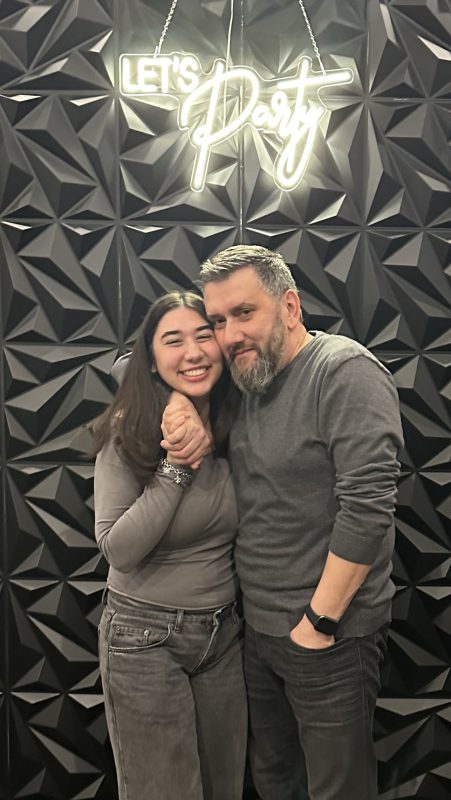
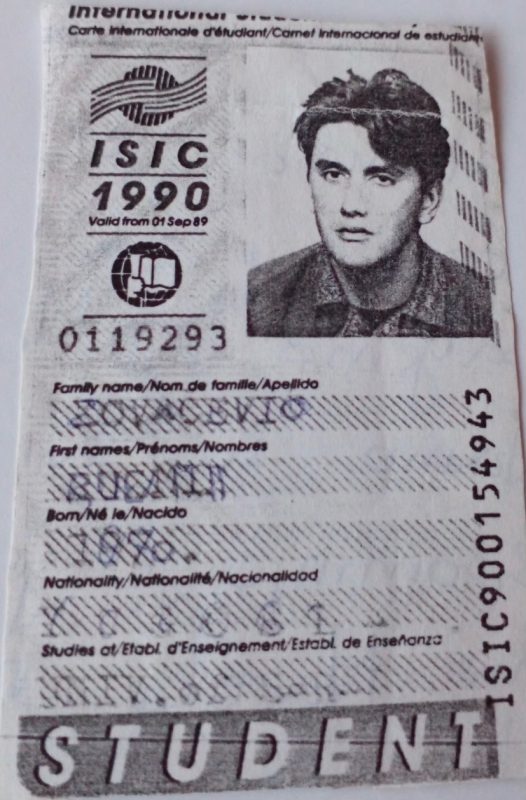
Emma Kovacevic ’26 finds that not many of her Kalamazoo College peers are familiar with the story of the Bosnian War, although she knows it well. The conflict, prompted by the fracturing of the former Yugoslavia, lasted from 1992–95. About 100,000 people were killed, and more than 2 million people were displaced in the fighting. It was the deadliest conflict in Europe since World War II. And Emma’s Bosnian father, Ruzmir Kovacevic—the subject of her Senior Integrated Project (SIP)—suffered as a prisoner of the Serbians during the hostilities.
“I would describe my dad as my hero,” Emma said. “He has gone through so many things in his life. I don’t know of anyone that’s gone through so much, and he’s still cracking jokes about random things all the time. I haven’t seen that kind of resilience in anyone else, so it’s inspiring and I’m grateful to have him in my life. He’s the bravest person I know and my biggest role model.”
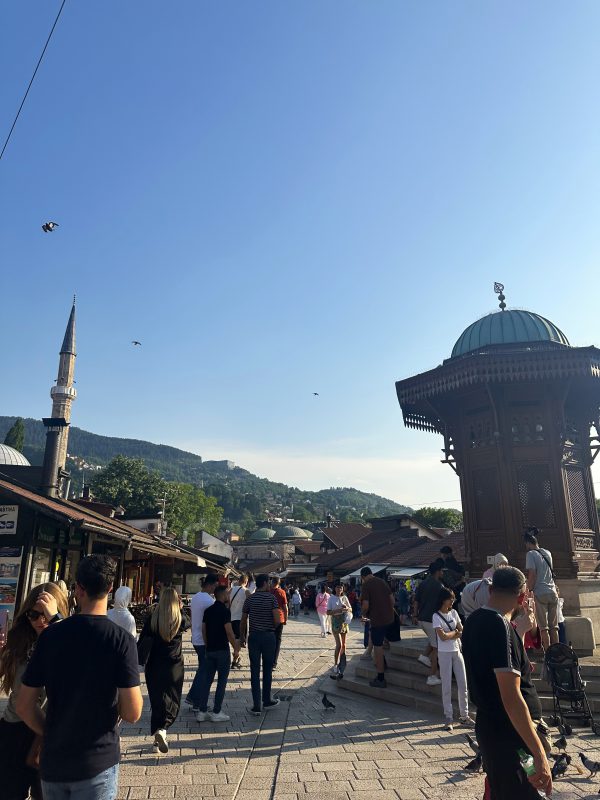
Ruzmir grew up in the small town of Doboj in Bosnia. His mother was an elementary school teacher, and his father worked as a salesperson at a local store. His childhood was centered on family, school and a tight-knit community where everyone knew each other. He was an outgoing and natural leader, his daughter said, the kind of person who was always surrounded by family and friends.
Neighbor vs. Neighbor
After high school, Ruzmir attended the University of Sarajevo, where he studied sports medicine. Like many young men in the former Yugoslavia, he also completed mandatory service in the Yugoslav army. His leadership ability stood out so much that military leaders asked him to stay beyond his required service as he ascended to the rank of first lieutenant.
A few years later, the country began splitting apart. When fighting broke out, Bosnia descended into violence and ethnic conflict. In towns like Doboj, neighbors suddenly found themselves on opposite sides of a brutal war.
“It was really interesting to hear about it because during the war, he was fighting against these people who taught him how to fight, how to clean his rifles and how to figure out the best ways to go about a war,” Emma said. “From what he told me, he had a lot of trouble going through that. He was fighting against some people that he knew in his hometown because it was all Yugoslavia.”
There was no official Bosnian army, so Ruzmir and the men of his community formed what they called the Patriotic League. They counted their rifles, took inventory of their weapons, made a plan and held their line as long as they could.
Brutality from Former Friends
Ruzmir was captured by Serbians after being wounded by a grenade that badly damaged his right leg. The Serbians wrapped the wound in a cast and refused to let surgeons remove the shrapnel. He was taken to a concentration camp where Bosnian prisoners were subjected to brutal treatment. Emma said he played sports growing up with some of the Serbians, who ended up beating him and denying him food for long periods of time.
At one point, a twist of fate briefly freed Ruzmir. A relative of his girlfriend, who held a high-ranking position in the Serbian military, arrived at the camp and escorted him out under the pretense of questioning. For a few days, Ruzmir stayed with family members who were packed into a tiny studio apartment. Fifteen people shared the cramped space, but he described it as heavenly, Emma said.
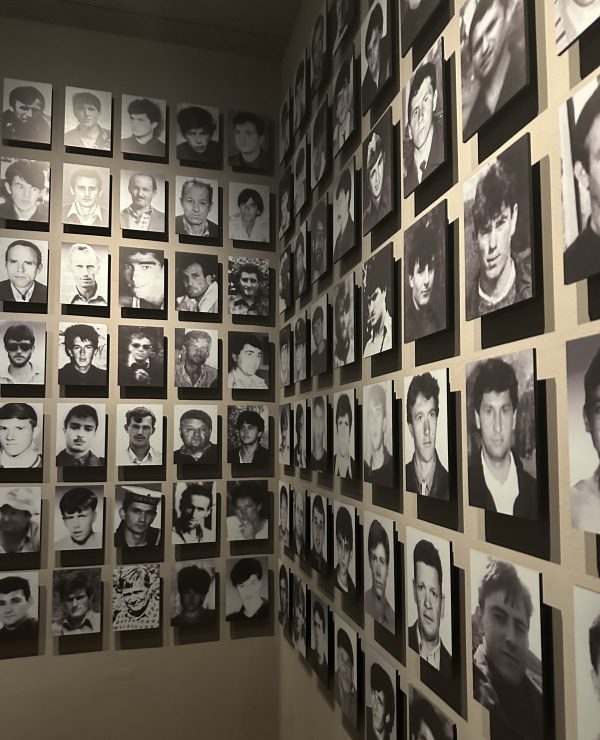
The freedom didn’t last. Serbian officers soon discovered he was missing and recaptured him, sending him back to the camp for an additional two and a half months. In all, Ruzmir spent about nine months in captivity. By then, many prisoners had died or disappeared. When Ruzmir first arrived, more than 50 men were held in the camp. By the end of his imprisonment, only about a dozen remained.
The prisoners were rescued almost by accident. After hearing reports that Bosnians were being held in the old prison facility, the German Red Cross scheduled an inspection. To hide the evidence, guards forced the remaining prisoners into a conference room and cleaned the cells. The prisoners heard the inspection happening and began screaming for help.
After recording their names, the Red Cross inspectors warned Serbian authorities they would return in two weeks. If conditions had not improved, the prisoners would be taken out of the country as refugees. Two weeks later, the Red Cross inspectors kept their promise.
Free at Last
Ruzmir boarded a bus to Germany and spent a few years there with his younger brother and father. He later arrived alone in Grand Rapids, where a significant Bosnian refugee community had already taken root. Ruzmir had been a year and a half away from finishing his sports medicine degree at the University of Sarajevo when the war interrupted his education. The credits didn’t transfer to the U.S., but he became a massage therapist. Emma said he loves his career and wouldn’t trade it for anything, though. He also helps resettle other refugees arriving in Michigan from all over the world.
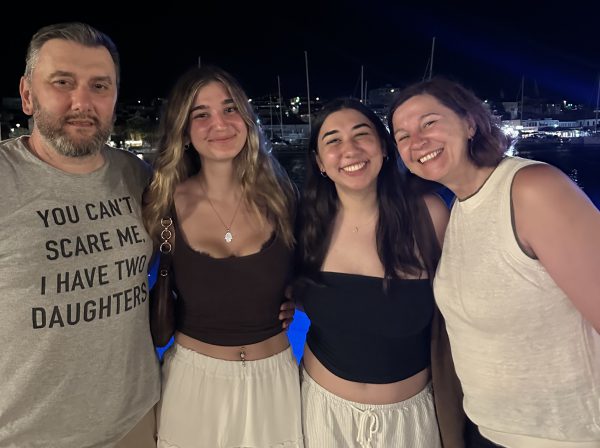
Ruzmir’s father survived the war but died in 2001 when he had a heart attack and stroke simultaneously caused by PTSD. However, he met a Bosnian woman, Amra, who had also fled. They had two daughters, including Emma. He built a life with his family.
“I’ve had a really supportive family, and as my parents are two immigrants, they have always wanted the best for my sister and me,” Emma said. “They’ve always wanted for us to have the education that they didn’t really have access to. They made a lot of sacrifices to support my sister and I in growing up to have access to the things that were taken away from them. I chose K because I just love it. I love what it stands for, the liberal arts education and the relationships I can have with my professors.”

55 Minutes
Emma and her father had talked for years about writing a book together. It was a “someday project”—something to tackle after a master’s degree or maybe a Ph.D. There was time.
But in 2023, Ruzmir went into cardiac arrest. He was technically dead for 55 minutes.
“I saw the strongest person I know die for that long,” Emma said.
He recovered. The nurses called him their Christmas miracle despite 13 broken ribs from the CPR, so Emma started thinking about the book differently, and yet was still hesitant. It was big material. Heavy material.
Then, three days before the spring term of her junior year, her father went into cardiac arrest again. She realized she needed to make her dad the subject of her SIP.
“I thought, ‘OK. It’s time. I can’t wait any longer,’” Emma said.
He has since turned 56 and the SIP is finished.
“He has a pacemaker and defibrillator,” Emma said. “They’ve saved him twice now, so I’m just grateful that I’ve been able to do this with him and talk to him about it, even though I could see how hard it was for him. He continuously says that he is so grateful for this opportunity. I hoped that I’d be able to do it later in my life, post-K, but with the inclusion of the SIP in the K-Plan, I’m just grateful that it gave me that push to start sooner.”
Her advisor, Professor of English Marin Heinritz ’99, has guided her through the entire process. Emma first took Introduction to Journalism with Heinritz in her sophomore year, and the two have been close since.
“I know that’s not true at other universities,” Emma said. “My sister goes to Michigan State, and her professors just don’t connect with her as an individual.”
A Light at the End of the Tunnel
Emma said Ruzmir wanted the story to be told because the Bosnian War is not something that gets taught much in the U.S., because it happened recently enough that people are still grappling with it, and because it happened distantly enough that many Americans don’t know it happened at all.
She knows he’s proud of her. He has been sending the PDF of her SIP to his friends and massage therapy clients. One of them printed it out and put it in a folder to share with others.
Emma has been accepted to a master’s program in teaching at the University of Michigan. She wants to be a high school English teacher. She also wants to keep writing, and eventually, when her father is ready, to turn the SIP into the book they always planned.
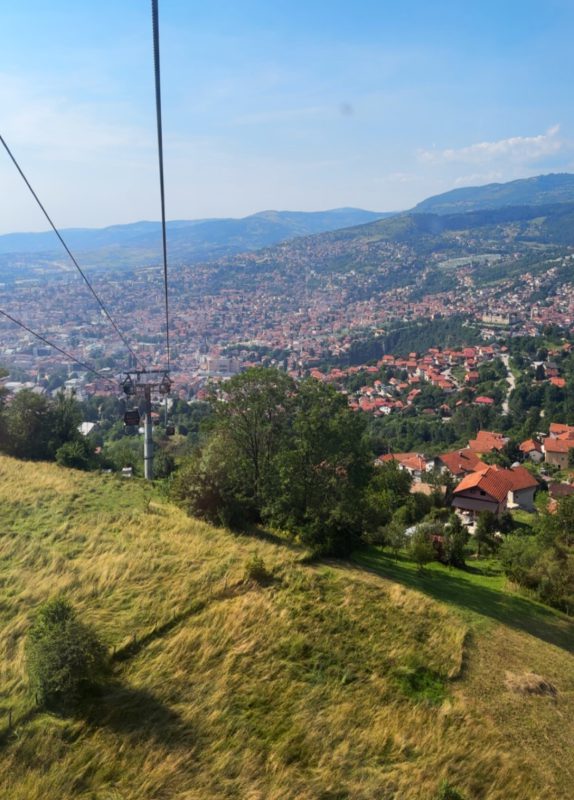
“He just needs a little break first,” she said. “I would hope that it will help people understand that even if they think their life is over with any horrible thing that happens, there’s always a light at the end of the tunnel.”