
When Kalamazoo College alumnus Cody Colvin ’18 stepped onto a set in Traverse City last year to portray one of the most disturbing criminals in recent Michigan history, he carried with him a lesson he learned nearly a decade earlier in a voice and diction class: “Whatever comes up, comes up.”
That advice, given to him by Professor of Theatre Arts Ren Pruis during a Shakespearean sonnet exercise, would prove instrumental as Colvin tackled the challenging role of Christopher Thomas in Hulu’s Stalking Samantha: 13 Years of Terror, a crime miniseries that climbed to No. 3 on the streaming platform after its August release.
The show dramatizes the harrowing true story of Samantha Stites, a former Grand Valley State University student who endured nearly 12 years of stalking by Thomas, a man about seven or eight years her senior. The ordeal culminated with dark subject matter including a kidnapping to a dungeon-like bunker, which demanded extraordinary emotional preparation from the actors re-creating the events.
“To me, it’s about as difficult a character as anyone can ever portray,” Colvin said. “How do you get in the mindset of someone like that? How do they see themselves? How do they see the other person?”
A Lesson That Changed Everything
The answer, Colvin discovered, was in the foundation he built at K under Pruis’ guidance during her voice and diction class. Performing a Shakespearean sonnet, he unexpectedly laughed, despite the piece not being comedic.
“I thought, ‘Oh, no. I’m going to get marked down for this,’ but I kept laughing through it,” Colvin said. “And she said, ‘Go with it.’ She said, ‘Whatever comes up, comes up.’”
That simple instruction became what Colvin now calls “the most important thing about acting that almost no one ever teaches you.”
“What I’ve learned in acting and performing is that humans don’t make any sense, so when you get on stage or on screen, and you have emotion that comes up that is not what you prepared for, you go with it,” he said.
Developing a Monster
The philosophy proved essential during the intensive eight-day shoot, where 12- to 15-hour workdays were common. The production, which conducted a statewide casting search in Michigan and Illinois for its leads, brought together a professional crew including Sarah Mast, an executive producer from MTV’s The Hills.
But Pruis’ character-development class provided another crucial building block. An assignment requiring students to stay in character for two hours prepared Colvin for the demands of portraying Thomas across full shooting days.
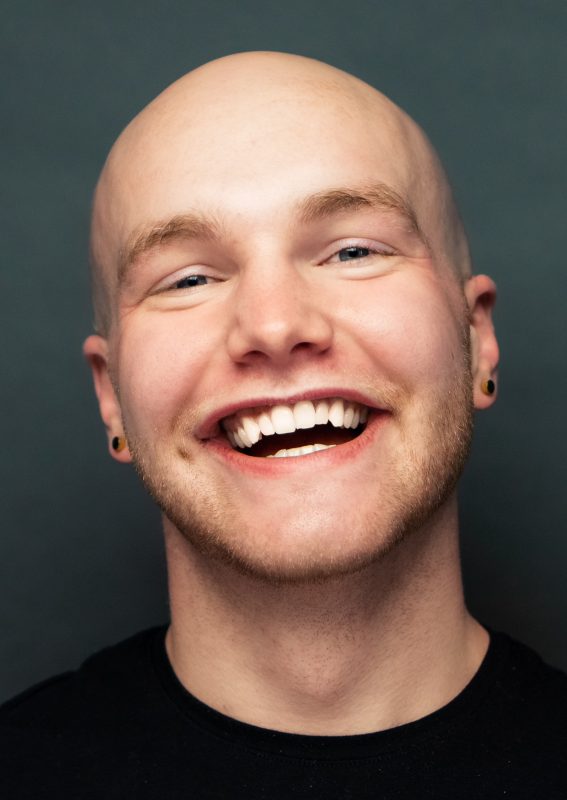
“I already know that I could be in character for hours and hours, and improvise, respond and think as that person,” Colvin said.
Playing Thomas, described by Colvin as “a horrible criminal with little conscience,” required accessing dark psychological territory. Yet the approach Pruis instilled in him, allowing authentic emotions to surface rather than imposing preconceived choices, made the grueling schedule and the acting challenges manageable and the performance honest.
“It makes it so much easier for 12 hours a day to act, because you’re not managing your emotions, you’re just letting it all happen,” Colvin said. “And that’s what creates the best performances.”
A Love for the Camera
For Colvin, who has devoted much of his career to directing and producing, the experience reaffirmed where his true passion lies, and he expressed clear aspirations for his future.
“I’d love to keep doing stuff on screen,” he said. “That’s my dream. I just love it.”
As he continues to build his career, Colvin carries forward the transformative lessons from his K education, proof that sometimes the most profound professional preparation happens not in the spotlight, but in a college setting where a faculty member encourages a laughing student to simply “go with it.”