
Kalamazoo College is expanding its efforts to support student well-being with a new grant from the Michigan Department of Lifelong Education, Advancement and Potential (MiLEAP).
The approximately $16,000 award will strengthen campus food initiatives, part of what leaders say is a broad commitment to ensuring that students have the resources they need to support their personal and academic success.
For Liz Candido, College chaplain and director of religious life, the MiLEAP grant represents both recognition and opportunity.
“We will have a new, larger capacity refrigerator to hold donated meals,” Candido said. “We will also have a new freezer for longer-term storage, giving us many more food options.”
Those additions will be housed in a 24/7, stigma-free space in the Hicks Student Center, making it easier for students to access food whenever they need it. That’s an important shift for students who juggle demanding academic and extracurricular schedules.
Candido emphasized that food insecurity on campus isn’t often visible, but that makes it no less real. A survey published in 2025 from The Hope Center for Student Basic Needs found that 41% of college students surveyed experienced food insecurity, underscoring the need for institutions to maintain ecosystems of support, be it for short-term emergencies or practical barriers like busy schedules that prevent students from accessing meals during open hours.
“Not only will this grant give us expanded capacity, it will provide us with funds to let students know about the amazing opportunities that exist on campus,” Candido said.
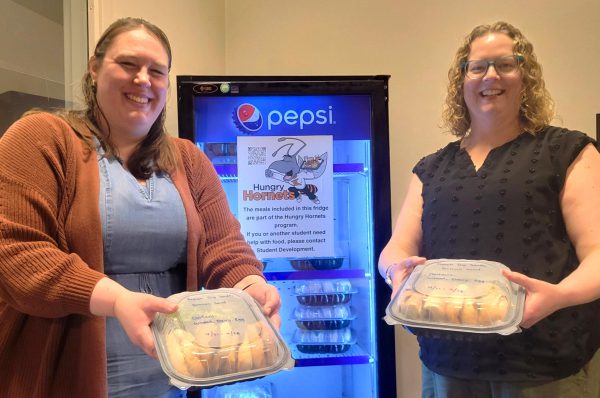
Those opportunities include the Hungry Hornets Meals fridge, which stocks to-go meals and containers, made fresh daily and utilizing food that would otherwise be destined for compost; the Hungry Hornets Pantry, a community-based pantry that collects and distributes food throughout the academic year; and the College’s meal-swipe donation program, which allows students to give unused dining swipes to peers.
“We know our campus is a caring place,” she said. “I believe that increased visibility will result in more swipe donations.”
The state’s decision to fund K’s efforts reflects years of groundwork already in place. Rather than launching a new initiative from scratch, the College proposed expanding and strengthening existing efforts.
“We were able to demonstrate not only a commitment to fighting hunger, but an awareness of what hunger looks like on campus,” Candido said. “We aren’t beginning a brand-new program. We are building on what already exists.”
That foundation includes strong campus partnerships. Dining services provider Parkhurst Dining will continue to donate meals and help monitor the new food-storage equipment, ensuring safety and consistency.
The grant proposal itself was a collaborative effort, uniting staff from across campus including employees from the Health Center, the Office of Student Involvement, Campus Dining and the Office of Religious and Spiritual Life.
“With input from so many places, we had a good overview of what was working on campus and what interventions would be most effective at expanding access to food,” Candido said.
Beyond the immediate benefits for students, Candido believes the grant sends a broader message about K’s values.
“I think this grant demonstrates our ongoing commitment to making sure that every K student has access to healthy food in a stigma-free environment,” she said. “We are a community of people who care for one another and look out for one another. That is true in all aspects of our common life together and this grant reflects that value.”