
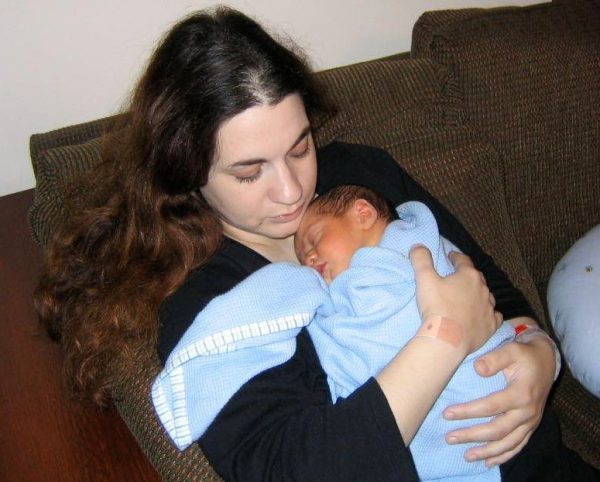
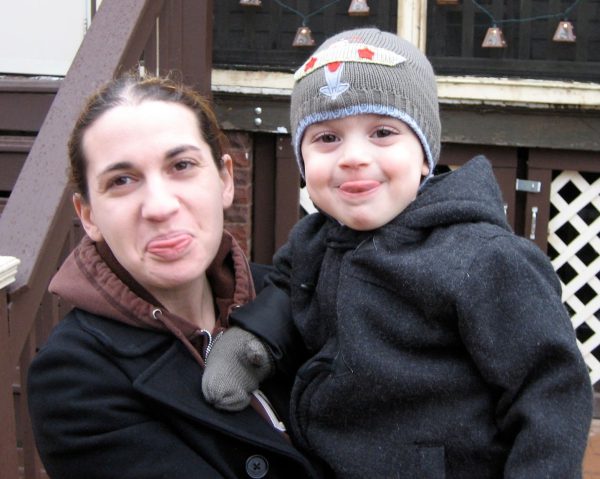
On an August morning last year, Kalamazoo College student Eliza Karlin ’26 pulled onto the highway outside Galesburg, Illinois, driving a silver Mini Cooper—just like the one her mom once had—and began a 4,800-mile journey along the Mississippi River.
For her mom, poet Monica Berlin, the same trip over a decade earlier—routed spontaneously with paper maps—provided inspiration and collaboration with her longtime colleague Beth Marzoni. Together, they coauthored Berlin’s first book, a volume of poetry titled No Shape Bends the River So Long, which won the 2013 New Measure Poetry Prize.
No Shape followed Berlin’s 2013 journey in a collaborative “we,” a voice that felt expansive and fluid, Karlin said. She would travel the same route carrying something heavier: Berlin died unexpectedly in November 2022, during Karlin’s first term at K—making hers a journey of grief, memory, self-discovery and enduring connection.
“I obviously didn’t know what to do when she died,” she said. “I took a leave of absence shortly thereafter. I remember thinking, ‘How would I ever be able to manage my grief?’ I thought that following in her footsteps would be one of the best ways to do that.”
Karlin’s trip became the foundation of her Senior Integrated Project (SIP), a poetry collection titled Bend the River Out of Shape No More, molded by travel, memory and a search for healing.
Mapping What Came Next
Karlin began planning the trip as a junior. Logistics required careful mapping, estimating mileage and costs, choosing stops and deciding whether to travel alone. Ultimately, she realized solitude mattered.
“While it may have been safer to do it with someone else, it was more impactful to do it by myself,” she said.
She woke up early, sought out unfamiliar food, and wandered through large cities such as Memphis, St. Louis, New Orleans and Minneapolis, and smaller towns including Cairo, Illinois; Natchez, Mississippi; and La Crosse, Wisconsin. The rhythm became steady: drive, listen, observe, write. She also created a soundtrack of albums she had never heard before.
“Memphis was Daft Punk,” she said. “The bottom of the river was Cat Stevens. The headwaters were Big Thief.”
Those sounds fused with place. Now, she said, the emotional contours of each region are linked to distinct sonic landscapes in her mom’s memory.
Her Mom as a Passenger
In a way, Karlin’s mom was by her side the whole time. The Mini Cooper’s passenger seat held 36 small jars, each containing some of Berlin’s ashes. During the 25-day trip, Karlin scattered them at different points along the river and wrote a poem after each stop.
“It wasn’t perfect, but it was really something to follow in her footsteps—to travel that distance by myself with her in my passenger seat, with her ashes,” Karlin said. “The whole experience helped so much. I feel like a completely different person after the trip. I feel stronger, braver, more … cool.”
Berlin had drafted much of No Shape while riding in a passenger seat. Karlin cherished the parallel.
“It was a two-person adventure for them,” she said. “The dominant pronoun became ‘we’ or ‘us’ during their trip. Mine was just ‘me’ or ‘I,’ but I was writing all the poems on the road. It felt like I was writing with her.”
Karlin wrote 42 of the 45 poems included in her SIP during the trip itself, often pulling over to walk, reflect and write. Her SIP opens with three deeply personal poems she wrote beforehand. These earlier poems, she said, served as grounding context for the ones that followed.
The rest unfolds as reflections on space, meditations on grief, portraits, odes and moments of clarity. Half share the title Ashen—a sequence of sonnets written after each ash-scattering ritual and modeled after Berlin’s final book, also a sonnet collection.
Across states and landscapes, Karlin found her internal landscape shifting, too. Some days she wrote five poems; other days, she wrote none. At one point early on, she noticed her tone becoming cynical.
“I realized I didn’t want to be cynical on this trip,” she said. “This was a beautiful opportunity to grieve my mother, find joy in the world, and move on.”
‘There Was So Much Love’
The trip held joy, sadness, anger, confusion and love. But as the miles passed, something in her softened. There were practical challenges as well. As a trans woman driving alone through parts of the American South, she expected to feel afraid. Instead, she found compassion.
“Even strangers had so much care,” she said. “There was so much love in the people I interacted with day to day. I thought that was beautiful.”
Together, the poems trace a young writer’s emotional landscape as she moves toward acceptance—not by leaving grief behind but by carrying it differently.
For Karlin, the project’s success is measured in feelings first: relief, transformation and gratitude. She also points to the stories she carries now and the ones she is still learning to tell.
“Storytelling is huge for me,” she said. “It can be anything. It can be poetry, improv theatre, even Dungeons and Dragons. And this trip helped further my storytelling ability.”
The ambitious trek was supported by a Hearst Foundation Undergraduate Research Fellowship, a grant administered through the Provost’s Office. Over the past three years, these fellowships have provided a total of $125,000 to assist 10 students annually in support of their research.
“I would like to say I’m grateful to all the people who supported me as a student, at K and elsewhere,” Karlin said. “It would have been impossible without them.”
Her SIP, she said, was fun, but also sacred, transformative, life-altering, irreplaceable and unattainable through anything but her educational journey at K.
“I have a more profound outlook on life because of it,” she said. “Going forward, I think it will guide me emotionally and personally. I grew up around a lot of poets, but I’ve liked interacting with the poets here even better. I saw a lot of pretentiousness when I was younger. Here, the experience has only felt real. I think that authenticity is a lot more about what poetry means and I love that.”
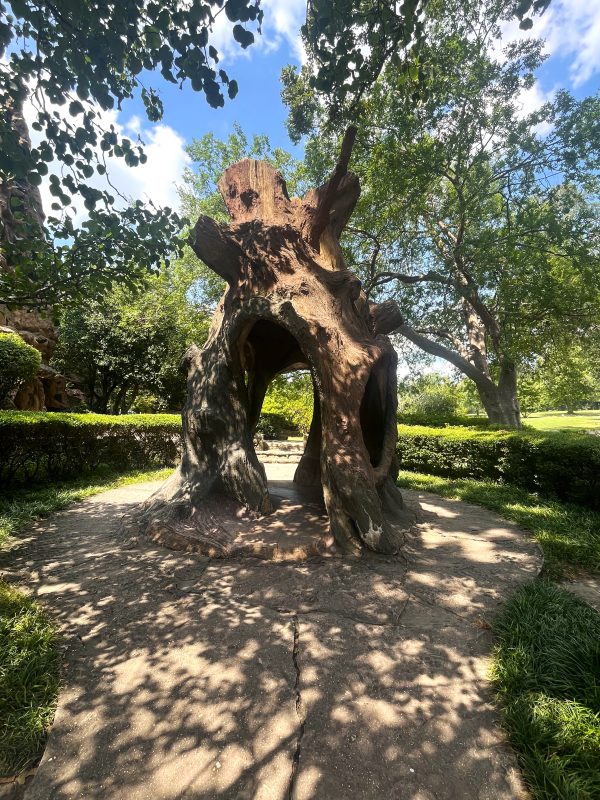

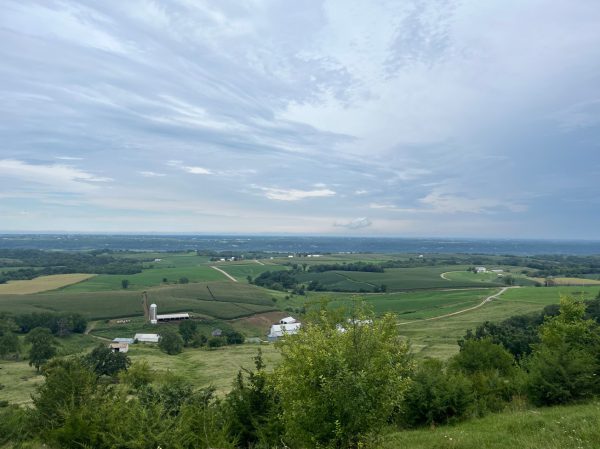
An Excerpt From Eliza’s SIP: Ashen (Final)
Friends of yours tell me stories of how you came to
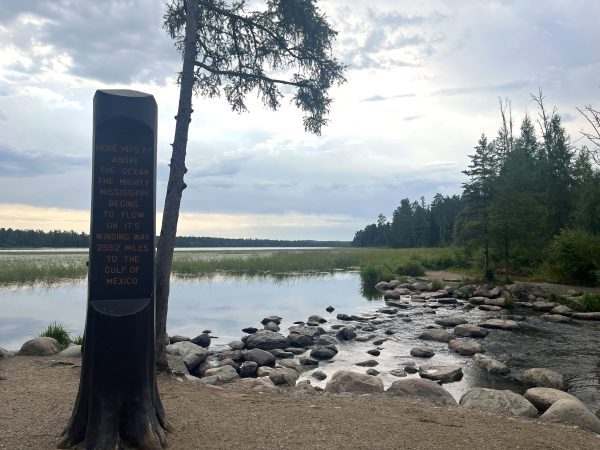
the Headwaters of the Old Man. You drove, solo, like me,
through the night only to see the state government shut
down & with it, the state park. Barricades couldn’t stop you. Your small self
pushed them away, & drove through to the welcome center. A year later, you would go
again with a friend & ask her, “Why are there so many people here?”
I follow you, as I always will, & walk the same
path & I have the same thought &, in addition “Why are there so many
naked babies?” A man asks me to take his picture & I watch the others,
working up courage to drop you off. & I realize, this place, this River
is not my own. It belongs to the millions who have followed it,
up & down, up & down, up & down. I release
you one last time & I think “she’s gone” but know
you never are.