

Why Study Biology at K?
As a biology major, you have the chance to observe, assess and analyze the marvels of existence and use that knowledge to improve the world around you.
K offers a Major in Biology.
The department takes an empirical approach to biology so that you can develop a strong foundation in the field and the critical thinking required to answer probing questions, interpret scientific literature, conduct experiments and make original observations of biological phenomena.
The lifelong learning our biology alumni developed during their time at K has enabled them to pursue meaningful careers in public health, conservation, academia and other sectors.
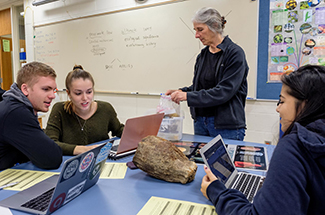
Through courses, research, personalized advising, and departmental experiences, you will gain a keen awareness of the natural world and the confidence and skills to further the field of biology. Specifically, by the time you graduate the department hopes that you will:
- Feel curious about the natural world and empathetic toward our shared environment;
- Know what has been discovered about the natural world, the process by which such knowledge is gained, and how to evaluate competing claims;
- Identify as new members of an interdependent community whose goal is to address socially relevant problems and questions; and
- Continually apply/practice newfound knowledge and skills via career exploration, problem-solving, research, communication, and teamwork.
What can you do with a biology degree?
Below are some of the careers, employers, and graduate schools of our biology alumni.
Job Titles
- Physician
- Research Assistant
- Sustainability Analyst
- Geologist
- Teacher
Employers
- Bronson Hospital
- National Wildlife Federation
- Pfizer
- Walter Reed Army Institute of Research
- Charles River Laboratories
Graduate Schools
- University of Chicago
- University of Michigan
- Michigan State University
- University of Rochester
- Johns Hopkins University
Program Spotlights

Learn in the Great Outdoors
As a Kalamazoo College biology student, you will be able to learn about ecology and environmental science on location at the College’s Lillian Anderson Arboretum, 140 acres of marsh, meadow, pine plantation and second-growth deciduous forest. The arboretum serves as an outdoor classroom where you will be able to collect samples for labs and learn about environmental stewardship first-hand. Many students have chosen to complete their Senior Integrated Project in the arboretum; past students have researched pollination patterns, invasive plant species, and bee populations.
Take your Studies Across the Globe
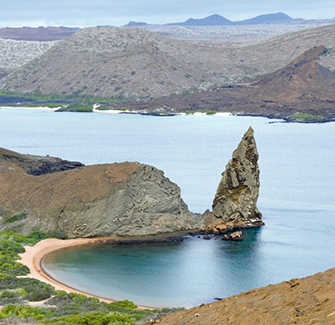
At K, study abroad is central to your education and K-Plan, and biology students are heavily encouraged to take advantage of this opportunity. While you can choose from any of the College’s 50+ study abroad programs and transfer any relevant biology classes, three programs offer unique experiences for biology students: learn about ecology and evolution exactly as Darwin did in the Galapagos Islands in Ecuador, apply your community and global health knowledge in San José, Costa Rica, or study and observe sustainable ecological development in Chiang Mai, Thailand.
Showcase your knowledge with your Senior Integrated Project (SIP)
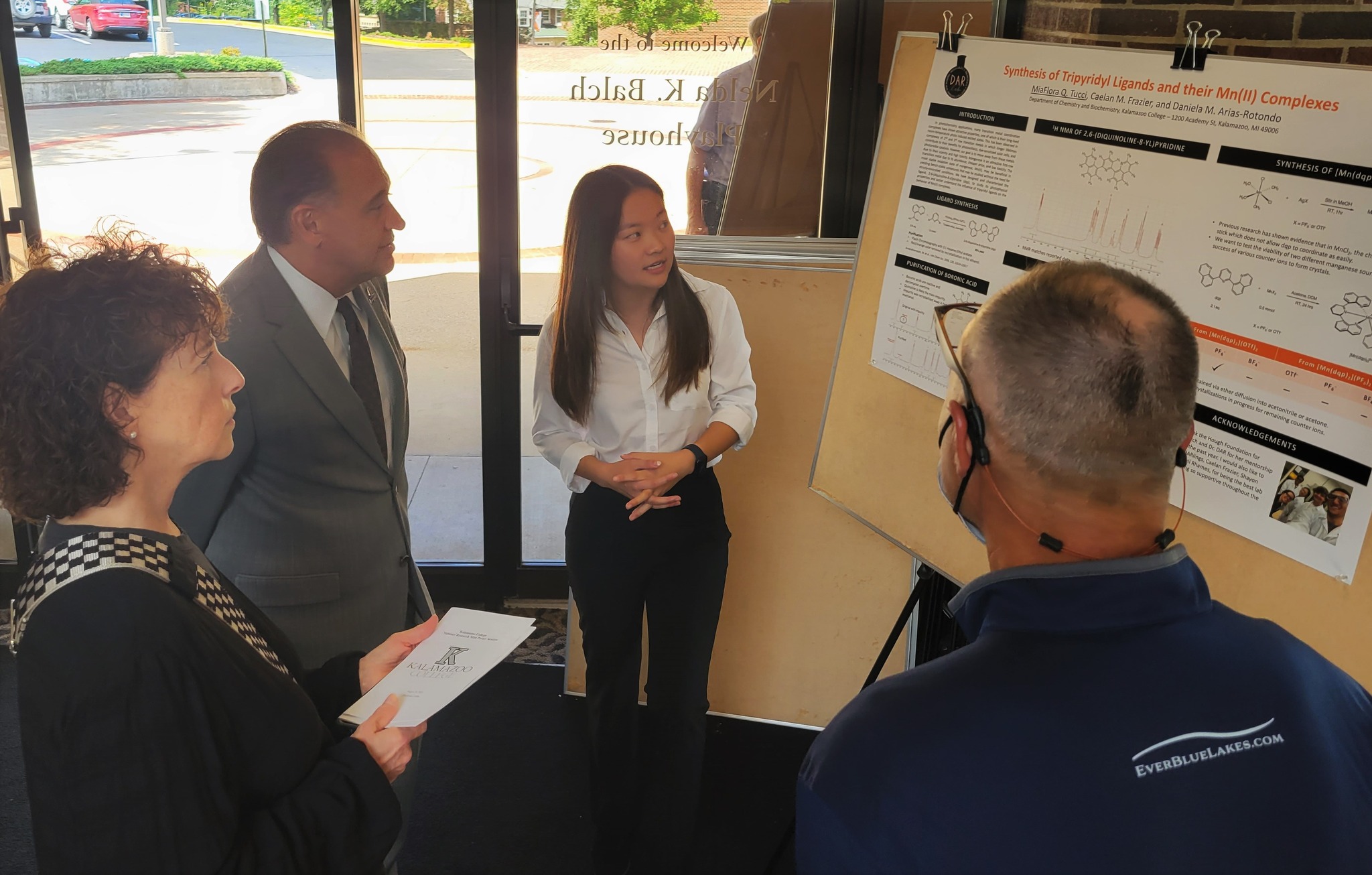
Whether you completed your Senior Integrated Project (SIP) within the Biology Department or not, we are proud of our seniors and want to showcase all you have learned. In that spirit, the annual Diebold Symposium is a three-day event for seniors to present their SIPs in front of their classmates, professors and families and revel in all they have accomplished. The symposium is headlined by a prominent biologist who is invited to campus to present their most recent research in a keynote address.
Meet the Current Departmental Student Advisors
Cedric May

Cedric May
(he/him)
Major: Biology
Minor/Concentration: Environmental Studies
Study Abroad: Wollongong, Australia
Best Adjective to Describe You: Outdoorsy
What is the best thing about being part of this department?
Being a part of a community of people who are curious about the natural world!
How have you taken advantage of the flexible curriculum or experienced breadth in your education?
I have taken quite a few humanities classes at K, including History, Theater, Spanish, English, Critical Ethnic Studies, and Religion classes. Taking classes in a variety of areas has helped me expand my horizons and become a more well-rounded person!
What has been your favorite class at K?
Plant and Fungal Biology (BIOL-232) has been my favorite class at K so far! I really loved taking a class that was focused on plants and fungi and having the opportunity to plan and do an experiment!
What is your Senior Integrated Project (SIP)?
For my SIP, I will be interning at the Grand Traverse Regional Land Conservancy and working on invasive plant management strategies.
What are your career aspirations/next steps after K?
I hope to pursue a career in conservation and potentially go to graduate school for ecology.
Hibah Khan

Hibah Khan
Major: Biology
Concentration: Biochemistry & Molecular Biology
Best Adjective to Describe You: Ambitious
What is the best thing about being part of this department?
Close connections/relationships with both Biology professors and students.
How have you taken advantage of the flexible curriculum or experienced breadth in your education?
Through my concentration, I have been able to engage in Chemistry classes. Also, K’s language requirement introduced me to the Spanish department.
What has been your favorite class at K?
My favorite classes have been Immunology and Cell and Molecular Biology.
What is your Senior Integrated Project (SIP)?
My SIP is on my internship at Harvard Medical School and the Division for Pulmonary and Critical Care Medicine at Massachusetts General Hospital. I will be conducting immunological research on Treg cells in allergic diseases.
What are your career aspirations/next steps after K?
Two weeks following graduation, I will be starting classes as a medical student at Western Michigan University’s Homer Stryker MD School of Medicine.