
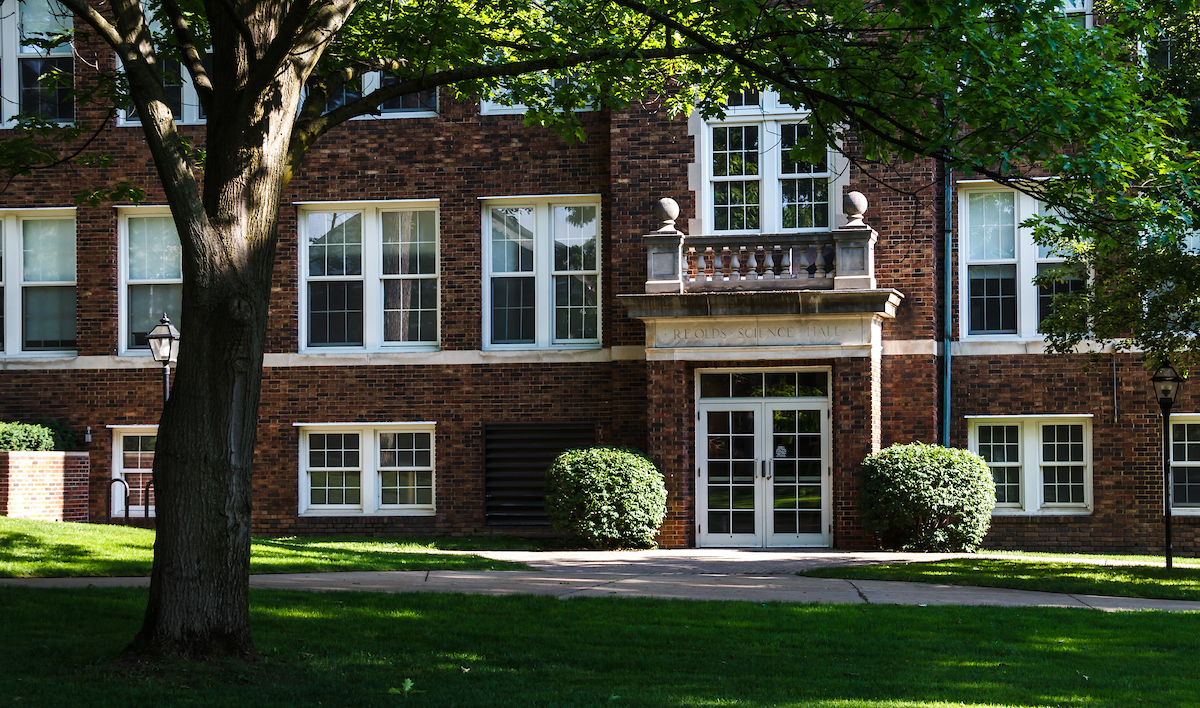
Why Study Computer Science at K?
As a computer science student, you will gain a firm foundation in computing and the skills to adapt, explore, and thrive in the ever-changing field.
K offers both a Major and a Minor in Computer Science.
Balancing theory and application, you will not only learn the technical know-how needed to create and implement technologies, but you will also gain a broader understanding of the societal and environmental implications of technology. With this holistic view of computer science, our students are trained to address today’s most pressing technological challenges.
Starting from the basics, like learning coding languages and data structures, you will learn how to write complex code in advanced software development courses. You will additionally learn how to transfer these skills into specialized fields through courses, such as Cryptography, Parallel Algorithms, Machine Learning, and Computing for Environmental Science.

Our alumni have benefited from learning computer science at a liberal arts college as they develop the ability to critically evaluate complex problems, artfully articulate their ideas, as well as understand how their work fits into the larger picture. These skills—along with the technical capabilities they learned in their coursework and their Senior Integrated Project—set our graduates apart and position them for lifelong success.
What can you do with a computer science degree?
Below are some of the careers, employers, and graduate schools of our computer science alumni.
Careers
- Software Engineer
- IT Business Analyst
- Data Scientist
- Lead Developer
- Web Developer
Employers
- Maestro
- Goldman Sachs
- Atomic Object
- Accenture
Graduate Schools
- University of Michigan
- Dartmouth
- University of Virginia
- Georgia Institute of Technology
- Boise State University
Program Spotlights

At K, you are not alone in your learning
By studying computer science at K, you are joining a strong community of learners. You will benefit from one-on-one mentorship with your professors, who are interested in guiding your professional passions and getting to know you as an individual. The department is also proud of the strong camaraderie between students. Exemplifying this peer support is the Collaboration Center, a tutoring group where advanced students are available to assist you with assignments, studying for exams and helping you navigate K.
Grow alongside your peers
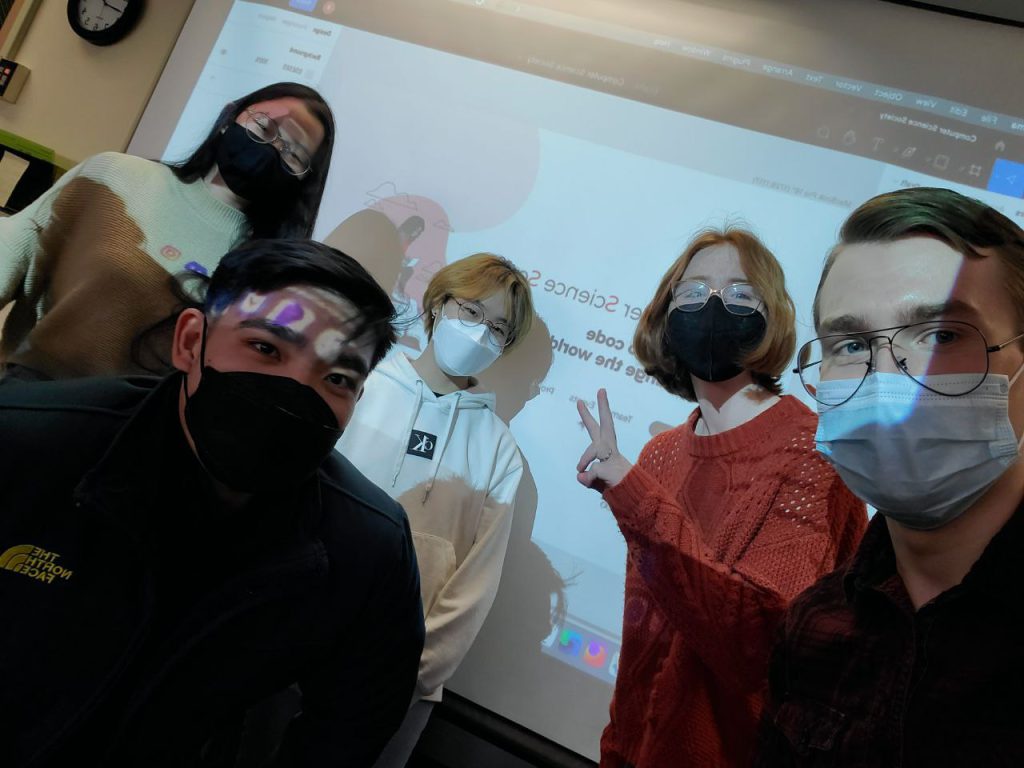
Our students support one another in their personal, professional, and technical growth throughout their four years. This student bond is fostered across campus—especially through the Computer Science Society, a student group for those interested in taking their CS beyond the classroom. The group regularly meets to cooperatively work on interesting projects and develop new technical skills while also creating space for peer mentorship, networking events, and fostering community.
Graduate with the skills to thrive
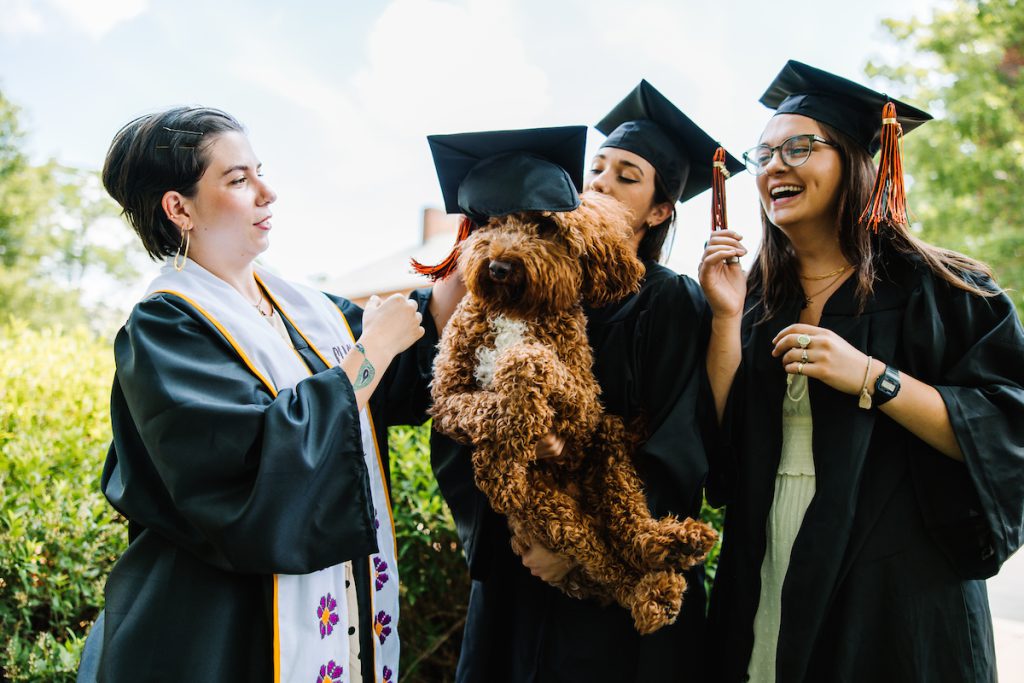
You will gain tangible skills to jumpstart your career by completing your Senior Integrated Project (SIP). Typically, computer science majors either conduct independent research—often through Research Experiences for Undergraduates (REUs)—or complete and reflect upon an internship in industry. For example, Abby Stewart ‘22 interned with Sparrow Health Systems as an applications analyst for her SIP, “Applying a Computer Science Education in Healthcare IT.” She applied her liberal arts background to follow medical practitioners to better create the technological infrastructure needed to improve patient outcomes.
Meet the Current Departmental Student Advisor
Juniper Pasternak
(she/her)
Majors: Computer Science and Mathematics
Minor: Studio Art
Study Abroad: Aberdeen, Scotland
Best Adjective to Describe You: Curious
What is the best thing about being part of this department?
The community of supportive and understanding professors and peers is the best part of the computer science department.
What is your advice to first-years and sophomores about getting connected to this department?
Talk with your professors within the classroom and during office hours. Even if you don’t have any questions, discussing life and possibly going down a computer science rabbit hole can be enjoyable and help you know the department better. Also talk with your computer science peers, work together, and visit the computer science collaboration center open five nights a week.
What has been your favorite class at K?
My favorite course has been MATH300/COMP400: Automata, Formal Languages, and Computability (or in other words, theory of computation). Any class that provides a whole new perspective in a field of interest is certainly a great one, but a class that also combines both of my majors is naturally my favorite. The course covers the mathematical theory behind computing, and this combination of mathematics and computer science provided me with new insight into what computing actually is.
How have you taken advantage of the flexible curriculum or experienced breadth in your education?
K’s flexible curriculum allows me to pursue subjects that I otherwise would not have time for, including a non-STEM field. While taking math courses, I realized that I would want to pursue a minor in mathematics, but as I discovered a passion for the field, this eventually turned into the pursuit of a math major. Surprisingly, by taking studio art courses while exploring other fields, I gained a passion for photography and filmmaking; and this continued interest led me to a studio art minor.
What is your Senior Integrated Project (SIP)?
My SIP is doing research in a summer 2026 research experience for undergraduates (REU) at Salisbury University where I am using machine learning to study and improve a parallel algorithm that solves the stable matching problem.
What are your career aspirations/next steps after K?
After graduation, I would like to pursue a career in a technical computer science field or continue researching in graduate school. Additionally, I would like to travel back to Europe and revisit Scotland at some point.
.