
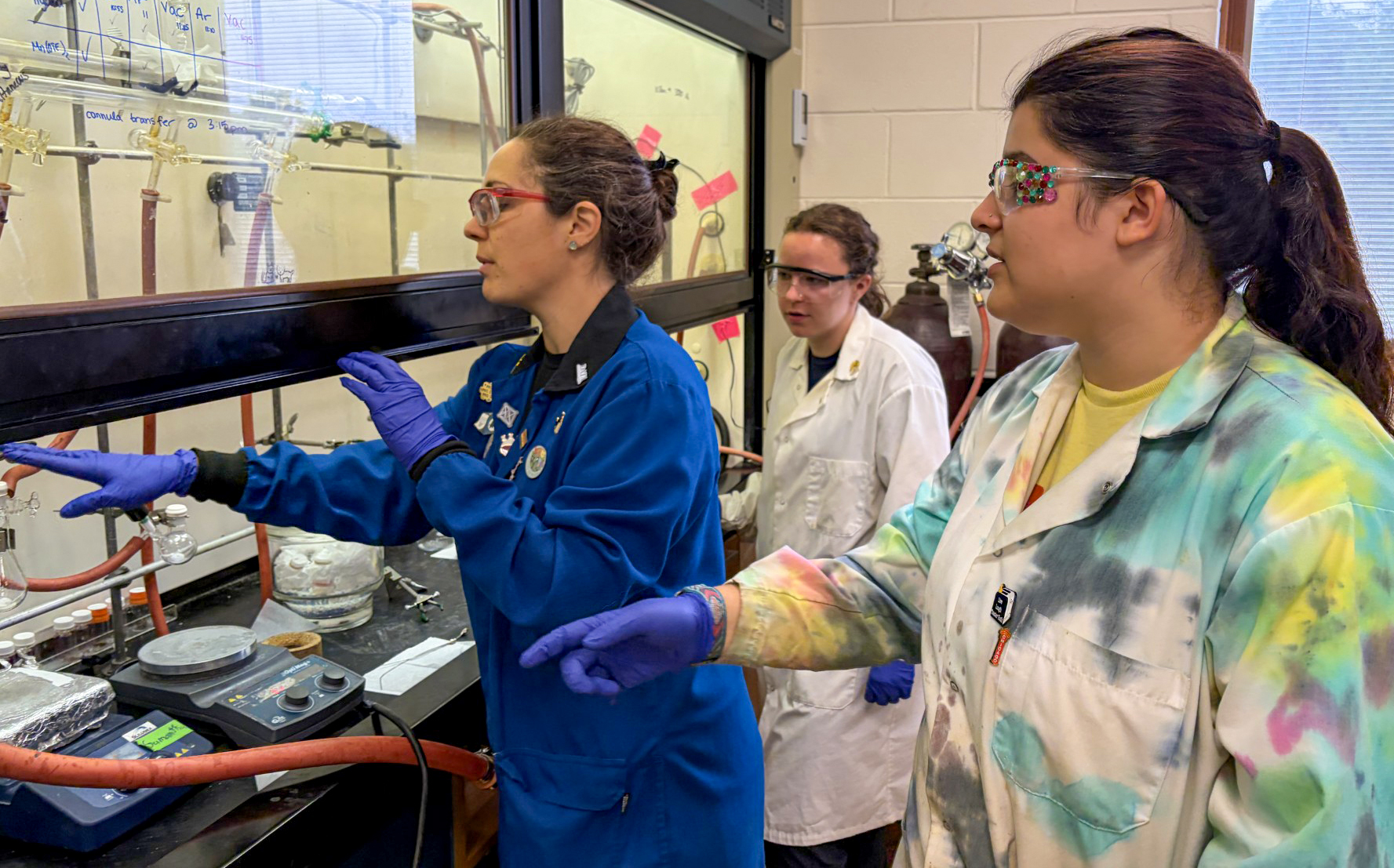
Color explodes in the lab of Dr. Daniela Arias-Rotondo, Roger F. and Harriet G. Varney Associate Professor of Chemistry, from the photos and plants gifted to her by students to the new compounds taking shape in experiments around the room.
Her lab’s goal is ambitious and ongoing: developing compounds that can absorb sunlight and convert it into useable solar energy.
“I am the idea person,” Dr. Arias-Rotondo (Dr. DAR as her students call her) says. “I make plans on how to get there, but I do very little myself. Students are the ones who are doing 90% of what happens in the lab.”
Students in her lab learn as much as possible—they maintain the equipment, changing gas cylinders and oil in the vacuum pumps. “Confidence grows when they do more! Sometimes the process may be slower, but we can see the payoff.”
What sets K’s research relationships apart from other schools or even graduate student work, is that everyone in the lab has close to equal footing. Undergraduates bring an energy and excitement that Dr. DAR doesn’t take for granted. “When students see the things I do every day for the first time, it makes it cool again to see it through their eyes.”
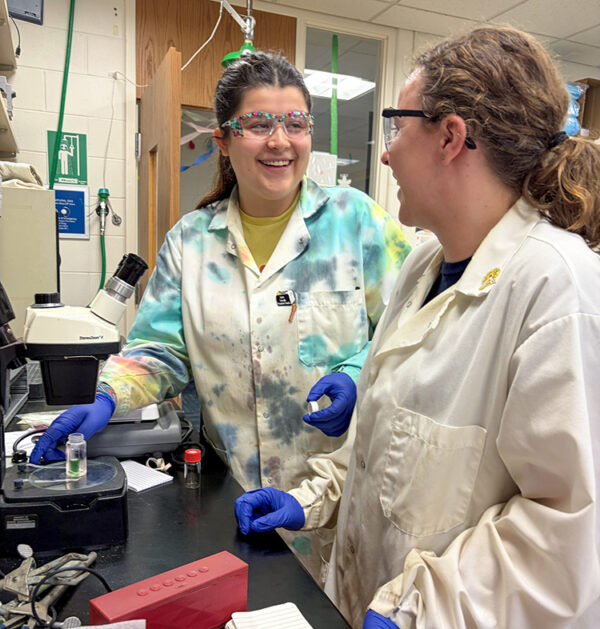
That relationship doesn’t end when a student studies abroad or steps away for a sports season. “I want them to know that they can come back, even with an academic quarter off.” Projects keep moving without them, and the lab makes room for it, because, for Dr. DAR, the point was never just the research; it’s teaching and mentoring the people doing it.
Four students who were conducting research this summer reflected on their experiences.
Meena Moritz ’28 says “Undergraduate research is not an option everywhere. At a time when national funding is uncertain, you fuel student learning—and we feel it.” Meena grows crystals of the compounds made in Dr. DAR’s lab, which are then sent to Michigan State University. She values the chance to collaborate across colleges.
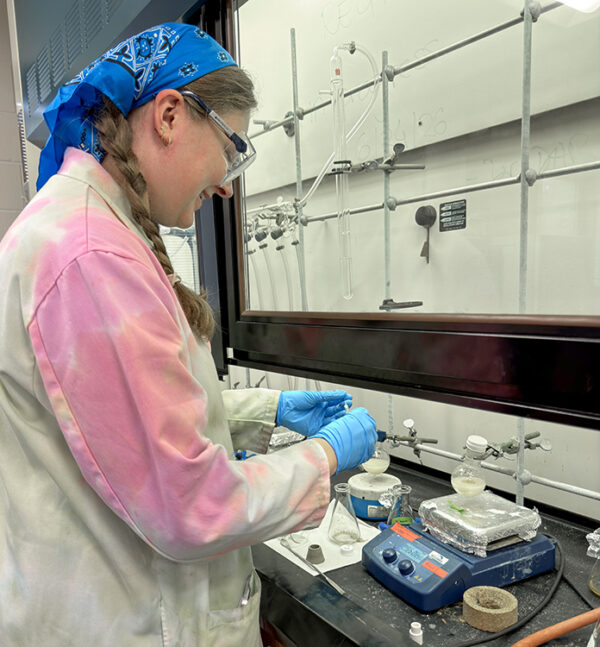
Caroline Johnson ’28 had an ah-ha experience when trying to recreate a reaction that had previously worked, but when conducting her trials was unsuccessful 2 of 10 times. Through self-reflection and independent problem solving, she was able to fix the experiment. Caroline says, “Dr. DAR teaches us what we need to know but challenges us. When you ask her a question, she’ll ask what we think first. She’s collaborative, but she pushes us to problem-solve on our own.”
Junior Mallory Gentry ’28 explored testing manganese against different compounds as one part of the overall research. She said summer research helps hone the skills that you begin in the classroom. “Dr. DAR’s lab helps you build research skills while getting comfortable making mistakes. I’m grateful to you for opportunities like this.”
Calvin Strader ’28 says “We work on a different arm of the project, but there’s a collective goal Dr. DAR sets for the day—it makes the work feel like something we’d do in the industry. She’s been incredibly influential and will be a mentor for life.”
Gifts through the Kalamazoo College Fund help make labs like this possible—not by funding one experiment or one student—by providing students with the mentorship, space and equipment that turn a classroom lesson into hands-on discovery.