
Anthony Asher ’82, Distinguished Achievement Award
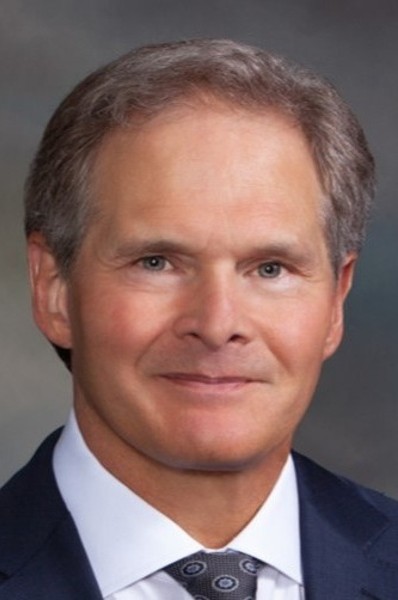
Tony Asher is one of the preeminent neurosurgeons in the country. And, in a compelling tribute to the power of the liberal arts at Kalamazoo College, he says the most important influence of his undergraduate experience was a professor of religion.
Let’s start with the opening sentence.
In recognition of his contributions to neurosurgical medical practice, Tony received the 2026 Cushing Medal, the highest honor awarded by the American Association of Neurological Surgeons. Those contributions include, among many others:
- Founder and surgical director of the adult neuro-oncology program at Levine Cancer Institute;
- Founder and first director of the Neurological Surgery Residency Program at Carolinas Medical Center;
- Author or co-author of more than 300 peer-reviewed scientific publications;
- Founder of the Quality Outcomes Database, the largest cooperative clinical outcomes initiative in American neurosurgery;
- One of only 12 neurosurgeons—and the only community-based practitioner in history—to have served as president of both the American Association of Neurological Surgeons and the Congress of Neurological Surgeons.
Tony has been the principal investigator of many clinical trials, and he and his co-investigators developed treatment strategies for brain tumors that are now standards of care throughout North America.
His influence in healthcare has extended beyond neurosurgery through advisory roles with the Accreditation Council for Continuing Education, the American Medical Association National Quality Registry, the Institute for Healthcare Improvement, the U.S. Food and Drug Administration, and multiple agencies in the U.S. Department of Health and Human Services.
And now to that second sentence and the power of the liberal arts.
Tony matriculated to K from Brother Rice High School (Birmingham, Michigan) in 1978. He earned majors in biology and religion, conducted an internship in the Bronson Hospital pathology lab, studied abroad in Caen, France, and completed a Senior Individualized Project at the National Institutes of Health. His SIP “introduced me to the world of scientific inquiry,” says Tony, “and my life has never been the same since.”
And the humanities changed his life as well. His most influential professor? “Without question, Professor of Religion Waldemar Schmeichel. He expanded my ability to think of the world in philosophical and spiritual—as well as scientific—contexts and to see no contradictions in such integrated thinking.”
“Throughout my career,” adds Tony, “I’ve been guided by a professional philosophy (derived from my experiences at K) that medicine advances when the elements of discovery, clinical practice, education, technology and organizational design are connected, thereby enabling ideas to mature into everyday practice.”