|
NEWS
Green K
Campus Calendar
Dean's List
Honors Convocation
Faculty Grants
Press Releases
The Index
Sports News
Experts List
Contact Us
|
Recital Reunion
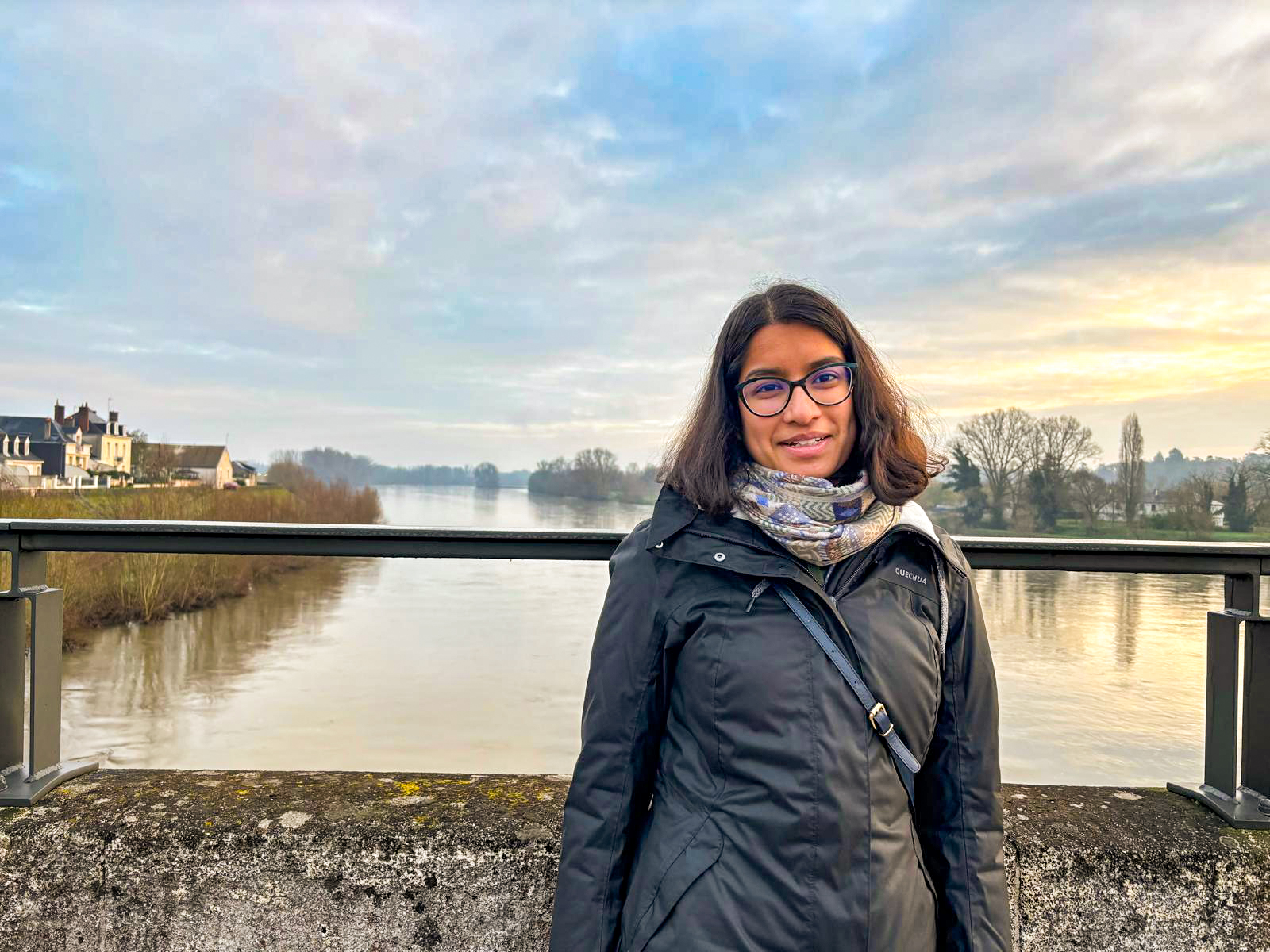
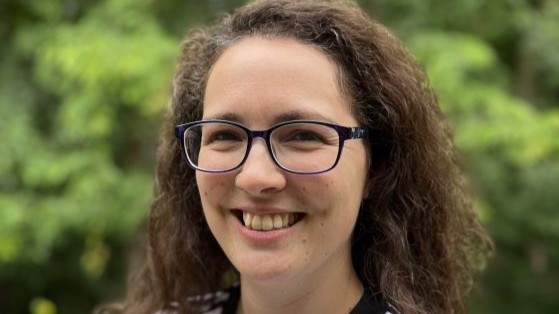
Violinist Joanna Steinhauser ‘02 joins Music Department Chair Les Tung for a recital Thursday, February 11, at 8 PM in the Connable Recital Hall of the Light Fine Arts Building. Steinhauser, who founded Baton Rouge Summer String Jams for young string players, is visiting her alma mater for a Winter Quarter teaching appointment, instructing violin and chamber music. She received her Doctor of Musical Arts degree from Louisiana State University in December 2009. Tung will accompany Steinhauser on the piano for Brahms’ “Sonata #1 in G major” and Debussy’s “Sonata for Violin and Piano.” He says he is thrilled to work with his “former student turned professional peer.” Steinhauser, who says she “feels very lucky and proud to return to ‘K’,” will also perform Yasÿe’s “Sontata #2” solo. The free recital is open to the public. (Copy by Elaine Ezekiel '13; photo by Anders Dahlberg) |
When Living Can’t Say Itself
Senior English major Claire Eder has won The Lyric magazine's national college poetry contest for her sonnet "The Good Book." The Lyric is the oldest magazine in North America in continuous publication devoted to poetry written in traditional forms—like the sonnet. Eder recently received Honors on her Senior Individualized Project, a collection of poems written in both English and French. She wrote the winning poem for The Lyric in Writer-in-Residence Diane Seuss’ “Advanced Poetry” class last spring.
The Good Book
Leaves, torn from above, now line the ground.
A hard wind brought them low all out of season,
and with a rotting-thread sewed them to earth, bound
to let the life-ink dry, give way to reason.
Gone the volume that affirmed the lines
of branches pointing to the sky, volume made of two-
dimensional things, arranged along a spine
to take up space, to fill the field of view.
Dead leaves, dead text, live once again in me,
and in your living stoop to say my own.
Your Author, who by saying brings to be,
has left the room, and I am all alone.
Now, gone mute, I take you from the shelf;
my living, though it’s tried, can’t say itself. |
Armstrong Lecture Features Hinduism Expert
On Monday, February 15, at 8 P.M., Wendy Doniger, the Mircea Eliade Distinguished Chair in History of Religions at University of Chicago, will deliver the 2009 Homer J. Armstrong Lecture on Religion and take questions. The title of her lecture is “Are Hindu Polytheists or Monotheists, And Why Is This Something to Fight About?” The event will occur in the Connable Recital Hall and is Free and open to the public. Doniger’s research interests revolve around Hinduism and mythology. Her course in Hinduism covers a broad spectrum that, in addition to mythology, considers literature, law, gender and psychology. She is the author of more than 15 books, the most recent being The Hindus: An Alternative History (2009), and The Woman Who Pretended to Be Who She was: Myths of Self-Limitation (2006). |
Thought Leader
Harold Decker ‘67 has been named a “2010 Thought Leader in Law” by Business Review West Michigan, a weekly print and online publication for the west Michigan business community. Decker leads the intellectual property practice group for Miller Canfield Paddock Stone out of the law firm’s Kalamazoo office. He was nominated for the Thought Leader award by Kalamazoo College President Eileen B. Wilson-Oyelaran. According to an article in the publication’s January 21 issue, Decker and five other West Michigan attorneys were chosen from more 60 nominees, because they “went above and beyond in their profession, advancing their industry and uplifting the region.” All six Thought Leaders will be honored at a celebration at the Grand Rapids Art Museum on Feb. 4. Registration for the event can be made at thoughtleadersinlaw@eventbrite.com. After earning his B.A. degree from Kalamazoo, Harold Decker earned J.D. and LL.D. degrees from Southwestern University Law School. He spent 21 years as legal counsel for The Upjohn Company, and later Pharmacia, in Kalamazoo. He joined the American Red Cross in 2001 as general counsel and corporate secretary and served a stint as interim president and CEO following the Sept. 11 attacks. Decker joined Miller Canfield’s Kalamazoo office in 2003, working primarily with pharmaceutical, biotechnology and medical device companies. In 2008, he received Kalamazoo College's Distinguished Achievement Award for his career accomplishments. Harold Decker talks about his 36-year law career in an interview with Business Review Associate Editor Mark Sanchez. |
Energy Check
Kalamazoo College received a $10,000 check from Consumers Energy as a rebate for expenses incurred during the College’s conversion to higher efficiency lighting fixtures in the Markin Center tennis courts. Total project costs were $25,000, said Director of Facilities Management Paul Manstrom. "Annual savings," he added, "are anticipated between $5,000 and $6,000 on utility bills and a reduction in greenhouse gas emissions of 30 metric tons each year." With the rebate, the payback on the project is less than three years. |
Recyclemania Cycles Back
Recyclemania has descended on Kalamazoo College again. The annual college and university competition in which institutions nationwide compete to recycle the most materials and minimize waste output stretches for 10 weeks from late January into early April. This year, 595 colleges and universities, representing approximately 5 million students and 1 million faculty and staff from 50 states, the District of Columbia, and Canada will take part in a friendly competition and benchmarking tool intended to promote waste reduction activities to their campus communities. Last year, 510 institutions collectively recycled or composted nearly 70 million pounds of waste. Kalamazoo joined the competition in 2004 and has finished at or near the top of numerous categories in the years since. In 2009, in per capita categories based on numbers of students and staff, “K” finished first in bottles and cans recycled, second in corrugated cardboard, tenth in paper, and second in total pounds recycled. “K” also finished fifth in percent of overall campus waste recycled. Long-time “K” recycling coordinator Rob Townsend says he takes particular glee in beating the big schools, particularly the Ivy Leagues. “It is almost like March Madness,” he said. “I look at who we compare with and make my own Sweet 16.” In addition to placing numerous recycling containers around campus, Townsend and his staff of student workers carryout “dorm storms” going door-to-door in residential halls to remove recyclables, answer questions about what to recycle, and to let students know how well “K” is doing in the competition. Recyclers also team up with other programs on campus to drive awareness and participation, and preach the benefits of reducing overall waste. “Do you really need to print that email?” asks Townsend. “And how about buying drinking water in two-gallon jugs instead of 12-ounce bottles?” This year, “K” residence halls will compete against each other in a side bet to see which ones achieve the greatest percentage of recycled consumables and waste minimization. Crissey and Severn will join forces against dual competitors Trowbridge-Dewaters and Hoben-Harmon. The seven Living Learning houses will also compete. According to Townsend, prospective “K” students learn about RecycleMania and Kalamazoo’s other sustainability efforts through the College’s Admissions Office. New students receive recycling packets when they arrive on campus in order to encourage their involvement.“Kalamazoo students and staff come to appreciate the recycling effort here,” Townsend said. “It becomes second nature to them.” For more on Recyclemania nationally, visit www.recyclemania.org. |
Phi Beta Kappa Lecture
Dr. Alan Ryan, a professor in the department of politics at Princeton University, will deliver the 2009 Phi Beta Kappa lecture on Tuesday, January 26, at 8 PM in the Mandelle Hall Olmsted Room. The title of his talk is “Academic Freedom.” Ryan has taught in various universities in England, the United States, Australia, and South Africa. His books include: The Philosophy of John Stuart Mill; The Philosophy of Social Sciences; Property and Political Theory; Russell: A Political Life; John Dewey and the High Tide of American Liberalism; and Liberal Anxieties and the Liberal Education. Most recently he has edited Mill: A Critical Edition and Liberty and the Subjection of Women by J.S. Mill. Ryan is a fellow of the British Academy and a long-time contributor to the New York Review of Books and to magazines and newspapers in Britain, in particular Times Higher Education, in which he writes a monthly column.
|
Boobus and Bunnyduck Are Here
The Rare Book Room in the Upjohn Library Commons at Kalamazoo College announces “The Arion Press: An Anti-Kindle,” an exhibit of selected publications, January 4 through March 10. Founded by Andrew Hoyem in 1974, The Arion Press publishes deluxe, limited-edition books illustrated by prominent artists. Since 2001, the Press has been a cultural tenant at the Presidio, the new national park in San Francisco. Books in the exhibit include “The Boobus and the Bunnyduck,” written by Michael McClure, illustrated and hand-lettered by Jess Collins; “Ulysses,” by James Joyce, with color etchings by Robert Motherwell, and “Squarings,” a sequence of 48 poems by Seamus Heaney, with 48 new drawings by Sol LeWitt. “The tactile stimulation of the special papers, and the visual stimulation of the type and illustrations combine to create a very special experience alien to that of the electronic format,” said Paul Smithson '68, Rare Book Room Curator. “To those who love the printed word, the concept of a private press need not be explained. The total experience of a well-laid out page—enriched by original artwork, well printed on quality archival paper, and soundly bound—is a thing of joy.” The Rare Book Room at Kalamazoo College is open every Monday, Tuesday and Thursday, through March 10, from 1:00 to 3:00 p.m. or by appointment. Upjohn Library Commons is located on the corner of Academy and Thompson Streets in Kalamazoo. The Rare Book Room is located on the third floor of the Library. Admission is free. For more information, contact Smithson at 269-337-7147. |
Bugs Matters
Associate Professor of Biology Ann Fraser and alumna Leah Blazek ’09 attended the 57th Annual Meeting of the Entomological Society of America, which was held in Indianapolis in December. Blazek presented a paper from her Senior Individualized Project (SIP) work titled “Instinct vs. learning in the initiation of a species-specific caterpillar-ant mutualism.” Fraser presented work from the SIP of Sarah Arnosky ’09: “Native bee diversity of Pierce Cedar Creek Institute in Southwest Michigan.” Fraser served as SIP advisor for both alumnae. The insect meeting was a great opportunity for “K” hornets to gather. Graduates attending the meeting included Lukasz Stelinski ’99, Rachel Mallinger ’05, Nate Walton ’03, Dan Hulbert ’09, Brett Blaauw ’05, Steve Juliano ’77, and Ulrich Mueller ’83. |
First Food in Star Song
The late Larry Barrett--English professor of World War II ship captain, provost and K-Plan founder--was also a fine poet. He wrote poems but never published them. His friend and colleague, Professor Emeritus of English Conrad Hilberry, submitted some of Barrett's poems posthumously to the Hudson Review. Two were published in the journal's autumn issue. "Night Watch" is, in a sense, a Christmas poem with wind and a child's cry;"I know you are down there" may be a bare-knuckled hard drinking cousin of Robert Frost's "Stopping by the Woods on a Snowy Evening." |
Longitudinal Lightning
Just how good is a Kalamazoo College education? Want to know for sure? Then directly test students before and after they’ve completed the K learning experience. Test them for their gains in these abilities: to think critically, to reason analytically, to write well, and to solve problems. After all, those skills will come in handy for life after college. And gains in those abilities are the reasons we go to college in the first place and the outcome we seek from the experience.
Measure directly! If you wanted to know how a medicine (or a diet or an exercise regimen) affected a person’s blood pressure, you wouldn’t just ask him how he felt afterwards, or make conclusions based solely on the way he looked. Instead, you’d use a monitor to read the person’s blood pressure. Direct measures require the courage to face real results. So kudos to K for its continued engagement with the Collegiate Learning Assessment (not all colleges have the guts).
The CLA is a rigorous test that directly measures gains in the four abilities listed above. No multiple choice involved here! Instead students complete a “performance task” in which they are asked to solve a real-world problem using evidence from a document library. They also write two essays, one in which they make an argument and another in which they critique an argument. The CLA factors for variations in individuals’ innate abilities in order to isolate and measure a single variable: the effect of a particular college educational experience on student gains in the ability to think, to reason, to write, and to solve.
In 2005 Kalamazoo College administered the CLA to two groups (or cohorts)—its freshman (class of 2009) and seniors (class of 2005). Results showed that a Kalamazoo College education provides gains far greater than expected in those four endpoints. Compared to other CLA participating institutions (all blinded, because self improvement, more than comparison, is the purpose of the CLA) K results were among the best—“nearly peerless” (the 99th percentile) according to Professor of Biology Paul Sotherland.
The College corroborated these results in a second separate-cohort (or “cross-sectional”) study. Excellent results—supported by additional studies—were great news. But the College never rested on any laurels. Rather, it carefully studied its CLA data to determine if the robust results occurred broadly among all majors and, if not, what curricular changes might be most effective to ensure outstanding gains for all K students. In other words, even though direct outcome measures show “K” to be nearly peerless, how can it continue to improve on what it already does well?
Now come the first longitudinal data—testing the same group of students as freshmen and as seniors. And the results confirm those of the cross-sectional studies: gains far above expected in all four abilities. According to Sotherland, “about two times greater than average gains at the other 25 institutions reporting longitudinal data.” Once again, he says, K is “peerless.” And, as before, the College continues to ask itself tough questions, relentlessly working to improve. Kudos K!
|
Presidential Recognition
Most study abroad packing checklists don’t include this item: "clothes to wear when I meet the country’s president." Good thing Brandon Schabes thought outside the checklist. The junior chemistry and English major is studying abroad in Costa Rica. Through a government program in San José called Costa Rica Multilingüe, Schabes volunteered at local high schools to help students learn English. He worked at a high school called Mario Quirós Sasso, located in the San José suburb of San Diego. “Our final activity for participating in the program was to meet the president of Costa Rica, Oscar Arias,” said Schabes. “His first term as president was from May 8, 1986, to May 8, 1990. His second term started May 8, 2006. He won the Nobel Peace Prize in 1987 for his efforts to end civil wars then raging in several other Central American countries.” |
Provenance Prover
James M. Hughes ’07 is in the third year of a PhD program in computer science at Dartmouth College. He recently had an article published in the Proceedings of the National Academy of Sciences titled "Quantification of artistic style through sparse coding analysis in drawings of Pieter Bruegel the Elder." Hughes and his colleagues applied a model from vision science to distinguish authentic drawings by Bruegel from well-known imitations. “The article is available at pnas.org,” said Hughes, “and it has already garnered some press attention." Check out this article from the BBC; other descriptions may be available soon at other web pages. |
Woodcarver Lamidi Fakeye Dies
Prominent Nigerian wood-sculptor Lamidi Olonade Fakeye, a recent visitor to Kalamazoo College, died on Christmas night in Ile-Ife, Nigeria, at age 81. The cause of death was reported as complications from prostate cancer surgery. He was buried at his home town, Illa-Orangun, according to Muslim rites.
Born in 1928, Lamidi Fakeye became the fifth-generation of his famous family to practice woodcarving. His work revolved around traditional Yoruba social and mythological subjects, which he began studying under his father at age 10. In addition to carving plaques, figures, and large sculptures, he created veranda posts and doors that grace dozens of Yoruba palaces, Catholic churches, and civic and commercial buildings in Nigeria and around the world. In 1973, he carved magnificent doors for the Kennedy Center in Washington, D.C.
Fakeye held his first exhibition in Nigeria in 1960. In 1978, he joined the Obafemi Awolowo University, formerly known as University of Ife. His international career began in 1962 with studies at the École Nationale Supérieure des Beaux-Arts in France, and as artist in residence at Western Michigan University in Kalamazoo. Through the years, he served as artist-in-residence at many universities and colleges throughout the United States and other countries. His numerous international honors included the 2008 UNESCO Living Human Treasure Award.
Fakeye visited Michigan often to create and exhibit his work at WMU, Michigan State University, Hope College, Kalamazoo College, and elsewhere. He was appointed Kellogg Visiting Artist for Michigan in 1999. In October 2009, he visited Kalamazoo College to talk about his life and work, and to demonstrate his art form in a series of appearances at “K,” WMU, and the Kalamazoo community. In October 2009, he visited Kalamazoo; talked about his life and work, and gave demonstrations of his art form in a series of appearances at “K,” WMU, BACC and elsewhere in the Kalamazoo community.
Kalamazoo College President Eileen Wilson-Oyelaran and her husband, professor of African Languages and Literatures Ọlásopé “Sopé” Oyelaran, met Fakeye when they were on the faculty at University of Ife in the 1970s, and came to know him affectionately as “Baba,” Yoruba for “elder.” They were visiting in Nigeria when word of their friend’s death reached them.
“Baba’s death remains a shock and source of great sadness to us,” she said. “We managed to get to Illa for the closing prayers at his interment and to offer condolences to his family and friends.” Read more about Lamidi Olonade Fakeye and view some of his work at “The Carver Among Us,” an online gallery created in 1999 by the Smithsonian Institution’s National Museum of Natural History in Washington, D.C. |
Copenhagen Connections
Two alumnae are attending the United Nations Climate Change Conference (Copenhagen, Denmark) in official capacities. Aubrey Ann Parker ’08, a chemical engineering student at University of Michigan, is keeping a blog about the Conference on behalf of the Detroit Free Press. Christa Clapp ’97, a Paris-based analyst for the Organization of Economic Cooperation and Development, is also attending what she describes as a “completely chaotic sea of people! Keep your fingers crossed for a good outcome of the negotiations.” OECD keeps a blog and has posted a message on what Clapp is doing in Copenhagen and her work on carbon markets. |
Heart Song
What’s the connection between the oldest and most prestigious poetry journal in the country and Kalamazoo College? This month the answer is Writer-in-Residence Diane Seuss, whose poem “Song in My Heart” was accepted in Poetry Magazine’s December issue. Seuss’s new book, Wolf Lake, White Gown Blown Open, winner of the Juniper Prize for Poetry, comes out in April 2010. |
Project Grant
Kalamazoo College has received a $2.1 million project grant from the Arcus Foundation that will fund programming plans for the first two years of the Arcus Center for Social Justice Leadership at Kalamazoo College. The grant also will fund the hiring of the Center’s executive director, academic director, and support staff. The Center will help develop leaders who will advocate for a society which gives individuals and groups fair treatment and equality of opportunity. It will offer students an array of programs, including lectures by individuals who are recognized nationally and internationally for their work in the field of social justice; short-term residencies for scholars, artists, and activists who will interact with the campus and the local community; opportunities for the development of new courses and leadership programs in the area of social justice and human rights; and conferences that address major issues related to the creation of a more just world. The Center will be located on the Kalamazoo College campus on the corner of Academy and Monroe streets in the building formerly occupied the L. Lee Stryker Center. |
Oyster Growth
Senior biology major Margaux Forsch spent a summer with oysters. Specifically, looking at the effects of ocean acidification on oyster development. Her research was funded by the National Science Foundation’s REU (Research Experience for Undergraduates) program and took place at the University of California Davis’s Bodega Marine Laboratory. Early this month, Forsch presented her research as a poster at the 20th Biennial Conference of the Coastal and Estuarine Research Federation in Portland, Oregon. The conference was titled “Estuaries and Coasts in a Changing World,” and the title of Forsch’s poster was: “Ocean Acidification Affects Larval and Juvenile Growth in the Olympia Oyster, Ostrea Lurida.” Forsch's research is the basis of her Senior Individualized Project (Professor of Biology Paul Sotherland is her SIP supervisor). Her attendance at the conference was funded by the Kalamazoo College biology department, one more example of the importance of alumni gifts to their alma mater.
|
Science Grant for Stellar Study
Assistant Professor of Physics Arthur Cole has received a Single Investigator Cottrell College Science Award from the Research Corporation for Science Advancement. The approximately $42,000 grant will support a project titled “Determination of Gamow-Teller Strength Distributions and Electron Capture Rates for Nuclei (A~40-65) in Pre-supernova Stars.” The money will be used to purchase two computers and fund three students who will collaborate in the research. Scientists (and students) will systematically calculate electron capture rates at stellar temperatures and densities, part of an effort to understand the evolution of stars. Research Corporation for Science Advancement, created in 1912, is America’s second-oldest foundation and the first dedicated solely to science. RCSA awards foster the professional growth of faculty to ensure that many students will have the opportunity to participate in high quality research during their undergraduate years.
|
Sustainability Scholarship
As architects for the recently completed renovation of Weimer K. Hicks Student Center, Tower-Pinkster touches the social lives of Kalamazoo College students nearly every day. Now, through the TowerPinkster Sustainability Scholarship, the Southwest Michigan-based architectural and engineering firm will touch five “K” students in a meaningful financial way. Tower-Pinkster will award $2,000 to a student who has an interest in sustainability issues each academic year for the next five years, starting in 2009-2010. Financial need will be considered. This year’s recipient is Anne Weir ’10, an economics major from Saline, Mich., who is currently working on a Senior Individualized Project focusing on the economics of sustainability. Anne, who is also the current student commission president, studied abroad during her junior year in Aberdeen, Scotland. After graduation, she plans to attend graduate school, possibly in the field of public policy as it pertains to sustainability. Here, she is pictured with TowerPinkster CEO Arnie Mikon. Congratulations, Anne! Thank you, TowerPinkster!
|
Nobel Connection
The announcement of the 2009 Nobel Prize in Medicine was particularly thrilling for Diane DeZwaan ’05. The Nobel winners—Elizabeth H. Blackburn, Carol W. Greider, and Jack W. Szostak—are the three top people in the telomere/telomerase field, the scientific area in which DeZwaan is engaged in her fifth year in the lab of Brian Freeman at the Institute of Genomic Biology (University of Illinois). DeZwaan knows and has worked with both Blackburn and Greider, who, with Szostak, discovered in 1984 telomeres and telomerase. Telomeres are strands of DNA attached to the ends of chromosomes that protect the chromosomes during cell division. As division recurs the length of these protective strands shortens; thus telomeres are intricately connected to cellular aging. Telomerase is the enzyme that makes telomere strands (and, Lachesis like, apportions their lengths). Inappropriate telomerase levels may be associated with diseases linked to premature cellular aging (low levels) or the cellular immortality characteristic of cancers (high levels). Since the initial 1984 discovery, telomere/telomerase matters have emerged as more complex. Says DeZwaan: “Our lab takes a different perspective on the dynamics of the telomere maintenance pathway, which has led to debate with many leaders in the field (including Dr. Blackburn) about the actions of telomerase at the telomere. After my latest two publications, Dr. Blackburn has become interested in our lab’s point of view regarding the role of molecular chaperones in these actions,” adds DeZwaan, “and we have begun an active collaboration. I’ve worked with Dr. Greider quite recently as well. She served as the editor of my latest paper in the Proceedings of National Academy of Sciences. It’s so neat and inspirational to be involved with two women scientists so highly regarded in their field of work!” |
Miller Time
After years of on-the-job experience, countless hours of study, and close scrutiny by Dutch masters, Alisa Crawford ’91 can now claim to be the only American who is a professional Dutch miller—and one of the few female professionals worldwide. Alisa, who was profiled in the May 2009 BeLight, recently returned from the Netherlands where she earned certification from the Netherlands’ Professional Cornmillers Association. She returns to “DeZwaan,” the 248-year-old, seven-story tall working Dutch windmill in Holland, Mich., that she has operated since 2002. “The Swan” is the only authentic Dutch windmill operating in the United States. Now it has the only certified American miller at the controls.
|
Alumna Artist on PBS
Julie Mehretu ’92 was featured on season five's episode four of national public TV’s “Art in the 21st Century.” Episode four, titled “Systems,” focuses on artists who tackle projects that are vast and complex. Mehretu is shown creating a large work about the history of market-based capitalism. The one-hour episode aired Wednesday, October 28. You can read an interview with Mehretu here. She has had major art exhibits around the U.S. and has a commission for a major mural in the New York building going up at the site of the World Trade Towers disaster. Among her awards are the Berlin Prize, from the American Academy in Berlin (she was a Fellow there at the same time as David Barclay, the Margaret and Roger Scholten Professor of International Studies); the John D. and Catherine T. MacArthur Foundation Award; and the American Art Award from the Whitney Museum of American Art. She lives in New York City and Berlin, and is the subject of a recent ArtMag essay. |
High Honors
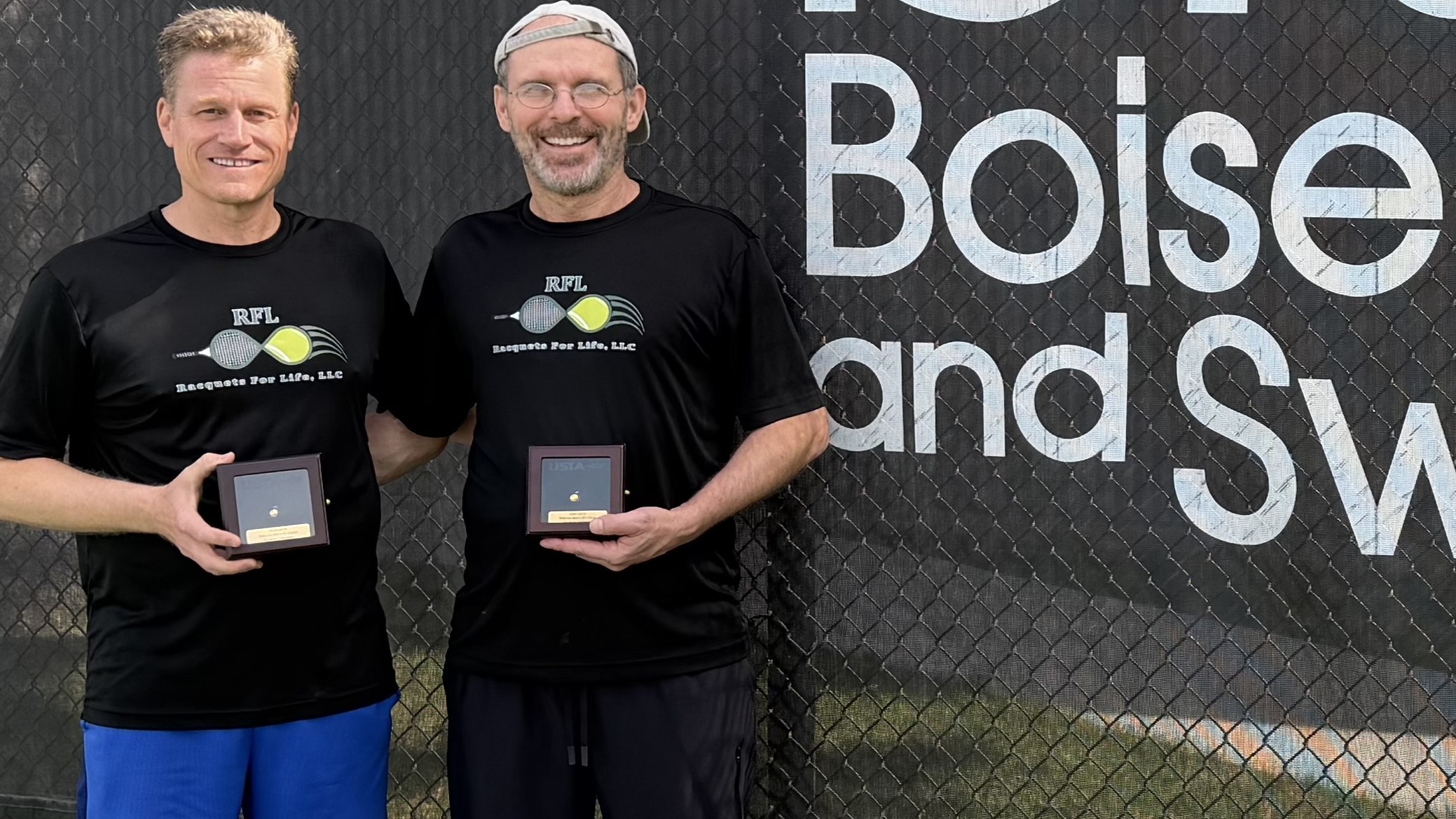
The Kalamazoo College Alumni Association conferred its annual awards during Homecoming this past weekend. David H. Wilson ’69 received the Distinguished Achievement Award; Vernon R. “Ven” Johnson ’83 received the Distinguished Service Award; and Billie Fischer, Ph.D., professor emerita of art and art history, received the Weimer K. Hicks Award. Wilson is a former filmmaker who founded the Museum of Jurassic Technology (Culver City, Calif.), an ineffable “collection” of questions on the meaning and motive of museums. For his work with the Museum of Jurassic Technology, Wilson received the prestigious MacArthur Fellowship (the so-called “genius grant”). He lectures about his work around the world and has been featured in major publications. Johnson was a tennis standout for the Hornet tennis team. He won the MIAA conference title in singles and doubles three consecutive years and was MVP of the conference his senior year. The prominent Detroit-area attorney has continued an ardent supporter of Hornet athletics. For many years he has hosted an annual alumni-varsity tennis tournament in Detroit. That festive occasion, followed by a party for families and friends, has steadily grown and now attracts some 30 alumni tennis players. Fischer distinguished herself in class (a Florence J. Lucasse Fellowship Award for Excellence in Teaching, the College’s most prestigious pedagogical honor) and was very involved in the lives of students outside of class (a Frances Diebold Award). She’s a fixture at athletic events and student plays and musical performances. She also is active in countless community organizations and projects. She received the Community Medal of Arts award from the Arts Council of Greater Kalamazoo in 2005. She lives near the College and, even though she’s retired, continues to participate in the Summer Common Reading program for incoming freshman. |
Green Grade
The grades are in and Kalamazoo College has received a solid “B” for its campus sustainability efforts. The Sustainable Endowments Institute has released its 2010 report card traking green initiatives at 332 institutions of higher learning in the United States and Canada. Schools received grades in nine categories: Administration, Climate Change and Energy, Food and Recycling, Green Building, Student Involvement, Transportation, Endowment Transparency, Investment Priorities, and Shareholder Engagement. Kalamazoo’s report card reveals the grade that the College received in each category, as well as survey data that went into each grade. “Sustainability is a campus-wide effort and that’s certainly reflected in this report card,” said Facilities Management Director Paul Manstrom. Paul praised Vice President for Business and Finance Jim Prince, Nick Kelly in Facilities Management, Mark Wilson in Sodexho Food Services, and former Sustainability Coordinator Marcquel Pickett ’08 for their efforts to gather info and respond to SEI survey questions. Kalamazoo received an overall grade of C- in 2009. This year, 26 schools received an A-, the highest grade awarded. In its fourth year, the College Sustainability Report Card is the only independent evaluation of campus and endowment sustainability activities at colleges and universities in the U.S. and Canada. Its aim is to provide accessible information for schools to learn from each other’s experiences and establish more effective sustainability policies. |
Awards Announced
Three annual “K” faculty and staff awards were recently announced: Outstanding First-Year Student Advocates: Dana Jansma (right), Associate Dean of Students; Deanna Roell (left), Area Coordinator; and Kristin Peterson, Area Coordinator. Dana, Deanna, and Kristin were honored for making significant contributions to the academic achievement and personal development of students during the first year of college. Outstanding Advisor: Jim VanSweden, Director of Communications. Jim was honored for paying close attention to his advisees’ academic progress, and for helping students work towards completing their degrees, and identifying and fulfilling their academic goals. Florence J. Lucasse Lectureship for Excellence in Teaching: Professor of Philosophy Chris Latiolais, Ph.D. Dr. Latiolais (photo below)was honored for making a deep and lasting impact on his students. He has taught 27 different courses during his time at the College; has used film, theater, art, music, and popular culture to examine deep and difficult concepts in class; has hosted faculty-student reading coteries over the years; prepared students to participate in major conferences; and has mentored them for graduate and professional study, for work, and for life. A Lucasse Award celebration will occur in Spring quarter and feature an address by Dr. Latiolais. |
President Endorses Access to Research Literature
The presidents of 57 liberal arts colleges—including Kalamazoo College President Eileen Wilson-Oyelaran—released an open letter on Tuesday endorsing the Federal Research Access Act of 2009 (S. 1373), a bill pending before the United States Senate aimed at increasing public access to academic research that is funded by the federal government. The bill would require federal agencies that fund more than $100 million in external research annually to require the peer-reviewed journals that publish that research to make it available for free on the Web after six months. According to the presidents’ letter, this would be “a major step forward in ensuring equitable online access to research literature,” and would particularly benefit students and faculty at liberal arts colleges where “access to research information paid for with tax dollars is severely limited.” |
Convocation 2009
The class of 2013 includes 391 students from many states and countries, and their first moment together occurred September 16 at the 2009 convocation. They experienced the annual international flag ceremony, which celebrates the geographical diversity of the "K" family and participated in the ritual of recognition--a kind of communion (diversity in time travel) with the College's ancestral fellowship in learning. That ceremony was written by President Allan Hoben (1922-1935) and first recited by an incoming class in 1927. Alumnus Harold Decker '67 described how Kalamazoo College "made changes in me that helped me make a difference in the world." The former interim president and CEO of the American National Red Cross was part of the Worldwide Measles Initiative, which has reduced disease mortality by 70 to 90 percent. Alumnus Rick Halpert '69 congratulated incoming freshmen on the wisdom of their decision to attend "K." And that's just the beginning of the process, he added. "K" is a place (or rather, in Halpert's words, a "family") associated with the the formation of wisdom--"knowing what to do when no one knows what to do"--and a strong value system that can accommodate lifelong learning and life's constant of change. Because of Kalamazoo College, he said, "You will soar in good times, cope with bad times, and, most importantly, live a happy life."
|
Generation One
Some 15 percent of students in the incoming Kalamazoo College Class of 2013 are the first in their immediate families to attend college. On Wednesday morning many of them—accompanied by parents, grandparents, and even siblings—attended a “First Generation” brunch in the Hicks Student Center to hear about the many opportunities and programs at “K” that await them. “Welcome is a word you will hear a lot of today and in the week ahead,” said Vice President of Student Development and Dean of Students Sarah Westfall. “We are delighted that you are here.” Students and families heard from President Eileen Wilson-Oyelaran, staff members from several campus departments, and older students who are themselves “G1” students. President Wilson-Oyelaran encouraged students “to be open to exploration” during the year ahead, and asked parents “to roll with the punches” as students explore, discover, and often change their intellectual passions. Staff members from the College’s Mary Jane Stryker Center for Service Learning, Center for Career Placement and Development, and Student Development outlined some of the programs that are available to G1 students, including Council of Independent Colleges/Wal-Mart Foundation grants that help meet costs of discovery externships and career internships. Three students talked about their experiences as G1 students at Kalamazoo. “I’m proud to be the first in my family to attend college,” Evan Bontrager '11 said. “But I feel no different than other students here. My message is that you can be whatever you choose to be.” Kalamazoo staff (some of whom were the first in their families to attend college) and current G1 students will meet regularly with first-year G1 students throughout the academic year to smooth their transition to college life and help them succeed at Kalamazoo. The photo shows incoming freshman Luis Barsuto-Jimenez (center) with his mom and Professor of Mathematics John Fink.
|
K Plan for H1N1
Kalamazoo College reported three cases of the novel H1N1 influenza virus, commonly called “swine flu,” among students in the spring. “For the fall term, we are hoping for the best, but planning for the worst,” said Kalamazoo College Director of Student Health Services Lisa Ailstock, PA-C. “It seems inevitable that we will experience novel H1N1 here on campus, if we learn from other campuses around the country. Our best plan is to limit the spread and keep those at high risk of complications as healthy as possibly. We encourage students, faculty, and staff to do what they can to limit the spread of this virus.” Ailstock, a certified physician assistant, has directed the Kalamazoo College Student Health Center for four years and supervises a staff of five full- and part-time medical professionals and support staff. Steve Pollens, M.D., serves as Medical Director. Ailstock is also a lead member of the College’s pandemic flu planning response team, which has developed plans for a variety of flu-related scenarios on campus. The team meets regularly and consults closely with the Kalamazoo County Department of Health and the Michigan Department of Community Health. They also closely monitor the U.S. Centers for Disease Control and Prevention (CDC) updates and guidelines. Ailstock was recently named to lead a statewide panel of college and university health officials charged with helping to prevent the spread of H1N1 virus on college campuses throughout Michigan. As a Work Group Leader on the Adult Influenza Immunization Subcommittee of the Michigan Flu Advisory Board, she is charged with developing flu prevention and treatment messages targeted at 19-24 year old college students. Currently, the messages to Kalamazoo students and their parents, as well as College faculty and staff, focus on prevention and what to do if flu-like symptoms present. Kalamazoo student athletes, Land-Sea participants, first-year students, and returning students all received letters instructing them not to return to campus if they are experiencing flu symptoms. College faculty and staff have received similar instructions. The entire campus community has received instructions on proper cough and sneeze technique, frequent hand washing. Hand sanitizing stations and flu prevention posters are seen throughout campus buildings. “Students who become sick while on campus will be sent home to recover whenever possible,” said Ailstock. “Faculty and staff will do whatever it takes to keep students healthy and up-to-speed on their academics.” When the long-anticipated H1N1 vaccine is made available to K College, students will be encouraged to get vaccinated. She said the campus clinic also has a good working relationship with the two local hospitals and the Sindecuse Health Center at Western Michigan University where “K” students can also receive medical care. “It seems likely that H1N1 will be part of Michigan’s college and university campuses for the foreseeable future,” Ailstock said. “Campuses in the American southeast and southwest have experienced noticeable outbreaks of the H1N1 flu. We anticipate a similar experience in Michigan and here in Kalamazoo.” For more information about what students and parents can do and what the College will do in response to an H1N1 outbreak, visit www.kzoo.edu/studev/H1N1NEW.htm. The Kalamazoo College Office of Information Services also maintains an H1N1 information site at www.kzoo.edu/is/connections/2009/04/h1n1-swine-flu-news-and-resources.html.
|
Comet Seed
Were some of life’s building blocks formed in space and delivered to earth by comet? That’s a theory that’s gained support from the recent discovery of glycine in dust samples collected by NASA’s Stardust spacecraft from a comet called Wild 2 (pronounced vilt-2). Stardust reached its Wild rendezvous at the edge of our solar system in January 2004 and there collected its samples of comet gas and dust, which were returned by capsule to earth some two years later (a round trip of some 3 billion miles). Alumna Jamie Elsila ’96 is a member of the scientific team at Goddard Space Flight Center (Greenbelt, Md.) that, since the capsule’s return, has analyzed the samples. The team discovered glycine in the samples and recently confirmed its extraterrestrial origin. Elsila is the lead author of a paper on the research which will be published in the journal Meteoritics and Planetary Science. Glycine is an amino acid used to make proteins, the fundamental molecules of life. The discovery gives rise to other tantalizing questions. How many other planets in addition to earth may have been seeded from space with chemicals essential for life? How widespread is life and in what various forms might it exist? You can read an article on the research at Physorg.com and see a BBC interview that features Dr. Elsila here. She is the lead author on paper on this subject that was highlighted in Chemical & Engineering News. |
Chem Prof Receives Grant Supplement
Kalamazoo College Associate Professor of Chemistry Laura Furge has received a federal economic stimulus grant to supplement her existing research grant from the National Institutes of Health (NIH). The original grant of $191,087 for a project titled “Mechanism-based Inhibition of P450 2D6 by a Piperazine-containing Compound” was awarded in December 2008. The grant funds research on cytochrome P450 enzymes and their role in drug metabolism, work that may benefit patients taking multiple medicines. In July, Dr. Furge’s application for a supplement of $135,581was funded with federal economic stimulus dollars allocated to the NIH. The supplement will accelerate the pace of research and promote job creation (criteria for the supplement program) by providing funds for to hire a full-time research associate. Hers is the first grant awarded to a Kalamazoo College faculty member using federal economic stimulus funds. Other proposals have been submitted to the National Science Foundation by “K” faculty. Furge’s research may one day contribute to medical understanding and prevention of adverse drug reactions in people who must take multiple medicines. Often, these interactions are caused when one drug inactivates an enzyme responsible for the processing or metabolism of a co-administered drug. Cytochrome P450 is one of a group of enzymes in humans that interferes with the activity of other drug clearing enzymes. Her research will involve use of modern liquid chromatography coupled to mass spectrometry, computer aided modeling of drug-enzyme interactions, and basic drug metabolism studies. |
 Plant Grant
Kalamazoo College Associate Professor of Biology Binney Girdler, Ph.D., has been awarded a grant of $135,000 from the National Science Foundation to study Great Lakes shoreline plant communities in the Beaver Island archipelago in northern Michigan. The research will seek to understand how the interaction of environmental factors and dispersal dynamics determine the composition of plant communities. Insights gained will ultimately be used to protect and manage remnants of intact shoreline plant communities and to restore the integrity of damaged ecosystems. Understanding the structure of ecological communities will also help scientists to anticipate impacts of climate change and other human activity. The two-year project will provide research experiences for several Kalamazoo College students as they collaborate with Dr. Girdler in studying this vulnerable ecosystem. Congratulations, Dr. Girdler! |
Sammie Finalist
Regan Murray '94, Ph.D., mathematical statistician at the U.S. Environmental Protection Agency, was one of 30 finalists (2009) for the Service to America Award. "Sammies" honor federal government workers who have made significant contributions to the country; and the award is presented by the Partnership for Public Service, a nonprofit, non-partisan organization based in Washington, D.C. Murray and her team developed software that helps public water facilities design and operate contamination warning systems, thus improving the safety of U.S. water supplies. You can find a profile and photo of Murray in the Washington Post. Murray also co-founded (with classmates Leah Berger and Bevin Dunn) a nonprofit organization to improve the lives of African children orphaned by HIV/AIDS. That work was reported in the Spring 2009 LuxEsto. |
Greening in the Green
Seasonal greening means sustainability greening at Kalamazoo College. This summer seven students (or recent graduates) are involved in research and development work that could directly or indirectly lead to reductions in greenhouse gas (GHG) emissions at the College. The work of four of the seven is funded by the Climate Commitment Planning Committee’s Climate Research Fellowships. “The fellowships provide an on-campus opportunity for students interested in sustainability research,” says committee chair Paul Manstrom. “In the past, these students would have had to find an internship on the outside.” Ellen Smith ’10 and Ben Cooper ’11 are researching the potential for the College to use the Anderson Arboretum biomass to sequester some of the GHG emissions the College must report as part of the Presidents Climate Commitment. “They are making great progress,” says Manstrom, “and the College is a leader in developing methods for calculating the sequestering potential of areas like the Arboretum.” Adam Smith ’11 is testing, both in the lab and in the field, the potential for LED lighting on campus. He has discovered a number of potential applications, and, if testing goes well, the energy savings (and GHG reduction) will be significant. Chris Hutchinson ’10 is using infrared camera technology to calculate heat loss in the College’s steam distribution system. He also is working on a plan with Residential Life to concentrate student occupancy during the December break. Both projects will help the College calculate, implement, and administer energy savings. Amanda Lawrence ’10 works half-time for facilities management (Recycling and the campus group, Helping Understand Bicycles). The rest of her time is spent on a Senior Individualized Project, researching ways to encourage more bicycle use at “K.” “Her research makes use of Geographical Information Systems,” says Manstrom, “a powerful software based on GPS data.” Evan Anderson ’09 is working for facilities management to write code for software that will automatically retrieve data from College energy meters and publicly display current and historical energy use. “This ‘energy dashboard’ concept is a feature on several U.S. college websites,” says Manstrom. “But we’re one of the first to install it ourselves.” Finally, Nick Kelly ’09 is conducting research into strategies to reduce emissions for the purpose of the Presidents Climate Commitment. He was commissioned by the Board of Trustees to produce a document that lists board member travel options that will offset GHG emissions. |
Wondrous Stories
"This is wondrous strange!"
"And therefore as a stranger give it welcome. There are more things in heaven and earth, Horatio, than are dreamt of in your philosophy."
Although William Shakespeare was not the commencement speaker in Kalamazoo College's 176th year, his kinswoman (in the sense of a fellow writer of fiction) Chimamanda Ngozi Adichie did fulfill that role. And she was terrific. The 330 graduating seniors first met the award-winning Nigerian author as freshmen, when all read--and then discussed with her--her novel Purple Hibiscus. Four years later, in a gentle breeze on a blue and sunny graduation Sunday, Adichie shared five humble "random suggestions" with the Class of 2009. Precepts three and four--to remember there is never a single story about anything, and, whenever smugness threatens, to think of how little we know--echoed Hamlet's "there are more things in heaven and earth." Adichie invited all of us to seek and have as many stories of the world as we can, and to let a diploma become a symbol of how much there is left to learn. She asked the graduates to begin to make a world that has the values they value. Read books--it is how one comes to live in bodies not one's own, and such animation leads to empathy. And finally, make room for hope and fear. "To write fiction is to start a long walk," Adichie said. And despite knowing that one is sure to trip and fall, one is keen to take the walk. To begin a novel is both an act of faith, in which fear and hope comingle, and a metaphor for any life journey. One is bound to fall and perhaps stay down awhile. But one can learn from that, and get up. She closed with a wish for every graduate: a life full of meaning...and laughter. Adichie received an honorary degree, as did noted philanthropist and civic leader Margaret Ann Riecker. Senior (now alumna) Amel Omari spoke eloquently of an "elan" of community she and her classmates developed during fours years and are now called to channel outward in order to make the world better for all.
|
A Fiske Best Buy
Kalamazoo College has been named one of the 44 “Best Buy” schools by Fiske Guide to Colleges 2010. Written by Edward Fiske, former education editor of the New York Times, the Fiske Guide annually rates more than 300 top American colleges and universities. The revised and updated 2010 edition features 20 public and 24 private “Best Buy” institutions of higher learning selected on the basis of cost data, academic offerings, and life-style information. In addition, the book lists each school’s strongest majors and programs, candid tips from current students, a self-quiz to help students understand which college is right for them, information on how to apply, and “Overlap” listings to help students expand their options. “Many students, parents and high school counselors recommend the Fiske Guide as a respected resource because it accepts no consulting, advertising, or other fees from colleges,” said Kalamazoo College Dean of Admissions Eric Staab. “By rating Kalamazoo as a ‘Best Buy,’ the Fiske Guide tells prospective students and parents what our alumni have known for years: that a ‘K’ education is a great investment.” |
Make Stuff's Happening
Kalamazoo College's Make Stuff student organization aims high. On June 12, 2009, at 3 PM the club launched its first homemade high altitude balloon from campus, complete with web cam and GPS information sent over HAM radio. The flight reached some 80,000 feet and lasted just under 90 minutes. The balloon was retrieved in Marshall, Michigan. Check out the group's web site here (with cool photos and video) and a great aerial shot of the campus taken from the balloon. |
"K" Talks Trash
RecycleMania 2009 results are in and Kalamazoo College has once again been honored as a leading recycler among colleges and universities nationwide. Kalamazoo was one of a record high 510 colleges and universities from 50 states, the District of Columbia, and Canada that took part in the friendly competition and benchmarking tool to promote waste reduction activities to their campus communities. During a 10-week period ending in early April, Kalamazoo and other schools reported recycling and trash collection data which were then ranked against other schools in their categories. Each week, schools watched how their results fluctuated against the competition and rallied their campus communities to reduce and recycle more. This year, 4.7 million students and 1.1 million faculty and staff on participating campuses collectively recycled or composted just over 69.4 million pounds of waste. In per capita categories based on numbers of students and staff, Kalamazoo finished first in bottles and cans recycled, second in corrugated cardboard, tenth in paper, and second in total pounds recycled. “K” also finished fifth in percent of overall campus waste recycled. Kalamazoo has participated in RecycleMania since 2005, finishing at or near the top of numerous categories through the years. Kalamazoo’s long-time recycling coordinator Rob Townsend told RecycleMania organizers that he takes particular glee in beating the big schools, particularly the Ivy Leagues. “It is almost like March Madness,” he said. “I look at who we compare with and make my own Sweet 16.” Townsend said his staff of 15-20 part-time student workers carry out “dorm storms” during which they go door to door in residential halls to remove recyclables, answer questions about what to recycle, and to let students know how well the college is doing in the competition. Recyclers also team up with other programs on campus to drive awareness and participation. New students receive recycling packets when they arrive on campus in order to encourage their involvement. Townsend is working on a similar online packet for college staff. Prospective students learn about RecycleMania and the College’s other sustainability efforts through the College’s Admissions Office. “Kalamazoo students and staff come to appreciate the recycling effort here,” Townsend said. “It becomes second nature to them.” Here are the 2009 RecycleMania categories in which Kalamazoo participated, the number of competing schools in each category, the winning school, and Kalamazoo’s rank. Visit www.recyclemaniacs.org for more info.
Grand Champion (percent of overall waste recycled). 206 schools. Winner, California State University, San Marcos (78.09 %). Kalamazoo, 5th (63.28%)
Stephen K Gaski Per Capita Classic (total pounds of recyclables collected per person). 293 schools. Winner, McNeese State University, Lake Charles, LA (76.19 pounds). Kalamazoo, 2nd (66.84 pounds). In 2008, “K” finished 1st out of 180 schools in this division.
Bottles and Cans (pounds per person). 210 schools. Winner, Kalamazoo College (19.03 pounds). In 2008, “K” was second out of 161 schools.
Corrugated Cardboard (pounds per person). 204 schools. Winner, McNeese State University, Lake Charles, LA (41.87 pounds). Kalamazoo, 2nd (28.13 pounds).
Paper (pounds per person). 204 schools. Winner, Stephens College, Columbia, MO (40.87 pounds). Kalamazoo, 10th (17.61 pounds).
Waste Minimization (pounds of waste generated per person—low score is better). 148 schools. Winner, North Lake College, Irving, Texas. Kalamazoo, 142nd (105.64).
Gorilla Prize (cumulative weight of all recyclables—favors big schools). 293 schools. Winner, Rutgers University, New Brunswick, NJ (2,131,378 pounds). Kalamazoo, 147th (74,130 pounds). |
Freedom and Flexibility
New students will enter “K” this fall under a Kalamazoo Curriculum that provides them more freedom to design their curricular pathways. After several shared requirements (far fewer than the previous curriculum’s), students are free to choose liberal arts courses with the flexibility to explore and develop their intellectual passions. They will accomplish this in collaboration with their academic advisors. The new curriculum requires a major, proficiency in a foreign language, a senior individualized project, and five physical education activity courses. The new curriculumalso requires a set of “shared passage” seminars (one each taken as a freshman, sophomore, and senior) that provides students a common experience. Continuing students may opt into the Kalamazoo Curriculum by completing a workshop and filing a plan at least two terms prior to graduation. The Kalamazoo Curriculum is part of the K-Plan, which continues to provide opportunities in international and intercultural engagement, career and professional development, and learning by practice. Research on more flexible curricula strongly suggests that the freedom of the Kalamazoo Curriculum will help students and faculty more effectively achieve their educational objectives. Students’ common experiences (particularly the shared seminars) will help students integrate the breadth of their liberal arts choices. First-year “shared passage” seminars focus on college-level writing, critical thinking, intercultural understanding, and information literacy. Sophomore seminars consider particular topics or issues from multiple perspectives, foster effective communication (written and spoken) and cross-cultural inquiry, and prepare students for participating in study abroad and living in an interdependent world. Senior seminars are disciplinary or interdisciplinary. The former integrate students’ experiences around a particular major. In interdisciplinary seminars, seniors from diverse majors apply their particular training and perspectives to a topic or problem. |
|
Event
Calendar |
| Winter Term 2010 - Week Six
|
| Feb 10 |
7:30 P.M. Men's Basketball v. Hope College, Anderson Athletic Center, LAC
|
| Feb 11 |
7 P.M. "Creation in Crisis: Should Christians Care," lecture by Edward Brown, Care of Creation, on the Christian response to the environmental crisis, Stetson Chapel, LAC
8 P.M. Faculty Recital: Steinhauser and Tung, featuring Professor Leslie Tung, piano, and Professor Joanna Steinhauser, violin, Connable Recital Hall, LAC
|
| Feb 12 |
11 A.M. Community Reflection: Though the Eyes of a Child, Stetson Chapel
|
| |
|
All
Events  |
Got News? Send it our way!
see also:
Alumni Events
CIP Calendar
Scheduling & Registration
Athletic Events
|